The right audio mixer can simplify podcast recording, improve microphone control, and give every speaker a cleaner, more consistent sound. The best choice depends on your microphone type, number of guests, recording workflow, and need for built-in effects or remote control.
We compare 10 options ranging from compact podcast production studios to straightforward analog mixers and budget-friendly streaming consoles, so you can match features to your setup without paying for controls you will not use.
Best 10 Audio Mixer for Podcast Studio Picks for 2026
Compact Creator Hub
- Two combo inputs with Revolution Preamps
- Four faders, touchscreen, and six SMART pads
- APHEX processing plus headset support
Best For: Solo or two-person podcasts and streaming
Flexible Analog Mixer

- 10 channels with USB and SPX effects
- EQ, high-pass filters, and one-knob compression
- Rugged powder-coated metal chassis
Best For: Multi-source podcast and instrument mixing
Full-Size Podcast Console

- Four XLR inputs and studio preamps
- Standalone multitrack recording options
- Eight customizable SMART pads
Best For: Multi-person podcasts and live production
Starter Streaming Bundle

- Includes condenser microphone and basic accessories
- Four recordable and eight built-in effects
- Supports two people and multiple devices
Best For: Beginner podcasts and livestreaming
Versatile Value Mixer
- Six channels with XLR and 1/4-inch inputs
- Bluetooth, USB, and MP3 playback support
- 48V phantom power and three-band EQ
Best For: Flexible podcast studios with music and live-sound needs
Streamer-Friendly Control Hub

- XLR input with 48V phantom power
- Independent faders for key audio channels
- Custom sound pads and voice effects
Best For: Solo podcasting, streaming, and creator setups
Podcast Production Console

- Two XLR inputs with up to 60dB gain
- Up to 11 customizable sound pads
- Supports instruments, streaming, and loopback
Best For: Feature-rich podcasting and livestream production
Feature-Rich Podcast Pick

- Seven podcast and recording modes
- Bluetooth and multi-device support
- Built-in DSP effects and noise reduction
Best For: Creators wanting voice effects and flexible mobile streaming
Beginner-Friendly Studio Choice

- USB recording for Mac and PC
- Bluetooth playback from mobile devices
- +48V phantom power and four channels
Best For: Small studios and beginners using conventional controls
Multi-Channel Console Pick

- Six inputs with four XLR channels
- Bluetooth, USB, and USB-drive playback
- Three-band EQ and 16 DSP effects
Best For: Multi-microphone studios and live multi-source mixing
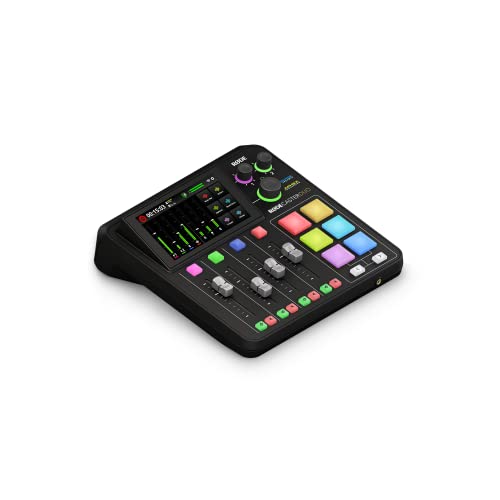
Compact Creator Hub – RØDECaster Duo
For creators seeking an audio mixer for podcast studio work, the RØDECaster Duo combines two combo inputs, four faders, SMART pads, touchscreen control, and onboard processing in a compact desktop unit. Its USB connectivity and headset support also suit streaming and content creation.
Best For: Solo or two-person podcasts, streaming, and compact content-creation setups.
Pros:
- Two Neutrik combo inputs with high-gain, low-noise Revolution Preamps.
- Four broadcast-quality faders, touchscreen control, and six SMART pads.
- Includes APHEX processing, effects, and a 3.5mm TRRS headset connection.
Cons:
- Provides four channels, which may limit larger panel discussions.
- It is a corded-electric unit rather than a battery-powered option.
The RØDECaster Duo is a focused choice when ease of control and built-in podcast features matter more than a high channel count. Its compact format keeps a small studio organized while retaining useful monitoring and effects options.
Flexible Analog Mixer – Yamaha MG10XU
The Yamaha MG10XU is a practical audio mixer for podcast studio setups that need more inputs and conventional mixer controls. It offers 10 channels, USB connectivity, SPX digital effects, three-band EQ, high-pass filters, and one-knob compression.
Best For: Studios mixing several microphones or instruments with hands-on channel control.
Pros:
- 10-channel layout provides more input capacity than compact podcast consoles.
- USB connectivity and built-in SPX digital effects support recording and processing.
- Three-band EQ, high-pass filters, and one-knob compressors aid mix shaping.
- Rugged, impact-resistant powder-coated metal chassis.
Cons:
- Its traditional mixer layout may require more manual setup than an all-in-one podcast studio.
- The unit is larger and heavier than the compact RØDE consoles listed here.
The MG10XU suits buyers who value input flexibility and familiar mixer controls. It is especially useful when a podcast studio also handles instruments or multiple connected sources.
Full-Size Podcast Console – RØDECaster Pro II
For a podcast studio that needs an audio mixer with room for guests and live production, the RØDECaster Pro II offers four XLR microphone inputs, headphone outputs, SMART pads, and APHEX processing. It can record multitrack audio to a computer, microSD card, or USB drive, and can operate without a computer.
Best For: Multi-person podcasts, live streams, and standalone recording workflows.
Pros:
- Four studio preamps accommodate a larger podcast group.
- Supports multitrack recording to a computer, microSD card, or USB drive.
- Eight customizable SMART pads can trigger effects, music, and mix-minus calls.
- Bluetooth, USB, and Wi-Fi connectivity expand setup options.
Cons:
- Its larger footprint may be excessive for a solo creator.
- Microphones are not included.
The Pro II is the strongest fit here for a dedicated podcast studio that expects multiple voices or wants standalone recording. Its expanded connectivity and show-control features can reduce the need for separate production hardware.
Starter Streaming Bundle – MAONO S1 Podcast Kit
The MAONO S1 bundle is an accessible audio mixer for podcast studio beginners who want a microphone and basic accessories included. It supports two people, multiple devices and platforms, built-in effects, voice changing, real-time monitoring, and connections to compatible computers and mobile devices.
Best For: Beginners creating podcasts, livestreams, and casual mobile or PC content.
Pros:
- Includes a condenser microphone, cable, tripod, windscreen, mixer, and charging cable.
- Offers four recordable and eight built-in special effects.
- Supports up to two people, four devices, and four platforms simultaneously.
- Compatible with many PCs, Macs, smartphones, iPhones, and tablets.
Cons:
- The AM200 supports only 3.5mm microphone input and does not support phantom power.
- Instruments such as guitars and keyboards require an additional adapter.
- Phones without a 3.5mm jack need an OTG adapter.
This bundle is convenient for getting started quickly because the core microphone and accessories are included. Buyers should confirm their device connections and microphone requirements before choosing it for a more advanced studio.
Versatile Value Mixer – Pyle PMXU63BT
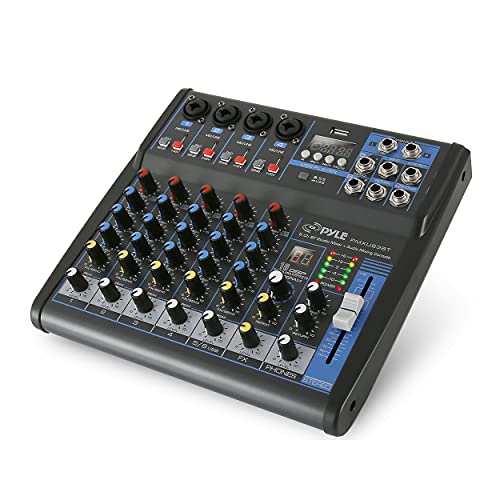
If you need an audio mixer for podcast studio use that can also handle music playback and live sound, the Pyle PMXU63BT offers a practical six-channel setup. It combines XLR and 1/4-inch inputs, Bluetooth, USB, an MP3 player, phantom power, and basic channel EQ in a compact chassis.
Best For: Podcasters and small studios that want flexible input options, wireless playback, and recording support without a highly specialized interface.
Pros:
- Six channels with XLR and unbalanced 1/4-inch inputs
- Bluetooth, USB, flash-drive, and built-in MP3 compatibility
- 48V phantom power, three-band EQ, and LED peak indicators
- Compact steel chassis with sealed rotary controls
Cons:
- Only basic product details are provided about computer recording workflow
- Its DJ and live-performance features may be more than a simple single-mic podcast requires
The PMXU63BT is a flexible all-rounder for a podcast studio that may also support music, interviews, karaoke, or small live productions. Choose it when broad connectivity matters more than podcast-specific controls.
Streamer-Friendly Control Hub – FIFINE Ampligame SC3
The FIFINE Ampligame SC3 is an audio mixer for podcast studio beginners who want hands-on control over one microphone, playback, and monitoring. Its individual faders, front mute and monitor buttons, sound pads, and computer connectivity are aimed at streaming and content creation.
Best For: Solo podcasters, livestreamers, and creators using an XLR microphone with a Windows or Mac computer.
Pros:
- XLR microphone input with built-in 48V phantom power for compatible condenser microphones
- Independent controls for microphone, line input, headphones, and line output
- Four customizable sound-effect buttons, voice-changing modes, and auto-tune options
- Front-panel mute and monitor controls plus plug-and-play Mac and Windows support
Cons:
- Designed around one microphone input rather than a multi-mic studio setup
- USB microphones are not supported
- XLR cable is not included
The SC3 prioritizes fast, physical control over advanced multi-channel production. It is a sensible pick for a solo creator who wants built-in effects and convenient monitoring, but a larger podcast team may need more microphone inputs.
Podcast Production Console – MAONO AME2 Podcast Mixer
The MAONO AME2 is an audio mixer for podcast studio production that combines XLR microphone support with sound pads, reverb, auto-tune, loopback, and multiple connection options. Its preamps offer up to 60dB of gain, while the 10-channel design supports microphones, instruments, smartphones, computers, and monitoring equipment.
Best For: Podcast and livestream creators who want built-in production effects, customizable audio pads, and support for microphones plus instruments.
Pros:
- Two XLR microphone inputs with phantom power and independently controlled microphone channels
- Up to 11 customizable sound pads, including looping and longer recording times
- Supports guitar, bass, smartphones, computers, tablets, cameras, and studio monitors
- Includes denoise, reverb, auto-tune, pitch, tone, sidechain, and loopback features
Cons:
- USB microphones are not supported
- The range of effects and routing options may require a learning period
- Package contents list cables but does not indicate that microphones are included
The AME2 is the most podcast-focused option here for creators who want a central console for recording and live production. Its broad routing and effect controls make it especially useful when a basic mixer would feel limiting.
Feature-Rich Podcast Pick – SINWE F988 Sound Card Mixer
For creators seeking an audio mixer for podcast studio setups, the SINWE F988 combines four-channel connectivity with podcast modes, voice effects, Bluetooth accompaniment, and built-in noise reduction. Its compact design and support for Windows, Mac OS, iPad, and smartphones make it adaptable for streaming, recording, and mobile production.
Best For: Podcasters, streamers, gamers, and vocal creators who want built-in effects and flexible device connectivity.
Pros:
- Offers seven podcast and recording modes plus four voice changer modes.
- Includes Bluetooth, XLR, and 3.5mm inputs, with support for connecting up to three mobile phones.
- Features dual DSP noise reduction, 24-bit processing, and a listed 120kHz sample rate.
- Compact, lightweight design suits home studios and portable setups.
Cons:
- Adapters may be required for iPad and smartphone connections.
- Its many effects and controls may take time for beginners to learn.
- Warranty information varies between the supplied specifications and product notes.
The SINWE is a strong choice when creative effects and mobile-friendly streaming matter as much as basic mixing. Buyers seeking a more traditional mixer layout may prefer one of the larger console-style options.
Beginner-Friendly Studio Choice – Pyle PMXU46BT Mixer
The Pyle PMXU46BT is a practical audio mixer for podcast studio use, with four channels, a USB audio interface, Bluetooth streaming, and XLR microphone connectivity. Its straightforward rotary controls, LED indicators, and 12-segment output meter provide useful hands-on monitoring for home recording and live mixing.
Best For: Beginners and small studio users who need USB recording, Bluetooth playback, and phantom-powered microphone inputs.
Pros:
- Connects to Mac or PC through its USB sound card and audio interface.
- Bluetooth supports wireless playback from phones, tablets, and MP3 players within a listed 15-foot range.
- Provides four channels, combo microphone/line inputs, headphone output, and send/return connections.
- Includes +48V phantom power for compatible condenser microphones.
Cons:
- The four-channel layout may be limiting for larger podcast teams or complex productions.
- Its listed 20kHz frequency specification is less extensive than some supplied alternatives.
- At 6.8 pounds, it is less lightweight than the compact SINWE option.
The Pyle offers a conventional mixer experience with useful computer-recording and wireless-playback features. It is especially appealing for users who prefer physical knobs and a familiar control layout over extensive built-in vocal effects.
Multi-Channel Console Pick – 6-Channel DSP Audio Mixer
For a podcast studio that needs more input capacity, this six-channel audio mixer provides four XLR inputs, stereo line channels, USB playback, Bluetooth streaming, and 16 DSP effects. It also includes three-band equalization and +48V phantom power, making it suitable for combining microphones, instruments, and playback sources.
Best For: Small production teams, karaoke setups, live streamers, and studios mixing several microphones or instruments.
Pros:
- Six-channel design supports multiple microphones, instruments, and stereo sources.
- Four XLR inputs offer switchable +48V phantom power for condenser microphones.
- Includes Bluetooth, USB interface, and USB-drive playback functions.
- Provides three-band EQ, channel faders, and 16 built-in DSP effects including delay and reverb.
Cons:
- The supplied notes describe it as a traditional analog mixer, so it may require more hands-on setup.
- Its larger, heavier form factor is less convenient for highly portable recording.
- The listed 90-day manufacturer warranty is shorter than the Pyle’s stated one-year limited warranty.
This mixer is the most capable choice here for expanding beyond a simple two-microphone podcast. Its channel count and effects are useful for live, multi-source productions, while buyers wanting a smaller creator-focused interface may prefer the SINWE.
How We Picked the Best Audio Mixer for Podcast Studio Use
We evaluated these mixers by focusing on the features that matter in real podcast workflows: microphone input type, preamp and gain control, phantom power, headphone monitoring, USB connectivity, routing flexibility, onboard processing, and ease of setup. We also considered whether each model suits solo recording, interviews, live streaming, or multi-person studio production.
Dedicated podcast consoles generally offer more convenient controls, sound effects, mix-minus functions, and multitrack or USB recording options. Traditional mixers can be better values when you already have recording software and need several microphone inputs at a lower cost.
Quick Comparison
| Best For | Look For | Typical Advantage |
|---|---|---|
| Solo podcasters | Simple USB connection and headphone monitoring | Fast setup with fewer controls to manage |
| Interview shows | Multiple XLR inputs and independent gain control | Consistent levels for several speakers |
| Live streaming | Sound pads, Bluetooth, and real-time effects | Quick access to music, calls, and cues |
| Growing studios | Flexible routing and multitrack recording | More control for editing and expansion |
| Budget setups | USB output, phantom power, and usable monitoring | Core recording features at a lower price |
Key Buying Factors for an Audio Mixer for Podcast Studio
Inputs and Microphone Compatibility
Count how many people may speak at once, then leave room for expansion. XLR inputs are the usual choice for podcast microphones. If you use condenser microphones, confirm that the mixer provides 48V phantom power. Dynamic microphones may need substantial clean gain, especially when positioned farther from the speaker.
USB Recording and Routing
A USB connection can send the mix directly to a computer, but not every mixer offers the same routing options. Check whether it supports stereo output or separate channels, and whether it works with your preferred macOS, Windows, or mobile workflow.
Monitoring and Control
Dedicated headphone outputs, independent headphone volume, mute controls, and clear level meters make sessions easier to manage. Mix-minus or loopback support is especially useful for remote guests and live calls because it helps prevent echo.
Effects and Workflow Features
Built-in compression, equalization, reverb, sound pads, and Bluetooth can reduce the need for extra equipment. However, these features are most valuable when they are easy to access; a simpler mixer may be the better choice if you plan to edit and process audio in software.
Who Should Buy Which Audio Mixer for Podcast Studio?
Choose a dedicated production console if you want an all-in-one Audio Mixer for Podcast Studio recording with hands-on controls, effects, and streamlined guest management. Pick a conventional analog mixer if you prioritize multiple inputs, familiar channel controls, and compatibility with an existing USB interface or recorder.
For streaming, gaming, and casual content, a compact mixer with Bluetooth, sound effects, or easy volume controls can be convenient. Beginners should favor clear monitoring and straightforward connections over an overwhelming feature list. Multi-host studios should prioritize enough XLR inputs, independent gain control, reliable headphone monitoring, and flexible routing so the setup can grow with the show.