
The best dynamic microphone for spoken word can make podcasts, voiceovers, livestreams, meetings, and narration sound fuller while helping reduce room noise. Dynamic designs are particularly useful in untreated spaces because they typically favor close, controlled speech over distant background sound.
We selected 10 USB, XLR, and hybrid microphones for different recording setups and budgets. The right choice depends on your connection needs, desk or boom-arm setup, monitoring preferences, and how much flexibility you want as your recording workflow develops.
Best 10 Dynamic Microphone for Spoken Word Picks for 2026
Studio Voice Pick
Shure MV7X XLR Dynamic Microphone

- Focused cardioid voice isolation
- Professional XLR connectivity
- Rugged all-metal construction
Best For: Interface-based podcast and spoken-word setups
USB Broadcast Choice
Audio-Technica AT2040USB Dynamic Microphone
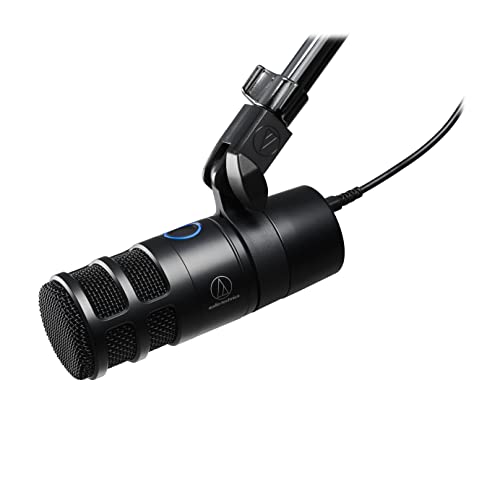
- Plug-and-play USB connection
- Hypercardioid room-noise reduction
- Headphone monitoring and mute controls
Best For: Computer-based podcasting and streaming
Proven Vocal Classic
Shure SM58 XLR Dynamic Microphone

- Focused cardioid vocal pickup
- Integrated pop protection
- Rugged, stage-ready construction
Best For: Live speaking, vocals, and XLR recording
Flexible Starter Pack
Samson Q2U USB/XLR Dynamic Microphone

- USB-C and XLR connectivity
- Desktop stand and cables included
- Unidirectional spoken-word pickup
Best For: Beginners wanting a ready-to-use upgradeable kit
Reliable Stage Starter
Pyle Dynamic Cardioid Microphone

- Cardioid pickup helps limit background noise and feedback.
- Built-in pop filter and rugged metal construction.
- Includes a 15-foot XLR-to-1/4-inch cable.
Best For: Wired spoken-word, stage, karaoke, and basic studio use
Flexible Creator Upgrade
MAONO PD200W Hybrid Wireless Mic

- Wireless, USB-C, and XLR connectivity in one microphone.
- Up to 60 hours of battery life and a 60-meter wireless range.
- Noise cancellation and MaonoLink sound customization.
Best For: Podcasts, interviews, streaming, and flexible creator setups
Rugged Wired Value

- Cardioid pickup reduces background noise and feedback.
- Built-in pop filter and rugged zinc-alloy body.
- Includes a 15-foot XLR-to-1/4-inch cable.
Best For: Live spoken word, vocals, karaoke, and basic studio use
Best Plug-and-Play Pick

- USB and XLR connectivity
- Cardioid pickup for focused vocals
- USB mute, gain, and headphone controls
Best For: Podcasters and voice-over users seeking flexible connectivity
Best Complete Desk Setup

- Includes boom arm and C-clamp
- USB/XLR connectivity
- RGB, mute, gain, and monitoring controls
Best For: Streamers and podcasters wanting an all-in-one desktop kit
Best Boom-Arm Podcast Kit

- Includes boom arm, shock mount, and windscreen
- USB and XLR recording options
- Controls plosives and desk vibration
Best For: Podcasters and streamers needing a supported vocal setup
Studio Voice Pick – Shure MV7X XLR Dynamic Microphone
For a dynamic microphone for spoken word, the Shure MV7X is built around focused vocal capture and a professional XLR workflow. Its cardioid design, integrated shock mount, and all-metal construction suit podcasts, streaming, and studio recording.
Best For: Podcasters and creators using an audio interface or mixer who want focused, broadcast-inspired vocal sound.
Pros:
- Cardioid voice-isolation technology helps reduce room noise and distractions.
- XLR output supports customizable signal control through an interface or mixer.
- Durable all-metal body with adjustable yoke mount and included thread adapter.
Cons:
- XLR-only connectivity requires an audio interface or mixer.
- The interface, mixer, stand, or boom arm is not included.
The MV7X is a strong choice when clean spoken-word capture and long-term physical durability matter more than plug-and-play USB convenience.
USB Broadcast Choice – Audio-Technica AT2040USB Dynamic Microphone
The Audio-Technica AT2040USB is a practical dynamic microphone for spoken word when you want direct USB connection and simple monitoring. Its hypercardioid pickup focuses on the speaker, while the headphone output, volume control, and mute button support everyday recording and streaming.
Best For: Podcasters and streamers who want plug-and-play USB recording with built-in monitoring controls.
Pros:
- USB connectivity provides straightforward computer setup.
- Hypercardioid pickup helps minimize room noise and echo.
- Built-in headphone jack, volume control, and soft-touch mute button.
Cons:
- USB connectivity is less suitable for users specifically seeking an XLR workflow.
- The supplied notes do not list a stand or boom arm as included.
Choose the AT2040USB for a focused spoken-word setup that prioritizes easy computer connection and convenient controls at the microphone.
Proven Vocal Classic – Shure SM58 XLR Dynamic Microphone
The Shure SM58 is a dependable dynamic microphone for spoken word, live use, and vocal recording. Its cardioid pattern focuses on the speaker, while the integrated pop protection helps reduce plosives, breath, and wind noise without requiring extra accessories.
Best For: Speakers, performers, and creators who need a durable XLR microphone for live or studio environments.
Pros:
- Cardioid pickup focuses on the voice and helps minimize background noise and feedback.
- Built-in grille and filter provide pop and breath-noise protection.
- Rugged metal construction is suited to demanding use.
Cons:
- XLR connectivity requires an audio interface, mixer, or compatible input.
- Its handheld form factor may be less convenient for fixed desk podcasting than a broadcast-style mic.
The SM58 remains a sensible choice when proven vocal clarity, integrated pop protection, and road-ready durability are higher priorities than USB convenience.
Flexible Starter Pack – Samson Q2U USB/XLR Dynamic Microphone
The Samson Q2U is a flexible dynamic microphone for spoken word that can connect by USB-C to a computer or by XLR to compatible audio equipment. The pack also includes a desktop tripod stand, extension, mic clip, windscreen, and both USB-C and XLR cables.
Best For: New podcasters and speakers who want a complete desktop kit with both USB and XLR upgrade paths.
Pros:
- USB-C and XLR connections support computer recording and traditional audio setups.
- Includes a tripod desktop stand, extension, clip, windscreen, and two cables.
- Unidirectional pickup is suited to focused podcasting and spoken-word use.
Cons:
- The supplied notes do not list built-in headphone monitoring or mute controls.
- The desktop tripod format may be less suitable for larger studio mounting setups.
The Q2U is especially appealing if you want to start recording immediately while keeping the option to move to an XLR interface or mixer later.
Reliable Stage Starter – Pyle Dynamic Cardioid Microphone
If you need a budget-friendly dynamic microphone for spoken word, the Pyle PDMIC58 offers a straightforward wired setup with a cardioid pickup pattern, built-in pop filter, and included 15-foot cable. Its passive design requires no batteries or external power.
Best For: Spoken-word performances, karaoke, stage use, and basic studio recording with an amplifier, mixer, PA system, or audio interface.
Pros:
- Cardioid pickup helps reduce background noise and feedback.
- Built-in pop filter helps reduce breath and plosive noise.
- Rugged zinc-alloy body and steel mesh windscreen are suited to frequent handling.
- Includes a 15-foot XLR-to-1/4-inch cable.
Cons:
- Wired operation limits movement compared with wireless microphones.
- Its 50Hz–15kHz response is less extensive than some creator-focused microphones.
- Handheld design may require a separate stand for desk-based recording.
The Pyle PDMIC58 is a practical choice when durability, simple connections, and feedback-resistant spoken-word performance matter more than advanced recording controls.
Flexible Creator Upgrade – MAONO PD200W Hybrid Wireless Mic
For creators who want a dynamic microphone for spoken word across multiple setups, the MAONO PD200W combines wireless, USB, and XLR connectivity. Its cardioid capsule, noise cancellation, software support, and included desktop stand make it suitable for both portable and computer-based recording.
Best For: Podcasts, interviews, streaming, voice recording, and creators switching between wireless, USB, and XLR workflows.
Pros:
- Supports wireless, USB-C, and XLR connections.
- Up to 60 hours of battery life and a stated 60-meter wireless range with RGB off.
- Cardioid pickup and three-stage noise cancellation focus on the speaker’s voice.
- MaonoLink provides four preset modes plus EQ and reverb adjustments.
Cons:
- Requires battery power for wireless use.
- Its advanced features may be unnecessary for a simple wired setup.
- Camera and Lightning accessories are sold separately.
The PD200W is the most versatile option here for spoken-word creators who value connection flexibility and onboard customization, especially when recording in more than one location.
Rugged Wired Value – PylePro PDMIC78 Handheld Mic
The PylePro PDMIC78 is a no-frills dynamic microphone for spoken word with a unidirectional cardioid pattern, built-in pop filter, and included 15-foot XLR cable. It is designed for clear vocal output in live and studio environments without adding wireless or software complexity.
Best For: Live announcements, vocals, karaoke, stage performances, and basic spoken-word recording with compatible audio equipment.
Pros:
- Cardioid pattern helps minimize background noise and feedback.
- Built-in pop filter supports clearer vocal delivery.
- Rugged zinc-alloy construction is made for stage and studio handling.
- Includes a 15-foot XLR-to-1/4-inch audio cable.
Cons:
- Only offers wired XLR connectivity.
- Handheld form factor is less convenient for desktop recording without extra equipment.
- Frequency response tops out at 15kHz.
Choose the PDMIC78 if you want a durable, affordable wired microphone for spoken word and live use, particularly where a long included cable is helpful.
Best Plug-and-Play Pick – FIFINE AmpliTank K688
If you need a dynamic microphone for spoken word that works with either a computer or an XLR setup, the FIFINE AmpliTank K688 offers a flexible starting point. Its cardioid pickup pattern helps reduce background noise, while USB controls simplify podcasting, voice-over, and recording.
Best For: Speakers, podcasters, and voice-over users who want USB convenience with an upgrade path to XLR equipment.
Pros:
- USB and XLR connectivity supports computer recording and mixer-based setups.
- Cardioid pickup, windscreen, and shock mount help manage background and handling noise.
- USB mode includes tap-to-mute, gain control, headphone monitoring, and volume adjustment.
Cons:
- Arm stand, mic stand, and XLR cable are not included.
- On-mic controls are available only through USB connection.
- It works best when positioned close to the speaker.
The K688 is a practical choice for spoken-word recording when you want clear, directional vocal capture now and the option to add an audio interface later.
Best Complete Desk Setup – FIFINE AmpliGame AM8T
The FIFINE AmpliGame AM8T is a dynamic microphone for spoken word aimed at users who want a ready-to-assemble desktop kit. It combines USB/XLR connectivity with a boom arm, monitoring controls, and a cardioid pattern that helps keep attention on the speaker.
Best For: Streamers, gamers, and podcasters who want a microphone kit with included boom-arm support and customizable RGB lighting.
Pros:
- Includes a metal boom arm, C-clamp, and USB-C cable for a straightforward setup.
- USB and XLR outputs support plug-and-play recording or mixer and interface connections.
- Offers a mute button, gain control, headphone monitoring, and controllable RGB lighting.
Cons:
- XLR cable is not included.
- The desk clamp fits desktops under 2 inches thick.
- RGB lighting may be unnecessary for a strictly voice-focused setup.
With its included arm stand and accessible controls, the AM8T is especially convenient for spoken-word creators building a gaming, streaming, or home-recording desk.
Best Boom-Arm Podcast Kit – FIFINE AmpliTank K688CT
For spoken-word creators who want a supported microphone rather than a bare mic, the FIFINE AmpliTank K688CT pairs USB/XLR connectivity with a heavy-duty boom arm. Its cardioid design, windscreen, shock mount, and close-recording guidance make it suited to focused vocal work.
Best For: Podcasters and streamers who want an included boom arm and practical controls for reducing plosives, vibration, and desk noise.
Pros:
- Includes a durable boom arm, shock mount, and windscreen.
- USB and XLR connections allow convenient computer use or an audio-interface workflow.
- USB controls include tap-to-mute, gain, headphone monitoring, and volume adjustment.
Cons:
- On-microphone controls do not work in XLR mode.
- The C-clamp is designed for desks under 2 inches thick.
- For best input volume, the speaker should remain about 2 to 6 inches from the mic.
The K688CT is a strong practical option when a stable boom-arm setup and vibration control matter as much as flexible USB/XLR recording.
How We Picked the Best Dynamic Microphone for Spoken Word
We focused on microphones designed for clear, close-range speech rather than relying only on general-purpose specifications. The roundup includes established vocal models, podcast-focused microphones, affordable handheld options, and USB/XLR designs that can serve both beginners and more advanced creators.
Our comparison considers connection type, cardioid or unidirectional pickup behavior, monitoring and control features, included accessories, construction, and likely use cases. Because spoken-word results depend heavily on mic placement and room acoustics, we also favored models that are practical to position close to the speaker.
Quick Comparison
| Type | Best For | Connection | Main Advantage |
|---|---|---|---|
| Podcast-focused dynamic | Podcasts and voiceovers | XLR or USB | Speech-oriented design and close-mic clarity |
| Traditional vocal dynamic | Live speech and vocals | XLR | Durability and dependable rejection of off-axis sound |
| Hybrid microphone | Growing creators | USB and XLR | Simple setup now with upgrade flexibility later |
| Handheld dynamic | Events and mobile use | XLR | Rugged construction and easy handling |
Key Buying Factors for a Dynamic Microphone for Spoken Word
USB, XLR, or Both
USB is the easiest option for a computer-based setup because it avoids a separate audio interface. XLR gives you more control and works with mixers, interfaces, and professional recording equipment. A hybrid USB/XLR microphone is useful if you want plug-and-play recording today but may build a more advanced setup later.
Pickup Pattern and Room Noise
Most microphones in this category use cardioid or similarly directional pickup. Position the mic a few inches from your mouth and aim the rear of the microphone toward the loudest unwanted sound. Directionality helps, but it cannot fully replace acoustic treatment or careful placement.
Controls, Monitoring, and Accessories
Headphone monitoring, a mute button, gain control, and a sturdy mount can make a bigger everyday difference than small specification changes. Check whether a stand, cable, windscreen, shock mount, or pop filter is included before comparing final prices.
Voice Quality and Technique
A Dynamic Microphone for Spoken Word often rewards consistent distance and a confident speaking level. Use a pop filter or foam windscreen when needed, keep the capsule slightly off-axis to reduce plosives, and confirm that your interface provides enough clean gain for an XLR model.
Who Should Buy Which Dynamic Microphone for Spoken Word?
Choose a USB microphone if you want the simplest route to podcasting, streaming, calls, or voiceover recording on a computer. Choose an XLR model if you already own an interface or mixer, need a traditional professional workflow, or want to use the microphone across different audio systems.
Choose a hybrid USB/XLR microphone if flexibility is your priority. It can simplify a first setup while preserving an upgrade path. Choose a classic handheld dynamic for stage announcements, interviews, mobile recording, or situations where toughness matters more than desktop controls.
Before buying, verify connector compatibility, mounting hardware, available desk space, and the microphone’s gain requirements. A well-positioned, securely mounted microphone that suits your equipment will usually outperform a more advanced model used too far away or with an incompatible setup.