
Choosing among today’s audio mixers depends on more than channel count. The right model should match your microphones, instruments, workflow, connectivity needs, and available space.
This roundup compares compact analog boards, USB-equipped mixers, digital systems, and streaming-focused controls to help you find a practical fit for recording, live performance, gaming, or karaoke.
Best 10 Audio Mixers Picks for 2026
Best Digital Mixer for Remote Control
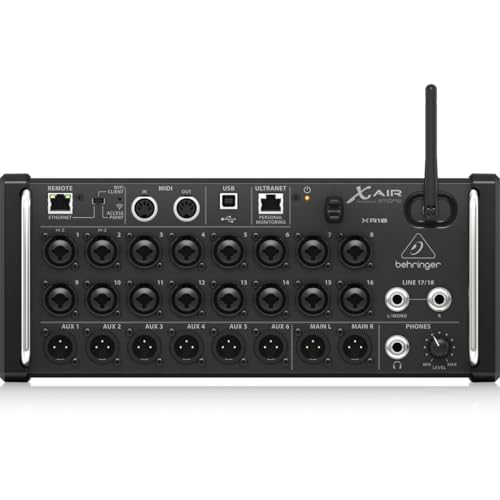
- 18 channels and 12 buses
- 16 programmable MIDAS preamps
- Built-in Wi-Fi and 18 x 18 USB
Best For: Live and studio setups needing tablet control
Best Compact Mixer with Effects

- 10 inputs with USB connectivity
- SPX effects and one-knob compression
- Rugged metal chassis
Best For: Small live, rehearsal, and recording setups
Best Mixer for Streaming and Recording

- Bluetooth playback and USB recording
- 24 GigFX+ effects with tap tempo
- Onyx preamps on microphone channels
Best For: Streaming, podcasting, and compact live setups
Best Gaming Audio Mixer for Beginners

- XLR input with 48V phantom power
- Independent mic, line, and monitor controls
- Voice effects, mute controls, and RGB
Best For: Beginner XLR-mic streamers and gamers
Best USB Streaming Mixer

- Eight inputs for flexible source mixing
- Stereo USB interface for computers or mobile devices
- XLR, TRS, and RCA outputs
Best For: Streaming, podcasting, and home recording
Best Compact Line Mixer
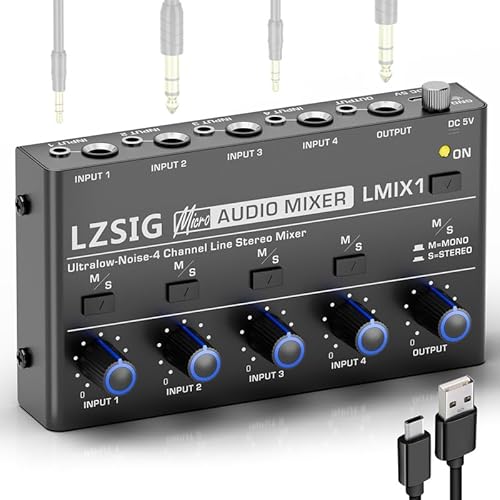
- Mixes four sources into mono or stereo output
- Accepts 3.5mm and 6.35mm connections
- Compact format for small audio setups
Best For: Basic sub-mixing and compact audio routing
Best Feature-Packed DJ Mixer
12-Channel Bluetooth USB Mixer
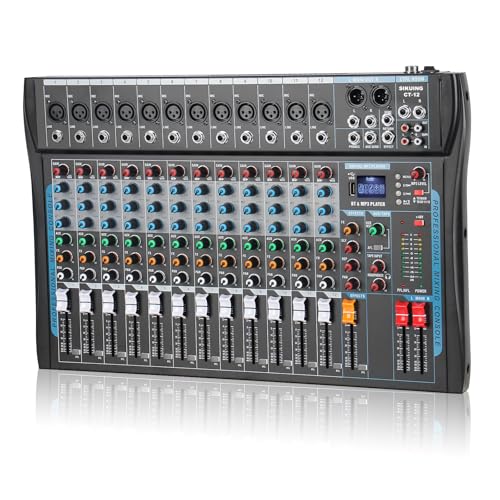
- Twelve channels with balanced XLR and line inputs
- Bluetooth and USB connectivity
- +48V phantom power and 16-bit DSP effects
Best For: DJs, live streaming, karaoke, and performances
Best Value Bluetooth Mixer
Pyle PMXU63BT 6-Channel Audio Mixer
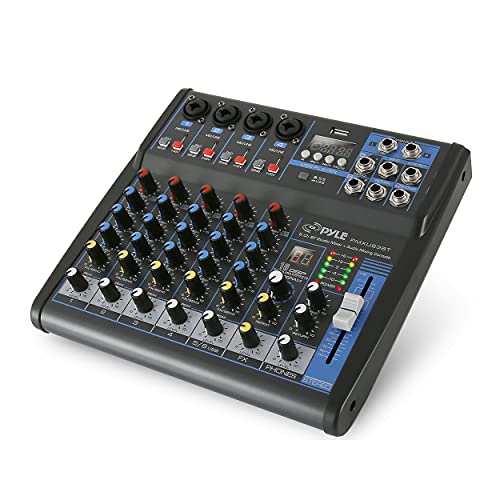
- Bluetooth streaming plus USB and MP3 playback
- 3-band EQ, 48V phantom power, and DSP effects
- Rugged steel chassis for gigs and karaoke
Best For: Home karaoke, live gigs, and compact media-friendly setups
Flexible Effects Mixer
6-Channel USB Audio Mixer with DSP

- Four XLR inputs with switchable 48V phantom power
- Bluetooth, USB playback, and recording interface
- 3-band EQ with 16 built-in DSP effects
Best For: Karaoke, small studios, streaming, and multi-input setups
Best for Larger Setups
CT-80S 8-Channel Bluetooth Audio Mixer

- Eight channels for bands, events, and karaoke
- Bluetooth 5.0, USB playback, and USB recording
- Thin chassis with LED display, reverb, and phantom power
Best For: Small bands, conferences, campus events, and home KTV
Best Digital Mixer for Remote Control – Behringer X AIR XR18
The Behringer X AIR XR18 is one of the most capable audio mixers here for live sound and studio work. Its tablet control, extensive channel count, programmable preamps, built-in Wi-Fi, and bidirectional USB interface make it a flexible choice when you want hands-off mixing and direct recording.
Best For: Live performers, studio users, and engineers who want tablet-based control and extensive routing.
Pros:
- 18-channel, 12-bus design supports complex live or studio setups.
- Includes 16 programmable MIDAS-designed microphone preamps.
- Built-in tri-mode Wi-Fi enables direct tablet operation without an external router.
- 18 x 18 bidirectional USB interface supports direct recording.
Cons:
- Tablet control may be less immediate than a mixer with physical faders.
- Its 18-channel feature set may be more than needed for simple setups.
The XR18 stands out when remote control, channel capacity, and USB recording matter more than traditional hands-on controls. It is a strong fit for users building a flexible digital mixing system.
Best Compact Mixer with Effects – Yamaha MG10XU
The Yamaha MG10XU is a practical choice among audio mixers for smaller live rigs, rehearsal spaces, and recording setups. It combines USB connectivity, SPX digital effects, three-band EQ, high-pass filters, and one-knob compression in a rugged metal chassis.
Best For: Musicians, small bands, and creators who want straightforward controls, onboard effects, and USB connectivity.
Pros:
- 10-input layout suits compact mixing applications.
- Built-in USB connectivity and SPX digital effects add recording and processing flexibility.
- One-knob compressors simplify control of guitars, bass, drums, and vocals.
- Rugged, impact-resistant powder-coated metal chassis.
Cons:
- Its 10-input capacity is less suitable for larger productions.
- Control is less expansive than a fully digital tablet-operated mixer.
Choose the MG10XU if you prefer a familiar physical interface and useful built-in processing. It offers a balanced set of features for everyday small-format mixing without an overly complicated workflow.
Best Mixer for Streaming and Recording – Mackie ProFX10v3+
The Mackie ProFX10v3+ is a versatile option for audio mixers aimed at streaming, recording, and live use. Bluetooth playback, USB recording, Onyx microphone preamps, and the GigFX+ effects engine let you manage several common sources from one compact desk.
Best For: Streamers, podcasters, musicians, and small live setups that need playback, recording, and effects.
Pros:
- Supports microphones, instruments, phones, and computers out of the box.
- Combines Bluetooth playback with multi-mode USB recording.
- GigFX+ provides 24 effects with tap tempo.
- Onyx preamps are included on every microphone channel.
Cons:
- Its 10-channel format may limit larger or more complex productions.
- Bluetooth and USB features may be unnecessary for users seeking a basic analog mixer.
The ProFX10v3+ is especially appealing when one mixer needs to handle content creation and music duties. Its combination of wireless playback, computer connectivity, and onboard effects makes it adaptable without requiring separate devices.
Best Gaming Audio Mixer for Beginners – FIFINE Ampligame SC3
The FIFINE Ampligame SC3 is a focused choice among audio mixers for gaming, streaming, and online content creation. It provides an XLR microphone input with 48V phantom power, independent level controls, mute and monitor buttons, customizable sound effects, and RGB lighting.
Best For: Beginner streamers and gamers using an XLR microphone with PC, Mac, OBS, Twitch, YouTube, or TikTok.
Pros:
- XLR input and built-in 48V phantom power support compatible condenser microphones.
- Independent controls adjust microphone, line input, headphone, and line output levels.
- Front-panel mute and monitor buttons are convenient during broadcasts.
- Includes customizable sound buttons, voice-changing modes, auto-tune options, and RGB lighting.
Cons:
- It is designed around one-microphone streaming rather than multi-channel production.
- It does not support USB microphones.
- An XLR cable is not included.
The SC3 makes the most sense for creators who want hands-on control over a simple streaming setup. Its effects and independent monitoring controls add convenience, while the XLR input provides a clear upgrade path from basic headset audio.
Best USB Streaming Mixer – Behringer XENYX 802S
Behringer XENYX 802S Premium Analog 8-Input Mixer with USB Streaming Interface
Check Price On AmazonThe Behringer XENYX 802S is a practical choice among audio mixers for streaming, podcasting, and recording setups that need analog controls plus computer connectivity. Its eight inputs, stereo USB interface, and multiple output options support straightforward mixing of PC, gaming, and other audio sources.
Best For: Streamers, podcasters, and home-recording users who want an analog mixer with USB connectivity.
Pros:
- Eight-input layout provides room for multiple audio sources.
- Stereo USB interface connects to a computer or mobile device.
- Supports direct mixing of PC and gaming sounds into the streaming output.
- Includes XLR, TRS, and RCA output connections.
Cons:
- Requires corded electric power.
- The supplied details do not specify supported software updates.
Choose the XENYX 802S if you prefer hands-on analog mixing while still needing a USB route for streaming or recording. Its feature set is focused on flexible desktop audio routing rather than advanced digital processing.
Best Compact Line Mixer – LZSIG 4-Channel Mini Mixer
The LZSIG Mini Audio Mixer is one of the more compact audio mixers for combining several line-level sources into a single mono or stereo output. Its four-channel design accepts both 3.5mm and 6.35mm connections, making it useful for small audio-routing setups involving instruments, computers, or gaming devices.
Best For: Users who need an inexpensive, compact sub-mixer for several line-level audio sources.
Pros:
- Combines up to four audio sources into one output.
- Supports mono and stereo line-mixer modes.
- Accepts both 1/8-inch and 1/4-inch TRS/TS cables.
- Compact design fits easily into small setups.
Cons:
- Power adapter is sold separately.
- Designed for line mixing rather than microphone-focused mixing.
- Uses a 5V power supply and should be positioned away from other electronics to minimize interference.
The LZSIG is best viewed as a simple expansion tool rather than a full-featured recording console. It makes sense when size, basic source combining, and flexible cable compatibility matter more than extensive controls or built-in effects.
Best Feature-Packed DJ Mixer – 12-Channel Bluetooth USB Mixer
This 12-channel audio mixer is a versatile option among audio mixers for DJs, live streaming, karaoke, studio recording, and performances. It combines USB and Bluetooth connectivity with channel-level controls, 3-band EQ adjustment, 16-bit DSP effects, and +48V phantom power for compatible condenser microphones.
Best For: DJs, performers, streamers, and karaoke users who need many inputs, wireless playback, and microphone support.
Pros:
- Twelve-channel layout accommodates larger audio setups.
- Bluetooth and USB support enable wireless playback and computer or phone connections.
- +48V phantom power supports condenser microphones.
- Includes 3-band EQ, LED indicators, headphone monitoring, and 16-bit DSP effects.
Cons:
- Its larger feature set may be more than a simple home setup requires.
- The supplied details do not identify specific DSP effects beyond the 16-bit processor.
- Requires corded electric power.
Consider this mixer when you need more channels and broader connectivity than a basic desktop unit provides. The combination of Bluetooth, USB, phantom power, and effects makes it adaptable, though users should confirm their exact input and output requirements before buying.
Best Value Bluetooth Mixer – Pyle PMXU63BT 6-Channel Audio Mixer
For shoppers comparing audio mixers for karaoke, live gigs, small performances, or basic recording, the Pyle PMXU63BT combines six channels with Bluetooth, USB playback and recording support, and built-in MP3 controls. Its 3-band EQ, 48V phantom power, and compact steel chassis make it a versatile option for everyday setups.
Best For: Home karaoke, live performance, and users who want Bluetooth and USB media features in a compact mixer.
Pros:
- Supports Bluetooth streaming from compatible smartphones and tablets.
- Includes USB, flash-reader, and MP3 compatibility for playback and mixing.
- Offers 3-band EQ, LED peak indicators, 48V phantom power, and 16-bit DSP effects.
- Rugged steel chassis with sealed rotary controls and a multi-voltage power supply.
Cons:
- Only six channels are available for larger multi-source setups.
- The supplied notes do not specify whether software updates are supported.
The PMXU63BT is a practical all-purpose choice when convenient wireless playback matters as much as basic mixing control. Its feature set is well suited to small venues and home use, though larger productions may need more channels.
Flexible Effects Mixer – 6-Channel USB Audio Mixer with DSP
This six-channel option is one of the more feature-focused audio mixers for karaoke, studio work, streaming, and recording. It combines four XLR inputs, 1/4-inch connections, Bluetooth, USB playback, 3-band channel EQ, and 16 built-in DSP effects, giving users several ways to connect microphones, instruments, and media sources.
Best For: Users who want multiple input types, wireless playback, and built-in reverb or delay effects for karaoke and small recording setups.
Pros:
- Provides four XLR inputs with switchable 48V phantom power for compatible condenser microphones.
- Accepts 1/4-inch connections for microphones, guitars, DI boxes, and other instruments.
- Includes Bluetooth streaming, USB playback, and a USB interface for mixing and recording.
- Offers 3-band EQ and 16 DSP effects, including delay or reverb options.
Cons:
- The manufacturer provides a 90-day warranty.
- Its traditional analog operation may require careful setup to avoid no-sound issues.
- The supplied notes do not specify support for software updates.
With its broad connectivity and onboard effects, this mixer is appealing for users who want more than basic level control. The four XLR inputs are especially useful for microphone-based setups, while the USB and Bluetooth features add playback flexibility.
Best for Larger Setups – CT-80S 8-Channel Bluetooth Audio Mixer
For buyers who need more input capacity, the CT-80S expands to eight channels while retaining features commonly sought in audio mixers, including Bluetooth 5.0, USB and MP3 playback, USB recording, reverb, and 48V phantom power. Its ultra-thin design is suited to home KTV, bands, campus events, conferences, and live music.
Best For: Small bands, karaoke systems, conferences, and users who need eight channels in a thin mixer format.
Pros:
- Eight-channel layout provides more connection capacity than six-channel alternatives.
- Supports Bluetooth 5.0, USB/MP3 playback, and USB recording.
- Includes reverb, 48V phantom power, and a large LED display with song-name display.
- Ultra-thin design measures approximately 1.57 inches thick.
Cons:
- The supplied product notes specify a 110V American plug.
- The unit weighs about 3.3 kg, so it is not the lightest portable option.
- The notes do not provide detailed information about EQ bands or software updates.
The CT-80S stands out when eight channels and a slim chassis are higher priorities than maximum portability. Its display, wireless playback, reverb, and recording features make it a capable choice for group performances and event-oriented setups.
How We Picked These Audio Mixers
We evaluated the selected Audio Mixers by looking at their intended use, input capacity, connection options, control layout, effects, monitoring features, and overall flexibility. Models with USB, Bluetooth, phantom power, or built-in effects can support more workflows, but those features are only useful when they match your setup.
We also considered whether each mixer is best suited to studio recording, live sound, streaming, gaming, karaoke, or simple multi-source mixing. A compact four-channel unit can be a better choice than a larger board when portability and straightforward operation matter most.
Quick Comparison
| Best For | Look For | Most Suitable Type |
|---|---|---|
| Home recording | USB connectivity, clean preamps, monitoring | USB analog or digital mixer |
| Live bands and events | More channels, durable controls, effects | Full-size analog or digital mixer |
| Streaming and gaming | USB, Bluetooth, easy mute and level controls | Streaming-focused compact mixer |
| Karaoke and casual playback | Bluetooth, USB playback, echo or reverb | Feature-rich analog mixer |
| Small portable setups | Low noise, simple routing, compact design | Mini mixer |
Key Buying Factors for Audio Mixers
Channel Count and Inputs
Count every source you expect to connect at the same time, including microphones, instruments, phones, music players, and computers. Leave some room for expansion rather than choosing a mixer that is already full.
Analog Versus Digital Control
Analog mixers offer direct knobs and quick operation. Digital mixers typically provide deeper routing, scenes, remote control, and more sophisticated processing, but they may require a learning curve and dependable network connectivity.
USB, Bluetooth, and Recording
USB can simplify computer recording, playback, and streaming. Bluetooth is convenient for background music or wireless playback, though it is generally not a replacement for a low-latency wired connection when timing matters.
Phantom Power and Microphone Support
If you use condenser microphones, confirm that the mixer supplies +48V phantom power and that it can apply it appropriately. Check the available microphone inputs, preamp quality, and whether phantom power is global or individually switchable.
Effects, Monitoring, and Noise
Built-in reverb, delay, compression, or other effects can reduce the need for external gear. Also check headphone monitoring, main and auxiliary outputs, gain controls, and noise performance, especially for spoken-word recording and streaming.
Who Should Buy Which Audio Mixers?
Choose a digital mixer such as the Behringer X AIR XR18 if you need extensive routing, remote tablet control, and a flexible setup for bands, venues, or complex productions. A traditional USB mixer such as the Yamaha MG10XU or Mackie ProFX10v3+ is a strong fit for creators who want hands-on controls with recording and playback features.
Streamers and gamers should prioritize a compact interface with quick level, mute, and monitoring controls, making the FIFINE option especially relevant. For simple computer streaming, playback, or small microphone setups, the Behringer XENYX 802S offers a more conventional control layout.
For karaoke, announcements, casual DJ use, or budget multi-source mixing, the larger channel-count boards with Bluetooth, USB playback, phantom power, and built-in effects may offer the most features for the money. Finally, choose a mini mixer like the LZSIG when portability, low cost, and basic signal combining matter more than advanced routing.