
Choosing a workstation computer for GIS mapping is mostly about handling large datasets without slowdowns, crashes, or storage bottlenecks. The right system should balance CPU speed, memory capacity, graphics support, and fast SSD storage.
In this roundup, we focus on practical options for map rendering, spatial analysis, and multitasking so you can match the machine to your workflow and budget.
Best 10 Workstation Computer for GIS Mapping Picks for 2026
Compact GIS Power
Lenovo ThinkStation P3 Ultra SFF for Mapping Workflows

- 20-core Core i7-14700 processor
- 64 GB DDR5 RAM and 2 TB SSD
- Dedicated NVIDIA T400 graphics
Best For: GIS users needing a compact, reliable workstation
Dual-Xeon Heavy Lifter
HP Z8 G4 Renewed Workstation for Mapping

- Dual Xeon Gold 5122 processors
- 96 GB ECC RAM with 1 TB SSD
- Quadro P600 professional graphics
Best For: Memory-heavy GIS and multitasking on a renewed tower
Balanced Pro Tower
HP Z2 G9 for GIS Mapping and Analysis
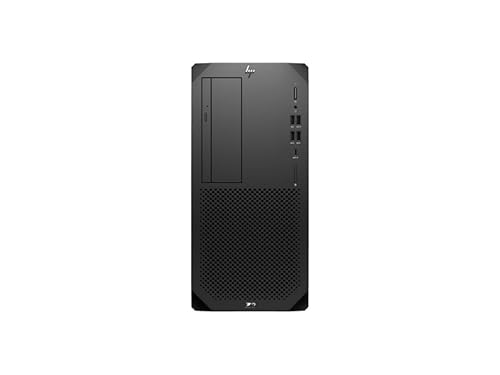
- Core i7-14700K with 20 cores
- NVIDIA T1000 8 GB graphics
- DDR5 memory expandable to 128 GB
Best For: Modern GIS users wanting strong balance and upgrade room
High-Core Value Tower
Dual-CPU RTX 5060 Workstation for GIS

- 36 cores and 72 threads total
- 128 GB RAM with 5 TB storage
- RTX 5060 graphics for stronger visuals
Best For: Users who want maximum cores and storage with a strong GPU
Essential Business Tower

- 20-core Intel Core Ultra 7 performance
- 32GB DDR5 + 1TB SSD
- Up to four FHD or two 4K monitors
Best For: mapping, layers, and office GIS productivity
Refurbished Pro Workstation

- 64GB RAM for large GIS projects
- Quadro P400 with multi-display support
- NVMe SSD boot drive plus 2TB HDD
Best For: large datasets and pro-style mapping workflows
High-Output Workstation

- RTX 5060 8GB dedicated graphics
- Intel Ultra 7-265 with 32GB DDR5
- 1TB PCIe SSD and Windows 11 Pro
Best For: advanced visualization and heavier GIS multitasking
Premium Multitasking Tower
Dell i7-14700 Business Desktop
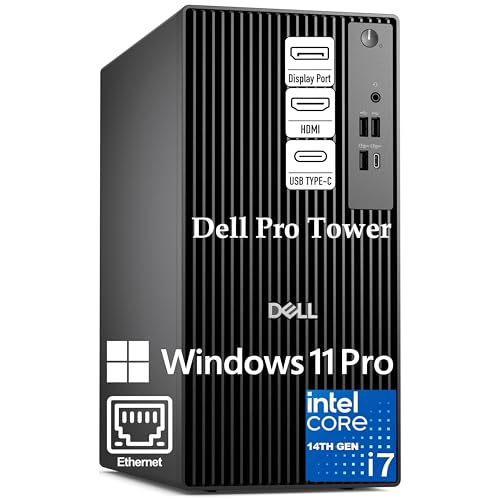
- 20-core Core i7-14700
- 32GB DDR5 + 1TB PCIe SSD
- Dual 4K support for workflows
Best For: GIS professionals needing a secure, high-multitasking tower
Value Office Workhorse

- 14-core Core i5-14500 vPro
- 32GB DDR5 + 1TB PCIe SSD
- Dual 4K monitor support
Best For: GIS users wanting secure, everyday mapping productivity
High-Capacity Business Tower
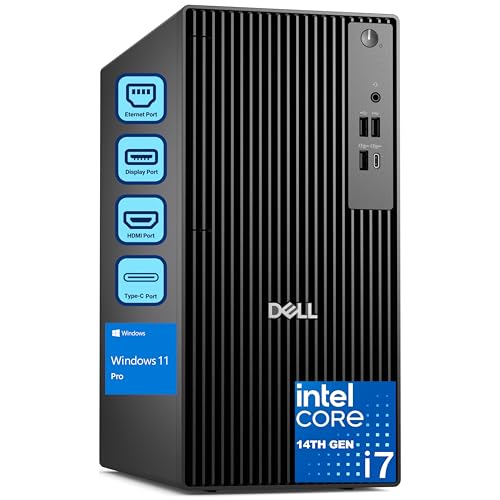
- 20-core Core i7-14700
- 32GB DDR5 and 1TB SSD
- Dual 4K support for GIS layouts
Best For: Professionals needing a business tower for GIS and multitasking
Compact GIS Power – Lenovo ThinkStation P3 Ultra SFF for Mapping Workflows
If you need a workstation computer for GIS mapping that fits a tight office or lab space, the Lenovo ThinkStation P3 Ultra SFF is built around a 20-core Intel Core i7-14700, 64 GB of DDR5 RAM, and a 2 TB PCIe SSD. Its dedicated NVIDIA T400 graphics and multiple DisplayPort outputs make it a practical choice for map viewing, multi-monitor layouts, and everyday geospatial analysis.
Best For: GIS professionals who want a compact, business-class tower with strong CPU speed and enough memory for mapping workloads.
Pros:
- Intel Core i7-14700 with 20 cores and 28 threads for demanding GIS processing
- 64 GB DDR5 RAM and 2 TB SSD for large projects and fast load times
- Dedicated NVIDIA T400 graphics with professional multi-monitor support
- Compact SFF design with Thunderbolt 4, Wi-Fi 6E, and dual Ethernet
Cons:
- T400 graphics are more focused on stability than heavy 3D acceleration
- Small-form-factor design may limit internal expansion compared with larger towers
This is a well-balanced option if your GIS work prioritizes responsiveness, reliable business hardware, and a smaller footprint over high-end graphics horsepower.
Dual-Xeon Heavy Lifter – HP Z8 G4 Renewed Workstation for Mapping
HP Z8 G4 2X Gold 5122 4C 3.6Ghz 96GB RAM 1TB SSD Quadro P600 Windows 11 (Renewed)
Check Price On AmazonFor a workstation computer for GIS mapping that emphasizes raw multitasking and legacy pro hardware, the renewed HP Z8 G4 brings dual Xeon Gold 5122 processors, 96 GB of ECC DDR4 RAM, and a 1 TB SSD. The included NVIDIA Quadro P600 is a modest professional GPU, but the platform is built to handle demanding business workloads with strong core count, large memory, and plenty of connectivity.
Best For: Users who want a high-memory, dual-processor tower for data-heavy GIS tasks and general workstation use.
Pros:
- Dual Intel Xeon Gold 5122 CPUs for strong parallel processing
- 96 GB ECC DDR4 RAM for stable multitasking and large datasets
- 1 TB SSD for quick boot and project access
- Professional NVIDIA Quadro P600 graphics and many ports, including DisplayPort and HDMI
Cons:
- Renewed unit, so condition and longevity depend on the refurbisher
- Quadro P600 has only 2 GB of VRAM, which is limited for graphics-heavy GIS work
If your mapping workflow is more about memory, processing, and dependable workstation design than cutting-edge graphics performance, the Z8 G4 still has plenty to offer.
Balanced Pro Tower – HP Z2 G9 for GIS Mapping and Analysis
The HP Z2 G9 is a practical workstation computer for GIS mapping when you want a newer platform with a 14th Gen Intel Core i7-14700K, 32 GB of DDR5 RAM, and a dedicated NVIDIA T1000 8 GB graphics card. With Windows 11 Pro, Intel W680 support, and room to expand memory up to 128 GB, it offers a solid mix of speed, graphics capability, and upgrade potential for mapping and analysis.
Best For: GIS users who want a modern tower with better graphics headroom and future memory expansion.
Pros:
- 14th Gen Core i7-14700K with 20 cores for strong compute performance
- NVIDIA T1000 8 GB graphics for professional display and mapping work
- 32 GB DDR5 RAM with upgrade support up to 128 GB
- Windows 11 Pro and W680 platform for business-focused reliability
Cons:
- 512 GB SSD is smaller than some competing workstation options
- Comes with only one processor, so it is less parallel-heavy than dual-CPU systems
For many GIS buyers, this hits a smart middle ground: enough CPU power for analysis, enough GPU memory for display work, and a modern chassis that leaves room to grow.
High-Core Value Tower – Dual-CPU RTX 5060 Workstation for GIS
If you are comparing a workstation computer for GIS mapping with an emphasis on sheer core count, this dual-CPU tower stands out with 2x E5-2697v4 processors, 128 GB of DDR4 RAM, and a 1 TB SSD plus 4 TB HDD. The RTX 5060 adds far more graphics muscle than many business workstations, which can help with display-heavy workflows and broader creative or technical use alongside GIS.
Best For: Power users who want maximum multitasking, large storage, and a stronger GPU in one system.
Pros:
- Dual CPU setup with 36 cores and 72 threads total
- 128 GB RAM for heavy multitasking and large projects
- RTX 5060 graphics for stronger visual performance than entry-level workstation cards
- 1 TB SSD plus 4 TB HDD for fast storage and large file capacity
Cons:
- Older Xeon platform uses DDR4 and an LGA 1200-era design
- More gaming-focused than traditional pro workstation branding
This is the most aggressive specs-for-the-money option here, especially if your GIS work shares time with rendering, media, or other demanding applications.
Essential Business Tower – Dell Tower Desktop ECT1250
If you need a workstation computer for GIS mapping that stays responsive for everyday analysis, the Dell Tower Desktop ECT1250 offers a strong balance of modern CPU performance, 32GB memory, and simple multi-monitor support. Its integrated Intel UHD graphics are best suited to map viewing, data cleanup, and general GIS workflows rather than heavy 3D rendering.
Best For: GIS users who want a dependable office tower for mapping, layers, and multi-display productivity.
Pros:
- Intel Core Ultra 7-265 processor with 20 cores for fast multitasking
- 32GB DDR5 memory and 1TB SSD for smooth project loading
- Supports up to four FHD monitors or two 4K displays
- Tool-less access makes future upgrades easier
Cons:
- Integrated UHD graphics are not ideal for demanding 3D GIS work
- Windows 11 Home is less business-focused than Pro
- No dedicated GPU included
Overall, this Dell is a practical pick if your GIS work is centered on map editing, data management, and large desktop setups. It looks especially appealing for users who value upgradeability and office-ready reliability over graphics-heavy power.
Refurbished Pro Workstation – HP Z4 G4 Workstation
The HP Z4 G4 is the most workstation-like option here for a workstation computer for GIS mapping, thanks to its Xeon CPU, 64GB memory, and Nvidia Quadro graphics. The mix of a fast NVMe boot drive and large 2TB HDD storage is useful when you need room for GIS datasets, project files, and archived maps.
Best For: GIS professionals who want a more traditional workstation with generous memory and pro-grade graphics support.
Pros:
- 64GB DDR4 memory is well suited to larger datasets and multitasking
- Nvidia Quadro P400 with 3 mini DisplayPorts supports multiple displays
- 512GB NVMe SSD plus 2TB HDD balances speed and storage capacity
- Windows 11 Pro adds a more business-ready software environment
Cons:
- Older Xeon W-2133 platform is not as current as newer CPUs
- Quadro P400 has only 2GB of graphics memory
- Renewed condition may matter to buyers who prefer new hardware
This HP makes sense when your GIS workload benefits more from memory, storage, and dependable pro-workstation features than from the newest processor generation. It is a solid fit for users who run mapping software alongside other desktop tools and want plenty of room for data.
High-Output Workstation – Dell Tower Plus EBT2250
For a workstation computer for GIS mapping that can also handle graphics-heavy extras, the Dell Tower Plus EBT2250 is the strongest performer in this group. Its Intel Ultra 7-265 processor, 32GB DDR5 memory, and GeForce RTX 5060 graphics give it more headroom for demanding visual work, while the 1TB PCIe SSD keeps loading times quick.
Best For: GIS users who want extra graphics power for advanced visualization, multiple displays, and heavier desktop workloads.
Pros:
- GeForce RTX 5060 8GB GDDR7 adds dedicated graphics power
- Intel Ultra 7-265 and 32GB DDR5 support fast multitasking
- 1TB PCIe NVMe SSD and Windows 11 Pro provide a strong daily-use base
- Plenty of display output options, including 3 DisplayPort and 2 HDMI
Cons:
- Higher-end graphics may be more than needed for basic GIS mapping
- Only 32GB memory out of the box, less than some workstation-class rivals
- Specific GIS certification information is not listed
If your mapping work includes heavier visualization, extra monitor flexibility, or other GPU-assisted tasks, this Dell stands out. It offers the best mix of modern CPU power and dedicated graphics performance in the lineup.
Premium Multitasking Tower – Dell i7-14700 Business Desktop
If you need a workstation computer for GIS mapping that can handle large datasets, multiple tools, and dual-display work, this Dell tower is built for serious productivity. The Intel Core i7-14700, 32GB of DDR5 RAM, and 1TB PCIe SSD give you strong headroom for demanding desktop workflows, while dual 4K support helps keep maps, attribute tables, and reference layers visible at once.
Best For: GIS professionals who want a fast business tower for heavy multitasking, dual 4K workflows, and secure Windows 11 Pro use.
Pros:
- 20-core Intel Core i7-14700 is designed for heavy multitasking and data-intensive work
- 32GB DDR5 RAM and 1TB PCIe SSD support fast launches and responsive project handling
- Dual 4K display support is useful for multi-window mapping and analysis setups
- Windows 11 Pro adds BitLocker and remote desktop features for business use
Cons:
- No built-in Wi-Fi, so wired Ethernet or a separate adapter is needed
- Integrated graphics only, which is fine for GIS productivity but not for GPU-heavy rendering
This is a strong fit if your GIS work depends more on CPU speed, memory, and screen space than on discrete graphics. It looks especially practical for office-based mapping workflows where stability and multitasking matter most.
Value Office Workhorse – Dell Pro Tower i5 vPro
This Dell Pro Tower is a practical workstation computer for GIS mapping if your day is centered on office productivity, moderate analysis, and tidy multi-monitor layouts. The Core i5-14500 vPro, 32GB DDR5 memory, and 1TB PCIe SSD are aimed at smooth everyday performance, while dual 4K support makes it easier to keep maps and supporting documents open side by side.
Best For: GIS users who want a business-ready desktop for everyday mapping, secure office work, and dual-monitor productivity.
Pros:
- 14-core Core i5-14500 vPro offers business-grade processing with hardware-based security
- 32GB DDR5 and 1TB PCIe SSD support quick loading and responsive multitasking
- Intel UHD 770 can drive two 4K displays for extended workspace
- Windows 11 Pro with vPro features suits managed office environments
Cons:
- Notes list integrated graphics, so it is not intended for graphics-intensive GIS visualization
- No built-in Wi-Fi mentioned, so wired networking may be required
For GIS work that leans more toward map production, tabular analysis, and general office productivity, this tower offers a balanced spec sheet. It is a sensible pick when you want dependable business features without moving up to a more expensive i7 system.
High-Capacity Business Tower – Dell i7 Next Gen Pro Tower
If you are shopping for a workstation computer for GIS mapping with extra room for demanding projects, this Dell Pro Tower stands out for its i7-14700 processor, 32GB of DDR5 RAM, and 1TB SSD. It is positioned as a business-class desktop for data-heavy tasks, and its dual 4K display support makes it easier to manage maps, layers, and other reference windows at the same time.
Best For: Professionals who want a business tower for GIS mapping, large multitasking workloads, and dual 4K desktop setups.
Pros:
- 20-core Intel Core i7-14700 handles demanding multitasking and data-intensive applications
- 32GB DDR5 RAM and 1TB PCIe SSD support fast, responsive project work
- Dual 4K display support is useful for side-by-side GIS mapping workflows
- Windows 11 Pro adds enterprise security and remote desktop capability
Cons:
- Built-in Wi-Fi is not included according to the notes
- Integrated Intel UHD Graphics 770 is not a substitute for discrete GPU power
This model makes the most sense for GIS users who value strong CPU performance and a roomy multi-monitor environment over specialized graphics hardware. It is a solid fit for professional offices, especially where reliability and business management matter.
How We Picked the Best Workstation Computer for GIS Mapping
We looked for systems that are well suited to GIS workloads, with an emphasis on high-core-count processors, at least 32GB of RAM, fast NVMe storage, and enough GPU capability for smooth map display and 2D/3D visualization. We also favored business-class towers and workstations with upgrade potential, because GIS needs often grow over time.
Quick Comparison: What Matters Most
For most buyers, the biggest differences come down to CPU performance, memory headroom, graphics power, and storage size. A Workstation Computer for GIS Mapping used for everyday desktop GIS can often get by with 32GB RAM and integrated or entry-level discrete graphics, while larger geospatial datasets and 3D scenes benefit from 64GB or more and a stronger GPU. If you work with many layers, imagery, or remote-sensing data, faster SSD capacity matters just as much as raw processor speed.
Key Buying Factors for a Workstation Computer for GIS Mapping
Processor
GIS applications benefit from strong single-core performance for responsiveness, but many tasks such as geoprocessing, raster analysis, and batch work also scale with more cores. Recent Intel Core i7 and Ultra processors are a strong fit for mixed GIS workloads, while Xeon platforms can still make sense for buyers who want ECC support and proven workstation stability.
Memory
RAM is one of the most important upgrades for GIS. 32GB is a practical starting point, 64GB is better for larger projects, and 96GB or more is helpful when handling massive datasets, imagery, or multiple applications at once.
Graphics
Not every GIS user needs a high-end GPU, but dedicated graphics can improve viewport performance and help with 3D mapping, CAD-style overlays, and multi-monitor setups. Entry-level professional cards are often enough for standard mapping, while stronger cards are better for advanced visualization.
Storage
Fast NVMe SSDs reduce load times and make working with large project files much smoother. A 1TB drive is a sensible baseline, but 2TB or a dual-drive setup is preferable if you store local imagery, basemaps, or extensive project archives.
Expandability and Reliability
Look for towers with room to add RAM, storage, and expansion cards. A Workstation Computer for GIS Mapping should be built to stay useful for several years, not just perform well on day one.
Who Should Buy Which Workstation Computer for GIS Mapping?
If you do light to moderate GIS work, a 32GB tower with a fast modern CPU and solid SSD is usually enough. Power users working with complex layers, 3D scenes, or large raster datasets should prioritize 64GB-plus memory and a dedicated GPU. If you want the safest long-term choice, pick a business workstation with better upgrade options and a stronger warranty path.
In short, the best choice depends on whether your daily work centers on speed, capacity, graphics, or long-term reliability. Match the machine to your actual project size, and you’ll get better performance without overspending.