
A mini PC can free up desk space without giving up a capable desktop recording setup. The right choice depends less on flashy specifications than on your projects, audio interface, plug-ins, and tolerance for fan noise.
These 10 options span entry-level recording machines and stronger choices for larger sessions. Use the guide below to narrow them down by the specifications that matter in a studio.
Best 10 Mini PC for Music Production Picks for 2026
Best for Larger Sessions

- 8-core, 16-thread Ryzen 7
- 24GB onboard LPDDR5 RAM
- Two M.2 slots for storage
Best For: Producers wanting more out-of-box processing and memory headroom
Best for Peripheral-Heavy Desks
- Six USB 3.2 Type-A ports
- Built-in power supply
- 16GB non-expandable memory
Best For: Modest DAW setups with several wired accessories
Best for an Upgradable Studio PC
- 8-core Ryzen 7 6800H
- DDR5 RAM upgradable to 64GB
- 1TB PCIe 4.0 SSD included
Best For: Growing studios that prioritize memory upgrades and storage
Flexible Starter Setup
- Core i7-1185G7 and 16GB DDR4
- Memory expandable to 64GB
- 512GB NVMe plus SATA expansion option
Best For: Compact home setups with planned storage upgrades
Memory-Ready Multitasker

- Eight-core, 16-thread Ryzen 7
- 32GB RAM preinstalled
- Two USB-C and five USB 3.2 ports
Best For: Producers wanting more RAM from the start
Roomier Sample Storage

- Core i7-1185G7 with 16GB DDR4
- 1TB NVMe SSD included
- RAM expandable to 64GB
Best For: Home studios wanting more included storage
Best for Expandability

- 8-core, 16-thread Ryzen 7
- 16GB RAM; expandable to 64GB
- Multiple storage and display options
Best For: Upgrade-minded home-studio producers
Best Compact Starter Setup

- 4-core Ryzen 5 processor
- 16GB RAM and 512GB SSD
- Expandable RAM and dual M.2 slots
Best For: Beginners building a compact studio PC
Best for Larger Sessions – ACEMAGIC K1 Ryzen 7 7735HS
If you need a mini pc for music production with room for plugins and multitasking, this ACEMAGIC K1 pairs an eight-core Ryzen 7 7735HS with 24GB of onboard LPDDR5 memory. Its compact case also leaves more desk space for an audio interface and controller.
Best For: Producers who want more processing headroom and memory out of the box in a compact Windows 11 Pro PC.
Pros:
- Eight cores and 16 threads provide useful headroom for demanding projects.
- 24GB LPDDR5 memory supports multitasking without an immediate RAM upgrade.
- Two M.2 2280 slots allow storage expansion beyond the included 512GB SSD.
Cons:
- Onboard memory is not presented as upgradable.
- 512GB of included storage may fill quickly with large sample libraries.
The Ryzen 7 processor and included memory make this a strong compact starting point. Plan for an additional SSD if your sample collection is large, and confirm compatibility with your audio interface before buying.
Best for a Compact Starter Setup – KAMRUI Pinova P2 Ryzen 7330U
The KAMRUI Pinova P2 is a mini pc for music production if your projects are modest and desk space is tight. Its four-core, eight-thread Ryzen 7330U and 16GB of LPDDR4X memory suit a starter DAW setup, while the small chassis can sit on a desk or use the included VESA mount.
Best For: Beginners building a compact setup for lighter recording, editing, and mixing projects.
Pros:
- Four cores and eight threads give a starter setup multitasking capacity.
- Two M.2 storage slots provide a path to more project and sample space.
- USB 3.2 Gen2 Type-A and Type-C ports offer options for connecting peripherals.
Cons:
- The included 256GB SSD is small for a growing sample library.
- Four CPU cores offer less headroom for demanding sessions than the eight-core options here.
This is the space-saving pick for lighter work, especially if you expect to add storage. Check your audio interface’s port and driver requirements before committing to a setup.
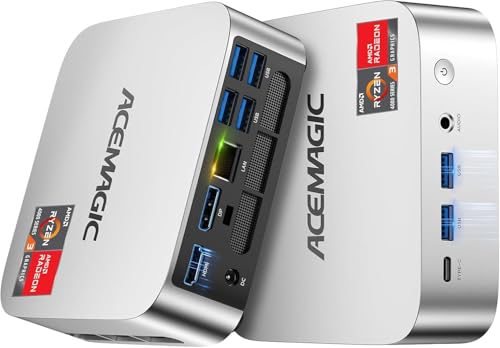
Best for Peripheral-Heavy Desks – ACEMAGIC K1 Ryzen 7330U
If your mini pc for music production needs to connect several USB accessories, this ACEMAGIC K1 stands out with six USB 3.2 Type-A ports plus a Type-C port. Its Ryzen 7330U, 16GB of memory, and Windows 11 Pro provide a compact base for lighter DAW projects.
Best For: Small recording desks with multiple USB peripherals and modest project demands.
Pros:
- Six USB Type-A ports help accommodate controllers and other wired accessories.
- A built-in power supply avoids a separate external power adapter.
- M.2 storage can be expanded beyond the included 256GB SSD.
Cons:
- The 16GB LPDDR4 memory is non-expandable.
- 256GB of included SSD storage leaves limited room for large libraries.
Choose this model for its port layout rather than maximum session headroom. Check that your audio interface works with its available USB connections, and budget for more storage if you use many samples.
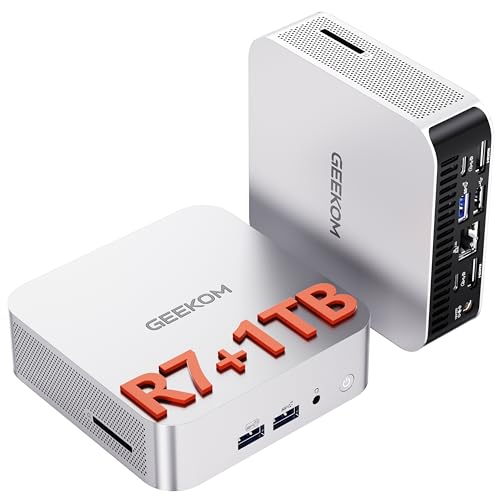
Best for an Upgradable Studio PC – GEEKOM A6 Ryzen 7 6800H
The GEEKOM A6 is a mini pc for music production worth considering if you want a capable starting configuration with room to grow. It combines an eight-core Ryzen 7 6800H, 16GB of DDR5 memory, and a 1TB PCIe 4.0 SSD; unlike the onboard-memory options here, its dual-slot RAM is upgradable.
Best For: Producers who expect their projects and sample libraries to grow and want an upgradable compact PC.
Pros:
- Eight-core Ryzen 7 6800H provides headroom for demanding multitasking.
- Dual-slot DDR5 memory can be upgraded up to 64GB.
- Included 1TB SSD offers more initial storage than the other models in this roundup.
- USB4 adds a high-speed connection option for compatible devices.
Cons:
- Its 16GB starting memory may still warrant an upgrade for particularly large projects.
- USB4 support alone does not establish compatibility with every audio interface.
The upgradable RAM and larger included SSD make this the most flexible choice here for a growing studio. Confirm your interface’s connection and driver requirements, particularly if you plan to use USB4.
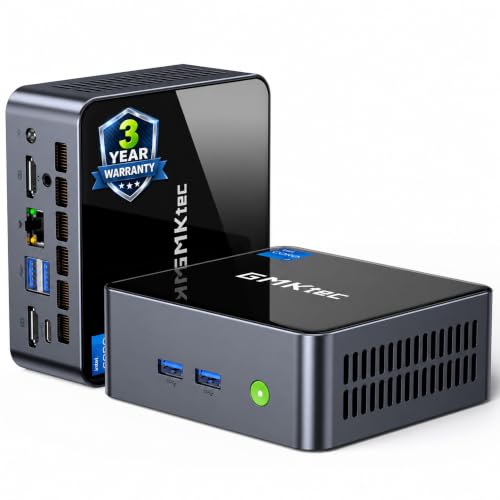
Flexible Starter Setup – GMKtec M2 Pro S 16GB/512GB
If you want a mini pc for music production that leaves room for future upgrades, this GMKtec pairs a Core i7-1185G7 with 16GB of DDR4 memory and a 512GB NVMe SSD. Its compact case helps keep a desk clear for a keyboard, interface, and monitors.
Best For: Home producers who want a compact starting setup with expandable memory and storage.
Pros:
- 16GB dual-channel DDR4 is expandable to 64GB.
- 512GB NVMe SSD can be upgraded, with an additional M.2 2242 SATA expansion option.
- USB4, Wi-Fi 6, 2.5G Ethernet, and three display outputs offer flexible connections.
Cons:
- The included 512GB drive may fill quickly with large sample libraries.
- The supplied specifications do not establish audio-interface compatibility or recording noise levels.
This is the smaller-storage choice of the two listed GMKtec i7 systems; pick it if you expect to add storage later rather than needing 1TB immediately.
Memory-Ready Multitasker – GEEKOM A7 Ryzen 7 7730U
The GEEKOM A7 is a mini pc for music production worth considering when you keep several applications open alongside your recording software. Its Ryzen 7 7730U has eight cores and 16 threads, and the included 32GB of RAM gives larger projects more starting headroom than the 16GB configurations here.
Best For: Producers who prioritize preinstalled memory, multiple peripherals, and a compact workspace.
Pros:
- Comes with 32GB RAM and a 500GB PCIe Gen4 x4 SSD; both are expandable.
- Two USB-C ports, five USB 3.2 ports, and 2.5G Ethernet provide connection options.
- Listed 15W TDP and a cooling system advertised at 36dB suit an efficiency-minded setup.
Cons:
- The included 500GB SSD may require an upgrade for extensive audio projects and sample libraries.
- The advertised cooling-noise figure does not guarantee silence in a recording room.
Its standout advantage is the 32GB already installed. Check your audio interface’s connection and operating-system requirements before choosing any mini PC for a studio.
Roomier Sample Storage – GMKtec M2 Pro S 16GB/1TB
For a mini pc for music production with more built-in storage, this GMKtec M2 Pro S combines a Core i7-1185G7, 16GB DDR4, and a 1TB NVMe SSD. The larger included drive gives project files and sample libraries more room than the 512GB configurations in this roundup.
Best For: Home studios that want 1TB of included storage in a compact PC.
Pros:
- 1TB NVMe SSD offers more starting capacity for projects and samples.
- 16GB dual-channel DDR4 supports expansion to 64GB.
- Two HDMI outputs and a USB-C display output support a three-screen workspace.
Cons:
- 16GB of included RAM is less than the GEEKOM A7’s 32GB.
- The supplied notes do not specify studio noise measurements or audio-interface compatibility.
Choose this configuration over the 512GB GMKtec when included drive space matters more than minimizing initial storage. Its listed M.2 expansion options leave room for further upgrades.
Best for Expandability – GEEKOM A5 Ryzen 7 7730U
The GEEKOM A5 is a mini pc for music production if you want an eight-core, 16-thread processor and room to grow your sample library. It starts with 16GB of RAM and a 500GB SSD, with additional memory and storage options listed by GEEKOM.
Best For: Producers who want an upgradeable home-studio computer with multiple display outputs.
Pros:
- Ryzen 7 7730U offers eight cores and 16 threads for multitasking.
- Dual RAM slots support up to 64GB; additional SATA storage options provide expansion.
- Dual HDMI and dual USB-C display connections support a multi-monitor workspace.
- Includes 2.5GbE Ethernet and a three-year limited warranty.
Cons:
- Its 500GB included SSD may fill quickly with large sample libraries.
- Extra RAM or storage must be purchased separately.
The A5 makes the most sense if you plan to expand memory or storage over time. Its connectivity is useful for a multi-screen setup, though the supplied specifications do not establish audio-interface compatibility or recording latency.
Best Ready-to-Use Capacity – GMKtec K15 Core Ultra 5
The GMKtec K15 is a mini pc for music production buyers who would rather start with 32GB of DDR5 memory and a 1TB SSD than upgrade immediately. Its Core Ultra 5 125U has 12 cores and 16 threads, making this a practical specification set for juggling a DAW and other applications.
Best For: Producers who want more RAM and storage installed from the outset.
Pros:
- Comes with 32GB DDR5 RAM and a 1TB PCIe 4.0 SSD.
- Three M.2 2280 slots provide room for storage expansion.
- Offers multiple display connections and 2.5GbE Ethernet.
Cons:
- Its one-year limited warranty is shorter than the GEEKOM A5’s listed coverage.
- The supplied notes do not verify recording noise levels or audio-interface performance.
The installed memory and storage are the K15’s clearest advantages for a growing project and sample collection. Do not choose it for the advertised AI or graphics features alone; those are not substitutes for confirmed DAW and interface compatibility.
Best Compact Starter Setup – GMKtec G10 Ryzen 5 3500U
The GMKtec G10 is a mini pc for music production beginners whose projects can start with 16GB of RAM and a 512GB SSD. Its Ryzen 5 3500U is a four-core processor, so this is a more modest starting point than the eight-core GEEKOM A5 or the higher-memory K15.
Best For: Small home-studio setups with lighter projects and a clear upgrade path.
Pros:
- Includes 16GB dual-channel RAM and a 512GB SSD.
- RAM can be expanded, and a second M.2 slot allows additional SSD storage.
- Supports three displays and has 2.5GbE Ethernet.
- Supports USB-C PD power with a suitable 65–70W charger.
Cons:
- The four-core Ryzen 5 3500U is a less ambitious choice for demanding sessions.
- 512GB of included storage may require expansion for a large sample library.
Choose the G10 for a compact starting setup rather than assuming it will handle every large session. Its upgrade options help, but the supplied specifications do not confirm DAW performance, interface compatibility, or low-latency recording.
How We Picked the Best Mini PC for Music Production
We compared the listed processor, memory, storage, and connectivity details against common music-production tasks: tracking audio, running software instruments, and mixing with plug-ins. We favored configurations with at least 16GB of RAM and considered 32GB especially useful for sample-heavy sessions. Advertised boost speeds and marketing labels were not treated as guarantees of sustained performance. We did not independently test audio latency, fan noise, or hardware compatibility, so check those details before purchasing.
Quick Comparison: Which Specs Matter Most?
For lighter recording and editing, the Ryzen 5 3500U-based GMKtec G10 and Ryzen 7330U-based KAMRUI Pinova P2 or ACEMAGIC K1 are reasonable starting points. The Ryzen 7 7730U-based GEEKOM A7 offers 32GB of included RAM for projects that use more samples, while the GEEKOM A5 lists 16GB. For buyers prioritizing processor headroom, compare the Ryzen 7 7735HS ACEMAGIC K1 and Ryzen 7 6800H GEEKOM A6. The GMKtec K15 pairs an Intel Core Ultra 5 125U with 32GB of DDR5 RAM and a 1TB SSD. The two listed GMKtec Core i7-1185G7 configurations deserve a closer look at their actual memory, storage, and ports before choosing between them.
Key Buying Factors for a Mini PC for Music Production
CPU and Project Size
Dense mixes, virtual instruments, and low-buffer recording can stress a processor. Core count matters, but cooling and sustained performance matter too: a brief turbo-frequency claim cannot tell you how a mini PC behaves through a long session. If you regularly use demanding synths or effects, budget for more CPU headroom than your current projects require.
RAM and Storage
Start with 16GB for modest sessions; consider 32GB for large sample libraries or extensive multitasking. Check whether RAM is upgradeable rather than assuming it is. A 256GB SSD can fill quickly once you add a DAW, plug-ins, and libraries. A 1TB drive is more convenient, while an external SSD is a practical option for project files and samples.
Ports, Compatibility, and Noise
Confirm that the PC has the USB ports your audio interface, MIDI controllers, and storage need; check the exact USB standard if an interface requires one. Verify your DAW, plug-ins, and interface drivers support the installed operating system. Finally, look for trustworthy reports of fan behavior. A compact computer that gets loud under load may be distracting near a microphone.
Who Should Buy Which Mini PC for Music Production?
Choose a 16GB Ryzen 7330U or Ryzen 5 3500U configuration for basic recording if the price and port selection work for you. Look at the 32GB GEEKOM A7 or GMKtec K15 when memory capacity is the priority. Consider the Ryzen 7 7735HS ACEMAGIC K1 or Ryzen 7 6800H GEEKOM A6 for more demanding processing, after checking cooling and noise reports. Whatever you choose, match its ports to your existing studio gear before ordering.