
Starting with a synthesizer does not have to mean learning complex menus, advanced music theory, or studio production software. The best synthesizers for beginners make it easy to explore tones, play melodies, and understand how sound changes as you experiment.
We’ve rounded up 10 approachable options, including compact keyboard controllers, standalone instruments, ribbon synths, and unusual electronic instruments. Whether you want a practical first keyboard or a fun portable gadget, this list highlights the features that matter most when you’re learning.
Best 10 Synthesizers for Beginners Picks for 2026
Portable Sound Explorer

- Analog physical-modeling engine with multiple sound options
- 37 responsive mini keys and 8-note polyphony
- Built-in speakers, looper, USB MIDI, and battery power
Best For: Portable, hands-on synthesis practice
Standalone Beat Starter

- Built-in sounds, speaker, and battery-powered standalone operation
- 25 velocity-sensitive keys, eight MPC pads, and arpeggiator
- Includes MPC Beats, instruments, and Melodics lessons
Best For: Portable keyboard and beat-making practice
Compact Analog Experimenter

- Lightweight analog ribbon-synth design
- Simple controls for quick sound exploration
- Includes a case and auxiliary connectivity
Best For: Portable analog sound experiments
Computer Production Hub

- USB MIDI controller for virtual synthesizers and DAWs
- 25 velocity-sensitive keys, pads, knobs, and arpeggiator
- Includes MPC Beats, virtual instruments, and sound content
Best For: Computer-based synth and beat production
Compact Bowie Pick
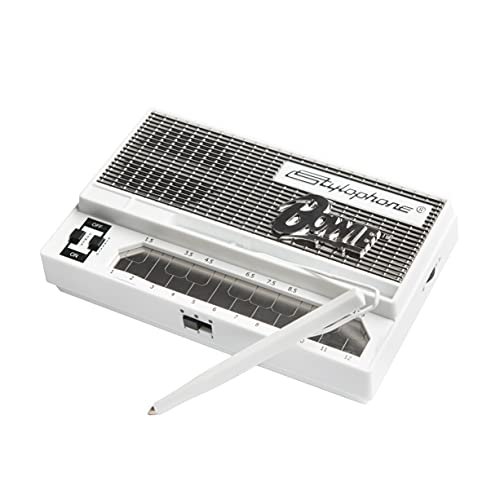
- Stylus-based interface is easy to approach
- Battery-powered and highly portable
- Three modes for analog and bass sounds
Best For: Bowie fans and beginners wanting simple, portable sound exploration
Versatile Controller Pick

- 37 keys cover three full octaves
- Pads, knobs, scales, and chords aid learning
- USB, MIDI, and CV/Gate connectivity
Best For: Beginners creating music with a DAW and expandable gear
Guided Theremin Pick

- Adjustable pitch correction supports beginners
- Built-in tuner and speaker aid practice
- 32 presets provide varied Moog-style tones
Best For: Beginners exploring expressive, hands-free electronic performance
Best Pocket Pick

- Easy stylus-based playing
- Three-octave vintage sound
- Pocket-sized and battery-powered
Best For: Beginners seeking a fun, portable first synthesizer
Best for Chord Exploration
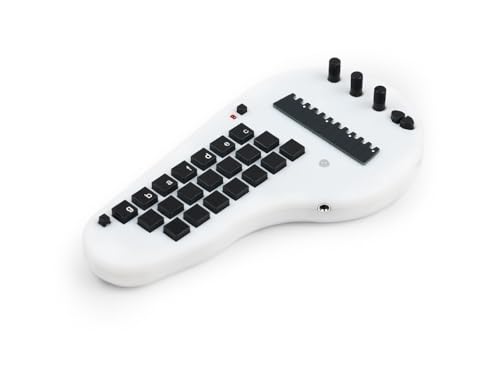
- Chord buttons simplify harmony
- Expressive harp-style touch zone
- USB MIDI and open-source design
Best For: Beginners exploring chords and experimental MIDI performance
Best Feature-Rich Option

- Six-operator FM synthesis
- 128 presets and onboard effects
- Portable with versatile MIDI
Best For: Beginners wanting a capable synth for production and performance
Portable Sound Explorer – Yamaha REFACE CS
The Yamaha REFACE CS is a strong choice for beginners seeking synthesizers for beginners with hands-on sound design and a traditional keyboard feel. Its analog physical-modeling engine offers multiple synthesis and oscillator types, while the compact 37-key layout, built-in speakers, and battery operation make it practical for learning and playing away from a studio.
Best For: Beginners who want a portable synthesizer with expressive keys, customizable sounds, and room to grow into more advanced synthesis.
Pros:
- Analog physical-modeling engine with multiple synthesis and oscillator types
- 37-key mini keyboard with a premium feel and responsive performance
- 8-note polyphony supports chords and pads, while mono mode suits bass and lead sounds
- Built-in speakers, phrase looper, USB MIDI, and battery power support portable use
Cons:
- Its 6-pound, nearly 30-inch design is less compact than mini controllers
- Advanced sound-shaping options may take time for complete beginners to learn
The REFACE CS balances approachable portability with meaningful synthesis control. It is a particularly well-rounded option if you want to practice without a computer and still have enough polyphony and tonal flexibility for developing musical ideas.
Standalone Beat Starter – Akai MPK Mini Play MK3
The Akai MPK Mini Play MK3 is a practical entry point for synthesizers for beginners who also want beat-making controls. It combines 25 velocity-sensitive keys, built-in sounds, a speaker, MPC-style pads, an arpeggiator, and USB MIDI, so new players can experiment with melodies, drums, and software production from one compact unit.
Best For: Beginners who want an all-in-one portable keyboard for learning melodies, programming beats, and starting computer-based music production.
Pros:
- Over 100 internal drum and instrument sounds for standalone practice
- 25 dynamic keys, eight velocity-sensitive MPC pads, OLED display, and four knobs
- Built-in speaker and battery operation make it easy to use away from a desk
- Includes MPC Beats, AIR Music Tech instruments, Melodics lessons, and other software
Cons:
- Its 25-key layout offers less range than a larger keyboard
- Batteries are not included
- It is a MIDI controller and standalone instrument, but the compact controls may feel limited for complex arrangements
The MPK Mini Play MK3 is especially approachable for beginners who want immediate sounds without setting up a computer. Its combination of internal instruments, pads, and included learning software makes it a versatile first step into keyboards and beat production.
Compact Analog Experimenter – Korg monotron DUO
The Korg monotron DUO is a tiny, lightweight option for beginners exploring synthesizers for beginners through simple, direct sound shaping. Its analog design and compact ribbon-synth format emphasize experimentation and portability, making it suited to quick creative sessions rather than full keyboard performance.
Best For: Beginners who want an inexpensive-feeling, highly portable way to explore analog-style modulation and sound adjustment.
Pros:
- Compact and lightweight design at 6.4 ounces
- Analog sound profile for hands-on sonic experimentation
- Simple interface supports quick adjustments and creative exploration
- Includes a case and provides auxiliary connectivity
Cons:
- Its compact ribbon-synth format is less suitable for traditional chord playing
- It offers fewer performance controls than a full keyboard synthesizer
- The supplied notes identify it as a monotron DUO accessory-style product, so buyers should confirm the exact configuration before ordering
The monotron DUO is best viewed as a compact sound-design tool rather than a complete beginner keyboard. Choose it if portability, analog character, and experimental control matter more than conventional keys and broad arrangement features.
Computer Production Hub – Akai MPK Mini MK3
The Akai MPK Mini MK3 suits beginners looking for synthesizers for beginners who plan to use virtual instruments and a computer. It is a USB-powered MIDI controller with 25 velocity-sensitive keys, a pitch-and-modulation thumbstick, an arpeggiator, pads, and assignable knobs for controlling synth plugins and music software.
Best For: Beginners building a computer-based setup for virtual synthesizers, beat production, and learning MIDI control.
Pros:
- 25 velocity-sensitive mini keys with pitch and modulation control
- Eight MPC-style pads support drum programming, samples, and DAW control
- Eight assignable knobs make it easy to adjust virtual synth and effect parameters
- Includes MPC Beats, three virtual instruments, 2GB of sound content, and production software
Cons:
- It requires a USB-compatible computer and does not include built-in sounds or a speaker
- Its 25-key range is limited for two-handed performance
- Learning MIDI mapping and software integration may take some initial setup
The MPK Mini MK3 is a focused controller rather than a standalone synthesizer. It is a good starting point for beginners who want to learn virtual instruments and beat production, especially when compact size and hands-on plugin control are priorities.
Compact Bowie Pick – Bowie Stylophone
The Bowie Stylophone is a fun entry point for anyone exploring synthesizers for beginners. Its compact, battery-powered design, simple stylus interface, and three modes make it easy to experiment with classic analog and bass sounds without a full studio setup.
Best For: Beginners, Bowie fans, and portable sound experiments.
Pros:
- Simple stylus-based interface is approachable for first-time players.
- Compact, battery-powered design is easy to take anywhere.
- Three modes provide classic analog synth and bass sounds.
- Limited-edition white design includes an embossed Bowie logo.
Cons:
- Its compact design offers fewer controls than a full-size synthesizer.
- Best suited to simple sound exploration rather than extensive production.
The Bowie Stylophone stands out as a distinctive, low-barrier introduction to electronic sound. Choose it if portability, simplicity, and character matter more than advanced sequencing or keyboard control.
Versatile Controller Pick – Akai MPK Mini Plus
The Akai Professional MPK Mini Plus is a strong choice for synthesizers for beginners who want to learn through a computer-based setup. Its 37-key layout covers three octaves, while pads, knobs, scales, chords, and DAW controls provide room to build practical production skills.
Best For: Beginners building a DAW-based music production setup.
Pros:
- 37 velocity-sensitive keys provide three full octaves for melodic playing.
- Eight RGB MPC pads, eight assignable knobs, and transport controls support hands-on production.
- Built-in 64-step sequencer supports drum and melody or chord tracks without a computer.
- USB, MIDI, and CV/Gate connectivity supports computers, sound modules, and modular gear.
Cons:
- It is a MIDI controller, so it requires compatible sound sources or software for most sounds.
- Its broad feature set may take longer for a complete beginner to learn.
- USB connectivity is limited to one USB port.
The MPK Mini Plus offers a more expandable learning path than a standalone novelty instrument. It is particularly suitable if you plan to use a DAW, explore software instruments, or eventually connect external synthesizers and modular equipment.
Guided Theremin Pick – Moog Theremini
The Moog Theremini gives beginners a distinctive way to explore synthesizers for beginners through gesture rather than keys. Assistive pitch correction, a built-in tuner, LCD feedback, and 32 presets make its unusual playing style easier to approach and practice.
Best For: Beginners interested in hands-free performance and expressive electronic sounds.
Pros:
- Adjustable pitch correction helps beginners control playing difficulty.
- Built-in tuner and LCD provide real-time visual pitch feedback.
- Thirty-two wave- or wavetable-based presets offer varied tones.
- Built-in speaker, headphone jack, CV output, and mini USB support flexible practice and connection options.
Cons:
- The corded-electric design is less portable than a battery-powered instrument.
- Its gesture-based technique differs from a conventional keyboard and requires practice.
- Advanced connectivity and editor features may be more than some casual beginners need.
The Theremini is a compelling beginner option for players who want an unconventional instrument with built-in guidance. Its pitch correction and tuner reduce the initial barrier, while presets and connection options leave room for continued experimentation.
Best Pocket Pick – Stylophone Original
The Stylophone is an approachable choice for anyone looking for synthesizers for beginners. Its touch-sensitive metal surface, connected stylus, three-octave range, and simple controls make it easy to start experimenting without a traditional keyboard layout.
Best For: Beginners who want a compact, playful instrument for learning basic melodies and vintage electronic sounds.
Pros:
- Simple stylus-based playing method is easy to learn.
- Compact, pocket-friendly design with built-in speaker and headphone output.
- Offers three octaves, optional vibrato, and an iconic analog sound.
- Can connect to a computer or other gear through its auxiliary connection.
Cons:
- Runs on three AA batteries.
- The small touch surface may feel limited for players seeking a conventional keyboard.
With its low-friction interface and portable design, the Stylophone is a strong starting point for casual practice, experimentation, or a beginner’s first taste of synthesis.
Best for Chord Exploration – Minichord Synthesizer
The Minichord offers a different entry point into synthesizers for beginners by emphasizing chords and touch performance instead of a conventional keyboard. Its chord buttons and divided harp touch zone let new players create harmonies and melodies with relatively simple gestures.
Best For: Beginners interested in chord-based composition, experimental performance, and computer-connected music making.
Pros:
- Twenty-one chord buttons support major, minor, and seventh chords.
- Twelve-section harp touch zone provides an expressive way to trigger notes.
- Includes 12 presets and supports custom presets.
- USB MIDI support works with music software, while the open-source design allows customization.
Cons:
- Its unconventional layout may require adjustment for players expecting piano-style keys.
- The supplied notes do not specify built-in speakers or battery operation.
The Minichord is particularly appealing if your goal is to understand harmony through hands-on experimentation, though its open-source and MIDI-focused features may be more useful as your skills develop.
Best Feature-Rich Option – M-VAVE FM-1
The M-VAVE FM-1 is a more advanced option among synthesizers for beginners, pairing an accessible color display and physical controls with a six-operator FM engine. Its presets and onboard production tools provide an immediate way to explore sounds while leaving room for deeper sound design.
Best For: Beginners who want portable FM synthesis with presets, sequencing, effects, and MIDI connectivity for guitar rigs or DAWs.
Pros:
- Includes 128 factory presets, 32 FM algorithms, and FM SysEx import.
- Built-in arpeggiator, 16-step sequencer, and six effects support hands-on production.
- Offers USB-C, Bluetooth BLE MIDI, and 3.5mm MIDI connectivity.
- Portable, rechargeable design provides up to 12 hours of play and includes a color TFT display.
Cons:
- The six-operator FM engine and broad feature set may be more complex than a first-time player needs.
- The 27-key silicone keyboard may not feel like a traditional keyboard.
Choose the FM-1 if you want a beginner-friendly interface without outgrowing the instrument quickly. Its presets make starting easy, while sequencing, effects, and multiple MIDI options support more ambitious setups.
How We Picked These Synthesizers for Beginners
We selected instruments that offer an accessible entry point into synthesis, prioritizing straightforward controls, useful portability, and a clear reason to choose each model. The lineup includes both standalone synthesizers that can make sound on their own and MIDI controllers that work best with a computer or mobile device.
We also considered key count, built-in sounds, speaker or headphone options, battery or USB power, hands-on controls, and the type of player each instrument suits. A beginner-friendly choice should encourage experimentation without forcing you to buy a full studio setup immediately.
Quick Comparison
| Best For | Look For |
|---|---|
| Learning classic synthesis | Hands-on knobs, editable oscillators, filters, and envelopes |
| Computer-based music making | USB MIDI, responsive keys, pads, and software compatibility |
| Portable practice | Compact design, battery power, built-in speaker, or headphone output |
| Creative sound effects | Ribbon controls, unusual interfaces, or expressive performance features |
| Playing without extra equipment | Built-in sounds, speakers, and independent audio output |
Key Buying Factors for Synthesizers for Beginners
Standalone or MIDI Controller?
A standalone synthesizer produces sound without another device, which is usually the simplest option for casual practice. A MIDI controller may offer better keys, pads, and software integration, but it generally needs a computer, tablet, or virtual instrument to make sound.
Controls and Learning Curve
Visible knobs and switches help you understand synthesis faster than deep menu systems. Look for controls that let you adjust pitch, filter brightness, modulation, and volume. Presets are useful, but instruments become more educational when you can shape sounds yourself.
Keys, Pads, and Playing Style
Small keyboards are portable, while larger key counts provide more room for two-handed playing. Some compact instruments replace conventional keys with ribbons or alternative controls. These can be fun and expressive, but they may not build traditional keyboard technique as effectively.
Connectivity and Power
Check whether the instrument uses USB, MIDI, audio output, batteries, or an external power adapter. If you plan to record, confirm that the connection fits your setup. A headphone output is particularly useful for quiet practice.
Who Should Buy Which Synthesizers for Beginners?
Choose a portable keyboard synth if you want an all-in-one instrument for learning melodies, tweaking sounds, and practicing away from a computer. This is the most direct route for many first-time players.
Choose a MIDI keyboard if your main goal is producing music with software. A controller with pads and assignable controls can remain useful as your skills grow, but remember to budget for a computer or compatible device and virtual instruments.
Choose a pocket or ribbon synthesizer if portability, novelty, and quick experimentation matter more than traditional keyboard technique. These instruments are excellent for travel, sound effects, and creative play.
Choose an expressive specialty instrument if you are drawn to unusual performance methods and want a distinctive sound. Before buying, make sure its control system matches the way you want to perform, since unconventional instruments can require more practice than their small size suggests.