
A great mini PC for retro gaming should make classic titles easy to launch, smooth to play, and simple to connect to your living room or desk setup.
In this roundup, we focus on compact systems that offer the right mix of CPU power, integrated graphics, storage, and ports for dependable emulation and lightweight gaming.
Best 10 Mini PC for Retro Gaming Picks for 2026
Ultra-Quiet Ryzen Performer
GMKtec M5 Ultra for 4K Multitasking

- Ryzen 7 7730U with 8 cores/16 threads
- 32GB RAM, 512GB SSD, expandable storage
- Triple-display output plus WiFi 6E and 2.5GbE
Best For: Retro gaming fans who want a fast everyday mini PC
Compact Everyday Gamer
KAMRUI E3B for Smooth Emulation

- Ryzen 5 7530U with 6 cores/12 threads
- Radeon Vega 7 and triple 4K display support
- 16GB LPDDR4X RAM, 512GB SSD, USB-C charging/display
Best For: Budget-conscious buyers who want a compact retro-emulation PC
Editor’s Pick

- Ryzen 5 7640HS with Radeon 760M graphics
- 16GB DDR5 and 512GB NVMe with upgrade room
- Dual 2.5GbE, WiFi 6E, BT 5.2, USB4
Best For: Retro gaming, emulation, and light modern gaming
Budget Option
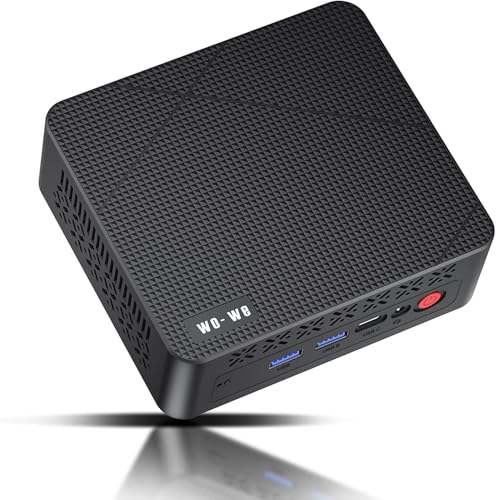
- Ryzen 5 3500U with Vega 8 graphics
- 8GB DDR4 and 256GB NVMe SSD
- Triple 4K output and quiet cooling
Best For: Affordable retro gaming and everyday light use
Storage Champion

- Ryzen 7 7730U with 8 cores and 16 threads
- 1TB NVMe SSD with extra M.2 expansion
- Dual 2.5GbE, WiFi 6E, BT 5.2
Best For: Large retro game libraries and multitasking
Ultra-Quiet Ryzen Performer – GMKtec M5 Ultra for 4K Multitasking
If you want a mini pc for retro gaming that can also handle everyday work, the GMKtec M5 Ultra is a strong all-rounder. Its Ryzen 7 7730U, Radeon integrated graphics, and 32GB of dual-channel RAM make it capable of emulator play, lightweight modern games, and smooth desktop multitasking.
Best For: Retro gaming fans who also want a fast everyday mini PC with strong connectivity.
Pros:
- Ryzen 7 7730U with 8 cores and 16 threads for responsive performance
- 32GB DDR4 RAM and 512GB PCIe SSD included, with room to expand storage
- Triple-display support with HDMI, DP, and USB-C for multi-monitor setups
- 2.5GbE dual LAN plus WiFi 6E and Bluetooth 5.2 for flexible connectivity
Cons:
- Integrated graphics are aimed more at emulation and casual gaming than heavy AAA play
- RAM upgrade support tops out at 64GB, but memory itself is not the key selling point here
Overall, the M5 Ultra is a practical choice if you want a compact system that can do retro gaming well without giving up office-friendly features. It is best treated as a versatile mini PC first, with gaming as a strong secondary strength.
Retro-Inspired Powerhouse – ACEMAGIC Retro X3 with Radeon 780M
The ACEMAGIC Retro X3 is one of the more compelling mini pc for retro gaming picks if you also want modern integrated graphics muscle. With the Ryzen 7 H 255 and Radeon 780M iGPU, it is built for fluid 1080p play in retro emulators, casual titles, and lighter AAA games.
Best For: Gamers who want a retro-styled mini PC with unusually strong integrated graphics.
Pros:
- Radeon 780M graphics are described as strong enough for retro emulators and 1080p gaming
- Ryzen 7 H 255 runs at up to 54W for sustained performance
- 16GB LPDDR5 RAM and 1TB PCIe 4.0 SSD come preinstalled
- USB4, DP 2.0, HDMI 2.1, and triple-display support add a lot of flexibility
Cons:
- Memory is soldered and not upgradeable
- Its premium feature set may be more than you need for simple emulator use
For retro gaming, this model stands out because it pairs a nostalgic design with genuinely modern graphics capability. If you want a compact machine that can handle emulation now and still feel current later, it is a very balanced option.
Compact Everyday Gamer – KAMRUI E3B for Smooth Emulation
If your goal is a mini pc for retro gaming that stays efficient and affordable, the KAMRUI E3B is a sensible pick. Its Ryzen 5 7530U and Radeon Vega 7 graphics should handle emulators, older games, and day-to-day tasks without needing a large desktop tower.
Best For: Budget-conscious buyers who want a compact, efficient retro-emulation PC.
Pros:
- Ryzen 5 7530U offers 6 cores and 12 threads with up to 4.5GHz boost
- Radeon Vega 7 graphics and triple 4K display support help with light gaming and media
- 16GB LPDDR4X RAM and 512GB SSD are included out of the box
- USB-C supports charging, data, and 4K/60Hz display output
Cons:
- RAM is non-upgradeable
- Graphics are suited to retro gaming and lighter titles rather than demanding modern games
The E3B is a practical middle-ground machine: compact, efficient, and equipped well enough for retro libraries and general use. If you mainly want a dependable emulator box with useful ports, it fits the brief nicely.
Budget Retro Starter – wo-we P6 for Light Gaming
The wo-we P6 is a straightforward mini pc for retro gaming when you want something simple for emulators, older titles, and basic home or office use. Its Ryzen 5 3500U and integrated graphics are modest, but the compact layout, triple-display support, and quiet cooling make it easy to place in a living room or desk setup.
Best For: Light retro gaming and general-purpose use on a tighter budget.
Pros:
- Ryzen 5 3500U with 4 cores and 8 threads for everyday responsiveness
- Dual-channel 8GB RAM and 256GB NVMe SSD included
- Triple-screen output via dual HDMI 2.0 and USB-C
- Silent fan and wall-mountable compact design help save space
Cons:
- 8GB RAM maximum limits upgrade headroom
- Older Ryzen 5 3500U platform is best for lighter gaming and emulation
The P6 makes sense if your retro gaming needs are modest and you care more about price, silence, and compactness. It is not the most powerful option here, but it covers the basics well enough for casual use.
Editor’s Pick – Ryzen 5 7640HS Mini PC
If you want a mini pc for retro gaming that can also handle modern light gaming and everyday use, the GMKtec M6 Ultra is a strong all-around option. Its Ryzen 5 7640HS and Radeon 760M graphics give it more headroom than entry-level boxes, while the compact chassis still keeps the footprint small enough for a media center or desk setup.
Best For: Buyers who want a compact, higher-performance mini PC for retro gaming, emulation, and light modern titles.
Pros:
- Ryzen 5 7640HS and Radeon 760M iGPU for strong casual gaming performance
- 16GB DDR5 RAM and 512GB NVMe SSD, with room for major upgrades
- Dual 2.5GbE LAN, WiFi 6E, BT 5.2, and USB4 for flexible connectivity
- Triple-display support with HDMI, DisplayPort, and USB4 output
Cons:
- Best suited to moderate gaming rather than demanding AAA play
- Base storage is 512GB, so larger game libraries may need expansion
Overall, this is the most capable pick here for users who want a small system that can do more than basic emulation. It balances speed, upgrade options, and connectivity well for a living-room or desk-friendly setup.
Budget Option – Ryzen 5 3500U Compact Mini PC
If your goal is a mini pc for retro gaming on a tighter budget, the wo-we P6 Lite keeps things simple with a Ryzen 5 3500U, Vega graphics, and a compact silent design. It is positioned more as a light-use and casual gaming machine than a high-end gaming box, which makes it a practical choice for older titles, media playback, and everyday tasks.
Best For: Shoppers who want an affordable, small-footprint mini PC for retro games, media, and light home use.
Pros:
- Ryzen 5 3500U with Vega 8 graphics for casual gaming and media use
- 8GB RAM and 256GB NVMe SSD with upgrade support
- Triple 4K display output via dual HDMI and USB-C
- Compact, quiet cooling design with VESA mount compatibility
Cons:
- 8GB RAM and 256GB storage are modest for larger game libraries
- Not aimed at demanding modern games
This is a straightforward entry-level pick for retro gaming and basic entertainment. It makes the most sense if you want a small, low-power system and do not need the stronger gaming performance of newer Ryzen chips.
Storage Champion – Ryzen 7 7730U Mini PC
For buyers looking for a mini pc for retro gaming with plenty of storage and strong multitasking, the BOSGAME P4 Ultra is an appealing midrange pick. The Ryzen 7 7730U is described as fast for everyday productivity and light gaming, while the 1TB SSD gives you far more room than many compact PCs at this price level.
Best For: Users who want a storage-heavy mini PC for retro gaming, light gaming, and multitasking.
Pros:
- Ryzen 7 7730U with 8 cores and 16 threads for responsive performance
- 1TB NVMe SSD plus another M.2 slot for expansion
- Dual 2.5GbE LAN, WiFi 6E, and Bluetooth 5.2
- Triple 4K display support through HDMI, DisplayPort, and USB-C
Cons:
- Notes say it is not designed for AAA titles
- Uses DDR4 rather than DDR5 memory
As a retro gaming mini PC, this model stands out more for capacity and connectivity than raw graphics power. It is a sensible choice if you want a tidy system that can store a larger game library and still serve as a capable home office or media machine.
Efficient 4K All-Rounder – Ryzen 7330U Triple-Display Mini PC
If you want a mini pc for retro gaming that can also handle everyday work, the KAMRUI Pinova P2 is a practical pick. Its Ryzen 7330U chip, Radeon Graphics, and triple 4K output make it a compact system for emulation, media, and light multitasking without taking up much desk space.
Best For: Users who want a quiet, space-saving mini PC for retro gaming, emulation, and 4K display setups.
Pros:
- Ryzen 7330U 4C/8T processor with stronger multi-core performance than older low-power chips
- Integrated Radeon Graphics can drive triple 4K@60Hz displays
- 16GB LPDDR4X RAM and 256GB SSD for smooth everyday use
- Compact case with VESA mount support and quiet cooling
Cons:
- Not positioned as a dedicated high-end gaming rig
- 256GB storage may feel limited without expansion
For buyers who want a balanced mini PC for retro gaming plus productivity, this model stands out for its efficient Ryzen performance and flexible display support. It looks especially sensible if you value low noise, a small footprint, and easy expansion options.
Gaming-Focused Performance – Ryzen 5 5600H Mini PC
The Trycoo mini PC gaming model is built for buyers who want more headroom in a mini pc for retro gaming and lightweight modern use. With a Ryzen 5 5600H, Radeon Graphics, and triple 4K display support, it offers a stronger performance profile than many entry-level mini desktops.
Best For: Retro gaming fans who want a faster AMD mini PC with better multitasking and upgrade flexibility.
Pros:
- Ryzen 5 5600H 6-core/12-thread processor for stronger CPU performance
- Claimed 35% CPU and 38% GPU gains over Ryzen 5 5700U/7430U
- Triple 4K/60Hz output through HDMI, Type-C, and HD ports
- Dual Ethernet, WiFi 6, and Bluetooth 5.2 for flexible connectivity
Cons:
- Ships with 8GB RAM, so heavier use may benefit from an upgrade
- 256GB SSD may not be enough if you store many games locally
If you want a mini PC that leans more toward performance, this Trycoo model has the specs to feel faster in emulation, multitasking, and general use. Its upgrade-friendly design and network options make it a solid step up for users planning to expand later.
Budget Retro-Friendly Pick – Ryzen 5 3500U Vega 8 Mini PC
The wo-we mini PC is a straightforward option if you want a mini pc for retro gaming without moving into a higher price tier. Its Ryzen 5 3500U, Vega 8 Graphics, and triple 4K display support make it a capable small desktop for casual emulation, media, and everyday tasks.
Best For: Budget-conscious buyers who want a compact AMD mini PC for retro gaming and light home use.
Pros:
- Ryzen 5 3500U 4C/8T processor for better multitasking than basic 4C/4T chips
- Vega 8 Graphics for smoother casual gaming and 4K video playback
- 8GB RAM, 256GB NVMe SSD, plus support for additional 2.5-inch storage
- Dual HDMI and USB-C output for three 4K displays
Cons:
- 8GB RAM is modest for heavier multitasking
- Older Ryzen 5 3500U platform is less powerful than newer chips
This is the most budget-oriented of the group, but it still brings useful features like upgrade options and quiet cooling. For retro gaming and light everyday computing, it offers a sensible mix of value, portability, and display flexibility.
How We Picked the Best Mini PC for Retro Gaming
We compared each Mini PC for Retro Gaming based on real-world emulation needs rather than raw benchmark hype. Priority went to systems with strong single-core CPU performance, capable integrated graphics, enough RAM for modern front ends and shaders, and SSD storage for fast loading. We also favored models with practical port selection, dual display support, and stable networking for game libraries, updates, and remote play.
Quick Comparison
For most buyers, the best choice depends on the generation of games you want to emulate. Lower-power systems can handle 8-bit, 16-bit, PlayStation, and many PSP-era titles with ease. More capable Ryzen 5 and Ryzen 7 models are better if you want smoother PlayStation 2, GameCube, Wii, and some light Switch or shader-heavy setups. If you plan to use front ends, media apps, and multitasking alongside emulation, 16GB RAM is the safer starting point, while 32GB is ideal for long-term flexibility.
Key Buying Factors for Mini PC for Retro Gaming
CPU and Graphics
Integrated Radeon graphics and newer Ryzen mobile chips are usually the best fit for a Mini PC for Retro Gaming. Emulation often depends on both CPU responsiveness and GPU support, especially when using enhancement shaders or higher resolutions.
Memory and Storage
8GB RAM is workable for basic retro gaming, but 16GB is the better everyday choice. Choose at least a 512GB SSD if you want room for game files, emulators, artwork, and launchers. A 1TB drive is worth it if you plan to keep a larger library locally.
Ports, Display Output, and Networking
Look for HDMI, DisplayPort, or USB-C video output if you want to connect modern monitors or TVs. Dual LAN or Wi-Fi 6/6E can be useful for downloads, network storage, and streaming. If your setup includes controllers, external drives, or capture gear, extra USB ports matter more than many buyers expect.
Cooling and Noise
Retro gaming sessions can run for hours, so stable cooling is important. A quieter mini PC is more comfortable in a living room, while better thermal design helps maintain performance during demanding emulation or upscaled gameplay.
Who Should Buy Which Mini PC for Retro Gaming?
Buy a lower-cost 8GB model if you want an affordable box for classic consoles and simple arcade use. Choose a midrange 16GB Ryzen 5 system if you want the best balance of price and performance for broad emulation coverage. Step up to a Ryzen 7 or higher-clocked model if you want more headroom for demanding systems, higher internal resolution, and heavier multitasking. For most people, the sweet spot is a Mini PC for Retro Gaming with 16GB RAM, a 512GB to 1TB SSD, and modern Radeon graphics.