
Choosing the right mini PC for ham radio can make your station quieter, more reliable, and easier to manage. The best options stay cool, sip power, and have the ports and networking you need for everyday shack use.
Whether you need a compact computer for logging, digital modes, hotspot control, or a portable setup, this roundup focuses on practical choices that fit real amateur radio workflows.
Best 10 Mini PC for Ham Radio Picks for 2026
Quiet Everyday Mini PC
Beelink Mini S13 N150 for Home and Office

- Low-power Intel N150 with quiet cooling
- 16GB RAM and 500GB SSD for smooth use
- Dual HDMI, WiFi 6, and USB 3.2 Gen2
Best For: Operators needing a quiet, compact Windows PC for station software and daily tasks
Single-Cable Radio Interface
Digirig Mobile for Digital Modes

- Audio, CAT, and PTT over one USB connection
- Supports HF, VHF, UHF, and common digital modes
- Compatible with Windows, MacOS, and Linux
Best For: Hams who want a compact interface for digital modes and transceiver control
Budget Shack PC
GMKtec N95 Mini Desktop for Ham Radio

- Intel N95 for routine station computing
- 8GB RAM, 256GB SSD, and dual HDMI
- Low 6W power draw with Ethernet
Best For: Entry-level shack setups needing an affordable computer for logging and digital modes
Pocket Shortwave Receiver
ATS MINI V4 SI4732 Portable Radio
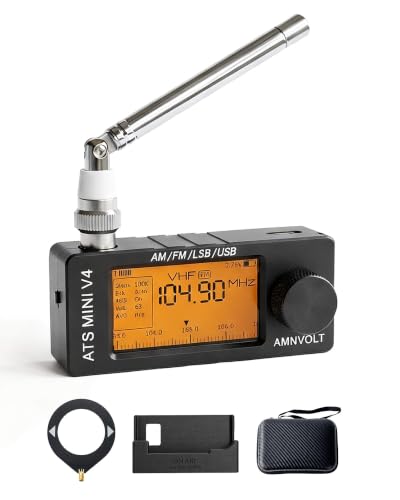
- AM, FM, LSB, and USB reception
- Metal-shell pocket design with battery
- Includes antennas, stand, and carry case
Best For: Operators who want a compact portable receiver for listening and travel
Quiet Budget Shack PC

- 16GB RAM and SSD for responsive everyday use
- Dual 4K HDMI outputs for a tidy station setup
- Compact, low-power design with Ethernet, WiFi, and Bluetooth
Best For: Budget-minded ham operators who want a quiet daily-use station PC
Digital Voice Hotspot Pick
AURSINC Mini MMDVM Duplex Hotspot Board

- Supports major digital voice protocols for ham radio use
- Works with Raspberry Pi models from Zero to Pi 4
- Duplex design with OLED and LED status indicators
Best For: Pi-based operators building a compact digital voice hotspot
Higher-Performance Shack PC

- Ryzen 5 3500U delivers stronger multitasking than budget chips
- Triple-display support helps organize radio and logging apps
- 2.5GbE plus WiFi 5 and Bluetooth 5.0 for flexible networking
Best For: Operators who want a faster station PC for multitasking and multiple monitors
Budget Handheld Starter Pick

- Compact, lightweight handheld design
- App and CHIRP programming support
- USB-C charging and NOAA weather reception
Best For: New operators and outdoor users who want a portable, easy-to-program handheld
Performance Desk Choice
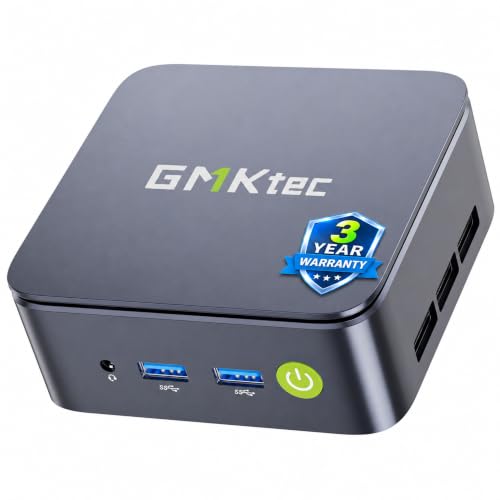
- Ryzen 5 3500U with Vega 8 graphics
- 16GB RAM and 512GB SSD included
- 2.5GbE LAN plus triple 4K display support
Best For: Operators who want a stronger station PC for logging and multitasking
Quiet Everyday Mini PC – Beelink Mini S13 N150 for Home and Office
If you’re choosing a mini pc for ham radio, the Beelink Mini S13 is a practical option when you want a quiet Windows box for digital modes, logging, and everyday shack tasks. Its low 25W power draw, dual HDMI output, and WiFi 6 make it a compact general-purpose computer that can sit behind a monitor or on a desk without taking much space.
Best For: Operators who want a quiet, low-power Windows mini PC for ham radio software, logging, and general shack use.
Pros:
- Intel N150 processor with low power consumption and quiet operation
- 16GB RAM and 500GB SSD provide a smooth base for common radio software
- Dual HDMI, USB 3.2 Gen2, Ethernet, WiFi 6, and Bluetooth 5.2
- Supports Wake on LAN, auto power on, and wall mounting for tidy setup
Cons:
- Not a radio interface, so you still need separate ham radio audio/CAT hardware
- Integrated graphics and low-power CPU are aimed at utility tasks, not heavy workloads
This is a strong fit if you want a dependable mini PC for ham radio operating without extra bulk. The combination of storage, connectivity, and quiet cooling makes it easy to integrate into a station focused on digital modes and logging.
Single-Cable Radio Interface – Digirig Mobile for Digital Modes
For a mini pc for ham radio setup, the Digirig Mobile is the most directly relevant piece here because it handles audio codec, CAT control, and PTT through a single USB connection. It’s designed for digital modes like FT8, FT4, JS8Call, RTTY, SSTV, WinLink, APRS, and Vara, making it a focused interface for operating from a compact computer.
Best For: Hams who need a compact USB interface for digital modes, CAT control, and PTT with a mini PC.
Pros:
- Combines audio, CAT control, and PTT in one USB-connected device
- Supports HF, VHF, and UHF with many popular digital mode apps
- Works with Windows, MacOS, and Linux
- Pre-made cables are available for many major radio brands
Cons:
- May require driver updates on some systems
- Radio cable choice and CAT configuration still depend on your specific transceiver
If your goal is to connect a small PC to a radio cleanly, this is the essential station accessory in the group. It simplifies cabling and gives you the core functions needed for reliable digital-mode operation.
Budget Shack PC – GMKtec N95 Mini Desktop for Ham Radio
If you want a budget-friendly mini pc for ham radio, the GMKtec G3 S is a straightforward choice for logging, spotting, web access, and digital-mode use alongside a separate radio interface. It runs on an Intel N95 processor, includes 8GB of RAM and a 256GB SSD, and offers dual 4K HDMI outputs plus Ethernet for a simple station computer.
Best For: Entry-level ham shack setups that need an affordable Windows mini PC for light radio computing.
Pros:
- Intel N95 processor is suitable for routine shack and office tasks
- 8GB RAM and 256GB SSD provide a usable starting configuration
- Dual HDMI, USB 3.2, Gigabit Ethernet, WiFi 5, and Bluetooth 5.0
- Low 6W power consumption is attractive for continuous station use
Cons:
- Less memory and storage than higher-spec mini PCs in this roundup
- Not designed as a dedicated radio interface or specialty station accessory
This model makes sense if you want a compact computer to run the basics without spending more than necessary. For ham radio, it covers the general-purpose PC side of the station well, especially when paired with the right interface hardware.
Pocket Shortwave Receiver – ATS MINI V4 SI4732 Portable Radio
This pocket receiver is not a mini pc for ham radio, but it can still appeal to operators who want a small companion radio for listening and checking bands. The ATS MINI V4 supports AM, FM, LSB, and USB reception, includes a metal shell and rechargeable battery, and comes with antennas, a stand, and a carry case for portable use.
Best For: Ham radio enthusiasts who want a compact handheld-style receiver for listening and travel.
Pros:
- Supports AM, FM, LSB, and USB reception across a wide band range
- Compact metal-shell design with 1.9-inch display and 800mAh battery
- Includes loop antenna, telescopic antenna, stand, and carry case
- Built-in headphone amplifier and speaker output for flexible listening
Cons:
- It is a receiver, not a computer or station control device
- Only 0.5W speaker output, so headphones may be preferable
For ham operators, this is best viewed as a portable listening companion rather than a station PC. It adds useful receive-only coverage in a tiny package, but it does not replace a dedicated mini computer or radio interface.
Quiet Budget Shack PC – KAMRUI AK1PLUS N5095 Mini PC
If you want a mini pc for ham radio that can handle logging, browser-based radio tools, and general shack multitasking without taking much desk space, the KAMRUI AK1PLUS is a practical pick. Its low-power Celeron N5095 chip, 16GB of RAM, and SSD storage are aimed at smooth everyday responsiveness rather than heavy-duty processing.
Best For: Operators who need an affordable, quiet mini PC for everyday shack use, web-based tools, and light multitasking.
Pros:
- Intel Celeron N5095 offers better everyday performance than the N4500.
- 16GB RAM and 256GB SSD support quick boot and responsive app loading.
- Dual HDMI 2.0 outputs support two 4K displays for an organized workspace.
- Compact design with USB 3.2, Ethernet, Bluetooth, and WiFi keeps connectivity flexible.
Cons:
- Integrated graphics and Celeron-class CPU are better for basics than demanding workloads.
- Base storage is modest unless you add expansion drives.
- Designed for everyday computing, not intensive media or creative tasks.
For operators building a simple and efficient station computer, this model covers the essentials well. It is especially appealing if you value low power use, quiet operation, and enough memory to keep multiple radio-related windows open at once.
Digital Voice Hotspot Pick – AURSINC Mini MMDVM Duplex Hotspot Board
If your goal is a mini pc for ham radio in the hotspot sense, this AURSINC MMDVM duplex board is built for digital voice networking rather than general desktop work. It supports popular protocols like DMR, P25, D-Star, YSF, NXDN, and POCSAG, making it a focused choice for operators who want a compact Pi-based hotspot setup.
Best For: Amateur radio users building a Raspberry Pi-based duplex hotspot for digital modes and networked repeaters.
Pros:
- Supports DMR, P25, D-Star, YSF, NXDN, and POCSAG.
- Compatible with Raspberry Pi models including Pi Zero, Pi 3, and Pi 4.
- Duplex operation and onboard OLED/LED status make monitoring easier.
- Firmware is pre-loaded and upgradeable through software.
Cons:
- Requires a Raspberry Pi host, so it is not a standalone PC.
- Setup depends on Pi-Star and radio/modem configuration steps.
- Designed for hotspot use, not for general computing tasks.
This is a specialized solution for operators who care more about digital radio connectivity than desktop features. If you already run a Pi-based station and want a compact duplex hotspot board with broad protocol support, it fits that use case well.
Higher-Performance Shack PC – GMKtec G10 Ryzen 5 Mini PC
For a mini pc for ham radio that can do more than basic logging, the GMKtec G10 brings stronger headroom with its Ryzen 5 3500U, 16GB of dual-channel RAM, and 512GB SSD. It is a better fit if your station computer also needs to handle heavier multitasking, multiple displays, or general-purpose home office duties alongside radio software.
Best For: Operators who want a faster all-around shack PC with room for multitasking and extra displays.
Pros:
- Ryzen 5 3500U offers stronger multitasking than low-end N-series chips.
- 16GB dual-channel RAM and 512GB SSD provide a solid out-of-box configuration.
- Triple display support can help organize radio apps, logs, and browsers.
- 2.5GbE, WiFi 5, Bluetooth 5.0, and USB-C PD add flexible connectivity.
Cons:
- More performance-focused than basic shack computers, so it may be more than some users need.
- Type-C charging depends on using a suitable 65-70W PD charger.
- Best performance comes from enabling Performance Mode in BIOS.
If you want a mini PC that feels less constrained during multitasking, this one stands out. It is especially useful for operators who keep several tools open at once and value extra graphics and networking capability.
Budget Handheld Starter Pick – BAOFENG UV-5R MINI 2-Pack
If you need a mini pc for ham radio in the sense of a compact, low-fuss portable radio setup, the BAOFENG UV-5R MINI is built for simple carry and quick operation. It keeps the feature set broad while staying small and lightweight, with app-based programming and CHIRP support to make frequency setup easier.
Best For: New and casual operators who want a compact handheld with broad features for outdoor use, team comms, and easy programming.
Pros:
- Small, lightweight body designed for long-term carrying
- App programming and CHIRP support simplify frequency setup
- Dual PTT, one-key frequency copy, and 999 channels add flexibility
- Includes USB-C charging plus NOAA weather reception
Cons:
- Not water resistant
- Best suited to users comfortable with radio programming tools
Overall, this is a practical value-first handheld for ham radio users who want portability and feature depth without a bulky setup. The included accessories and dual-pack format make it especially useful for paired use or backup.
Performance Desk Choice – GMKtec G10 Ryzen 5 Mini PC
This mini PC for ham radio is a strong pick when you want a compact desktop that can handle radio-related software, logging, and multitasking without feeling underpowered. The Ryzen 5 3500U, 16GB of RAM, and 512GB SSD give it a much stronger performance profile than entry-level N-series systems, while the 2.5GbE port and multiple display outputs make it easy to build a capable station.
Best For: Ham radio operators who want a more powerful mini PC for logging, general desktop use, and multi-window station workflows.
Pros:
- Ryzen 5 3500U offers stronger multitasking performance than N100/N150-class chips
- 16GB dual-channel RAM and 512GB SSD provide responsive everyday use
- 2.5GbE LAN is useful for wired networking and server-style setups
- Triple 4K display support helps with multi-window operating stations
Cons:
- More power than basic task-only mini PCs may be needed for simple setups
- Graphics are aimed at productivity and light gaming, not heavy creative workloads
For a ham radio desk, this model stands out because it balances compact size with genuinely solid performance and connectivity. It is a better fit if you want one small machine to manage radio tasks plus normal office or home use.
Low-Power Value Pick – Binxarn ZB-MN300 Intel N3160 Mini PC
For a mini pc for ham radio where low power draw and simple connectivity matter most, this compact Intel N3160 system keeps things straightforward. It offers dual HDMI, multiple USB ports, wired LAN, and low-power operation, making it a practical choice for a basic radio desk, streaming, or light everyday computing.
Best For: Budget-minded operators who want a small, quiet, low-power PC for simple ham radio station tasks.
Pros:
- Low 15-watt power consumption suits always-on or extended use
- Dual HDMI and multiple USB ports provide flexible connectivity
- Compact, VESA-mountable design helps keep the desk tidy
- Built-in Wi-Fi, Bluetooth, and 1000M RJ45 LAN add convenience
Cons:
- Older N3160 platform is best for lighter workloads
- 8GB RAM maximum limits future expansion
- DDR3 memory is dated compared with newer mini PCs
This is the kind of mini PC that makes sense when your ham radio setup needs basic computing, not maximum speed. It is compact, quiet, and well connected, which can be enough for a lean station build.
How We Picked the Best Mini PC for Ham Radio
For a Mini PC for Ham Radio, the priorities are stability, low power draw, usable connectivity, and enough performance for common tasks like logging software, SDR apps, digital mode decoding, hotspot management, and web-based tools. We also looked for models with solid storage options, dependable Ethernet, and the right mix of USB and display outputs.
Quick Comparison
Entry-level Intel N-series systems are usually best for basic logging, rig control, and lightweight digital modes. Ryzen-based mini PCs offer more headroom for multitasking, multiple apps, and heavier software loads. If your setup depends on network reliability, choose a model with faster Ethernet and enough USB ports for radios, interfaces, and accessories.
Key Buying Factors for a Mini PC for Ham Radio
Performance
Most operators do not need a high-end desktop, but they do need smooth responsiveness. An Intel N95, N100, or similar chip is typically fine for logging, FT8-style workflows, and general station control. If you plan to run several programs at once, a Ryzen 5 class system is the safer pick.
Memory and Storage
Look for at least 8GB of RAM, with 16GB preferred if you want extra multitasking room. A 256GB SSD is workable, but 500GB or more is better if you store recordings, maps, logs, or multiple operating systems.
Ports and Networking
Ham radio setups often need more USB than you expect. Make sure the system has enough ports for interfaces, CAT control, sound cards, keyboards, and external storage. Ethernet is especially important for online logging, updates, and networked radio tools, while Wi-Fi is useful for flexible placement.
Noise, Power, and Size
Small, quiet systems are ideal in a shack. Fan noise can be distracting during receive-heavy operation, and low power consumption matters for portable or always-on use. A compact mini PC also fits more easily beside radios, amplifiers, and monitors.
Who Should Buy Which Mini PC for Ham Radio?
If you mainly need a simple station computer, an affordable Intel N-series mini PC is usually enough. Operators running digital modes, SDR software, or multiple utilities at once should lean toward 16GB RAM and a faster CPU. For hotspot builders or network-focused stations, prioritize stable Ethernet and enough USB headroom. If you want one computer that can handle ham radio plus everyday desktop work, a Ryzen-based mini PC is the most versatile choice.
In short, the best Mini PC for Ham Radio is the one that matches your software load, port needs, and operating style without adding noise, heat, or wasted power.