
The best WiFi routers for gaming can reduce congestion, prioritize game traffic, and give your console or PC a more consistent connection. The right choice depends on your internet speed, home size, device count, and whether you need newer WiFi 6E or WiFi 7 features.
We’ve gathered 10 gaming-focused routers ranging from affordable dual-band models to high-end multi-gigabit systems, so you can compare performance features, wired ports, coverage, and upgrade potential before buying.
Best 10 Wifi Routers for Gaming Picks for 2026
Best WiFi 6E Pick

- Tri-band WiFi 6E with up to 6.6Gbps
- AI QoS and Game Accelerator features
- 1.8GHz quad-core processor and 2.5Gbps LAN
Best For: Gamers seeking WiFi 6E and automatic traffic prioritization
Best OpenWrt Gaming Router

- WiFi 6 speeds up to 6Gbps
- Dual 2.5G ports and four 1G ports
- Fast WireGuard and OpenVPN support
Best For: DIY users and multi-gig gaming networks
Best 10G WiFi 7 Router

- WiFi 7 speeds up to 7.2Gbps
- 10G SFP+ and 10G WAN/LAN ports
- AiMesh, security, and gaming features
Best For: Power users with multi-gig internet and 10G equipment
Best Tri-Band WiFi 7 VPN Router

- Tri-band WiFi 7 up to 9Gbps
- Five 2.5G Ethernet ports
- VPN, AdGuard Home, and parental controls
Best For: Busy homes wanting WiFi 7 and advanced network control
Best Overall WiFi 6E Powerhouse
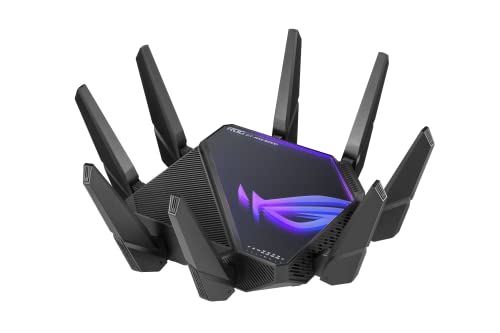
- Quad-band WiFi 6E rated up to 16,000 Mbps
- Dual 10G ports and 2.5G WAN port
- Triple-level game acceleration and AiMesh support
Best For: Multi-gig households and serious gamers
Best WiFi 7 Value
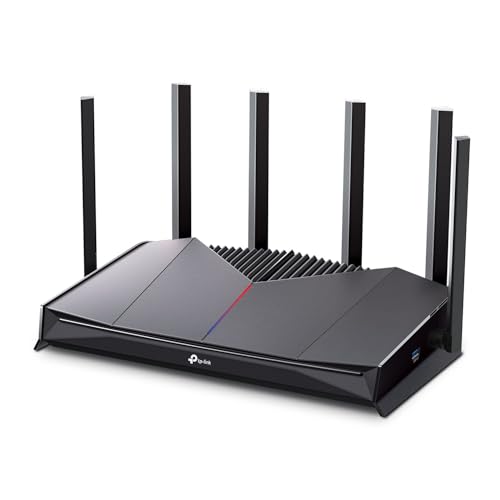
- WiFi 7 speeds rated up to 6.5 Gbps
- WTFast, QoS, and a dedicated gaming port
- Up to 2,600 square feet and 90 devices
Best For: Medium-size homes seeking accessible WiFi 7 gaming features
Best WiFi 6 Gaming Router
ASUS ROG Rapture GT-AX11000 Pro

- Tri-band WiFi 6 rated up to 11,000 Mbps
- Configurable 10G and 2.5G WAN/LAN ports
- Triple-level game acceleration and AiMesh support
Best For: Large-area WiFi 6 gaming networks
Feature-Rich Renewed Gaming Pick
ASUS RT-AX82U WiFi 6 Gaming Router

- WiFi 6 speeds up to 5,400Mbps
- Mobile Game Mode and dedicated gaming port
- AiMesh support plus lifetime AiProtection Pro
Best For: Gamers prioritizing mobile controls, mesh support, and customization
Next-Generation Wired Gaming
ASUS TUF Gaming BE6500 WiFi 7 Router

- WiFi 7 speeds up to 6.5Gbps with MLO
- Four 2.5GbE ports for high-speed wired devices
- Gaming Port, Open NAT, and mobile prioritization
Best For: Gamers with WiFi 7 clients or multi-gigabit wired hardware
Best WiFi 6E Pick – MSI Radix AXE6600
The MSI Radix AXE6600 is a strong choice among wifi routers for gaming if you want tri-band WiFi 6E, gaming-focused traffic management, and a dedicated 6GHz band. Its AI QoS and Game Accelerator features are designed to help prioritize gaming traffic, while the 1.8GHz quad-core processor supports demanding home networks.
Best For: Gamers who want tri-band WiFi 6E, RGB customization, and automatic traffic prioritization.
Pros:
- Tri-band 2.4GHz, 5GHz, and 6GHz connectivity with up to 6.6Gbps advertised data transfer
- AI QoS automatically prioritizes data packets for gaming and other applications
- 1.8GHz quad-core processor, eight-stream support, and a 2.5Gbps LAN connection
- Mystic Light RGB can sync with compatible products
Cons:
- WiFi 6E benefits are most noticeable with compatible 6GHz devices
- RGB lighting may add little value if appearance is not a priority
The Radix AXE6600 balances gaming features with broad tri-band connectivity. It is especially appealing for households with multiple users and newer devices that can take advantage of the 6GHz band.
Best OpenWrt Gaming Router – GL.iNet Flint 2
The GL.iNet Flint 2 is a practical option among wifi routers for gaming for users who want strong wired connectivity and extensive network control. Its eight-stream WiFi 6 hardware supports up to 6Gbps, while dual 2.5G ports, pre-installed OpenWrt, and fast VPN support make it suitable for advanced home networks.
Best For: DIY users, gamers with multi-gig internet, and households connecting more than 100 devices.
Pros:
- Eight-stream WiFi 6 with advertised speeds up to 6Gbps
- Two 2.5G ports plus four 1G ports for flexible wired networking
- WireGuard speeds up to 900Mbps and OpenVPN speeds up to 880Mbps
- OpenWrt, AdGuard Home support, QoS, guest mode, and multi-WAN features
Cons:
- Firmware should be updated during initial setup for the best experience
- Advanced configuration options may be more than casual users need
Flint 2 stands out for its combination of multi-gig ports, VPN capability, and customization. It is a particularly good fit when network control matters as much as raw wireless speed.
Best 10G WiFi 7 Router – ASUS RT-BE88U
The ASUS RT-BE88U is a forward-looking choice among wifi routers for gaming, combining WiFi 7 features with unusually strong wired connectivity. It supports advertised wireless speeds up to 7.2Gbps, includes a 10G SFP+ port and 10G WAN/LAN port, and adds AiMesh compatibility for whole-home coverage.
Best For: Gamers and power users with multi-gig internet, 10G devices, or plans to expand a wired network.
Pros:
- WiFi 7 with Multi-Link Operation and 4096-QAM, rated up to 7.2Gbps
- One 10G SFP+ port and one 10G WAN/LAN port for up to 34G wired capacity
- Dedicated gaming port, four 2.5G ports, and four 1G ports
- AiMesh support, AiProtection Pro security, parental controls, and VPN features
Cons:
- Its advanced 10G hardware may be unnecessary for standard broadband plans
- WiFi 7 features require compatible client devices to realize their full potential
The RT-BE88U makes the most sense for a high-performance network that needs both modern wireless standards and extensive wired capacity. Its security and mesh features also give it room to grow beyond gaming.
Best Tri-Band WiFi 7 VPN Router – GL.iNet Flint 3
The GL.iNet Flint 3 is a versatile pick among wifi routers for gaming, pairing tri-band WiFi 7 with five 2.5G ports and built-in VPN support. Multi-Link Operation, enhanced OFDMA, 4K QAM, and preamble puncturing are designed to improve speed and latency, while its storage and software features suit connected households.
Best For: Gamers who want WiFi 7, multiple 2.5G wired connections, VPN control, and coverage for a busy home.
Pros:
- Tri-band WiFi 7 with advertised speeds up to 9Gbps
- Five 2.5G ports for multi-gig wired devices
- Supports MLO, enhanced OFDMA, 4K QAM, and preamble puncturing
- WireGuard and OpenVPN support, AdGuard Home, parental controls, and up to 2,000 square feet of stated coverage
Cons:
- Firmware should be updated during initial setup
- VPN speeds are rated up to 680Mbps, which may limit the fastest connections when VPN is enabled
- WiFi 7 advantages depend on compatible devices
Flint 3 is a feature-rich option for homes that need both gaming performance and network flexibility. Its five 2.5G ports and tri-band design make it well suited to dense, modern setups.
Best Overall WiFi 6E Powerhouse – ASUS ROG Rapture GT-AXE16000
For demanding homes and serious gamers, the ASUS ROG Rapture GT-AXE16000 is one of the most fully equipped wifi routers for gaming. Its quad-band WiFi 6E design adds the 6 GHz band, while dual 10G ports and a 2.5G WAN port provide substantial wired networking headroom.
Best For: Gamers and households with multi-gig internet, multiple high-bandwidth devices, or a need for broad wireless capacity.
Pros:
- Quad-band WiFi 6E with speeds rated up to 16,000 Mbps
- New 6 GHz band offers wider channels and reduced interference
- Dual 10G ports plus a 2.5G WAN port support fast wired connections
- Triple-level game acceleration, AiMesh support, and lifetime internet security
Cons:
- Large, heavy design may be difficult to place discreetly
- Its advanced capacity may be more than a smaller household needs
The GT-AXE16000 is a premium choice when maximum capacity, flexible wired connectivity, and gaming-focused controls matter more than size or simplicity. ASUS RangeBoost Plus and AiMesh support also make it a strong option for extending coverage over time.
Best WiFi 7 Value – TP-Link Archer GE400
The TP-Link Archer GE400 is a practical pick among wifi routers for gaming if you want WiFi 7 features and dedicated gaming controls without moving to a quad-band flagship. It combines prioritized game traffic, WTFast game-server acceleration, and multi-gigabit ports in a dual-band design.
Best For: Gamers who want WiFi 7, straightforward game prioritization, and coverage for a medium-size home.
Pros:
- WiFi 7 performance rated up to 6.5 Gbps
- Dedicated multi-gig gaming port, QoS, and WTFast acceleration
- Coverage rated for up to 2,600 square feet and 90 devices
- Includes 2.5G WAN/LAN, 2.5G LAN, and three 1G LAN ports
Cons:
- Dual-band design offers less frequency-band flexibility than tri- or quad-band models
- Requires a separate modem
- Some premium security features require a subscription
With six antennas, beamforming, EasyMesh compatibility, and an accessible Tether app, the Archer GE400 balances gaming features with everyday usability. It is especially appealing when wired multi-gig connectivity and WiFi 7 are priorities.
Best WiFi 6 Gaming Router – ASUS ROG Rapture GT-AX11000 Pro
The ASUS ROG Rapture GT-AX11000 Pro remains a strong option for buyers comparing wifi routers for gaming and wanting high WiFi 6 throughput with flexible networking. Its tri-band design, 160 MHz channels, and configurable 10G and 2.5G ports are supported by ASUS gaming prioritization features.
Best For: Gamers who want a powerful WiFi 6 router with extensive controls, large-area coverage, and upgrade-friendly wired ports.
Pros:
- Tri-band WiFi 6 rated up to 11,000 Mbps
- One 10G port and one 2.5G port can operate as WAN or LAN
- Triple-level game acceleration helps prioritize traffic toward game servers
- RangeBoost Plus, AiMesh compatibility, and subscription-free network security
Cons:
- It does not provide the newer 6 GHz band found on WiFi 6E models
- Large chassis requires considerable placement space
The GT-AX11000 Pro is a sensible middle ground for users who want flagship-style gaming controls and tri-band capacity without specifically needing WiFi 6E. Its flexible high-speed ports also help accommodate changing network layouts.
Reliable WiFi 6 Value – NETGEAR Nighthawk RAX36
The NETGEAR Nighthawk RAX36 is a practical pick among wifi routers for gaming if you want WiFi 6 performance without replacing your existing modem. Its AX3000 dual-band connection supports speeds up to 3Gbps, while four Gigabit Ethernet ports provide wired connections for consoles and PCs.
Best For: Gamers with cable, fiber, DSL, or satellite service who need coverage for up to 2,000 square feet and 25 devices.
Pros:
- WiFi 6 speeds up to 3Gbps for gaming, streaming, and conferencing
- Four 1Gbps Ethernet ports for wired gaming devices
- Built-in VPN support, USB 3.0, WPA3 security, and app control
- Compatible with internet plans up to 1Gbps across major connection types
Cons:
- Requires a separate cable modem with coax input
- Coverage and device capacity are limited to the supplied 2,000-square-foot and 25-device ratings
The RAX36 focuses on dependable WiFi 6 coverage and straightforward wired connectivity rather than specialized gaming controls. It is a sensible choice when you already have a modem and want a capable, broadly compatible router.
Feature-Rich Renewed Gaming Pick – ASUS RT-AX82U WiFi 6 Gaming Router
The renewed ASUS RT-AX82U is one of the more gaming-focused wifi routers for gaming in this lineup. It combines WiFi 6 speeds up to 5,400Mbps with mobile game prioritization, a dedicated gaming port, and support for 160MHz channels, making it suited to households that want gaming features and flexible mesh expansion.
Best For: Gamers who want app-based mobile prioritization, Aura RGB customization, and the option to build an ASUS AiMesh network.
Pros:
- WiFi 6 dual-band performance rated up to 5,400Mbps
- Mobile Game Mode helps minimize lag and latency with an app tap
- AiMesh support enables a seamless whole-home mesh network
- Includes lifetime ASUS AiProtection Pro, WPA3, and parental controls
Cons:
- This is a renewed model with a listed 90-day limited warranty
- Its supplied specifications identify four ports but do not provide Gigabit port ratings
The RT-AX82U stands out for its gaming-oriented controls and ASUS ecosystem support. Buyers should weigh the renewed condition and shorter listed warranty against its strong feature set and mesh flexibility.
Next-Generation Wired Gaming – ASUS TUF Gaming BE6500 WiFi 7 Router
The ASUS TUF Gaming BE6500 is a forward-looking choice among wifi routers for gaming, pairing WiFi 7 with multi-link operation and four 2.5GbE ports. It also adds gaming-specific traffic controls, including a dedicated Gaming Port, one-tap mobile prioritization, and Open NAT for simpler multiplayer setup.
Best For: Gamers with fast wired devices or internet service who want WiFi 7, 2.5GbE connectivity, and advanced gaming prioritization.
Pros:
- WiFi 7 dual-band performance rated up to 6.5Gbps
- Four 2.5GbE ports, including one WAN and three LAN ports
- Multi-Link Operation is designed to improve connection stability and efficiency
- Gaming Port, mobile packet prioritization, Open NAT, and subscription-free security features
Cons:
- WiFi 7 benefits may require compatible client devices
- Its advanced wired capabilities may be unnecessary for slower internet plans or basic setups
The TUF Gaming BE6500 is the strongest fit here for users building around newer networking hardware. Its 2.5GbE ports and dedicated gaming controls make it particularly appealing for high-speed wired gaming, while the three-year warranty adds reassurance.
How We Picked the Best Wifi Routers for Gaming
We focused on routers with features that matter during online play rather than treating maximum wireless speed as the only measure of performance. Our selection considers wireless standard, processor capability, traffic-prioritization tools, wired connectivity, coverage, mesh support, and value.
We also included a mix of WiFi 6, WiFi 6E, and WiFi 7 models. Newer standards can improve performance with compatible devices, but older consoles, phones, and PCs may not benefit from every feature. Gaming-specific software, stable firmware, and Ethernet ports remain important regardless of the generation.
Quick Comparison
For a straightforward upgrade, a WiFi 6 router such as the NETGEAR Nighthawk RAX36 or ASUS RT-AX82U can be sufficient for moderate broadband plans and smaller homes. WiFi 6E models add access to the less congested 6GHz band, while WiFi 7 routers are better suited to multi-gigabit internet, newer devices, and households with heavy simultaneous traffic.
Look closely at the ports, not just the wireless rating. Models with 2.5GbE or 10GbE connections are more prepared for fast fiber service, wired gaming PCs, NAS storage, and future upgrades. Mesh compatibility is useful when one router cannot cover the entire home reliably.
Key Buying Factors for Wifi Routers for Gaming
Latency and Traffic Management
Gaming routers cannot eliminate latency caused by distant servers or a poor ISP route, but quality-of-service tools can help prevent downloads, streaming, and uploads from overwhelming the connection. Look for adaptive QoS, game acceleration, device prioritization, or bandwidth controls.
Wireless Standard and Spectrum
WiFi 6 is still a strong choice for most homes. WiFi 6E adds 6GHz access with less interference, but compatible client devices are required. WiFi 7 offers newer features such as Multi-Link Operation and wider channels, making it most worthwhile when your devices and broadband plan can use them.
Ports and Wired Play
Ethernet remains the most consistent option for a gaming PC or console. Check the WAN and LAN speeds, especially if you have internet faster than 1Gbps. Multiple 2.5GbE ports are often more useful than a single high-speed port.
Coverage and Household Load
Large homes, thick walls, and many connected devices may require mesh expansion or a wired access point. A powerful router placed poorly will not outperform a well-positioned system with adequate coverage.
Who Should Buy Which Wifi Routers for Gaming?
Buy a WiFi 6 model if you want dependable gaming performance at a reasonable price, use mostly WiFi 5 or WiFi 6 devices, or have internet service up to 1Gbps.
Choose WiFi 6E if your gaming PC or newer devices support 6GHz and your local wireless environment is crowded. It can provide a cleaner short-range connection, though 6GHz has less range through walls.
Choose WiFi 7 if you have multi-gigabit internet, newer client devices, or want stronger long-term upgrade potential. These routers cost more, and their advantages are limited when most devices use older WiFi standards.
Prioritize multi-gigabit ports for fiber plans above 1Gbps, local network transfers, or a wired gaming setup. For the most demanding homes, combine a high-end router with Ethernet backhaul or a compatible mesh system instead of relying on wireless range alone.