
Choosing the right storage setup matters when your shoots keep growing and every file needs to stay safe, organized, and easy to reach. The best NAS for photographers can centralize backups, speed up sharing, and simplify long-term archive management.
In this roundup, we focus on practical options for solo creators, studio teams, and hybrid workflows that need dependable performance without wasting time on the wrong hardware.
Best 10 NAS for Photographers Picks for 2026
All-Flash Creator NAS

- SSD-only 4-bay NAS with 4x M.2 NVMe slots
- 10GbE plus Wi‑Fi 6 for fast photo transfers
- Intel Core i5 1235U and up to 32TB support
Best For: Photographers who want the fastest local file access
Simple Backup Drive
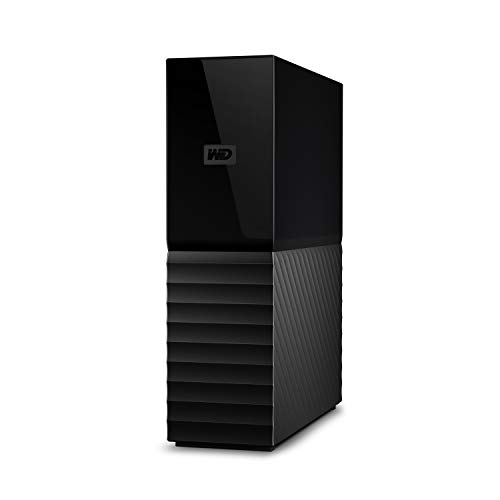
- 16TB desktop external HDD for photo archives
- Backup software plus password protection included
- 256-bit AES hardware encryption and USB 3.0
Best For: Photographers needing a simple archive and backup drive
Thunderbolt Editing NAS

- Thunderbolt 3 NAS with Thunderbolt 2 adapter support
- 10GbE expansion card and SSD caching included
- Built for fast Mac file sharing and collaboration
Best For: Mac photographers who edit and share files over Thunderbolt
High-Capacity RAID Backup

- 44TB dual-drive desktop RAID storage
- Auto backup software with RAID-0 ready setup
- 256-bit AES encryption and password protection
Best For: Photographers needing maximum-capacity desktop backup
Flagship AI NAS for demanding studios
TERRAMASTER F4-425 Pro 4-Bay AI NAS

- Intel N305 and 8GB RAM for multitasking
- Dual 5GbE and three M.2 slots for speed
- TOS 7 adds search, mobile control, and AI tools
Best For: Photographers and creative teams needing a fast, expandable 4-bay NAS
High-capacity NAS hard drive for long-term archives
Seagate IronWolf Pro 20TB NAS HDD

- 20TB CMR drive built for NAS use
- 7,200 RPM with RAID-friendly features
- Includes health monitoring and rescue services
Best For: Photographers who need a large, reliable RAID-ready archive drive
Compact fast NAS for creative workgroups
TERRAMASTER F2-425 Plus 2-Bay NAS

- Intel N150 with 8GB DDR5 for efficient performance
- Dual 5GbE and M.2 expansion for speed
- CloudSync and TerraSync help with sharing and backup
Best For: Photographers and small teams wanting a compact, speedy NAS
Pro-Grade 4-Bay Expansion
4-Bay Intel N95 NAS with Dual 5GbE

- 4-bay design with up to 144TB total capacity
- Dual 5GbE networking with up to 1020MB/s
- Triple M.2 slots for cache or storage pools
Best For: Photographers and creative teams needing speed plus expansion
Higher-Memory Creator Hub
4-Bay Intel N150 NAS with 16GB DDR5

- 16GB DDR5 RAM for heavier multitasking
- Dual 5GbE networking with up to 1020MB/s
- Triple M.2 slots plus up to 144TB capacity
Best For: Photographers who want extra memory for a smoother workflow
Compact Photo Library NAS
2-Bay Intel N95 NAS with Dual 5GbE

- Compact 2-bay design for smaller workspaces
- Dual 5GbE networking with up to 1020MB/s
- Up to 84TB capacity with CloudSync and TerraSync
Best For: Solo photographers or small studios needing a compact, fast NAS
All-Flash Creator NAS – UGREEN DXP480T Plus
If you want a NAS for photographers that prioritizes speed, the UGREEN DXP480T Plus is built around all-flash storage and fast network connectivity. Its M.2 NVMe bays, 10GbE port, and Wi‑Fi 6 make it a strong fit for moving large photo libraries, working on edits, and keeping files centralized instead of scattered across devices.
Best For: Photographers and creators who want an SSD-based NAS for fast local photo access and storage.
Pros:
- All-flash design with 4x M.2 NVMe slots for fast reads and writes
- 10GbE port with peak speeds up to 1250MB/s for large photo transfers
- Intel Core i5 1235U 10-core CPU for stronger processing performance
- Supports RAID0, RAID1, RAID5, RAID6, RAID10, and up to 32TB capacity
Cons:
- Drives are not included
- Advertised capacity depends on RAID 0 with compatible drives
- Actual speeds vary by router, CPU, drives, and file size
For photographers who care most about fast access to large files, this model stands out because it combines SSD-only storage with modern networking and an all-in-one app approach. It is a strong premium option when performance matters more than raw drive cost.
Simple Backup Drive – WD My Book 16TB
If your NAS for photographers needs a dependable backup target, the WD My Book 16TB is a straightforward desktop drive with plenty of capacity. It is aimed at business and personal use, and the included backup software, password protection, and hardware encryption make it useful for storing photo archives safely on a local drive.
Best For: Photographers who need a simple, high-capacity backup drive for archives and local redundancy.
Pros:
- 16TB of desktop storage for large photo libraries
- Includes backup software and password protection
- 256-bit AES hardware encryption for added security
- USB 3.0 connectivity with WD reliability
Cons:
- Single-drive external HDD, not a network-attached NAS
- Mechanical drive is slower than SSD-based storage
- Requires a desktop-style setup and external power
This is a practical pick if you want a simple, capacity-first storage companion rather than a full NAS system. It works best as a backup and archive drive for photographers who value large space and basic protection.
Thunderbolt Editing NAS – QNAP TS-453BT3
For photographers using a Mac-based workflow, this NAS for photographers is designed to speed up file sharing and editing over Thunderbolt 3. The QNAP TS-453BT3 also supports Thunderbolt 2 Macs with an adapter, and its 10GbE expansion and SSD caching make it better suited to fast collaboration than a basic storage box.
Best For: Mac photographers and creative teams that need fast Thunderbolt-based transfers.
Pros:
- Thunderbolt 3 support with Thunderbolt 2 compatibility via adapter
- 10GbE expansion and SSD caching for faster workflows
- Built for smoother file sharing for photographers, editors, and designers
- Includes Collaboration Station for Mac and Windows
Cons:
- 4-bay design may be limiting for users needing larger expansion
- Older Intel Celeron J3455 processor compared with newer NAS CPUs
- Best benefits depend on Thunderbolt and 10GbE-capable setup
This model makes the most sense when your editing workflow already relies on Thunderbolt and high-speed networking. It is less about general-purpose storage and more about keeping photo transfers and collaboration moving quickly.
High-Capacity RAID Backup – WD My Book Duo 44TB
If you are building a storage setup for photographers and want a large local backup device, the WD My Book Duo offers RAID-ready capacity in a desktop external drive. Its dual-drive design, auto backup software, and hardware encryption make it a practical choice for keeping photo archives mirrored or consolidated on one system.
Best For: Photographers who need very high-capacity desktop backup with RAID flexibility.
Pros:
- 44TB desktop RAID external drive for large photo libraries
- RAID-0 ready out of the box with flexible storage setup
- Includes auto backup software for local protection
- 256-bit AES hardware encryption and password protection
Cons:
- Not a network-attached NAS system
- Uses mechanical HDDs instead of SSDs
- Desktop form factor requires external power and space
This is a strong fit if your priority is massive local storage rather than networked access. For photographers who want a straightforward RAID-style backup companion, it offers a lot of capacity in a single enclosure.
Flagship AI NAS for demanding studios – TERRAMASTER F4-425 Pro 4-Bay AI NAS
If you’re shopping for a NAS for photographers, the TERRAMASTER F4-425 Pro is built for fast multitasking, large photo libraries, and streamlined sharing. Its Intel N305 CPU, dual 5GbE networking, and three M.2 slots give it the kind of headroom that helps when you’re moving big RAW archives, editing across devices, or serving media alongside backups.
Best For: Photographers and creative teams who want a powerful 4-bay NAS with fast networking, caching, and modern backup tools.
Pros:
- Intel N305 8-core CPU and 8GB memory handle multiple tasks at once
- Dual 5GbE ports support link aggregation up to 1020 MB/s
- Three M.2 NVMe slots with Hyper Cache acceleration
- TOS 7 adds global search, online office editing, and mobile management
Cons:
- Diskless enclosure, so storage drives must be purchased separately
- Advanced AI-native OS features may be more than some users need
Overall, this is the most ambitious option in the group if you want a future-ready photo server with room to grow. It combines storage flexibility, strong networking, and backup-focused features in a single enclosure.
High-capacity NAS hard drive for long-term archives – Seagate IronWolf Pro 20TB NAS HDD
For a NAS for photographers, the drive matters just as much as the enclosure, and the Seagate IronWolf Pro 20TB is designed for exactly that job. Its CMR recording, 7,200 RPM speed, and NAS-focused features make it a strong fit for large image archives, RAID arrays, and steady day-to-day access.
Best For: Photographers building a large, reliable RAID-ready archive with enterprise-class capacity.
Pros:
- 20TB capacity is ideal for big photo libraries and backups
- CMR design and 7,200 RPM support consistent NAS performance
- AgileArray, TLER, and RV sensors are tuned for RAID environments
- Includes IronWolf Health Management and 3-year Rescue Data Recovery Services
Cons:
- It is an internal hard drive, not a complete NAS system
- Requires a compatible NAS or RAID environment for proper use
If your priority is dependable capacity for an ever-growing image archive, this drive is easy to justify. It is best viewed as the storage foundation for a photo NAS rather than a standalone solution.
Compact fast NAS for creative workgroups – TERRAMASTER F2-425 Plus 2-Bay NAS
If you need a practical NAS for photographers without stepping up to a larger chassis, the TERRAMASTER F2-425 Plus is a compact 2-bay option with serious speed features. Dual 5GbE ports, triple M.2 support, and 8GB DDR5 memory make it well suited to moving photo files quickly, caching active projects, and keeping shared media accessible.
Best For: Photographers, small teams, and home users who want a compact NAS with fast networking and flexible expansion.
Pros:
- Intel N150 CPU and 8GB DDR5 memory for efficient daily performance
- Dual 5GbE LAN supports link aggregation and up to 1020 MB/s speeds
- Triple M.2 design allows SSD cache or independent storage pools
- CloudSync, TerraSync, and mobile control simplify sharing and backups
Cons:
- Only two HDD bays, so raw drive capacity is lower than 4-bay models
- Diskless design means storage must be added separately
This model makes sense if you want a smaller footprint but still care about transfer speed and expansion options. It is a strong middle ground for photo workflows that need quick access more than maximum drive count.
Pro-Grade 4-Bay Expansion – 4-Bay Intel N95 NAS with Dual 5GbE
If you want a NAS for photographers that can handle large RAW libraries, shared project folders, and fast offload workflows, the TERRAMASTER F4-425 Plus is built for exactly that kind of workload. Its 4-bay design, dual 5GbE networking, and triple M.2 expansion make it a strong fit for creators who need both capacity and speed.
Best For: Photographers and creative teams who want roomy storage, fast network access, and flexible SSD expansion.
Pros:
- Intel N95 quad-core CPU with 8GB RAM for efficient multitasking
- Dual 5GbE LAN with link aggregation and SMB Multichannel, up to 1020MB/s
- Triple M.2 slots for SSD cache or independent storage pools
- Supports up to 144TB total capacity with TRAID protection
Cons:
- Diskless, so storage drives must be purchased separately
- 4-bay size may be more than some solo users need
Overall, this model offers a good mix of capacity, speed, and flexibility for photography workflows that involve large files and shared access. It also adds extras like snapshots, HyperLock-WORM, and direct data drive mounting for a more practical storage setup.
Higher-Memory Creator Hub – 4-Bay Intel N150 NAS with 16GB DDR5
For photographers who want a NAS for photographers with a bit more headroom for multitasking, the TERRAMASTER F4-425 Plus adds 16GB DDR5 memory and the same fast dual 5GbE platform. It is a practical option for editing support, file sharing, and multimedia storage when you want a responsive box with room to grow.
Best For: Photographers who want more memory for multitasking, shared access, and media-heavy storage.
Pros:
- Intel N150 quad-core CPU paired with 16GB DDR5 RAM
- Dual 5GbE LAN with link aggregation and SMB Multichannel
- Triple M.2 slots for SSD cache or independent storage pools
- Up to 144TB total capacity with TRAID, snapshots, and HyperLock-WORM
Cons:
- Diskless enclosure, so no drives are included
- 4-bay layout may be larger than needed for simple backup use
This version stands out if you value extra memory for smoother day-to-day use alongside fast networking and flexible storage expansion. It keeps the same creator-friendly features as the line, including direct data drive mounting and broad app support.
Compact Photo Library NAS – 2-Bay Intel N95 NAS with Dual 5GbE
If your photography setup needs a smaller NAS for photographers without giving up fast networking, the TERRAMASTER F2-425 Plus is the compact pick in this group. Its 2-bay design is easier to place on a desk, while the dual 5GbE ports and triple M.2 slots still give it serious flexibility for shared files and cache.
Best For: Solo photographers or small studios that want a compact, high-speed NAS with room for SSD expansion.
Pros:
- Compact 2-bay chassis with Intel N95 quad-core CPU
- Dual 5GbE LAN with link aggregation and SMB Multichannel
- Triple M.2 slots for SSD cache or independent storage pools
- Supports up to 84TB total capacity and includes CloudSync and TerraSync
Cons:
- Lower maximum capacity than the 4-bay models
- 8GB memory is solid, but not as roomy as the 16GB version
For photographers who do not need the larger 4-bay footprint, this model offers a balanced mix of speed, size, and practical backup features. It is a strong fit for smaller studios that still want fast access and cloud sync support.
How We Picked These NAS for Photographers
We prioritized models that balance speed, capacity, expandability, and everyday usability. For NAS for Photographers, that means strong network performance, RAID support, enough RAM for multitasking, and flexible drive or SSD configurations for both active projects and archives.
We also considered whether each option fits a realistic photo workflow: ingesting cards, backing up multiple copies, sharing files across a studio, and keeping older work protected for the long term.
Quick Comparison
Broadly, the list splits into three categories. All-flash and 10GbE systems are best for fast editing and shared project access. Multi-bay HDD NAS units are better for cost-effective archive storage. External RAID and large desktop drives can work as simpler backup layers when you do not need a full networked system.
Key Buying Factors for NAS for Photographers
Capacity and RAID
Photography libraries grow quickly, especially with RAW, burst sequences, and video clips. Choose a system with room to expand and RAID support so a single drive failure does not take down your archive. Two-bay units are fine for smaller collections; four-bay models are more flexible and usually better for long-term growth.
Speed and Connectivity
If you edit directly from the NAS or move large batches of files often, look for 2.5GbE, 5GbE, or 10GbE. Faster networking matters more than raw drive speed when multiple users or large catalogs are involved. NVMe-based systems can also help with scratch, cache, or all-flash workflows.
Drive Type
HDD-based NAS units deliver the lowest cost per terabyte, making them ideal for archives. SSD-based systems are faster, quieter, and better for active projects, but they usually cost more per terabyte. Many photographers use both: SSD for current work and HDD for backup or deep storage.
Software and Backup Features
Look for built-in backup tools, snapshot support, easy user permissions, and folder syncing. These features reduce accidental deletion risk and make it easier to automate backups from desktop workstations or external drives.
Who Should Buy Which NAS for Photographers?
Solo photographers who mainly need safe archive storage can favor a simpler two-bay or desktop RAID solution. Studio teams and heavy Lightroom or Capture One users should lean toward faster four-bay NAS systems with higher network bandwidth and more RAM. If your top priority is maximum performance, an all-flash or 10GbE model is the strongest fit. If your top priority is affordable capacity, a NAS with large IronWolf Pro drives or a similar HDD-based setup is usually the smarter choice.
For most buyers, the best NAS for Photographers is the one that matches today’s workload while leaving enough room for tomorrow’s shoots.