
Choosing a home server with low power consumption is about more than wattage alone. The best options stay quiet, run reliably 24/7, and still deliver enough speed for storage, media streaming, backups, and self-hosted apps.
In this roundup, we focused on compact NAS boxes, fanless mini PCs, and efficient x86 platforms that balance performance, expandability, and everyday energy savings.
Best 10 Home Server with Low Power Consumption Picks for 2026
Quiet, Capable Storage
UGREEN DXP2800 2-Bay NAS for Creators

- Intel N100 CPU for efficient always-on use
- Up to 80TB local storage capacity
- Easy app access on major devices
Best For: Creators and home users who want simple, efficient centralized storage
Fanless Self-Hoster Pick
ZimaBlade 7700 Home Server Starter Kit

- Fanless cooling for quiet 24/7 use
- CasaOS preinstalled for easy setup
- PCIe x4 expansion for future upgrades
Best For: Quiet self-hosting, media, and home automation
Compact Hybrid Server

- Intel N150 for efficient server tasks
- 2 HDD bays plus 3 M.2 slots
- Dual 5GbE and 2.5GbE networking
Best For: Small all-in-one storage and light server use
DIY Low-Power Homelab
- Intel x86 platform with wide compatibility
- 16GB RAM for multiple lightweight services
- Dual SATA kit for a ready-to-build NAS
Best For: DIY homelabs, personal cloud, and light media serving
Quiet Network Mini PC
MeLE Quieter DL N100 Dual 2.5G LAN

- Fanless 10W design
- Dual 2.5GbE networking
- Linux and Wake on LAN support
Best For: Quiet always-on home server and private cloud use
Pocket Home Server Board
ZimaBoard 2 832 x86 Home Server

- Intel N150 with 8GB LPDDR5
- Dual SATA plus dual 2.5GbE
- PCIe 3.0 x4 expansion
Best For: DIY NAS, Docker, and compact always-on home servers
Expandable NAS Server
AOOSTAR WTR PRO 5825U 4+2 Bay NAS
- Ryzen 7 5825U multitasking
- 4+2 bays with RAID support
- Dual 2.5GbE and 24/7 use
Best For: Low-power NAS and home lab users needing more bays
Quiet Multimedia NAS
- 19dB(A) quiet operation
- Intel quad-core with 2.5GbE
- 4K media and cloud sync support
Best For: Quiet home storage, backups, and media streaming
Fanless Low-Power Mini PC
MeLE Quieter DL N150 Fanless Mini PC
- Fanless 0dB silent design
- About 6W idle, under 12W load
- Dual 2.5GbE for networking and server use
Best For: Silent always-on routing, automation, and light virtualization
Expandable Low-Power ITX Board
Mini-ITX 8-SATA Server Motherboard

- 15W TDP low-power 8-thread CPU
- 8 SATA plus 2 M.2 NVMe slots
- Dual 2.5GbE and virtualization support
Best For: DIY NAS and firewall builds that need lots of storage expansion
Quiet, Capable Storage – UGREEN DXP2800 2-Bay NAS for Creators
If you want a home server with low power consumption that still feels modern and capable, the UGREEN DXP2800 is a strong everyday NAS option. It uses an Intel N100 quad-core CPU, 8GB of DDR5 RAM, and dual M.2 NVMe slots, so it is aimed at users who want efficient local storage without relying on cloud subscriptions.
Best For: Content creators, small teams, and home users who want centralized storage with easy app-based access.
Pros:
- Intel N100 platform keeps the system efficient for always-on home use.
- Supports up to 80TB of storage for large photo, video, and backup libraries.
- Easy file sharing across Windows, macOS, Android, iOS, web browsers, and smart TVs.
- AI-powered photo organization can sort faces, scenes, objects, and locations.
Cons:
- Diskless, so drives must be purchased separately.
- 2-bay design may be limiting for users who expect larger multi-drive expansion.
Overall, this is a practical choice if you want efficient local storage, simple management, and broad device support in a compact NAS. It leans more toward ease of use and long-term value than raw server complexity.
Fanless Self-Hoster Pick – ZimaBlade 7700 Home Server Starter Kit
The ZimaBlade 7700 is built for people who want a home server with low power consumption and a very quiet footprint. With Intel x86 support, CasaOS preinstalled, and fanless cooling, it is designed for self-hosting, media serving, and always-on use in shared living spaces.
Best For: Users who want a silent, easy-to-start home server for Docker, Plex, Nextcloud, and Home Assistant.
Pros:
- Fanless design keeps noise low for desks, bedrooms, or living rooms.
- Intel x86 compatibility supports apps like Plex, Nextcloud, and Home Assistant natively.
- CasaOS preinstalled for simple, app-based setup and management.
- PCIe x4 expansion allows storage or networking upgrades later.
Cons:
- Expansion is available, but the base system is intentionally compact and minimal.
- Best suited to lightweight self-hosting rather than heavy workloads.
This is a solid pick if your priority is quiet operation and low power use over maximum raw performance. It offers a friendly starting point for anyone building a personal server or small homelab.
Compact Hybrid Server – Beelink Me Pro Mini PC NAS
If you want a home server with low power consumption and more flexibility than a basic NAS, the Beelink Me Pro is worth a look. It combines mini PC hardware with NAS storage, using an Intel N150 processor, 16GB LPDDR5 memory, and a pre-installed 1TB SSD for a compact all-in-one server setup.
Best For: Users who want a small, quiet network storage box that can also handle media, routing, and light server work.
Pros:
- Intel N150 is positioned for efficient multitasking and lower power use.
- Hybrid design combines 2 HDD bays with 3 M.2 SSD slots for flexible storage.
- Dual 5GbE and 2.5GbE ports support fast networking and aggregation.
- Whisper-quiet cooling is designed for 24/7 operation.
Cons:
- More complex than a basic NAS if you only need simple file storage.
- Modular design may be overkill for buyers who do not plan to expand.
For buyers who want one device to cover private cloud, media storage, and light home server duties, this model offers a lot of capability in a small footprint. It is especially appealing if you value networking speed and storage flexibility.
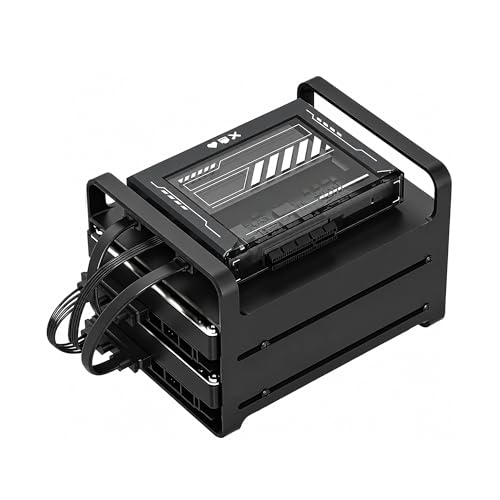
DIY Low-Power Homelab – ZimaBlade 7700 2-Bay NAS Kit
The ZimaBlade 7700 2-Bay NAS Kit is aimed at users who want a home server with low power consumption and enough flexibility to grow into a homelab. Its Intel x86 platform, 16GB RAM, CasaOS preinstalled, and dual SATA support make it a practical base for self-hosting, Plex, and lightweight always-on services.
Best For: DIY builders who want a compact x86 NAS kit for personal cloud, Docker, and media streaming.
Pros:
- Intel x86 hardware gives broad software compatibility.
- 16GB RAM supports multiple lightweight services at once.
- Dual SATA and included drive cage make it ready for a 2-bay build.
- Designed for low-power, 24/7 home server operation.
Cons:
- Assembly is required, so it is less plug-and-play than a finished NAS.
- Best for lightweight workloads rather than demanding server tasks.
This kit is a good fit if you want a flexible starting point instead of a locked-down appliance. It balances quiet, efficient operation with the freedom to build and customize your own setup.
Quiet Network Mini PC – MeLE Quieter DL N100 Dual 2.5G LAN
If you want a home server with low power consumption, the MeLE Quieter DL is a compact fanless option built around the Intel N100. Its 10W design, dual 2.5GbE ports, and quiet passive cooling make it a practical pick for a small private cloud, soft router, or always-on network box.
Best For: Quiet always-on home server tasks, private cloud use, and dual-network setups.
Pros:
- Fanless passive cooling means no noise and no dust buildup.
- Dual 2.5GbE ports are useful for soft routing and isolated network connections.
- Low 10W power consumption suits 24/7 use.
- Supports Linux, Wake on LAN, PXE, and auto power on for flexible deployments.
Cons:
- 4GB RAM and 128GB eMMC are modest for heavier server workloads.
- Best suited to lightweight server duties rather than demanding virtualization.
- No built-in SATA expansion for large direct-drive storage.
Overall, this is a sensible low-power mini PC for users who value silence, network flexibility, and simple always-on operation over raw expansion.
Pocket Home Server Board – ZimaBoard 2 832 x86 Home Server
The ZimaBoard 2 is aimed squarely at anyone building a home server with low power consumption and real server features. With an Intel N150, 8GB LPDDR5, dual 2.5GbE, dual SATA, and PCIe 3.0 x4 expansion, it is built for always-on storage, networking, and self-hosted services.
Best For: Home labs, DIY NAS builds, Docker setups, and compact always-on server projects.
Pros:
- Dual SATA and dual 2.5GbE make it strong for NAS and networking tasks.
- PCIe 3.0 x4 expansion supports higher-end upgrades like 10GbE or NVMe adapters.
- Preinstalled ZimaOS includes private cloud, backups, and plugin support.
- Fanless design keeps operation quiet for 24/7 use.
Cons:
- It is a board-style server, so setup is less plug-and-play than a mini PC.
- 32GB eMMC is enough for the OS, but storage expansion is still expected.
- Best value comes when you actually use its server-oriented I/O and expansion.
For buyers who want a compact x86 platform with true server connectivity, this is one of the more capable low-power choices in the lineup.
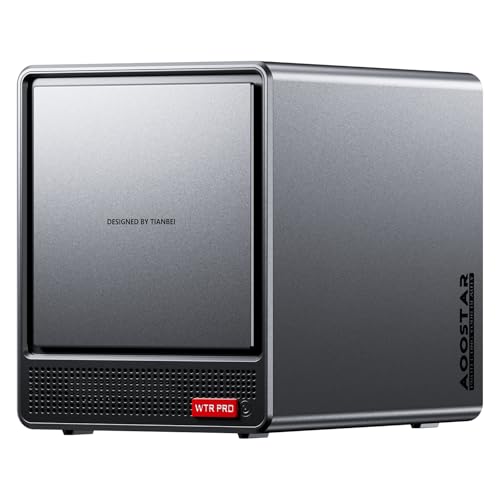
Expandable NAS Server – AOOSTAR WTR PRO 5825U 4+2 Bay NAS
The AOOSTAR WTR PRO is a strong option if you need a home server with low power consumption but also want serious storage and multitasking headroom. Its AMD Ryzen 7 5825U, 4+2 bay design, dual 2.5GbE, and support for NAS, virtualization, and multiple OS options make it a flexible home lab base.
Best For: Users who want a low-power NAS-style server with more drive bays and multitasking power.
Pros:
- 8-core Ryzen 7 5825U handles file storage, Docker, and VMs more comfortably.
- 4+2 bay layout with RAID support is useful for larger storage setups.
- Dual 2.5GbE and multiple display outputs add flexibility for server or desktop use.
- Designed for 24/7 operation with metal casing and active cooling for stability.
Cons:
- Not the quietest choice because it uses a 12 cm rear fan.
- Sold without RAM, SSD, or OS, so total build cost will be higher.
- More complex than a simple mini PC if you only need basic server tasks.
This model makes sense when low power matters, but storage capacity, RAID options, and upgrade room matter just as much.
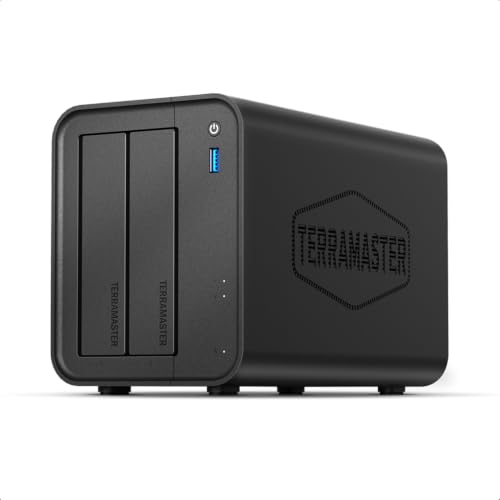
Quiet Multimedia NAS – TERRAMASTER F2-425 2-Bay NAS
If you want a home server with low power consumption that still feels capable, the TERRAMASTER F2-425 is built around a quiet 2-bay NAS design with an Intel x86 quad-core CPU, 4GB RAM, and 2.5GbE networking. It is aimed at home users who want fast file transfers, media streaming, and simple backup management without a noisy or complicated setup.
Best For: Home users who want a quiet, compact NAS for media, backups, and everyday shared storage.
Pros:
- Hardware-level 4K H.265 decoding with support for Plex, Emby, Jellyfin, and DLNA
- Quiet operation at 19dB(A), making it suitable for bedrooms and other quiet spaces
- 2.5GbE LAN and quad-core CPU help with multitasking and faster transfers
- Supports up to 60TB, TRAID, and cloud sync options for flexible storage protection
Cons:
- Diskless, so drives must be purchased separately
- 4GB RAM may be limiting for heavier server workloads
- Best suited to NAS duties rather than general-purpose PC tasks
This is a strong pick if your priority is a quieter, user-friendly NAS with good media features and efficient home storage. It is less about raw server expansion and more about practical, low-noise everyday use.
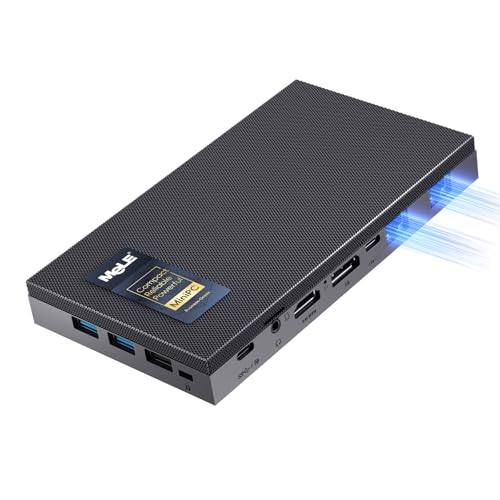
Fanless Low-Power Mini PC – MeLE Quieter DL N150 Fanless Mini PC
For a home server with low power consumption, the MeLE Quieter DL is a fanless mini PC that emphasizes silent 24/7 operation. Its N150 platform, dual Intel 2.5GbE ports, and support for Proxmox, pfSense/OPNsense, and Home Assistant make it a practical choice when you want a compact machine that can run always-on network and home-lab services.
Best For: Silent always-on home servers, firewall appliances, and lightweight virtualization setups.
Pros:
- Fanless design delivers 0dB silence and removes a common failure point
- Very low power draw at about 6W idle and under 12W full load
- Dual Intel I226-V 2.5GbE ports suit routing, VLANs, and network appliance use
- 16GB RAM and 512GB NVMe SSD provide solid room for small server workloads
Cons:
- Not designed for heavy desktop-class compute or high-end media transcoding
- Storage and memory capacity are modest compared with larger homelab hardware
- Mini PC form factor limits internal expansion
This model stands out when silence and efficiency matter most. If your home server needs are centered on networking, automation, or light virtualization, it offers a very attractive balance of size and power use.
Expandable Low-Power ITX Board – Mini-ITX 8-SATA Server Motherboard
If you are building a home server with low power consumption and want more expansion than a typical mini PC, this Mini-ITX motherboard is designed for storage-heavy and network-focused builds. It pairs a low-power 8-thread CPU with dual 2.5GbE LAN, 8 SATA ports, and two M.2 NVMe slots, giving you a compact base for NAS, firewall, or virtualization projects.
Best For: DIY home server builders who want a compact, expandable NAS or firewall platform.
Pros:
- 15W TDP low-power CPU with 8 threads and up to 3.9GHz turbo
- Eight SATA ports plus two M.2 NVMe slots for large storage builds
- Dual 2.5GbE LAN and virtualization support for flexible server roles
- Mini-ITX form factor fits compact custom home server cases
Cons:
- Requires a full DIY build with compatible case, memory, and power connections
- Includes a note about a possible sleep mode bug
- Uses active cooling rather than a fanless design
This is the most flexible option in the group for a custom build, especially if you need more drive support than a small prebuilt box. It makes the most sense for users who are comfortable assembling a server and tuning it to their needs.
How We Picked These Home Server with Low Power Consumption Options
We prioritized efficient CPUs, practical storage expandability, low-noise or fanless designs, and networking that makes sense for always-on use. We also looked for systems that can handle common home server jobs such as file sharing, Plex-style media serving, Docker, light virtualization, and backup duties without wasting power.
Because a Home Server with Low Power Consumption should fit real household use, we favored models with sensible memory and storage paths, plus 2.5GbE where it meaningfully improves transfers without pushing energy use too high.
Quick Comparison: Which Type Fits Your Setup?
If you want the simplest storage-first appliance, a 2-bay NAS is usually the easiest route. If you want more flexibility for apps and experimentation, an x86 mini server or board-based build gives you more control. Fanless mini PCs are best when silence and low idle power matter most, while higher-bay systems suit users who need larger media libraries or multiple disks.
Key Buying Factors for a Home Server with Low Power Consumption
CPU Efficiency
Look for modern low-watt processors that can handle idle-heavy workloads well. For many homes, an Intel N-series chip is enough for file serving, light containers, and basic media tasks. If you expect heavier multitasking or several simultaneous users, a stronger chip may be worth the extra power draw.
Storage and Expansion
Check how many SATA bays and NVMe slots you actually need. More bays improve capacity and redundancy, but they can also increase total system cost and power use once drives are installed.
Networking
2.5GbE is a smart sweet spot for fast backups and smooth local transfers. Dual LAN can also help if you want separation between home traffic and server access.
Noise, Cooling, and Always-On Use
Fanless designs are excellent for silent operation, but make sure the workload matches the cooling limits. For systems with fans, look for good thermal design so the server remains stable and efficient during long uptime.
Who Should Buy Which Home Server with Low Power Consumption?
Buy a compact NAS if your main goal is easy shared storage and simple administration. Choose a mini PC NAS or x86 home server if you want Docker, Plex, light virtualization, or custom services. Pick a higher-bay desktop NAS if you expect storage growth. And if silence is your top priority, a fanless mini PC is the most appealing choice for a Home Server with Low Power Consumption.
In short, the best option depends on whether you value ease of use, expandability, or absolute efficiency. Match the hardware to your workload first, and you’ll get a server that stays useful, quiet, and economical for years.