
Choosing the right hub can make a smart home feel seamless instead of scattered. The best wireless smart home hubs bring your devices, apps, and voice assistants together in one reliable control point.
In this roundup, we focus on hubs that balance compatibility, automation, and ease of use so you can pick the right fit for your home setup and budget.
Best 10 Wireless Smart Home Hubs Picks for 2026
Top Pick
Aeotec Smart Home Hub, Works as a SmartThings Hub
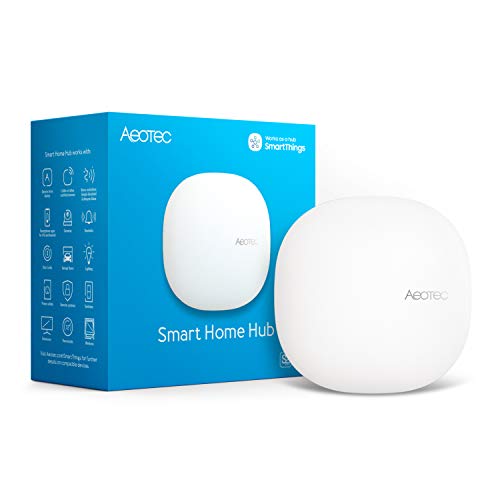
- Supports Matter, Zigbee, Z-Wave, Wi‑Fi, Alexa, and Google Home
- Automations can run locally for better speed and reliability
- Sets up quickly with Wi‑Fi or Ethernet
Best For: Users who want one hub for a wide mix of smart home devices
Best for Tapo Ecosystems
Tapo Smart Hub with Built-in Chime

- Handles up to 64 sensors/buttons plus 4 cameras or doorbells
- Built-in chime and local microSD storage
- Low-power wireless helps compatible devices last longer
Best For: Tapo households wanting a hub with chime and local recording
Best for Automation
Home Assistant Green Official Hub

- Home Assistant is preinstalled for quick start-up
- Official hardware with local data storage and control
- USB expandability for Z-Wave, Zigbee, and Thread
Best For: Advanced users who want a customizable, local-first hub
Best Wall Control
Amazon Echo Hub (newest model)

- 8-inch dashboard for devices, routines, cameras, and security
- Supports Alexa-compatible Wi‑Fi, Bluetooth, Zigbee, Matter, Sidewalk, and Thread devices
- Wall-mountable with optional hidden-cable accessories
Best For: Households that want a dedicated smart home control panel
MOES Dual-Protocol Hub
ZigBee & Bluetooth Mesh Gateway

- Combines ZigBee 3.0 and Bluetooth mesh
- Supports up to 128 Tuya devices
- Offers local automation and security functions
Best For: Tuya households mixing ZigBee and Bluetooth devices
Tapo Home Sensor Hub

- Long-range hub with up to 30m coverage
- Supports up to 64 Tapo devices
- Includes built-in chime and 90 dB siren
Best For: Tapo sensor setups needing alerts and long-range stability
Aqara Security Hub

- Zigbee 3.0 hub for up to 128 Aqara devices
- Built-in speaker works as alarm or doorbell
- Supports HomeKit, Alexa, Google Assistant, and IFTTT
Best For: Aqara homes focused on security automations
Whole-Home Lighting Hub
Lutron Caseta Smart Hub Compatible with Alexa, Apple, Google Home, & More
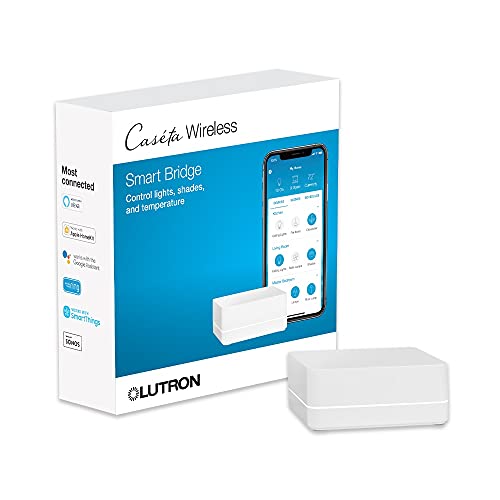
- Broad support for Alexa, Apple HomeKit, Google Assistant, Ring, and Sonos
- Simple plug-in setup with router and app
- Supports up to 75 Caseta devices
Best For: Lutron-based homes that want broad voice-assistant compatibility
Multi-Protocol Tuya Bridge
Smart Multi-Mode Gateway ZigBee & Bluetooth

- ZigBee 3.0 and Bluetooth Mesh support in one hub
- Works with Smart Life/Tuya app and voice assistants
- Supports up to 128 Tuya devices
Best For: Tuya households needing a multi-protocol gateway
Tuya Dual-Mode Bridge
ZigBee 3.0 Hub WiFi & Bluetooth Gateway

- Supports ZigBee, Bluetooth Mesh, and Wi‑Fi control
- Works with Smart Life/Tuya Smart apps and Alexa/Google Assistant
- Easy plug-and-play setup on 2.4 GHz Wi‑Fi
Best For: Tuya-compatible homes that want a simple dual-protocol bridge
Top Pick – Aeotec Smart Home Hub, Works as a SmartThings Hub
If you want one of the most flexible wireless smart home hubs, the Aeotec Smart Home Hub is built to bring SmartThings, Matter, Zigbee, Z-Wave, Wi‑Fi, Alexa, and Google Home into one place. It is a strong fit if you want broad device compatibility and app-based control without juggling multiple hubs.
Best For: Buyers who want a broadly compatible hub for mixing SmartThings, Matter, Zigbee, and Z-Wave devices.
Pros:
- Works with SmartThings, Matter, Zigbee, Z-Wave, Wi‑Fi, Alexa, and Google Home
- Supports automations in the SmartThings app, with many now running locally for improved speed and reliability
- Easy setup via Wi‑Fi or Ethernet in minutes
- Lets you connect and control thousands of compatible devices
Cons:
- Designed for use in North America
- Z-Wave Plus support applies to the V3 model only
For shoppers comparing wireless smart home hubs, this one stands out for compatibility first. If your devices span several ecosystems, the Aeotec gives you a practical way to centralize control and automation.
Best for Tapo Ecosystems – Tapo Smart Hub with Built-in Chime
The Tapo H200 is a focused choice among wireless smart home hubs if you mainly use Tapo cameras, doorbells, sensors, and buttons. It adds a built-in chime, supports local microSD recording, and helps low-power devices last much longer, making it especially useful in a Tapo-centered setup.
Best For: Tapo users who want a hub, chime, and local storage in one device.
Pros:
- Supports up to 64 switches, sensors, or buttons plus 4 cameras or doorbells
- Built-in chime works with compatible Tapo cameras and doorbells
- Supports local microSD storage up to 512 GB
- Low-power wireless protocol can help sensors and buttons last up to 10 times longer
Cons:
- Requires 2.4GHz Wi‑Fi
- Best experience is centered on Tapo devices
If your home already runs on Tapo hardware, this hub adds useful extras beyond basic control. The chime and local storage make it a practical add-on for doorbell and camera setups.
Best for Automation – Home Assistant Green Official Hub
Home Assistant Green | Smart Home hub with Advanced Automation | Official Home Assistant Hardware
Check Price On AmazonHome Assistant Green is a straightforward way to get into advanced automation with one of the more capable wireless smart home hubs available. It arrives with Home Assistant already installed, uses a small fanless design, and is aimed at users who want local control and room to expand with USB accessories.
Best For: Homeowners who want advanced automation and local control with official Home Assistant hardware.
Pros:
- Home Assistant comes preinstalled for quick setup
- Official hardware built and supported by Nabu Casa
- Fanless, silent design with quad-core processor, 32GB storage, and 4GB RAM
- USB expandability for Z-Wave, Zigbee, and Thread devices
Cons:
- Requires Ethernet rather than built-in Wi‑Fi
- To add more connectivity, you need separate USB devices
This is a smart pick if you value flexibility, local data, and deeper automation control. It is less of an all-in-one consumer hub and more of a solid foundation for building a highly customized smart home.
Best Wall Control – Amazon Echo Hub (newest model)
The Amazon Echo Hub is a wall-friendly option among wireless smart home hubs for people who want quick access to devices, cameras, routines, and security controls. With an 8-inch display and Alexa-based controls, it works well as a central command panel for a busy household.
Best For: Families who want an always-available smart home control panel with Alexa support.
Pros:
- 8-inch touchscreen makes it easy to manage devices and routines
- Works with thousands of Alexa-compatible Wi‑Fi, Bluetooth, Zigbee, Matter, Sidewalk, and Thread devices
- Can be wall mounted and hidden-cable setups are supported with accessories
- Includes home security controls and on-screen media controls
Cons:
- Power-over-Ethernet adapter and cable pass-through accessories are sold separately
- Some features rely on Alexa+ and compatible Ring subscription services
If you want a dedicated display instead of another app-driven hub, the Echo Hub is designed to stay visible and useful. It is especially compelling for controlling shared family routines, security, and smart devices from one place.
MOES Dual-Protocol Hub – ZigBee & Bluetooth Mesh Gateway
If you’re comparing wireless smart home hubs for mixed-device setups, the MOES gateway is built to bridge Tuya Bluetooth mesh and Zigbee 3.0 devices in one unit. It supports app and voice control through MOES/Smart Life, local automation and security functions, and quick setup without wiring.
Best For: Tuya users who want one hub for Zigbee and Bluetooth Mesh devices.
Pros:
- Supports MOES/Tuya Bluetooth mesh and Zigbee 3.0 in a single gateway.
- Works with up to 128 Tuya smart devices.
- Includes sound and light alarm support plus local automation.
- Compatible with Alexa and Google Assistant for voice control.
Cons:
- Only supports Tuya smart devices.
- Designed for the 2.4GHz network.
- Feature set is centered on the MOES/Smart Life ecosystem.
Overall, this is a flexible hub if your smart home is already built around Tuya-compatible gear and you want broad protocol support in one bridge.
Tapo Home Sensor Hub – Built-In Chime H100
For buyers looking at wireless smart home hubs that prioritize sensors and simple automations, the Tapo H100 is a compact central hub with a built-in chime. It uses a lower-frequency wireless protocol for long-range, stable connections, supports up to 64 Tapo devices, and can trigger actions from sensor detection or button presses.
Best For: Tapo users who want a sensor hub with a built-in chime and long-range connection.
Pros:
- Long-range connectivity rated up to 30m.
- Supports up to 64 Tapo devices.
- Built-in high-decibel siren and chime for alerts.
- Can trigger shortcuts and automations from sensors or buttons.
Cons:
- Requires 2.4GHz Wi-Fi.
- Does not directly connect to Tapo smart plugs or lights without Wi-Fi requirements.
- Works within the Tapo ecosystem of supported accessories.
This hub makes the most sense if your setup is focused on Tapo sensors and control accessories, especially when range, alerts, and battery efficiency matter more than broad compatibility.
Aqara Security Hub – Hub M1S Gen 2
Among wireless smart home hubs, the Aqara Hub M1S Gen 2 stands out for security-focused automations and broad ecosystem support. It uses Zigbee 3.0, connects over secure 2.4GHz Wi-Fi, supports up to 128 Aqara devices with repeaters, and works with Apple HomeKit, Alexa, Google Assistant, and IFTTT.
Best For: Aqara users who want a security-oriented hub with strong automation and ecosystem support.
Pros:
- Supports up to 128 Aqara devices with Zigbee 3.0.
- Includes a 2-watt speaker for alarms or doorbell functions.
- Built-in RGB light with 18 LEDs and illumination sensor.
- Compatible with Apple HomeKit, Alexa, Google Assistant, and IFTTT.
Cons:
- Requires 2.4GHz Wi-Fi and does not support Wi-Fi 6.
- Only supports Aqara Zigbee devices, not third-party Zigbee devices.
- May require Aqara repeaters for full device capacity.
If you want a hub that doubles as an alarm and light source while tying into major smart home platforms, this is a strong fit for an Aqara-based home.
Whole-Home Lighting Hub – Lutron Caseta Smart Hub Compatible with Alexa, Apple, Google Home, & More
If you want a dependable wireless smart home hub for lighting, the Lutron Caseta Smart Hub is built around broad ecosystem support and simple setup. It connects Lutron Caseta devices to Alexa, Apple HomeKit, Google Assistant, Ring, Serena shades, and Sonos, while avoiding Wi‑Fi interference thanks to Clear Connect Technology.
Best For: Homes that want an easy-to-install hub focused on Lutron lighting and shade control with broad voice-assistant compatibility.
Pros:
- Works with more leading smart home brands than any other Lutron smart home product
- Supports up to 75 Caseta devices for easy expansion
- Simple setup: plug into an outlet, connect to your router, and use the Lutron app
- Clear Connect Technology does not interfere with Wi‑Fi connected devices
Cons:
- Caseta dimmers, switches, and coordinating accessories are sold separately
- Designed for Lutron Caseta devices rather than being a universal hub
- Alexa on/off and dimming control requires compatible Caseta hardware
For buyers building around Lutron lighting, this hub is a practical and low-friction way to add voice control and app-based management. It is especially appealing if you want a stable bridge that won’t compete with your home Wi‑Fi.
Multi-Protocol Tuya Bridge – Smart Multi-Mode Gateway ZigBee & Bluetooth
This wireless smart home hub is designed for Tuya and Smart Life users who want one gateway for multiple device types. It combines ZigBee 3.0 and Bluetooth Mesh support, adds app-based remote control, and works with Alexa or Google Home for voice commands.
Best For: Tuya/Smart Life setups that need a multi-protocol gateway with room for lots of devices.
Pros:
- Combines ZigBee 3.0 and Bluetooth Mesh in one gateway
- Supports remote control and group control through the Smart Life/Tuya app
- Works with Alexa and Google Home for voice control
- Supports up to 128 Tuya smart home devices
Cons:
- Only supports Tuya/SmartLife devices
- Not a universal hub for mixed-brand ecosystems
- Requires compatible 2.4 GHz network setup
If your devices already live in the Tuya ecosystem, this gateway gives you a flexible way to connect and automate them from one place. Its main strength is protocol support and device capacity rather than broad third-party compatibility.
Tuya Dual-Mode Bridge – ZigBee 3.0 Hub WiFi & Bluetooth Gateway
For buyers searching for wireless smart home hubs in the Tuya ecosystem, this ZigBee and Bluetooth Mesh gateway offers a straightforward way to centralize compatible devices. It also supports Wi‑Fi control, app-based management through Smart Life or Tuya Smart, and voice control with Alexa or Google Assistant.
Best For: Tuya users who want a simple dual-protocol bridge for app and voice control.
Pros:
- Dual-protocol support for ZigBee and Bluetooth Mesh
- Works with Smart Life App or Tuya Smart App for setup and control
- Supports Alexa Echo and Google Assistant voice control
- Quick setup with no network cable required
Cons:
- Only compatible with Tuya protocol products
- Not compatible with some device types that do not use Tuya protocol, including certain bulbs, door locks, and blinds
- Requires 2.4 GHz Wi‑Fi
This hub makes sense if you already know your devices are Tuya-compatible and want a compact gateway with easy setup. Its value comes from simplifying control inside a narrow but common smart-home platform.
How We Picked These Wireless Smart Home Hubs
We looked for hubs that offer broad device compatibility, stable wireless performance, and practical automation features. We also considered setup simplicity, support for major ecosystems, and whether a hub is best for beginners, power users, or brand-specific installations.
Quick Comparison
Some Wireless Smart Home Hubs are designed to act as all-purpose bridges for mixed-device homes, while others are focused on a single ecosystem such as Tuya, Zigbee, or Lutron. If you want flexibility, look for multi-protocol support and strong third-party compatibility. If you want reliability for one brand family, a dedicated hub can be the better buy.
Key Buying Factors for Wireless Smart Home Hubs
Protocol Support
Check whether the hub supports Zigbee, Z-Wave, Bluetooth, Matter, Wi-Fi, or a mix of these. The more protocols it supports, the easier it is to expand your system without replacing the hub later.
Ecosystem Compatibility
Make sure the hub works with the platforms you already use, such as Alexa, Google Home, Apple Home, SmartThings, or Home Assistant. Ecosystem fit often matters more than raw feature count.
Automation Depth
If you want routines, scenes, sensors, and conditional logic, choose a hub with strong local automation tools or advanced app controls. Casual users may prefer simpler hubs that emphasize easy routines and voice control.
Wireless Reliability
For Wireless Smart Home Hubs, stable connections and good range matter. Consider whether the hub needs 2.4GHz Wi-Fi, Ethernet, or a direct link to devices, especially if you plan to connect sensors, switches, or alarms across multiple rooms.
Hub Role and Expansion
Some products function as bridges for a specific device family, while others are true central controllers. Think about whether you want a compact accessory hub, a dedicated automation brain, or a multi-device gateway that can grow with your setup.
Who Should Buy Which Wireless Smart Home Hubs?
Choose a multi-protocol hub if you want flexibility across different brands and standards. Pick a dedicated ecosystem hub if you already own matching devices and want the smoothest setup. If advanced automation is your priority, a platform-oriented option is usually the smartest long-term choice. For voice-first control and a cleaner dashboard experience, a display-based hub can be a strong fit.
In short, the best Wireless Smart Home Hubs are the ones that match your devices, your preferred app, and how hands-on you want to be with automation.