
Smart home hubs can simplify a scattered setup by bringing lights, sensors, locks, remotes, and routines into one control layer. The right hub can improve reliability, expand compatibility, and make automation easier to manage.
In this roundup, we focus on smart home hubs that balance device support, standards like Matter, and practical features for everyday homes.
Best 10 Smart Home Hubs Picks for 2026
Reliable Lighting Control
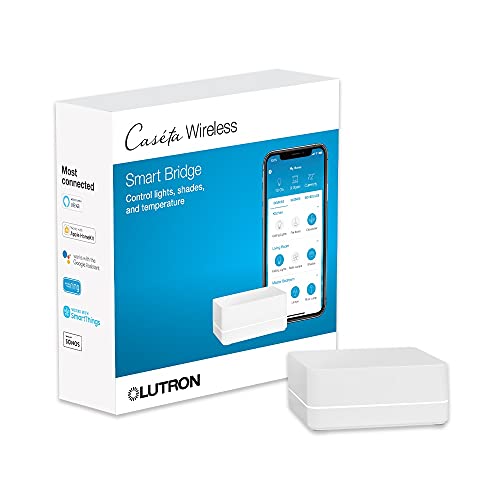
- Works with Alexa, HomeKit, Google Assistant, Ring, and more
- Supports up to 75 Caseta devices
- Plugs into the router and is simple to set up
Best For: Caseta lighting control and easy multi-platform integration
Local Automation Starter

- Official Home Assistant hardware with preinstalled software
- Local control reduces hub and app clutter
- USB expandability for Z-Wave, Zigbee, and Thread
Best For: Home Assistant users who want easy local automation
Wall-Mounted Control Center

- Customizable dashboard for devices, cameras, and routines
- Built-in hub supports Zigbee, Matter, Thread, and more
- Designed for wall mounting and shared household use
Best For: Families wanting a shared smart home control panel
Advanced Multi-Protocol Hub

- Matter bridge with Zigbee and Thread support
- Edge hub enables local automations
- Built-in 360° IR blaster for AC and legacy devices
Best For: Aqara users wanting local automation and IR control
Hub Starter for Tapo Homes
Tapo Smart Hub with Built-in Chime

- Supports up to 64 Tapo devices
- Low-power protocol helps extend battery life
- Built-in chime and 90 dB siren for alerts
Best For: Tapo users who want a simple hub for sensors and alerts
Most Flexible Platform Hub
Aeotec Smart Home Hub for SmartThings

- Supports Matter, Z-Wave, Zigbee, and Wi-Fi
- Works with SmartThings, Alexa, and Google Home
- Local automations can improve speed and reliability
Best For: Users who want broad compatibility and SmartThings automation
All-in-One IR and Sensor Hub

- Combines IR remote control with temp and humidity monitoring
- Adds a light sensor and two physical buttons
- Supports Matter for select SwitchBot devices
Best For: SwitchBot users who want IR control and room sensing
Compact Matter Bridge for Aqara Systems
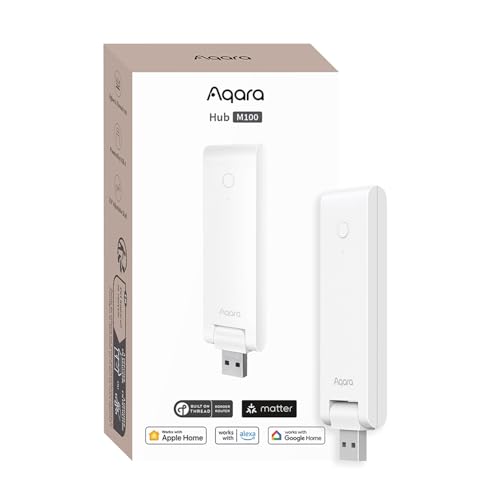
- Bridges Aqara Zigbee and Thread devices to Matter ecosystems.
- Runs local automations for faster, more reliable control.
- Small USB-A powered design with Wi-Fi 6 support.
Best For: Compact Aqara setups that need Matter bridging and local automation.
Local-First Matter Bridge with Security Features
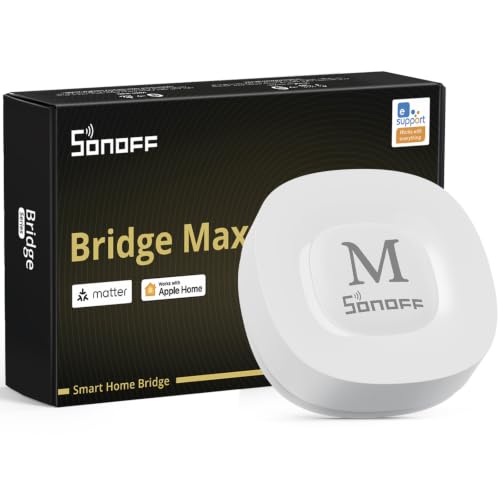
- Bridges Zigbee, BTHome, and eWeLink devices to Matter.
- Local web console works without cloud dependence.
- Includes a 90 dB alarm for Zigbee-based security setups.
Best For: Local-first users who want Matter bridging and built-in security features.
Feature-Rich Aqara Hub with IR Control

- Matter Controller, Bridge, and Thread Border Router in one unit.
- 360° IR blaster can control air conditioners and learn remote use.
- Dual-band Wi-Fi, PoE, and USB-C backup power support.
Best For: Aqara users who want IR appliance control and flexible network options.
Reliable Lighting Control – Lutron Caseta Smart Hub
If you’re building smart home hubs around lighting and voice control, the Lutron Caseta Smart Hub is a focused option that keeps Caseta devices organized while working with major platforms like Alexa, Apple HomeKit, Google Assistant, Ring, Serena shades, and Sonos. It plugs into your router, uses Clear Connect technology, and is designed to be simple to set up without interfering with Wi‑Fi-connected devices.
Best For: Homeowners who want a dependable hub for Lutron Caseta lighting and compatible ecosystem control.
Pros:
- Compatible with more leading smart home brands than any other Lutron smart home brand
- Supports up to 75 Caseta devices for gradual expansion
- Easy setup: plug in, connect to the router, and use the app
- Clear Connect technology avoids competing with Wi‑Fi devices
Cons:
- Caseta dimmers/switches and coordinating accessories are sold separately
- Primarily centered on Lutron Caseta devices rather than broad native device control
For buyers focused on lighting, this hub is a practical way to centralize Caseta control and integrate it cleanly into a larger smart home setup. It’s especially appealing if you want simple installation and broad assistant compatibility in one compact bridge.
Local Automation Starter – Home Assistant Green
Home Assistant Green | Smart Home hub with Advanced Automation | Official Home Assistant Hardware
Check Price On AmazonFor smart home hubs that prioritize local control, Home Assistant Green is the easiest entry point into the Home Assistant ecosystem. It comes with Home Assistant already installed, uses Ethernet for setup, and is designed to reduce app clutter while giving you a single place to manage and automate devices.
Best For: Users who want an official Home Assistant hub with local automation and easy startup.
Pros:
- Home Assistant is preinstalled for quick setup
- Official hardware from Nabu Casa
- Fanless, silent design with quad-core processor, 32GB storage, and 4GB RAM
- USB expandability for Z-Wave, Zigbee, and Thread accessories
Cons:
- Uses Ethernet, so it is not a wireless-first hub
- More advanced than a basic plug-and-play smart speaker hub
This is a strong pick if you want a compact hub built for automation depth and local data ownership. It’s best when you want a more flexible smart home brain rather than a simple voice controller.
Wall-Mounted Control Center – Amazon Echo Hub
The Amazon Echo Hub is a smart home hub built as a dedicated control panel, making it a good fit if you want quick access to devices, cameras, routines, and security tools from one wall-mounted screen. It supports thousands of compatible devices and brings Wi‑Fi, Bluetooth, Zigbee, Matter, Sidewalk, and Thread together in a dashboard-style interface.
Best For: Households that want a visible, shared control panel for smart home and security management.
Pros:
- Customizable dashboard for devices, routines, and cameras
- Supports thousands of Alexa-compatible devices
- Built-in smart home hub with Zigbee, Matter, Sidewalk, and Thread support
- Easy wall-mount installation with optional cable-hiding accessories
Cons:
- Power-over-Ethernet adapter and tabletop stand are sold separately
- Some advanced Ring features require a compatible subscription
If you want your smart home hubs to feel more like a central command station, Echo Hub delivers that experience well. It’s especially useful for families who want a shared screen for security and daily device control.
Advanced Multi-Protocol Hub – Aqara Smart Home Hub M3
The Aqara Smart Home Hub M3 is a versatile choice among smart home hubs if you want Matter bridging, local automation, and support for both Zigbee and Thread devices. It can also act as a smart IR blaster, giving you a way to connect traditional air conditioners and other IR gear into a modern automation setup.
Best For: Users who want a local-first Aqara hub with broad protocol support and IR control.
Pros:
- Supports Aqara Zigbee and Thread devices, plus Matter bridge functionality
- Edge hub design prioritizes local control and automation
- 360° IR blaster can provide status feedback and learning
- Offers dual-band Wi‑Fi, PoE, USB-C backup options, and encrypted local storage
Cons:
- Supports up to 127 Aqara Zigbee devices, not third-party Zigbee devices
- 2A USB power adapter is not included
For users who want a hub that does more than basic device linking, the M3 stands out with local automation and IR flexibility. It’s a smart fit if you already use Aqara gear or want to bridge more complex home devices into Matter.
Hub Starter for Tapo Homes – Tapo Smart Hub with Built-in Chime
If you’re building out one of the more focused smart home hubs setups, the Tapo H100 is a practical central point for Tapo sensors, switches, and buttons. It uses a low-power wireless protocol for those accessories, supports up to 64 devices, and adds a built-in chime plus a siren feature for alerts and deterrence.
Best For: Tapo users who want a simple hub for sensors, buttons, and home alerts.
Pros:
- Connects up to 64 Tapo devices in one hub.
- Low-power protocol can extend device battery life up to 10 times.
- Built-in chime and up to 90 dB siren add useful alerting.
- Supports smart actions based on sensor detection or button presses.
Cons:
- Requires 2.4GHz Wi-Fi.
- Works with Tapo smart sensors, switches, and buttons rather than direct smart plug/light pairing.
- Maximum connection distance is listed at up to 30 m under lab testing.
Overall, the H100 makes sense if you want one of the more straightforward smart home hubs for expanding a Tapo ecosystem without overcomplicating setup. It’s especially useful when your priorities are battery-friendly accessories, local alerts, and simple automations.
Most Flexible Platform Hub – Aeotec Smart Home Hub for SmartThings
For shoppers comparing smart home hubs with broad compatibility, the Aeotec Smart Home Hub stands out as a SmartThings-compatible gateway with Matter, Z-Wave, Zigbee, Wi-Fi, Alexa, and Google Home support. It’s designed to connect and automate a wide range of devices, with many routines now able to run locally for better speed and reliability.
Best For: Users who want a broadly compatible hub for SmartThings-based automation.
Pros:
- Supports Matter, Z-Wave, Zigbee, Wi-Fi, and SmartThings devices.
- Works with Alexa and Google Home for voice control.
- Wi-Fi or Ethernet setup makes installation flexible.
- Many automations can run locally for improved speed and reliability.
Cons:
- Designed for use in North America.
- Z-Wave Plus support is limited to the V3 model.
- Best value depends on whether you actually need its wider protocol support.
This is the most versatile pick in the group if you want one hub to cover multiple ecosystems and protocols. It’s a strong choice when your smart home includes mixed devices and you want room to expand later.
All-in-One IR and Sensor Hub – SwitchBot Hub 2
The SwitchBot Hub 2 is a strong pick among smart home hubs if you want one device to handle IR remote control, environmental monitoring, and SwitchBot bridging. It adds temperature, humidity, and light readings, lets you consolidate infrared remotes for appliances like TVs and air conditioners, and supports Matter for select SwitchBot devices.
Best For: SwitchBot users who want IR control plus temperature and humidity monitoring.
Pros:
- Built-in thermometer, hygrometer, and light sensor.
- Can consolidate many infrared remotes into one app.
- Supports scenes and geofencing based on sensor data.
- Includes two buttons for simple appliance control or automations.
Cons:
- Maximum supported devices is listed as 6.
- Requires 2.4GHz Wi-Fi for hub-to-cloud functionality.
- Primary compatibility is centered on SwitchBot products and supported IR devices.
As smart home hubs go, this one is especially appealing if you want to replace a stack of remotes and keep an eye on room conditions at the same time. It’s less of a general-purpose hub and more of a compact control center for the SwitchBot ecosystem.
Compact Matter Bridge for Aqara Systems – Aqara M100 Smart Hub
If you’re comparing smart home hubs for a compact Aqara-focused setup, the M100 is built to bridge Zigbee and Thread devices into Matter ecosystems with a small, flexible footprint. It supports local automations for fast response times and can link Aqara devices with platforms like Apple Home, Alexa, and Home Assistant.
Best For: Homeowners who want a compact Aqara hub for Matter bridging and local automation.
Pros:
- Supports Aqara Zigbee devices and Thread devices in one hub.
- Works as a Matter Bridge for Apple Home, Alexa, Home Assistant, and more.
- Local automation can run without Wi-Fi or cloud access.
- USB-A power makes placement flexible with wall outlets, PCs, routers, or power banks.
Cons:
- Does not support third-party Zigbee devices.
- Power adapter is not included.
- Requires continuous power during use.
For users already invested in Aqara, the M100 is a practical bridge that focuses on quick local control and ecosystem compatibility rather than broad Zigbee support. Its small size and Wi-Fi 6 connectivity make it a straightforward option for a tidy smart home setup.
Local-First Matter Bridge with Security Features – SONOFF Bridge Max
For shoppers evaluating smart home hubs with broad compatibility, the SONOFF Bridge Max is designed to bridge Zigbee, BTHome, and eWeLink devices into Matter platforms. It stands out for local-only management through a web console, plus built-in security tools that make it useful beyond simple device control.
Best For: Users who want a local Matter bridge with Zigbee support and basic home security features.
Pros:
- Bridges Zigbee, BTHome, and eWeLink devices to Matter ecosystems.
- Local web console works from LAN without needing a cloud account.
- Supports Home Assistant integration through MQTT.
- Built-in 90 dB alarm can work with Zigbee sensors for home security.
Cons:
- Some setup and management still depend on understanding bridging workflows.
- Security notifications and app access rely on mobile connectivity.
The Bridge Max is a strong fit if you want a hub that keeps control local while still connecting different ecosystems through Matter. Its combination of broad device support and built-in alarm features makes it more versatile than a basic bridge.
Feature-Rich Aqara Hub with IR Control – Aqara M200 Smart Hub
Among smart home hubs, the Aqara M200 is the most feature-packed option here, combining Matter control, Zigbee and Thread support, and an IR blaster for traditional appliances. It also supports local automation, so Aqara routines can stay responsive even when Wi-Fi or cloud access is unavailable.
Best For: Buyers who want an Aqara hub with Matter support, IR control, and wired or wireless networking.
Pros:
- Works as a Matter Controller, Matter Bridge, and Thread Border Router.
- Supports up to 40 Aqara Zigbee devices and 40 Thread devices.
- 360° IR blaster can control air conditioners and learn from remote use.
- Offers dual-band Wi-Fi, PoE support, and USB-C backup power options.
Cons:
- IR-to-Matter AC exposure is limited to one AC device.
- Some functions vary depending on the Matter integration app.
- Third-party Zigbee support is not indicated in the notes.
The M200 is a strong choice if you want a hub that does more than basic bridging, especially with IR appliance control and flexible wired networking. It is best suited to users who want one central Aqara hub for automation, alerts, and multi-platform integration.
How We Picked These Smart Home Hubs
We prioritized hubs that offer broad ecosystem compatibility, support for common protocols such as Matter, Zigbee, Z-Wave, Wi-Fi, or IR where relevant, and useful automation features. We also looked at setup simplicity, expandability, and whether the hub fits beginners, power users, or mixed-brand homes.
Quick Comparison
If you want the simplest voice-and-dashboard experience, display-style hubs are often easiest. If you need advanced routines and local control, dedicated automation hubs are usually the better choice. If your home includes a mix of older accessories, smart remotes, or different brands, choose a hub with stronger protocol bridging and broad compatibility.
Key Buying Factors for Smart Home Hubs
Compatibility
Check that the hub supports the devices you already own. Some Smart Home Hubs are built for one ecosystem, while others act as bridges across multiple platforms.
Protocol Support
Matter can improve cross-platform flexibility, but many homes still rely on Zigbee, Z-Wave, Wi-Fi, or IR. The best choice depends on what you plan to connect now and later.
Automation Capability
Look for scenes, schedules, device grouping, and conditional automations. Advanced users may prefer hubs that support local processing or deeper logic for faster, more reliable routines.
Interface and Control
Some Smart Home Hubs emphasize app-based control, while others add touchscreens, built-in voice assistants, or physical controls. Pick the interface that matches how you actually manage your home day to day.
Expansion and Future-Proofing
A good hub should leave room for growth. If you plan to add sensors, switches, or third-party accessories, choose a model with enough protocol coverage and ecosystem support to avoid replacing it later.
Who Should Buy Which Smart Home Hubs?
Beginners usually benefit from easy-to-use Smart Home Hubs with broad voice assistant compatibility and simple setup. Enthusiasts and tinkerers should look at options with advanced automation and local control. If you already rely on a specific ecosystem, such as Alexa, SmartThings, or Home Assistant, the best hub is often the one that fits that platform first and foremost. Homes with mixed devices may gain the most from hubs that combine Matter support with Zigbee, Z-Wave, or IR bridging.