
If your Wi-Fi drops off in the garage, backyard, or upstairs rooms, a Wi-Fi extender with external antennas can help push the signal farther and more reliably.
In this roundup, we focus on models that balance range, band support, weather resistance, and real-world ease of setup so you can choose the right fit for your home or property.
Best 10 Wi-Fi Extender with External Antennas Picks for 2026
Top Pick
TP-Link RE550 AC1900 Dual-Band Extender

- Three adjustable external antennas
- Dual-band AC1900 with Gigabit Ethernet
- EasyMesh compatible and app-managed
Best For: Larger homes needing broad coverage and wired flexibility
Best Budget
TP-Link RE205 Dual-Band Extender

- Two external antennas
- Up to 750 Mbps dual-band
- Signal light helps placement
Best For: Budget-friendly dead-zone coverage
Best Outdoor
TP-Link EAP110-Outdoor V3 Access Point

- High-gain antennas for long-range coverage
- Weatherproof outdoor design
- Passive PoE and Omada management
Best For: Outdoor Wi-Fi coverage and planned installations
High-Capacity Pick
2026 1200Mbps 6-Antenna WiFi Extender

- Six antennas for wider coverage
- Dual-band up to 1200 Mbps
- Up to 10,000 sq. ft. and 50 devices
Best For: Large homes with many devices
Outdoor Long-Range Choice

- IP65 weatherproof enclosure
- Dual-band AC1200 with MU-MIMO
- 802.3af/at and passive PoE support
Best For: Outdoor coverage with remote-managed flexibility
Simple Long-Range Repeater
C. Crane CC Vector WiFi Receiver System

- Indoor/outdoor omni antenna
- Repeats Wi-Fi to all devices
- IP65 water-resistant mounting options
Best For: Basic long-range coverage for weak-signal areas
Wi-Fi 7 Outdoor Performer
WAVLINK BE5100 Outdoor Extender

- Wi-Fi 7 dual-band with 4 streams
- Four detachable 8dBi antennas
- IP67 waterproof with PoE support
Best For: Fast outdoor Wi-Fi with rugged weather protection
Reliable Indoor Coverage
TP-Link AC1200 Dual-Band Extender for Everyday Dead Zones
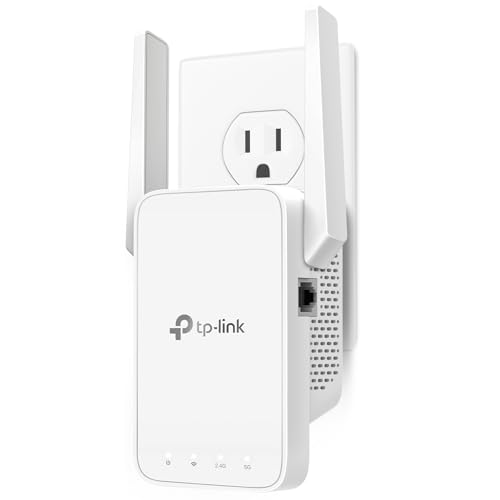
- Two adjustable external antennas
- AC1200 dual-band up to 867/300 Mbps
- EasyMesh compatible with 1 Ethernet port
Best For: Everyday indoor coverage in homes with weak spots
Outdoor Signal Booster
WAVLINK AC600 Weatherproof Extender with PoE

- Two detachable 7dBi antennas
- IP67 weatherproof with PoE support
- Four modes including repeater and AP
Best For: Outdoor coverage in yards, farms, and campsites
High-Capacity Outdoor Mesh
WAVLINK AX3000 WiFi 6 Extender for Large Outdoor Networks
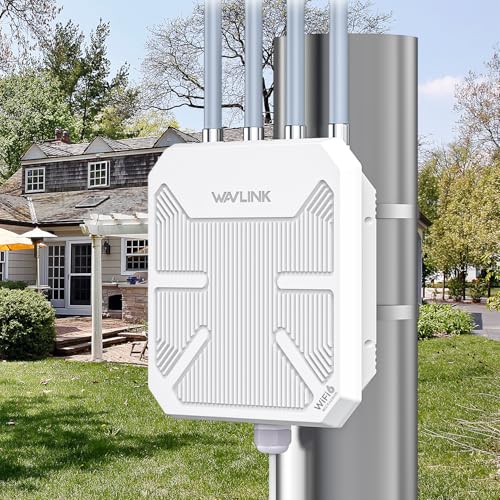
- Four 8dBi detachable antennas
- Wi-Fi 6 speeds up to 2402/573 Mbps
- Supports up to 256 devices with IP67 protection
Best For: Large outdoor networks needing long range and many connections
Top Pick – TP-Link RE550 AC1900 Dual-Band Extender
If you want a Wi-Fi extender with external antennas that can cover a larger home while adding useful wired flexibility, the TP-Link RE550 is a strong all-around option. It supports dual-band Wi-Fi, includes three adjustable external antennas, and adds a Gigabit Ethernet port plus AP mode for more versatile setup options.
Best For: Larger homes that need broader coverage, EasyMesh compatibility, and a wired Ethernet option.
Pros:
- Three adjustable external antennas for better coverage and more reliable connections
- Dual-band AC1900 speeds up to 1300 Mbps on 5 GHz and 600 Mbps on 2.4 GHz
- Gigabit Ethernet port and AP mode for wired devices or hotspot-style use
- EasyMesh compatible for expanding a compatible router setup
Cons:
- Like all extenders, it improves coverage rather than increasing your base internet speed
- Not compatible with mesh WiFi systems like Deco
The RE550 stands out if you want a practical extender with external antennas and extras that go beyond basic signal boosting. Its strongest appeal is the mix of coverage, dual-band performance, and wired connectivity.
Best Budget – TP-Link RE205 Dual-Band Extender
The TP-Link RE205 is a straightforward Wi-Fi extender with external antennas for users who mainly want to bring dead zones back into coverage. It offers dual-band support, an intelligent signal light to help with placement, and broad router compatibility in a compact design.
Best For: Smaller budgets and simple dead-zone coverage with easy placement guidance.
Pros:
- Two external antennas for stronger Wi-Fi expansion
- Dual-band performance up to 750 Mbps combined
- Intelligent signal light helps find the best location
- Works with any Wi-Fi router or wireless access point
Cons:
- Lower top speed than faster AC1900-class extenders
- Fewer advanced features than higher-end models
If you need a simple Wi-Fi extender with external antennas and don’t want to overpay for extras, the RE205 is easy to understand and easy to place. It’s a sensible pick for basic coverage extension.
Best Outdoor – TP-Link EAP110-Outdoor V3 Access Point
The TP-Link EAP110-Outdoor V3 is built for outdoor Wi-Fi applications rather than typical in-home repeating. It uses high-transmission power and high-gain antennas, includes passive PoE with a free injector, and is weatherproof for flexible long-range deployment.
Best For: Outdoor coverage needs such as yards, patios, and business-style installs.
Pros:
- High transmission power and high-gain antennas for long-range coverage
- Weatherproof design for outdoor Wi-Fi use
- Passive PoE support with a free PoE injector for easier installation
- Cloud access, Omada App support, and controller software for management
Cons:
- Single-band 2.4 GHz design only
- It is an access point, not a typical plug-in home extender
This is the right choice when the goal is outdoor wireless coverage, not just extending an indoor router signal. Its antenna and installation features make it especially useful for planned deployments.
High-Capacity Pick – 2026 1200Mbps 6-Antenna WiFi Extender
If you’re looking for a Wi-Fi extender with external antennas that emphasizes coverage and device capacity, this 6-antenna model is aimed at busy households. It offers dual-band support, claims up to 10,000 sq. ft. coverage, and is positioned as a simple one-tap setup solution.
Best For: Large homes with many connected devices and a preference for simple setup.
Pros:
- Six antennas for signal boosting across a wide area
- Dual-band performance with 300 Mbps on 2.4 GHz and 867 Mbps on 5 GHz
- Rated for up to 10,000 sq. ft. coverage and 50+ devices
- One-tap setup with LED indicator for placement help
Cons:
- Brand and model details are less established than major-name alternatives
- Specification listing is inconsistent in the supplied details
On paper, this model is built for broad coverage and a large number of devices rather than premium extras. It makes sense if your priority is a simple, high-capacity extender with multiple external antennas.
Outdoor Long-Range Choice – TP-Link EAP225-Outdoor AC1200
If you need a Wi-Fi extender with external antennas for outdoor coverage, the TP-Link EAP225-Outdoor is built more like a weatherproof access point than a typical plug-in booster. Its dual-band AC1200 design, MU-MIMO support, and IP65 enclosure make it a strong fit for yards, patios, and other spaces where regular indoor extenders struggle.
Best For: Homes or small sites that need durable outdoor Wi-Fi coverage with flexible PoE installation and centralized management.
Pros:
- IP65 weatherproof enclosure for reliable outdoor use in harsh conditions.
- Dual-band AC1200 with MU-MIMO for serving multiple devices at once.
- Supports 802.3af/at PoE and passive PoE for easier deployment.
- Omada SDN integration offers remote cloud management and app control.
Cons:
- It is an access point, so setup is better suited to networked installations than simple plug-and-play use.
- Best results depend on proper mounting and PoE access.
Overall, this is a practical choice when your priority is stable outdoor coverage rather than a basic home range extender. The external antenna-style design is less about convenience and more about dependable signal distribution in demanding spaces.
Simple Long-Range Repeater – C. Crane CC Vector WiFi Receiver System
The C. Crane CC Vector is a Wi-Fi extender with external antennas designed to pull in a distant 2.4 GHz signal and rebroadcast it to devices in another part of the property. Its indoor/outdoor antenna, flexible mounting options, and straightforward setup make it appealing if you want to extend coverage to a garage, garden, upstairs room, or similar weak-signal area.
Best For: Basic users who want a simple long-range repeater for improving weak Wi-Fi in outbuildings and hard-to-reach rooms.
Pros:
- Omni-directional indoor/outdoor antenna helps receive distant Wi-Fi signals.
- Repeats to all devices, including phones, tablets, smart TVs, and gaming consoles.
- Can be mounted on a wall, window, or outside with water-resistant IP65 protection.
- Simple setup is aimed at basic computer users.
Cons:
- Performance drops as distance increases.
- Primary support is on 2.4 GHz, with 5 GHz only for shorter ranges.
- Best throughput is limited to lighter usage such as browsing or SD streaming.
This is a practical coverage extender when ease of use and signal reach matter more than high-speed performance. If your dead zone needs are modest and you can work within 2.4 GHz limits, it offers a straightforward fix.
Wi-Fi 7 Outdoor Performer – WAVLINK BE5100 Outdoor Extender
For a Wi-Fi extender with external antennas that is clearly built for modern outdoor networking, the WAVLINK BE5100 brings Wi-Fi 7, four detachable 8dBi antennas, and multiple operating modes into one weather-ready unit. It is aimed at users who want fast wireless coverage outside, plus flexible installation with PoE and support for mesh, AP, router, and repeater modes.
Best For: Outdoor spaces that need high-speed Wi-Fi 7 coverage, flexible modes, and rugged weather protection.
Pros:
- Wi-Fi 7 dual-band design with 4-stream performance and high-speed support.
- Four detachable 8dBi fiberglass antennas for broader outdoor coverage.
- IP67 waterproof housing with ESD and lightning protection.
- Supports active and passive PoE plus multiple working modes.
Cons:
- Mesh mode is limited to WAVLINK series products.
- The PoE converter is not waterproof.
- Outdoor installation requires proper cabling and mounting.
Overall, this is the most feature-rich option here for outdoor use, especially if you want newer Wi-Fi 7 support and adjustable deployment modes. The external antennas and rugged design make it well suited to demanding coverage projects.
Reliable Indoor Coverage – TP-Link AC1200 Dual-Band Extender for Everyday Dead Zones
If you want a Wi-Fi extender with external antennas for standard home coverage, the TP-Link RE315 is built for straightforward dead-zone reduction. It uses dual-band AC1200 speeds, two adjustable external antennas, and EasyMesh compatibility to help extend signal to more rooms while staying easy to set up with the Tether app.
Best For: Households that want a simple indoor extender for everyday browsing, streaming, and adding coverage to weak spots.
Pros:
- Two adjustable external antennas help improve coverage and connection reliability.
- Dual-band AC1200 support delivers up to 867 Mbps on 5 GHz and 300 Mbps on 2.4 GHz.
- Supports up to 32 devices and covers up to about 1,500–1,600 sq. ft.
- Includes one Ethernet port for wired devices and Access Point mode.
Cons:
- Designed to improve coverage, not directly increase internet speed.
- Not compatible with mesh WiFi systems like Deco.
- Best suited for indoor use rather than outdoor environments.
The RE315 is a practical pick if you want a Wi-Fi extender with external antennas that prioritizes simplicity, broad compatibility, and dependable whole-home coverage. It makes the most sense for users who need an affordable signal booster rather than a high-end networking hub.
Outdoor Signal Booster – WAVLINK AC600 Weatherproof Extender with PoE
The WAVLINK AC600 is a Wi-Fi extender with external antennas designed for outdoor areas where indoor hardware usually falls short. With two detachable 7dBi antennas, PoE support, and an IP67 weatherproof enclosure, it is built to extend coverage to yards, farms, campsites, and other open spaces.
Best For: Outdoor Wi-Fi expansion in places that need weather resistance and flexible installation.
Pros:
- Two detachable 7dBi antennas and 1000mW output are aimed at strong outdoor coverage.
- PoE support lets you place it where power outlets are unavailable.
- IP67 weatherproof housing is designed for rain, dust, and wider temperature swings.
- Multiple modes include Repeater, Router, AP, and AP+Repeater.
Cons:
- Speed is AC600-class, so it is slower than newer Wi-Fi 6 models.
- The included PoE converter is not waterproof.
- Best suited to outdoor or semi-outdoor deployments, not typical indoor rooms.
This model makes sense when placement flexibility matters more than raw speed. If your goal is dependable outdoor coverage with external antennas and simple PoE-powered installation, the AC600 is a focused, rugged option.
High-Capacity Outdoor Mesh – WAVLINK AX3000 WiFi 6 Extender for Large Outdoor Networks
For buyers comparing a Wi-Fi extender with external antennas for large outdoor networks, the WAVLINK AX3000 stands out with four 8dBi detachable antennas, Wi-Fi 6 speeds, and support for up to 256 devices. It is built for long-range coverage, weather resistance, and flexible setup with active or passive PoE.
Best For: Large outdoor or mixed-use networks that need modern Wi-Fi 6 performance and broad device support.
Pros:
- Four 8dBi detachable antennas help push coverage up to 200–300 meters.
- Wi-Fi 6 dual-band speeds reach up to 2402 Mbps on 5 GHz and 573 Mbps on 2.4 GHz.
- Supports up to 256 devices and includes gigabit Ethernet.
- IP67 enclosure, ESD protection, and lightning protection improve outdoor durability.
Cons:
- Mesh mode is only available for WAVLINK series products.
- PoE converter is not waterproof.
- Designed for larger deployments, so it may be more than many small homes need.
This is the strongest choice here if you want high-capacity outdoor coverage with external antennas and newer Wi-Fi 6 features. It is especially appealing for farms, yards, RV setups, and other environments where range and client count matter.
How We Picked the Best Wi-Fi Extender with External Antennas
We prioritized products that offer practical range gains, external antenna designs that can be aimed or positioned more effectively, and a clear fit for either indoor or outdoor use. We also looked at band support, Ethernet or PoE options, device capacity, and weatherproofing where relevant.
Because the best choice depends on your layout, we included options for small apartments, multi-room homes, large yards, detached garages, and camera-heavy outdoor setups.
Quick Comparison
For simple indoor coverage, dual-band plug-in extenders are usually the easiest and most affordable choice. For larger homes or outdoor dead zones, access points and weatherproof models tend to deliver more stable performance. If you need broader device support or future-facing speeds, Wi-Fi 6 and Wi-Fi 7 options are worth a look.
Key Buying Factors for a Wi-Fi Extender with External Antennas
Range and Coverage Area
Check the claimed square footage or outdoor distance, but treat those numbers as best-case estimates. Real performance depends on walls, interference, and where you place the unit.
Band Support and Speed
Dual-band models are the most common and usually the best balance of price and performance. If you stream, game, or connect many devices, higher-throughput models can help reduce congestion.
Antenna Design
External antennas can improve flexibility because you can often angle them toward the weakest signal area. Detachable or higher-gain antennas are especially useful in outdoor and long-range setups.
Installation Type
Plug-in extenders are simplest for indoor use, while access points and outdoor units may require Ethernet, PoE, or a more involved setup. Choose the installation style that matches your network and comfort level.
Durability and Weather Resistance
If the device will live outside, look for IP-rated weather protection and mounting options. Indoor-only extenders should not be exposed to moisture or temperature swings.
Who Should Buy Which Wi-Fi Extender with External Antennas?
Choose a basic indoor extender if you mainly need stronger coverage in a few rooms. Pick a higher-capacity or mesh-compatible model if you have many devices or a larger home. Go with an outdoor access point or weatherproof extender if you need stable Wi-Fi in a yard, shed, garage, or for security cameras. For the most demanding long-range applications, a Wi-Fi Extender with External Antennas that supports Ethernet or PoE is often the most dependable choice.