
If you need better wireless coverage and a wired port for consoles, PCs, TVs, or printers, a Wi-Fi extender with Ethernet output can be the simplest fix.
This roundup focuses on models that balance range, speed, and real-world usability, so you can pick the right extender for your home without overspending.
Best 10 Wi-Fi Extender with Ethernet Output Picks for 2026
Top Dual-Band Mesh Pick
TP-Link RE550 AC1900 Extender with Gigabit Port

- Gigabit Ethernet port for wired devices
- AP mode turns wired lines into Wi-Fi
- Up to 2200 sq. ft. and 32 devices
Best For: Homes needing both coverage and a wired port
Wi-Fi 6 Wired Port Upgrade
TP-Link RE500X AX1500 Extender with Gigabit Port

- Wi-Fi 6 AX1500 with up to 1.5 Gbps
- Gigabit Ethernet port for wired devices
- OneMesh and AP mode for flexible use
Best For: Wi-Fi 6 homes needing a gigabit Ethernet port
Budget Dual-Band Pick
TP-Link RE220 WiFi Extender with Ethernet Port
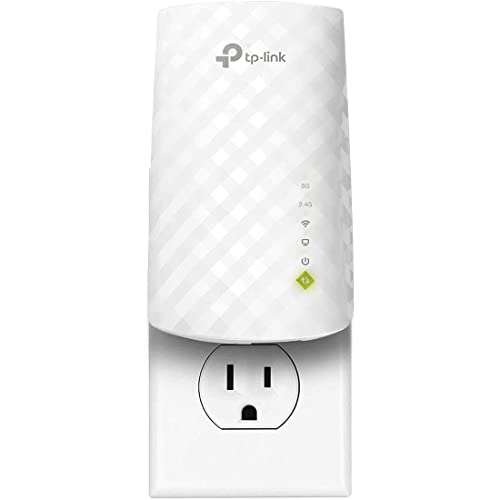
- Dual-band Wi-Fi up to 1200 sq. ft.
- Supports up to 30 devices
- Ethernet port plus OneMesh support
Best For: Small homes that need an affordable extender with wired Ethernet support
Fastest Wi-Fi 6 Option
TP-Link RE715X AX3000 Extender

- AX3000 Wi-Fi 6 with up to 2404 Mbps
- Gigabit Ethernet port and AP mode
- Covers up to 2400 sq. ft. for 64 devices
Best For: Busy homes that need the fastest extender here with gigabit Ethernet
Best Value AC1200
TP-Link RE315 WiFi Extender with Ethernet
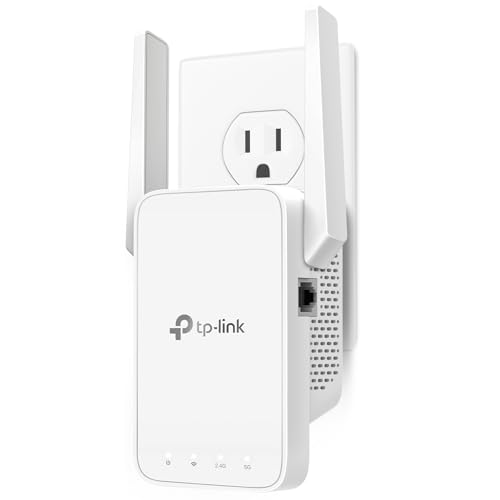
- AC1200 dual-band speeds up to 1200 Mbps
- Fast Ethernet port for wired devices
- Covers up to 1500 sq. ft. and 32 devices
Best For: Moderate-size homes needing a balanced extender with wired Ethernet support
Top Wi‑Fi 6 Pick
TP-Link RE615X AX1800 WiFi 6 Range Extender

- AX1800 dual-band Wi‑Fi 6
- Gigabit Ethernet output for wired devices
- EasyMesh compatible with app setup
Best For: Homes wanting strong coverage plus a wired Ethernet option
Best Budget Wi‑Fi 6 Option
TP-Link RE515X AX1500 Range Extender

- AX1500 Wi‑Fi 6 with gigabit Ethernet
- AP mode for creating a hotspot from wired internet
- EasyMesh compatible with Tether app setup
Best For: Budget-conscious buyers wanting Ethernet output and Wi‑Fi 6
Top Dual-Band Mesh Pick – TP-Link RE550 AC1900 Extender with Gigabit Port
If you want a Wi-Fi extender with Ethernet output that can also serve as a wired access point, the TP-Link RE550 is a strong all-around choice. It combines AC1900 dual-band coverage, a gigabit Ethernet port, and AP mode, so you can either extend an existing network or turn a wired line into a new hotspot.
Best For: Homes that need both broader wireless coverage and a dependable Ethernet port for a TV, console, or desktop.
Pros:
- Gigabit Ethernet port supports wired speed and reliability anywhere in the home.
- AP mode lets you convert a wired connection into a Wi-Fi hotspot.
- Dual-band AC1900 speed rating with up to 2200 sq. ft. coverage and support for 32 devices.
- EasyMesh compatible for broader whole-home expansion with supported routers.
Cons:
- Like all extenders, it improves coverage rather than increasing your base internet speed.
- Not compatible with mesh systems like Deco.
The RE550 is a practical pick if you want a well-rounded extender that covers a lot of ground and still gives you a wired connection option. It fits best in homes where flexibility matters more than chasing the newest spec sheet.
Budget Ethernet Port Option – intelbras Dual-Band WiFi Extender 1200Mbps
This Wi-Fi extender with Ethernet output is geared toward straightforward home coverage on a budget. The intelbras model offers dual-band 1200Mbps performance, an Ethernet/LAN port for wired devices, and AP mode if you want to use an existing cable run to create a stronger wireless hotspot.
Best For: Buyers who want a simple extender with a wired port and easy setup for everyday home use.
Pros:
- Dual-band design delivers up to 1200Mbps total bandwidth.
- Ethernet port supports stable wired connections for a TV, desktop, or console.
- AP mode can turn a wired connection into a wireless hotspot.
- Coverage up to 2,150 sq. ft. and support for 35 devices.
Cons:
- Single-band support in the details is limited to 2.4GHz, so specs should be reviewed carefully.
- Setup may require attention to the phone settings and reset steps listed in the notes.
For shoppers focused on value and basic functionality, this extender covers the essentials without extra complexity. It is best when you want a wired output and wider coverage more than premium speed features.
Wi-Fi 6 Wired Port Upgrade – TP-Link RE500X AX1500 Extender with Gigabit Port
The TP-Link RE500X is a Wi-Fi extender with Ethernet output built for users who want Wi-Fi 6 benefits plus a wired connection option. With AX1500 dual-band speeds, a gigabit Ethernet port, AP mode, and OneMesh compatibility, it is aimed at homes that want a flexible upgrade path without replacing the router.
Best For: Wi-Fi 6 households that want a gigabit port for a wired device and easier network expansion.
Pros:
- Wi-Fi 6 AX1500 rating supports up to 1.5 Gbps combined bandwidth.
- Gigabit Ethernet port provides a reliable wired connection.
- AP mode and OneMesh support add flexibility for home networking.
- Up to 1500 sq. ft. coverage and support for 25 devices.
Cons:
- Coverage is lower than some larger-range extenders in the list.
- Not compatible with mesh systems like Deco.
This model makes sense if you want a newer Wi-Fi 6 extender that still includes a useful Ethernet port. It is a solid fit for smaller to mid-size spaces where stable wired access matters alongside better wireless performance.
High-Coverage Ethernet Choice – TGDLLF 5000 Sq. Ft. WiFi Extender with Ethernet
If maximum coverage is the priority, this Wi-Fi extender with Ethernet output is designed to reach hard-to-cover areas and keep a wired option available. The TGDLLF extender supports up to 5000 sq. ft., connects up to 50 devices, and includes an RJ45 Ethernet port plus AP mode for converting a wired network into wireless coverage.
Best For: Large homes that need broad coverage and a simple Ethernet port for stable wired use.
Pros:
- Very large claimed coverage of up to 5000 sq. ft.
- Ethernet port can reduce Wi-Fi drop issues for supported devices.
- AP mode supports wired-to-wireless networking.
- Simple plug-and-play style setup with WPS and browser-based configuration.
Cons:
- Single-band 2.4GHz design is less versatile than dual-band options.
- Speeds are listed as 300Mbps on 2.4GHz, which is modest by modern standards.
- Warranty is only 30 days per the supplied details.
This is the most coverage-focused option in the group, so it suits situations where reach matters more than advanced radio features. If you need a basic extender with Ethernet output for a large footprint, it offers a straightforward value proposition.
Budget Dual-Band Pick – TP-Link RE220 WiFi Extender with Ethernet Port
If you want a Wi-Fi extender with Ethernet output for everyday coverage gaps, the TP-Link RE220 is a straightforward dual-band option. It supports 5GHz and 2.4GHz bands, covers up to 1200 square feet, and can connect up to 30 devices, making it a practical fit for smaller homes or apartments.
Best For: Budget-minded buyers who want a simple extender with wired Ethernet support for a room, console, or smart TV.
Pros:
- Dual-band design offers up to 44% more bandwidth than single-band N300 extenders
- Covers up to 1200 square feet and supports up to 30 devices
- Includes an Ethernet port for wired connectivity anywhere in range
- OneMesh support adds flexibility with compatible TP-Link setups
Cons:
- Lower throughput than the faster AC1200 and AX3000 models here
- Smaller coverage area than the other two options in this roundup
The RE220 is a solid entry-level choice if you mainly need dependable coverage and a basic wired port without paying for Wi-Fi 6. It is best suited to light-to-moderate home networking needs rather than larger, device-heavy households.
Fastest Wi-Fi 6 Option – TP-Link RE715X AX3000 Extender
For shoppers specifically looking for a Wi-Fi extender with Ethernet output and the strongest feature set, the TP-Link RE715X stands out. It delivers AX3000 dual-band speeds, extends coverage up to 2400 square feet, and supports up to 64 devices, so it is built for busier homes and heavier streaming or multitasking.
Best For: Larger households that want Wi-Fi 6 coverage plus a gigabit Ethernet port for a stable wired connection.
Pros:
- Wi-Fi 6 AX3000 performance with speeds up to 2404 Mbps on 5GHz and 574 Mbps on 2.4GHz
- Gigabit Ethernet port for wired speed and reliability anywhere in the home
- Up to 2400 square feet of coverage and support for up to 64 devices
- EasyMesh compatibility and AP mode add setup flexibility
Cons:
- More advanced than basic extenders, so it may be more than casual users need
- Not compatible with mesh WiFi systems like Deco
The RE715X is the best pick here if you want the most headroom for coverage, devices, and wired output. Its gigabit Ethernet port and Wi-Fi 6 support make it the most capable all-around option in this group.
Best Value AC1200 – TP-Link RE315 WiFi Extender with Ethernet
The TP-Link RE315 is a balanced Wi-Fi extender with Ethernet output for users who want solid everyday performance without jumping to Wi-Fi 6 pricing. It offers dual-band AC1200 speeds, covers up to 1500 square feet, and supports up to 32 devices, giving it a middle-ground profile for homes with moderate coverage needs.
Best For: Buyers who want a practical all-around extender with Ethernet for streaming devices, work gear, or a console.
Pros:
- AC1200 dual-band speeds with 867 Mbps on 5GHz and 300 Mbps on 2.4GHz
- Fast Ethernet port adds wired reliability for nearby devices
- Covers up to 1500 square feet and supports up to 32 devices
- EasyMesh compatibility and app-based setup improve flexibility
Cons:
- Not as fast or as high-capacity as the AX3000 model
- Coverage is good, but still below the RE715X’s 2400-square-foot range
The RE315 makes sense if you want a dependable Wi-Fi extender with Ethernet output and a more accessible feature set than Wi-Fi 6. It is the most balanced choice when you want useful coverage, wired support, and simple setup.
Top Wi‑Fi 6 Pick – TP-Link RE615X AX1800 WiFi 6 Range Extender
If you want a Wi-Fi extender with Ethernet output for faster, more flexible coverage, the TP-Link RE615X is built around AX1800 dual-band Wi‑Fi 6 and a gigabit Ethernet port. It is a practical choice for filling dead zones while still giving you a wired option for a console, PC, or other nearby device.
Best For: Homes that need stronger whole-home coverage plus a gigabit Ethernet port for wired devices.
Pros:
- AX1800 dual-band speeds with 1201 Mbps on 5 GHz and 574 Mbps on 2.4 GHz
- Gigabit Ethernet port adds wired speed and reliability anywhere in the home
- Two high-gain antennas with Beamforming help extend coverage and reduce dead zones
- EasyMesh compatible and managed through the TP-Link Tether app
Cons:
- Extenders improve coverage, not direct internet speed
- Not compatible with mesh systems like Deco
Overall, the RE615X is the strongest all-around fit here if you want a Wi-Fi extender with Ethernet output and modern Wi‑Fi 6 support. It balances coverage, wired convenience, and simple app-based setup without overcomplicating the install.
Longest-Range Value – 2026 Dual-Band Extender with Ethernet Port
This Wi-Fi extender with Ethernet output is aimed at users who want maximum reach and simple setup in a compact design. It combines dual-band support, four adjustable antennas, and an Ethernet port for devices that benefit from a wired link.
Best For: Large homes that need broad coverage, easy setup, and an Ethernet port on a budget-friendly extender.
Pros:
- Coverage is listed up to 12,880 sq. ft. with 4 adjustable external antennas
- Dual-band speeds include 1.2Gbps on 5 GHz and 300Mbps on 2.4 GHz
- Beam forming is designed to maintain speed through multiple concrete walls
- Includes WPA3 encryption, device isolation, and Ethernet port support
Cons:
- Brand ecosystem and long-term support are less established than major networking names
- Claims are ambitious, so real-world performance may vary by layout and wall construction
If your priority is reach first and wired flexibility second, this model stands out for sheer coverage claims and security features. It is best treated as a simple long-range extender with Ethernet output rather than a premium mesh alternative.
Best Budget Wi‑Fi 6 Option – TP-Link RE515X AX1500 Range Extender
The TP-Link RE515X is a straightforward Wi-Fi extender with Ethernet output that focuses on practical coverage, simple setup, and broad device compatibility. With AX1500 Wi‑Fi 6, a gigabit Ethernet port, and AP mode, it works well when you want both wireless expansion and a wired connection point.
Best For: Users who want a lower-cost TP-Link extender with Wi‑Fi 6, Ethernet output, and AP mode.
Pros:
- AX1500 dual-band Wi‑Fi 6 with 1201 Mbps on 5 GHz and 300 Mbps on 2.4 GHz
- Gigabit Ethernet port supports wired speed and AP mode for turning a wired line into Wi‑Fi
- Two high-gain antennas with Beamforming help improve range and reliability
- EasyMesh compatible and easy to manage with the TP-Link Tether app
Cons:
- Coverage is smaller than the RE615X at up to 1,800 sq. ft.
- Like all extenders, it boosts coverage rather than directly increasing internet speed
For shoppers who want a familiar brand and a balanced feature set, the RE515X is an easy recommendation. It gives you the wired flexibility of Ethernet output without pushing into the higher-priced end of the lineup.
How We Picked the Best Wi-Fi Extender with Ethernet Output
We prioritized models that combine strong dual-band performance, useful Ethernet output, and broad device support. We also considered coverage claims, Wi-Fi 6 versus AC performance, ease of setup, and whether the extender supports AP or Mesh-style operation.
Because advertised range can vary a lot with walls, interference, and router placement, we favored options with practical specs and flexible placement rather than marketing numbers alone.
Quick Comparison
If you want the simplest choice, AC models usually cost less and are fine for browsing, streaming, and light gaming. If you have a newer router or many connected devices, a Wi-Fi 6 extender often delivers better efficiency and stability. For a Wi-Fi Extender with Ethernet Output, the wired port is most useful when you want a more reliable connection to one device without running a long cable back to the router.
Key Buying Factors for Wi-Fi Extender with Ethernet Output
Speed and Band Support
Look for dual-band support so the extender can split traffic between 2.4GHz and 5GHz. This helps reduce congestion and improves performance for streaming and downloads.
Ethernet Port Use Case
Check whether the Ethernet port is meant for connecting a device to the extender or for access point mode. If you plan to wire in a smart TV, game console, desktop, or streaming box, this feature matters more than headline range.
Coverage and Device Count
Choose a model sized for your home. Larger floor plans and more users call for higher device limits and stronger radios, especially in multi-room environments.
Wi-Fi 6, Mesh, and AP Mode
Wi-Fi 6 models are a smarter pick for busy networks. EasyMesh or AP mode can also improve flexibility if you want a more seamless setup or a wired backhaul-style configuration.
Who Should Buy Which Wi-Fi Extender with Ethernet Output?
Buy an AC extender if you want a lower-cost fix for dead zones and only need one wired device connected. Choose a Wi-Fi 6 Wi-Fi Extender with Ethernet Output if your home has many devices, newer phones and laptops, or you want better long-term performance. If you are covering a large home or outbuilding, prioritize stronger coverage claims, higher device capacity, and placement flexibility over the cheapest option.
For most buyers, the best choice is the model that matches your home size, router generation, and wired-device needs—not simply the one with the biggest speed number on the box.