
A basement Wi-Fi dead zone can make streaming, gaming, and smart-home use frustrating fast. The right extender can help pull a stable signal into lower levels without a full network overhaul.
In this roundup, we focus on models that balance range, band support, Ethernet options, and ease of placement for real-world basement use.
Best 10 Wi-Fi Extender for Basement Picks for 2026
Heavy-Duty Dual-Band Pick

- Dual-band up to 1900 Mbps combined
- Covers up to 2200 sq. ft. and 32 devices
- Gigabit Ethernet port and AP mode
Best For: Basements needing broad coverage and a wired connection option
Budget Long-Range Option

- Single-band 2.4 GHz design
- Claimed coverage up to 8470 sq. ft.
- Repeater mode, AP mode, and Ethernet port
Best For: Large basements where maximum range is the main goal
Compact Dual-Band Upgrade
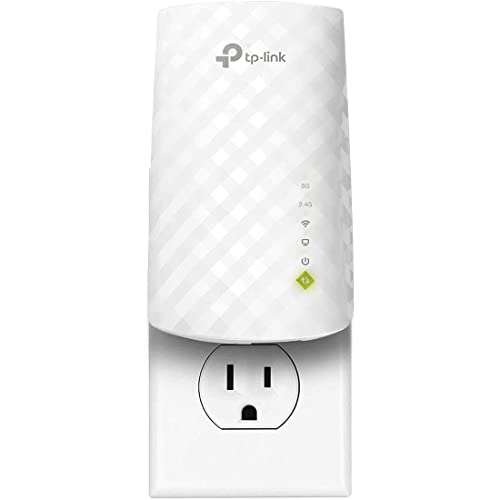
- Dual-band with up to 733 Mbps combined
- Covers up to 1200 sq. ft. and 30 devices
- Compact size with Ethernet port
Best For: Smaller basements that need a simple dual-band boost
Editor Pick
TP-Link AX1500 WiFi 6 Extender

- Wi-Fi 6 dual-band speeds up to 1.5 Gbps class
- Covers up to 1500 sq. ft. and 25 devices
- Gigabit Ethernet port and app setup
Best For: Basements needing reliable Wi-Fi 6 coverage and a wired port
Best Performance
TP-Link AX3000 WiFi 6 Extender

- AX3000 Wi-Fi 6 speeds and beamforming antennas
- Covers up to 2,400 sq. ft. and 64 devices
- Gigabit Ethernet port, AP mode, and EasyMesh support
Best For: Busy basements that need the strongest range and most capacity
High-Coverage Pick
Nonser 1200Mbps Dual-Band Extender

- Up to 15999 sq. ft. coverage
- Dual-band 1200Mbps performance
- Ethernet port with repeater/AP modes
Best For: Larger homes or basements needing broad coverage and flexible setup
Balanced Everyday Pick
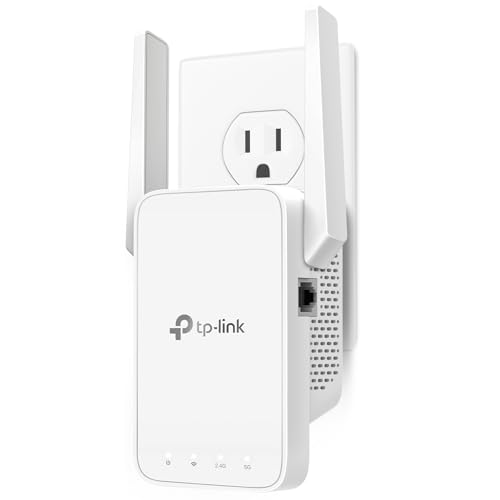
- Dual-band AC1200 with Ethernet port
- Up to 1600 sq. ft. coverage
- Easy setup with app and signal indicator
Best For: Households wanting simple setup and reliable everyday coverage
Heavy-Duty Dual-Band Pick – TP-Link AC1900 RE550
If you need a Wi-Fi extender for basement coverage and want stronger signal quality rather than just more bars, the TP-Link RE550 is a practical dual-band option. It supports up to 2200 sq. ft. of coverage, can connect up to 32 devices, and includes three adjustable external antennas plus a Gigabit Ethernet port for wired gear.
Best For: Homes that need broader basement coverage, dual-band performance, and the option to hardwire a device or use AP mode.
Pros:
- Dual-band speeds up to 1300 Mbps on 5 GHz and 600 Mbps on 2.4 GHz
- Three adjustable external antennas help improve coverage and reduce dead zones
- Gigabit Ethernet port supports wired connections or Access Point mode
- EasyMesh compatible for expanding a supported home network
Cons:
- Like all extenders, it improves coverage rather than increasing your base internet speed
- Not compatible with mesh WiFi systems like Deco
For a basement setup, this model stands out because it balances coverage, dual-band flexibility, and wired connectivity in one unit. If your router is upstairs and the basement needs a more reliable signal for streaming, gaming, or smart devices, it’s a solid mid-to-upper-tier choice.
Budget Long-Range Option – JOYOCHO 8470 Sq.Ft Extender
This Wi-Fi extender for basement use is aimed at maximum reach on the 2.4 GHz band, with a stated coverage area up to 8470 sq. ft. It offers up to 300 Mbps, supports repeater and AP modes, and includes an Ethernet port for turning a wired link into a broadcast point.
Best For: Large homes or basement areas where maximum range matters more than dual-band performance.
Pros:
- Very large claimed coverage area up to 8470 sq. ft.
- Repeater mode and AP mode give flexible setup options
- Ethernet port supports access point use from a wired source
- Supports WPA/WPA2 security protocols
Cons:
- Single-band 2.4 GHz design only
- Top speed is limited to 300 Mbps
- Coverage claims are ambitious and may depend heavily on placement and building materials
If your basement has weak reception and you mainly need reach for browsing, cameras, or general connected devices, this model is the most range-focused pick here. It trades speed and band flexibility for a simple, long-distance signal boost.
Compact Dual-Band Upgrade – TP-Link RE220
For a smaller or moderately difficult Wi-Fi extender for basement setups, the TP-Link RE220 is a compact dual-band option that keeps things simple. It covers up to 1200 sq. ft., supports up to 30 devices, and includes an Ethernet port for a wired connection when you need one.
Best For: Smaller basements or secondary spaces that need a straightforward dual-band extender with a compact footprint.
Pros:
- Dual-band support with 2.4 GHz and 5 GHz bandwidth options
- Up to 1200 sq. ft. of coverage and 30 connected devices
- Ethernet port adds flexibility for wired devices or network expansion
- Very small, lightweight design
Cons:
- Less coverage than larger-footprint models
- Not as powerful on paper as higher-end AC1900 extenders
This is a sensible choice if your basement only needs a dependable signal boost rather than maximum reach. Its small size, dual-band support, and easy home-network compatibility make it a low-fuss upgrade.
High-Capacity Coverage Pick – grecab 5000 Sq.Ft Extender
If your basement needs broad coverage for multiple gadgets, this Wi-Fi extender for basement use is built around reach and device capacity. It claims up to 5000 sq. ft. of coverage, supports up to 50 devices, and includes dual-band support, AP mode, repeater mode, and an Ethernet port.
Best For: Busy households that want wide basement coverage and support for lots of connected devices.
Pros:
- Coverage claims up to 5000 sq. ft. with support for 50 devices
- Dual-band technology with up to 300 Mbps on 2.4 GHz
- Repeater mode and AP mode for flexible installation
- Ethernet port can provide a more stable connection from a wired source
Cons:
- Notes only specify 2.4 GHz speed for the dual-band setup
- Security and range claims are broad and may depend on home layout and placement
This model makes sense when the basement is part of a larger, device-heavy home network. It focuses on coverage, simple setup, and a wired fallback rather than premium speed specs.
Editor Pick – TP-Link AX1500 WiFi 6 Extender
If you need a Wi-Fi extender for basement coverage, the TP-Link RE500X is a practical choice for filling in dead zones with dual-band Wi-Fi 6 support. It’s built for home coverage rather than raw speed gains, and the 1.5 Gbps class plus high-gain antennas make it a solid option for improving signal reliability in hard-to-reach areas.
Best For: Basement setups that need reliable coverage, Wi-Fi 6 support, and an Ethernet port for a wired device.
Pros:
- Covers up to 1500 sq. ft. and supports up to 25 devices.
- Dual-band Wi-Fi 6 with up to 1201 Mbps on 5 GHz and 300 Mbps on 2.4 GHz.
- Gigabit Ethernet port adds a wired option for a console, PC, or streaming device.
- TP-Link Tether app setup and intelligent signal indicator simplify installation.
Cons:
- As with all extenders, it improves coverage rather than increasing your internet plan speed.
- Does not support the 6 GHz band.
- Not compatible with mesh WiFi systems like Deco.
For a basement where walls and floors can weaken signal, the RE500X offers a balanced mix of range, Wi-Fi 6, and easy setup. Its coverage claims are modest compared with larger extenders, but the wired port and OneMesh support make it a flexible upgrade for many homes.
Budget-Friendly Option – 1200Mbps Dual-Band Extender
For a Wi-Fi extender for basement use on a tighter budget, this dual-band model focuses on broad coverage and simple setup. It’s rated to cover up to 2,150 sq. ft. and supports up to 35 devices, with an Ethernet port and AP mode if you want a more stable wired backhaul or a basement hotspot.
Best For: Larger basement areas that need broad coverage, an Ethernet port, and straightforward setup.
Pros:
- 1200 Mbps dual-band performance with 867 Mbps on 5 GHz and 300 Mbps on 2.4 GHz.
- Rated coverage up to 2,150 sq. ft. and support for up to 35 devices.
- Ethernet port plus AP mode for a wired connection or hotspot setup.
- Setup options include WPS or web setup, with clear recovery tips if pairing fails.
Cons:
- Uses older 802.11a/b/g/n compatibility rather than Wi-Fi 6.
- As with other extenders, it is meant to improve coverage, not increase speed.
- Performance can drop with walls, floors, and interference.
This is a good fit if your basement needs stronger reach more than cutting-edge features. The larger coverage rating and AP mode make it appealing for wired or wireless basement layouts, though it’s not the most advanced option in the group.
Best Performance – TP-Link AX3000 WiFi 6 Extender
If you want a high-capacity Wi-Fi extender for basement coverage, the TP-Link RE715X is the strongest performer in this group. It offers Wi-Fi 6 speeds up to 3000 Mbps class, coverage up to 2,400 sq. ft., and support for up to 64 devices, making it a better fit for busy homes or basements with multiple streaming and connected devices.
Best For: Busy basements that need the highest capacity, stronger coverage, and a fast wired option.
Pros:
- AX3000 dual-band speeds up to 2404 Mbps on 5 GHz and 574 Mbps on 2.4 GHz.
- Covers up to 2,400 sq. ft. and supports up to 64 devices.
- Gigabit Ethernet port and AP mode add wired flexibility.
- EasyMesh compatibility, app setup, and beamforming with high-gain directional antennas.
Cons:
- Like all extenders, it improves coverage rather than increasing your internet plan speed.
- Not compatible with mesh WiFi systems like Deco.
- Performance still depends on walls, distance, and other obstacles.
For basement installs where reach, device count, and signal stability matter most, the RE715X is the most capable option here. It’s especially appealing if you want a wired Ethernet port and a more future-ready Wi-Fi 6 setup.
High-Coverage Pick – Nonser 1200Mbps Dual-Band Extender
If you need a Wi-Fi extender for basement use, this dual-band Nonser model is built to push a stronger signal into hard-to-reach spots. It combines 1200Mbps dual-band support with four antennas, an Ethernet port, and multiple operating modes, so it can help extend coverage where your main router struggles to reach.
Best For: Larger homes or basements that need broad coverage, flexible setup options, and wired-device support.
Pros:
- Up to 15999 sq. ft. of coverage for reducing dead zones.
- Dual-band 2.4GHz/5GHz support for faster, more flexible connections.
- Ethernet port plus repeater and AP modes add setup flexibility.
- Supports WPA/WPA2 security protocols.
Cons:
- Coverage claims are very high, so real-world basement performance will depend on wall layout and router placement.
- Wide compatibility is noted, but it does not list mesh-system integration.
Overall, this is the most feature-packed option in the group for users who want broad reach and multiple ways to deploy it. If your basement is a weak-signal zone and you want a unit that can also handle wired connections, this one is a practical fit.
Balanced Everyday Pick – TP-Link AC1200 RE315
The TP-Link RE315 is a solid Wi-Fi extender for basement coverage if you want a straightforward, well-known option with balanced speed and range. It supports dual-band AC1200 speeds, includes an Ethernet port, and uses adaptive path selection to help maintain a reliable connection as you move around the home.
Best For: Households that want easy setup, reliable coverage, and a trusted mainstream extender for everyday use.
Pros:
- Dual-band AC1200 speeds up to 867 Mbps on 5GHz and 300 Mbps on 2.4GHz.
- Up to 1600 sq. ft. and 32 devices supported.
- Easy setup with TP-Link Tether app and intelligent signal indicator.
- Ethernet port and EasyMesh compatibility add versatility.
Cons:
- Coverage is more modest than the largest-range options in this roundup.
- Not compatible with mesh WiFi systems like Deco.
This is a practical pick if you want a dependable extender without extra complexity. For a basement that needs better signal rather than huge maximum reach, the RE315 keeps the setup simple and the feature set useful.
Security-Focused Pick – 1.2Gbps Extender with WPA3
If your basement needs a Wi-Fi extender for basement coverage and you also care about security, this model stands out with WPA3 encryption and device isolation. It pairs dual-band 1.2Gbps performance with four antennas and beam forming, aiming to keep the signal stable across longer distances and through difficult interior obstacles.
Best For: Users who want strong basement coverage with modern security features and easy setup.
Pros:
- Dual-band speeds of 1.2Gbps on 5GHz and 300Mbps on 2.4GHz.
- Up to 12,880 sq. ft. coverage with four adjustable antennas.
- WPA3 encryption and device isolation for stronger security.
- Ethernet port and simple setup with included instructions and support.
Cons:
- Brand name is less established than the major networking brands here.
- Compatibility is listed specifically with routers, so setup expectations should be kept practical.
For buyers who want a basement-friendly extender with a stronger security story, this is an appealing option. It offers broad claimed coverage and useful stability features without adding much setup friction.
How We Picked the Best Wi-Fi Extender for Basement
For a Wi-Fi Extender for Basement use, we prioritized models that can handle signal loss through floors and walls, offer dual-band support, and include practical features like Ethernet ports or mesh compatibility. We also favored extenders with clear setup, enough device capacity for a typical household, and coverage claims that suggest flexibility in placement.
Quick Comparison
Basement-friendly extenders generally fall into three groups: budget long-range models for basic browsing and streaming, dual-band extenders with Ethernet for a more stable wired connection, and Wi-Fi 6 options for faster, more efficient performance in busier homes. If your basement is used for work or gaming, the Wi-Fi 6 and Ethernet-equipped models are usually the safest bet.
Key Buying Factors for a Wi-Fi Extender for Basement
Signal Strength and Placement
A basement extender works best when it can still receive a decent signal from the router upstairs. Coverage numbers matter, but placement matters more. Look for a model that can be installed midway between the router and basement rather than deep inside the dead zone.
Dual-Band Support
Dual-band extenders help reduce congestion by using 2.4GHz for range and 5GHz for higher speeds. For many basement setups, that balance is essential. A Wi-Fi Extender for Basement use should not rely on single-band performance unless your needs are very light.
Ethernet Port
An Ethernet port is a major advantage if you want to connect a desktop, TV, console, or streaming box in the basement. It can also improve stability when wireless signal quality is inconsistent.
Wi-Fi 6 Vs. Wi-Fi 5
Wi-Fi 6 extenders are a better fit for homes with multiple devices, heavier streaming, or more demanding use. Wi-Fi 5 models can still work well for simpler needs, especially if your internet plan is modest and the basement is mainly for browsing or casual media.
Device Capacity and Mesh Features
If several people will use the basement network at once, check the device limit and any EasyMesh or AP mode support. Those features can make it easier to expand coverage without creating a confusing second network.
Who Should Buy Which Wi-Fi Extender for Basement?
If you want the simplest fix for light basement use, choose a dual-band budget extender with straightforward setup. If you need smoother video calls, gaming, or streaming, step up to a Wi-Fi 6 model with stronger throughput and Ethernet. If your basement acts like a full living area or workspace, prioritize the most capable extender in the lineup, especially one with wide coverage claims, strong band support, and multi-device capacity.
The best choice depends less on the biggest advertised range and more on how much signal must travel through your home and how many devices you need to support below grade.