
A mini PC can make a quiet, space-saving Unraid server, but the right choice depends on more than processor speed. Storage expansion, networking, and Linux hardware support matter just as much.
These 10 picks span budget refurbished desktops and newer, more powerful systems. Use the buying guide below to match one to your drive setup and workload.
Best 10 Mini PC for Unraid Picks for 2026
Efficient Starter
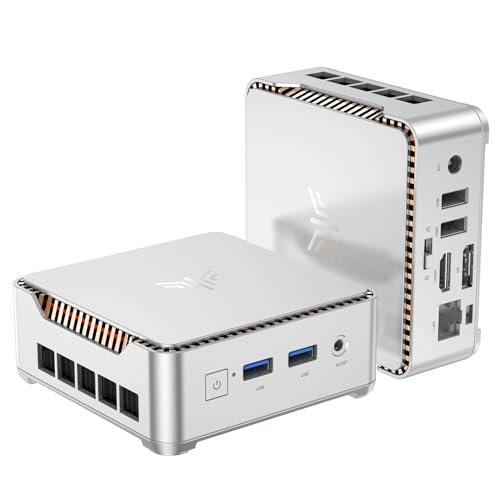
- Four-core, eight-thread Ryzen 7330U
- Two M.2 storage slots
- Gigabit Ethernet; compact VESA-ready case
Best For: Light containers and SSD-focused storage
Small-Space Pick

- Four-core, eight-thread Ryzen R2544
- Upgradeable DDR4 and dual M.2 slots
- Compact 3.94-inch-square footprint
Best For: A tiny SSD-based test server
More Storage Included
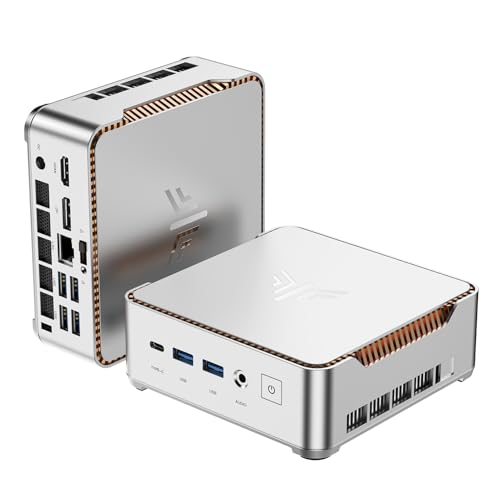
- 512GB SSD and 16GB LPDDR4 included
- Two M.2 slots; up to 4TB stated
- Four-core Ryzen 4300U and Gigabit LAN
Best For: Modest builds needing more included SSD space
Expansion Pick

- Eight-core, 16-thread Ryzen 7 7730U
- Upgradeable RAM up to 64GB
- 2.5GbE plus M.2 and 2.5-inch storage options
Best For: Containers, VMs and flexible compact storage
Refurbished Starter
HP EliteDesk 800 G2 Desktop Mini
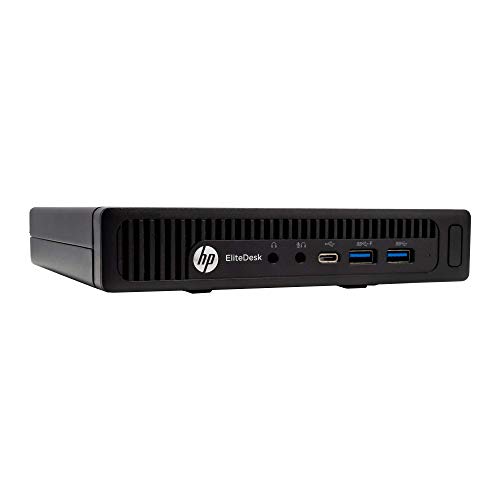
- Quad-core i5-6500T with 16GB DDR4
- Rear Ethernet and four rear USB 3.0 ports
- Renewed unit with minimum 90-day warranty
Best For: Budget-minded small home labs with a storage connection plan
Dual-Network Powerhouse

- Eight-core, 16-thread Ryzen 9 6900HX
- Two 1Gbps Ethernet ports
- 1TB NVMe SSD plus an additional M.2 slot
Best For: Compute-heavy home labs needing dual Ethernet
Compact Drive-Expansion Pick

- Ryzen 3 3200U with 8GB DDR4
- M.2 2280 and 2.5-inch drive slots
- Gigabit LAN and four USB 3.2 ports
Best For: Light-duty servers needing a compact 2.5-inch drive option
Best for Expandable Storage

- Two M.2 2280 SSD slots
- 2.5GbE wired networking
- 16GB DDR4, upgradeable to 32GB
Best For: Compact, SSD-focused Unraid setups
Budget Starter Pick

- Ryzen 5 3501U, 4 cores and 8 threads
- 16GB DDR4; 512GB NVMe SSD
- Internal drive expansion not specified
Best For: Small-scale builds with modest storage needs
Best for Heavier Workloads
ACEMAGICIAN S3A Ryzen 7 Mini PC

- Ryzen 7 H 255 with 8 cores and 16 threads
- 16GB LPDDR5; expandable storage up to 4TB
- Three selectable power modes
Best For: CPU-focused compact server builds
Efficient Starter – KAMRUI Pinova P2 Ryzen 7330U
If you want a mini pc for unraid that can handle light services without taking much desk space, this Pinova P2 pairs a four-core, eight-thread Ryzen 7330U with 16GB of memory and Gigabit Ethernet. Its two M.2 storage slots suit an SSD-focused setup better than a multi-drive NAS.
Best For: A compact Unraid host for light containers and SSD-based storage.
Pros:
- Ryzen 7330U has four cores and eight threads for multitasking.
- Two M.2 slots support one SATA/NVMe drive and one SATA drive, with up to 4TB total capacity stated.
- Gigabit Ethernet and a small, VESA-mountable enclosure simplify placement.
Cons:
- Only 256GB of SSD storage is included.
- The supplied specifications do not list internal 3.5-inch drive bays or a second Ethernet port.
Choose this if low footprint and modest compute needs matter more than a large internal drive array. Plan your storage and Unraid boot device separately before ordering.
The ACEMAGIC K1 is a mini pc for unraid shoppers prioritizing a tiny enclosure and straightforward memory and SSD upgrades. Its Ryzen R2544 offers four cores and eight threads, while separate NVMe and SATA M.2 slots leave room to expand beyond the included 256GB SSD.
Best For: A space-constrained, SSD-based Unraid experiment with modest workloads.
Pros:
- Four-core, eight-thread processor provides a useful base for light multitasking.
- Dual DDR4 slots and two M.2 slots allow memory and storage changes.
- Compact 3.94-by-3.94-inch footprint fits a crowded desk.
Cons:
- M.2 expansion is stated at up to 2TB, limiting internal storage headroom.
- The supplied notes do not establish its wired Ethernet specifications or list 3.5-inch drive bays.
This is the smallest-footprint choice here, but confirm its network interface and Unraid-compatible boot and storage plan before treating it as a permanent NAS.
For a mini pc for unraid with more included SSD capacity, this Pinova P2 ships with 512GB alongside 16GB of memory. Its four-core Ryzen 4300U, Gigabit LAN and two M.2 slots make it a practical starting point for a small, SSD-focused server.
Best For: Buyers who want more onboard SSD space for a modest Unraid setup.
Pros:
- Includes a 512GB SSD, twice the stated capacity of the 256GB configurations above.
- One SATA/NVMe M.2 slot and one SATA M.2 slot support up to 4TB combined, according to the listing.
- Gigabit LAN and 16GB of included memory cover basic server needs.
Cons:
- The notes describe LPDDR4 memory but do not identify an upgrade path.
- No internal 3.5-inch drive bays are listed.
Pick this over the 7330U version if included SSD capacity matters more to you than the newer processor. As with any compact Unraid build, check your intended boot and drive arrangement before buying.
The GEEKOM A5 is the most flexible mini pc for unraid in this group if you expect heavier container or VM workloads. Its eight-core, 16-thread Ryzen 7 7730U combines with upgradeable memory, 2.5GbE and more internal storage options than the M.2-only models.
Best For: A compact Unraid host with room for memory upgrades and mixed SSD/2.5-inch storage.
Pros:
- Eight cores and 16 threads provide headroom for concurrent services.
- Dual SODIMM slots support up to 64GB RAM.
- Includes 2.5GbE, an M.2 2242 SATA slot and a 2.5-inch SATA drive bay alongside the main NVMe slot.
Cons:
- Only 16GB RAM and a 500GB SSD are included; additional drives and memory cost extra.
- One listed 2.5-inch bay is not a substitute for a multi-bay hard-drive chassis.
This is the strongest fit for a more capable small server, especially if faster wired networking matters. Its expansion is still limited compared with a purpose-built NAS, so map your drive layout first.
Refurbished Starter – HP EliteDesk 800 G2 Desktop Mini
If you want a mini pc for unraid without starting from a barebones system, this renewed HP EliteDesk includes a quad-core Core i5-6500T, 16GB of DDR4 RAM, and a 240GB SSD. Its compact chassis and rear RJ-45 port make it a practical candidate for a modest home-server setup, provided you plan how to connect your storage drives.
Best For: A budget-minded Unraid starter or small home lab using externally connected storage.
Pros:
- Quad-core i5-6500T and 16GB DDR4 provide a useful starting configuration.
- Memory supports up to 32GB across two slots.
- Four rear USB 3.0 ports, rear Ethernet, and a compact 7.2 x 7.2 x 1.9-inch case suit a small workspace.
Cons:
- The supplied 240GB SSD offers limited room if you also want substantial local storage.
- The notes do not establish room for multiple internal data drives; check your planned Unraid drive connections before buying.
- Renewed condition comes with a stated minimum 90-day warranty.
This is the straightforward, older-hardware choice: useful for getting a compact server running, but storage connectivity matters more than its included Windows installation when evaluating it for Unraid.
For a mini pc for unraid that could also anchor a more demanding home lab, the BOSGAME P6 pairs an eight-core, 16-thread Ryzen 9 6900HX with 24GB of onboard LPDDR5X memory. Its two 1Gbps Ethernet ports and provision for an additional M.2 NVMe drive distinguish it from simpler compact desktops, although your storage plan still needs careful thought.
Best For: Home-lab users who want substantial CPU resources and dual Ethernet in one compact PC.
Pros:
- Ryzen 9 6900HX offers eight cores and 16 threads for demanding workloads.
- Two 1Gbps Ethernet ports support flexible network setups.
- Includes a 1TB PCIe 4.0 NVMe SSD and supports an additional M.2 NVMe drive.
Cons:
- The 24GB LPDDR5X memory is described as onboard, so do not assume a RAM upgrade path.
- The supplied notes specify an additional M.2 slot but do not establish bays for a multi-drive internal array.
Choose the P6 primarily for compute and networking rather than assuming its small enclosure replaces a dedicated drive chassis. Confirm how you will attach and power any Unraid array disks before committing.
The Beelink SER3 is a mini pc for unraid shoppers who value a very small footprint and a stated 2.5-inch drive slot alongside its M.2 storage. Its Ryzen 3 3200U, 8GB DDR4, 256GB NVMe SSD, and Gigabit LAN fit a modest server role better than a heavy virtualization workload.
Best For: A compact, light-duty home server that can use an additional 2.5-inch drive.
Pros:
- M.2 2280 and 2.5-inch drive slots provide more stated internal storage flexibility than an SSD-only listing.
- Four USB 3.2 ports and RJ-45 Gigabit LAN support peripheral and wired-network connections.
- Its 4.9 x 4.4 x 1.7-inch chassis includes a VESA mount for discreet placement.
Cons:
- The dual-core Ryzen 3 3200U and 8GB RAM are modest for more demanding concurrent tasks.
- One stated 2.5-inch slot is not a complete internal multi-disk array; plan additional storage connections if needed.
The SER3 makes sense when space and a simple drive upgrade matter most. For Unraid, match your intended number of disks to the available internal slot and external connections before choosing this tiny chassis.
Best for Expandable Storage – GMKtec NucBox G10
If you’re shopping for a mini pc for unraid, the GMKtec NucBox G10 is worth considering for its two M.2 2280 SSD slots and 2.5GbE wired connection. Its Ryzen 5 3500U, 16GB of dual-channel DDR4, and included 512GB SSD provide a practical starting configuration for a compact server.
Best For: A compact, SSD-focused Unraid setup that benefits from faster wired networking.
Pros:
- Two M.2 2280 slots offer room to expand SSD storage.
- 2.5GbE LAN is useful for moving files across a compatible network.
- 16GB of dual-channel DDR4 is installed and upgradeable to 32GB.
Cons:
- No internal 3.5-inch drive bays are listed, so it is not a straightforward choice for a multi-HDD array.
- Only one Ethernet port is specified.
The G10’s appeal is its combination of SSD expansion and 2.5GbE in a palm-sized system. Check your planned drive connections and Unraid hardware compatibility before buying.
Budget Starter Pick – Getorli GT101 Ryzen 5 Mini PC
The Getorli GT101 is a mini pc for unraid shoppers who want a modest starting configuration rather than a high-end desktop. It pairs a four-core, eight-thread Ryzen 5 3501U with 16GB of DDR4 and a 512GB NVMe SSD in a compact, VESA-mountable system.
Best For: Trying a small Unraid build when extensive internal drive expansion is not the priority.
Pros:
- 16GB of installed DDR4 can be upgraded to 32GB.
- The included 512GB NVMe SSD provides onboard storage.
- Multiple USB ports give you options for peripherals and externally connected devices.
Cons:
- The supplied specifications do not state the Ethernet port speed.
- Additional internal storage slots or hard-drive bays are not specified.
This is a sensible option to investigate for a small-scale project, but its listed storage-expansion details are limited. Verify drive connectivity and Unraid compatibility against your intended setup.
Best for Heavier Workloads – ACEMAGICIAN S3A Ryzen 7 Mini PC
If your mini pc for unraid shortlist prioritizes processing power, the ACEMAGICIAN S3A stands out with an eight-core, 16-thread Ryzen 7 H 255, 16GB of LPDDR5 memory, and a 512GB PCIe 4.0 NVMe SSD. Its three selectable power modes let you choose between quieter operation and higher performance.
Best For: A compact server build where CPU headroom matters more than a large internal drive array.
Pros:
- Eight-core, 16-thread processor offers substantial multitasking capability.
- Storage is listed as expandable up to 4TB with a tool-free removable design.
- Silent, Auto, and Performance modes provide power and noise options.
Cons:
- The supplied notes do not specify the Ethernet port speed or the number of LAN ports.
- Internal hard-drive bays are not listed.
The S3A makes the most sense when compute performance is your first concern. Confirm its drive-connection options and Unraid compatibility before choosing it as a storage server.
How We Picked the Best Mini PC for Unraid
We considered the listed processors, memory, included storage, and likely fit for common Unraid workloads: file sharing, Docker containers, and virtual machines. We also weighed the limitations of the mini PC form factor. A fast processor cannot compensate for too few drive connections or an unsuitable network port.
Specifications in a product title do not establish full Unraid compatibility. Before buying, verify the exact unit’s Ethernet chipset, storage slots and ports, BIOS options, and whether its memory can be upgraded. Check the seller’s listing or manufacturer documentation for the configuration you will actually receive.
Quick Comparison: Which Type Fits Your Server?
Basic file serving: An older, lower-cost system such as the HP EliteDesk 800 G2 Mini or Beelink SER3 may be sufficient if your storage and networking needs are modest. Balanced everyday use: The Ryzen 5-class KAMRUI Pinova P2 with a 7330U, GEEKOM A5, or comparable 16GB options offer more room for containers. Heavier multitasking: The BOSGAME P6 and ACEMAGICIAN S3A are better starting points for demanding VM or container plans, provided their expansion options suit your build.
Key Buying Factors for a Mini PC for Unraid
Plan the Drives Before the Computer
Unraid typically uses an array of data drives, optionally protected by parity, plus separate pool storage for workloads that benefit from faster access. Many mini PCs have room for only one or two internal drives. If you need several disks, plan an external enclosure or a different chassis, and confirm the connection method is dependable for always-on use. An included SSD is useful for setup or a pool, but it does not replace capacity planning.
Check Networking and Linux Support
Wired Ethernet is preferable for a server. Confirm port speed and chipset if either is important to you; do not assume a model has 2.5GbE based on its CPU or price. Look for reports of Unraid or Linux support for the exact hardware revision, particularly its network and storage controllers.
Match RAM and CPU to the Workload
File sharing needs far fewer resources than multiple containers and VMs. Most listed configurations include 16GB of RAM, a practical starting point for mixed home use; check upgrade limits if you expect growth. For media serving, distinguish direct playback from transcoding. Verify software support for the specific processor and graphics hardware before buying for Plex or Jellyfin.
Who Should Buy Which Mini PC for Unraid?
Choose a budget or refurbished model for a small starter server when price matters most. Choose a newer 16GB Ryzen system for a more flexible mix of shares and containers. Consider the higher-end models when you have a clear need for extra compute—not merely because they have stronger graphics. If your main goal is a large, internally connected drive array, a conventional desktop or purpose-built NAS chassis is usually a better fit than any Mini PC for Unraid.