
The best subwoofers for music add depth, scale, and impact without overwhelming vocals, instruments, or carefully balanced mixes. The right model can make a compact stereo, desktop setup, or full-size listening room sound more complete.
We’ve selected 10 powered subwoofers spanning studio monitors, bookshelf speakers, home stereo systems, and home theaters. Use the guide below to compare size, power, connectivity, placement, and the kind of bass each design is intended to deliver.
Best 10 Subwoofers for Music Picks for 2026
Studio Precision Pick

- 8-inch bass-reflex subwoofer with 150W amplification
- 22Hz–150Hz stated frequency response
- Adjustable crossover and phase controls
Best For: Recording, live music, and desktop audio setups
Compact Wireless-Ready Choice
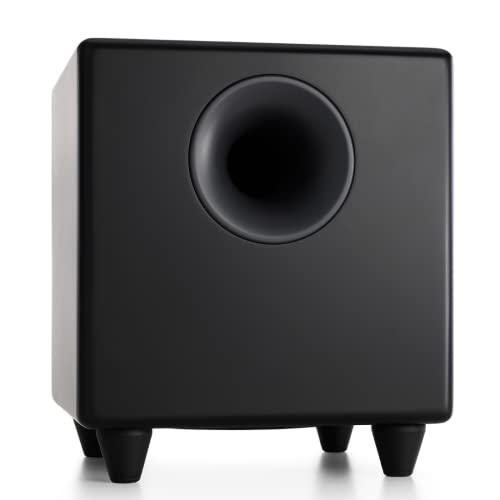
- 250W output rating from an 8-inch woofer
- Down-firing design supports flexible placement
- Compatible with the Audioengine W3 adapter kit
Best For: Compact home audio, desktop systems, and home studios
High-Output Music and Movie Pick

- 12-inch front-firing copper-spun woofer
- 400W dynamic power from a digital amplifier
- Low-pass crossover, phase control, and Line/LFE inputs
Best For: Powerful home theater and music systems
Clean, Tunable Bass Value

- 12-inch woofer with a 200W Class-D amplifier
- RCA, LFE, and speaker-level inputs
- Auto-on function and five-year manufacturer warranty
Best For: Music and home entertainment systems with flexible connections
Style-Conscious Bass

- 10-inch polyfiber woofer
- 150W Class D amplifier
- Slim walnut-finish cabinet
Best For: Music and home theater setups where style and strong bass both matter
Compact Room Favorite
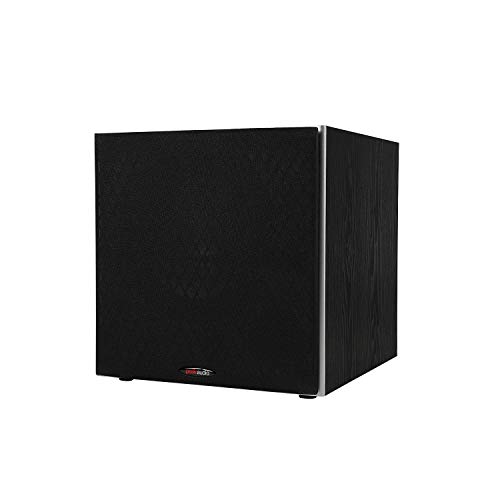
- 10-inch Dynamic Balance woofer
- 80-160 Hz variable crossover
- Speaker- and line-level inputs
Best For: Small-to-mid-size wired home audio and home theater systems
Studio Detail Specialist

- 8-inch driver reaches down to 30 Hz
- Bluetooth 5.0 plus wired inputs
- Adjustable highpass and lowpass filters
Best For: Music production and hi-fi listening with compact studio monitors
Balanced Bass Pick
Klipsch R-100SW 10-Inch Subwoofer

- 10-inch front-firing woofer
- 300 watts peak power
- Adjustable crossover and phase
Best For: Flexible music and home theater systems
Room-Friendly Value
Yamaha NS-SW100 10-Inch Subwoofer

- 10-inch cone woofer
- Advanced YST II technology
- Twisted flare port for tight bass
Best For: Straightforward home theater and stereo setups
Deep-Bass Audiophile Choice
REL HT/1205 MKII 12-Inch Subwoofer

- 12-inch sealed front-firing driver
- 500-watt Class D amplifier
- Bass reaches 22Hz at -6dB
Best For: HiFi music and modest home theater systems
Studio Precision Pick – Yamaha HS8S
For listeners and creators comparing subwoofers for music, the Yamaha HS8S emphasizes adjustable integration and extended low-end reach. Its 8-inch bass-reflex design combines a 150W amplifier with a stated 22Hz–150Hz frequency response.
Best For: Recording setups, live music, and desktop or laptop audio systems that need flexible crossover control.
Pros:
- 22Hz–150Hz stated frequency response
- 150W powered design with an 8-inch woofer
- Low-cut switch, adjustable low cut, high-cut control, and phase switch
- Wired XLR connectivity
Cons:
- Floor-standing cabinet weighs 33.6 pounds
- Not waterproof or water resistant
- Bluetooth is listed in the specifications, but the subwoofer connectivity is wired
The HS8S is a practical choice when tuning flexibility matters more than a compact footprint. Its dedicated crossover and phase controls can help match the subwoofer to a broader range of music-monitoring systems.
Compact Wireless-Ready Choice – Audioengine S8
The Audioengine S8 is a compact option for shoppers seeking subwoofers for music in a home studio, stereo, or desktop system. It uses an 8-inch down-firing woofer, a 250W output rating, and a design intended to simplify placement.
Best For: Compact home audio, desktop systems, home studios, and listeners who want wireless-ready positioning flexibility.
Pros:
- 250W output rating with an 8-inch woofer
- Down-firing design for flexible placement
- Compatible with the Audioengine W3 wireless subwoofer adapter kit
- Sleep mode powers the unit down when not in use
Cons:
- Wired RCA connectivity is specified
- 27Hz frequency response is listed, rather than the deeper extension of some larger models
- Weighs 30 pounds despite its compact cabinet
With its small footprint and down-firing layout, the S8 is easy to position in rooms where a larger cabinet would be inconvenient. The wireless-ready design adds placement flexibility, while the 250W rating provides substantial output for its size.
High-Output Music and Movie Pick – Klipsch R-12SW
For buyers who want subwoofers for music with plenty of headroom, the Klipsch R-12SW pairs a 12-inch front-firing woofer with a 400W all-digital amplifier. Its low-pass crossover and phase control help tailor the bass to a compatible system.
Best For: Home theater and music systems that need powerful, front-firing low-end output.
Pros:
- 12-inch copper-spun front-firing woofer
- 400W dynamic power from an all-digital amplifier
- Low-pass crossover and phase control
- Line/LFE inputs support compatibility with many receivers
Cons:
- Large 20-inch-deep cabinet
- Wired connectivity with no wireless communication technology
- 29Hz frequency response is listed
The R-12SW favors scale and impact over a compact design. Its large driver, high power rating, and receiver-friendly inputs make it a strong fit for systems where music and movie playback both benefit from assertive bass.
Clean, Tunable Bass Value – Dayton Audio Classic CS1200
The Dayton Audio Classic CS1200 is built for shoppers who want subwoofers for music with a clean, controlled presentation. Its 12-inch woofer, 200W Class-D amplifier, and rigid braced cabinet are designed to deliver tight low end without unnecessary boominess.
Best For: Home entertainment systems and music setups needing broad connection options and straightforward tuning.
Pros:
- 12-inch woofer with a 200W Class-D amplifier
- Stated 26Hz frequency response
- Stereo RCA, LFE, and speaker-level inputs
- Auto-on function and five-year manufacturer warranty
Cons:
- Black grille is included; the gray grille is sold separately
- Cabinet is nearly 18 inches deep
- Wired connectivity only
The CS1200 stands out for system-building flexibility: its input selection accommodates different equipment, while auto-on simplifies everyday use. The braced cabinet and Class-D amplification make it a sensible option for listeners prioritizing clean bass and long-term value.
Style-Conscious Bass – Jamo Studio Series S 810
The Jamo Studio Series S 810 is a slim, walnut-finish option for shoppers comparing subwoofers for music and home entertainment. Its 10-inch polyfiber woofer, 150-watt Class D amplifier, and slot-port bass reflex design aim to add substantial low-end impact without a bulky cabinet.
Best For: Music listeners and home theater users who want powerful bass in a distinctive, ultra-slim cabinet.
Pros:
- 10-inch polyfiber woofer provides a substantial low-frequency foundation.
- 150-watt bottom-mounted Class D amplifier supports strong output.
- Walnut finish and slim design make it a style-friendly addition to a room.
- Bluetooth and remote control provide flexible operation.
Cons:
- Its 29-pound weight and 19-inch dimensions require a dedicated placement area.
- It is not waterproof, so it is intended for indoor use.
The S 810 stands out when appearance matters as much as bass performance. Choose it if you want a high-output 10-inch subwoofer with wireless connectivity and a furniture-friendly finish.
Compact Room Favorite – Polk Audio PSW10
The Polk Audio PSW10 is a practical entry point for shoppers seeking subwoofers for music in small-to-mid-size rooms. Its 10-inch Dynamic Balance woofer, directed port, and built-in 50-watt RMS amplifier are designed to add deeper bass while integrating with an existing system.
Best For: Small-to-mid-size home audio and home theater systems that need an affordable, easy-to-integrate bass upgrade.
Pros:
- 10-inch woofer delivers added bass depth and punch.
- Continuously variable 80-160 Hz crossover helps blend it with main speakers.
- Includes speaker- and line-level connections for flexible system integration.
- Phase toggle supports setups using multiple subwoofers.
Cons:
- Its 100-watt maximum output is more modest than higher-powered alternatives.
- Wired connectivity does not offer Bluetooth convenience.
- The cabinet weighs about 11.8 kg, so placement may require some planning.
The PSW10 focuses on straightforward setup and useful integration controls rather than premium extras. It is a sensible choice for adding fuller bass to an established wired audio system.
Studio Detail Specialist – PreSonus Eris Sub 8BT
The PreSonus Eris Sub 8BT is built for listeners and creators who prioritize controlled low end. This 8-inch powered studio subwoofer combines Bluetooth 5.0 with balanced and unbalanced inputs, adjustable crossover controls, and a frequency response reaching down to 30 Hz.
Best For: Music production, hi-fi listening, and multimedia setups using compact studio monitors.
Pros:
- 8-inch woven-composite driver is designed for tight, accurate bass.
- Bluetooth 5.0 supports convenient wireless playback.
- Highpass and lowpass controls help integrate the subwoofer with main monitors.
- Balanced TRS, RCA, and front-panel aux connections suit varied sources.
Cons:
- The 8-inch driver may offer less physical impact than larger 10-inch models.
- Its controls and connection options may be more than casual listeners need.
- It is not waterproof and is intended for indoor studio or listening environments.
The Eris Sub 8BT is the most control-oriented choice in this group. Its tuning features, headphone output, and broad connectivity make it particularly appealing for compact monitor systems and music-focused workspaces.
Balanced Bass Pick – Klipsch R-100SW 10-Inch Subwoofer
The Klipsch R-100SW is a practical choice among subwoofers for music when you want a dedicated 10-inch woofer, adjustable low-pass and phase controls, and enough output for a versatile home audio setup. Its front-firing spun-copper IMG woofer and RCA/LFE inputs make it straightforward to integrate with compatible equipment.
Best For: Music listeners and home theater users who want adjustable, wired bass from a compact 10-inch subwoofer.
Pros:
- 10-inch front-firing spun-copper IMG woofer
- 300 watts peak power from an all-digital amplifier
- Low-pass crossover, volume, and 0–180-degree phase controls
- RCA and LFE inputs support broad receiver compatibility
Cons:
- Wired connectivity only
- Its 32Hz frequency response may not reach as deeply as larger models
- Somewhat substantial at 26 pounds
The R-100SW offers useful setup controls and flexible RCA connectivity without moving to a larger cabinet. It is a sensible all-around option for listeners who want stronger low-end presence in music and movies.
Room-Friendly Value – Yamaha NS-SW100 10-Inch Subwoofer
The Yamaha NS-SW100 is a straightforward option among subwoofers for music, combining a 10-inch cone woofer with Yamaha’s Advanced YST II technology. Its twisted flare port is designed to support clear, tight bass, while the floor-standing cabinet suits a conventional home audio or theater setup.
Best For: Home theater and stereo listeners seeking an uncomplicated 10-inch powered subwoofer with a room-friendly design.
Pros:
- 10-inch cone woofer
- Advanced YST II active servo technology
- Twisted flare port contributes to clear, tight bass
- Includes a subwoofer cable and two-year warranty
Cons:
- Rated maximum output is 100 watts
- Wired connectivity is listed for the subwoofer
- The supplied specifications list a 180Hz frequency response without a lower response figure
The NS-SW100 focuses on simple installation and controlled bass rather than maximum output. It fits listeners who want Yamaha’s bass technology in a conventional powered subwoofer for home theater or everyday stereo use.
Deep-Bass Audiophile Choice – REL HT/1205 MKII 12-Inch Subwoofer
The REL HT/1205 MKII stands out among subwoofers for music with a front-firing 12-inch driver, 500-watt Class D amplifier, and bass extension down to 22Hz at -6dB. Its RCA connections support both dedicated subwoofer outputs and left/right stereo connections, making it suitable for music-focused systems as well as home theater.
Best For: HiFi stereo and modest home theater systems needing deep, controlled bass in rooms up to 400 square feet.
Pros:
- 12-inch front-firing driver with a sealed design
- 500-watt Class D amplifier
- 22Hz extension at -6dB
- RCA inputs support stereo and home theater connections
Cons:
- Heavier and larger than the 10-inch alternatives at 38 pounds
- Designed for wired RCA connections in the supplied connectivity details
- A stereo pair may be preferable for spaces larger than 400 square feet
The HT/1205 MKII is the strongest fit here for listeners prioritizing deep musical bass and system flexibility. Its larger driver and higher-powered amplifier offer substantial headroom, while the sealed cabinet is aimed at precise, immersive low-frequency performance.
How We Picked the Best Subwoofers for Music
We focused on powered subwoofers that can integrate into music-focused systems rather than judging them solely by maximum volume. The selection includes compact 8- and 10-inch models for desks and smaller rooms, plus larger 12-inch subwoofers for deeper extension and higher output.
We also considered connection options, amplifier design, crossover and phase controls, cabinet size, likely placement, and overall system compatibility. Because music benefits from controlled bass as much as powerful bass, integration and adjustability are especially important.
Quick Comparison
| Best For | Recommended Type | Why It Makes Sense |
|---|---|---|
| Desktop or nearfield listening | Compact 8-inch model | Fits smaller spaces and blends with powered monitors |
| Bookshelf speaker systems | 10-inch powered subwoofer | Adds fuller low end without dominating the room |
| Large rooms and stereo systems | 12-inch high-output model | Provides deeper extension and greater headroom |
| Studio monitoring | Studio-oriented subwoofer | Offers more predictable integration with monitor speakers |
| Music and home theater | Flexible powered subwoofer | Balances musical detail with cinematic impact |
Key Buying Factors for Subwoofers for Music
Driver Size and Output
An 8-inch subwoofer is often enough for a desk, apartment, or modest listening room. Ten-inch models provide a useful middle ground, while 12-inch designs generally offer more authority with deep bass and greater output. Bigger is not automatically better if the room is small or the main speakers are compact.
Connections and Integration
Check whether the subwoofer supports the outputs on your amplifier, receiver, powered speakers, or audio interface. Line-level inputs, speaker-level connections, and wireless compatibility each suit different systems. A variable crossover helps the subwoofer take over below the range where your main speakers begin to lose output.
Placement and Room Control
Low frequencies interact strongly with room boundaries, so placement can change the perceived bass substantially. Start near the front wall, then test several positions. Phase control, level adjustment, and a selectable crossover make it easier to achieve tight, natural bass instead of a boomy mid-bass hump.
Music Versus Home Theater Tuning
For music, prioritize articulation, speed, and smooth integration with vocals and instruments. Home theater listeners may prefer greater output and deeper effects. Some models can do both, but the best choice depends on whether musical accuracy or maximum low-frequency impact is your priority.
Who Should Buy Which Subwoofers for Music?
Choose a compact 8-inch model for desktop monitors, small rooms, apartments, or nearfield listening. These options are easier to place and usually provide sufficient extension for everyday music.
Choose a 10-inch subwoofer if you want a versatile upgrade for bookshelf speakers or a medium-sized stereo system. This size is often the most balanced choice for listeners who want noticeable depth without an oversized cabinet.
Choose a 12-inch model for larger rooms, demanding listening levels, or systems that also handle movies. Look for adjustable controls and enough connection flexibility to match your amplifier or receiver.
Choose a studio subwoofer when you are pairing it with powered monitors or producing and mixing audio. A model designed for monitoring can make crossover setup and level matching more predictable.