
The right subwoofer can reveal low-frequency problems that compact studio monitors miss, helping you make more confident mixing decisions. However, more bass is not always better—accuracy, integration, and room control matter just as much.
We compare 10 strong options for home studios, from compact 8-inch models to powerful 12-inch designs, so you can match your setup, room, and listening goals without overspending.
Best 10 Subwoofers for Home Studios Picks for 2026
Balanced Studio Bass
KRK S8.4 8-Inch Powered Subwoofer

- 8-inch woofer reaches down to 30Hz
- Front-firing port supports flexible placement
- Footswitch-ready sub and crossover bypass
Best For: Compact home-studio monitoring setups
Adjustable Low-End Control

- 10-inch woofer reaches down to 28Hz
- Adjustable crossover, phase, and volume
- Designed to complement ADAM T5V and T7V monitors
Best For: Flexible, higher-output studio monitoring
Extended Monitoring Range

- 8-inch bass-reflex design reaches 22Hz
- 150-watt amplifier delivers substantial output
- Adjustable low- and high-cut controls plus phase switch
Best For: Deep-bass recording and live-music monitoring
Compact Versatile Bass
Audioengine S8 Powered Subwoofer
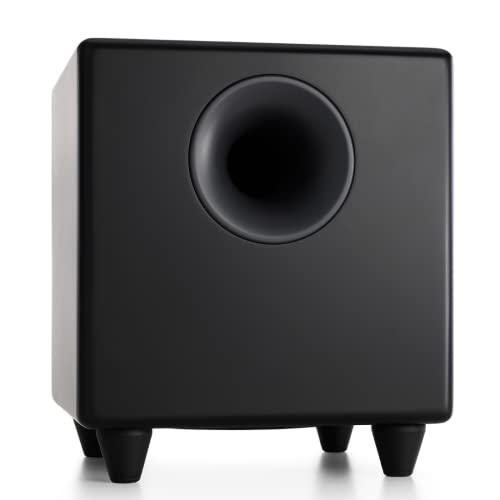
- 8-inch down-firing woofer in a compact cabinet
- Stated 250-watt output
- Compatible with the optional W3 wireless adapter
Best For: Small, multipurpose home-studio spaces
Desktop Bass Upgrade
Mackie CR8SBT 8-Inch Studio Subwoofer

- Made for Mackie CR Series monitors
- TRS, RCA, and Bluetooth connectivity
- Desktop remote and adjustable crossover
Best For: CR Series monitor users needing convenient bass control
Compact Low-End Control
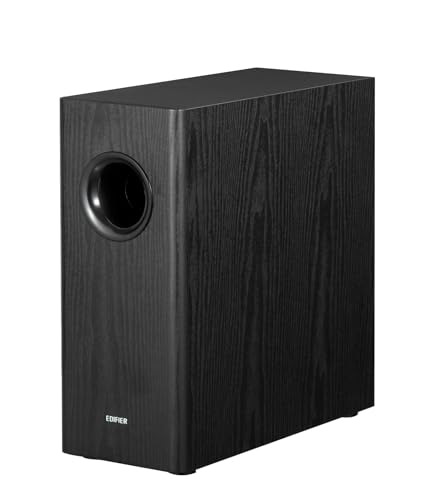
- 8-inch woofer with 70W RMS output
- Adjustable filter and phase selector
- Compact RCA-connected design
Best For: Small wired speaker and desktop audio systems
High-Output Bass
Klipsch R-12SW 12-Inch Subwoofer

- 12-inch front-firing copper-spun woofer
- 400 watts of dynamic amplifier power
- Low-pass crossover and phase control
Best For: Large-room music and home theater systems
Precision Studio Bass

- 12-inch driver with 325W RMS amplification
- DSP and app-based room tuning
- Compact sealed, braced cabinet
Best For: Powerful, adjustable bass in home studios
Practical Deep Bass

- 10-inch front-firing IMG woofer
- 300W peak all-digital amplifier
- RCA inputs with crossover and phase controls
Best For: Simple wired studio and multipurpose setups
Compact Room Support

- 8-inch woofer with 100W dynamic power
- Twisted flare port for tight bass
- Compact floor-standing design
Best For: Small studios needing modest low-end support
Balanced Studio Bass – KRK S8.4 8-Inch Powered Subwoofer
The KRK S8.4 is a practical choice among subwoofers for home studios when you want extended low end without moving up to a larger cabinet. Its 8-inch glass aramid composite woofer reaches down to 30Hz, while the front-firing port and curved enclosure offer flexible placement.
Best For: Home-studio producers and recording setups needing compact, adjustable low-frequency extension.
Pros:
- 8-inch woofer extends bass response to 30Hz.
- 112dB maximum SPL provides substantial output for studio monitoring.
- Footswitch control can disable the subwoofer and crossover filter.
- Class D amplification keeps the design powerful and lightweight.
Cons:
- Footswitch is not included.
- Wired XLR connectivity may require compatible studio equipment.
- Its 26.5-pound cabinet still needs dedicated floor or tabletop space.
The S8.4 combines useful placement flexibility with straightforward studio-focused controls. It is a strong fit when you want more bass detail and impact while retaining the option to check a mix without the subwoofer.
Adjustable Low-End Control – ADAM Audio T10S Subwoofer
The ADAM Audio T10S is one of the more adaptable subwoofers for home studios, pairing a 10-inch driver with a downward-facing woofer for placement flexibility. Its adjustable crossover, phase rotation, and volume controls help you integrate the subwoofer with your existing monitors.
Best For: Studio users who want powerful low-end extension and detailed integration controls, particularly with ADAM T5V or T7V monitors.
Pros:
- 10-inch woofer reaches down to 28Hz.
- 130-watt output provides strong low-frequency headroom.
- Adjustable crossover, phase rotation, and volume support room and monitor matching.
- Footswitch bypass makes A/B checking with and without bass extension convenient.
Cons:
- Its 27-pound, floor-standing cabinet takes more room than a compact 8-inch model.
- Footswitch is needed for the bypass feature but is not listed as included.
- Wired RCA connectivity may require adapters in some studio systems.
The T10S stands out for its combination of deeper extension and setup flexibility. It is especially compelling if you use ADAM T-Series monitors, though its controls also make it suitable for other compatible studio-monitor chains.
Extended Monitoring Range – Yamaha HS8S Studio Subwoofer
The Yamaha HS8S adds substantial low-frequency extension to a monitoring system, making it a dependable option among subwoofers for home studios. Its 8-inch bass-reflex design offers a 22Hz–150Hz frequency range, while the dedicated filter and phase controls help tailor integration.
Best For: Recording and live-music setups that need deep bass extension and hands-on crossover adjustment.
Pros:
- 8-inch bass-reflex subwoofer reaches as low as 22Hz.
- 150-watt amplifier supplies strong output.
- LOW CUT, HIGH CUT, and phase controls support system matching.
- Wide 22Hz–150Hz response covers a broad low-frequency range.
Cons:
- The 33.6-pound cabinet is comparatively large and heavy.
- Its 18-by-16-by-18.5-inch dimensions require careful placement.
- Bluetooth is listed in the supplied specifications, but the subwoofer connectivity is wired.
The HS8S is a strong choice when deep extension and conventional studio controls matter more than minimal size. Its larger enclosure makes it better suited to a permanent monitoring position than a frequently moved setup.
Compact Versatile Bass – Audioengine S8 Powered Subwoofer
The Audioengine S8 is a compact option for buyers comparing subwoofers for home studios, with an 8-inch down-firing driver and a stated 250-watt output. Its small square cabinet is easy to position, and compatibility with the Audioengine W3 wireless subwoofer adapter kit adds placement flexibility.
Best For: Compact home studios and mixed-use desks or rooms where easy placement and strong bass output are priorities.
Pros:
- 8-inch down-firing design produces deep bass while supporting flexible placement.
- Stated 250-watt output offers substantial power in a compact cabinet.
- Compatible with the Audioengine W3 wireless subwoofer adapter kit.
- Sleep mode automatically powers the unit down when not in use.
Cons:
- Its RCA wired connection may need integration hardware for some studio monitor setups.
- The supplied notes do not specify an adjustable crossover or phase control.
- Wireless operation requires the separate W3 adapter kit.
The S8 favors convenience and compact placement over extensive studio calibration controls. It makes sense for smaller or multipurpose rooms where a simple, powerful subwoofer can support both music work and general listening.
Desktop Bass Upgrade – Mackie CR8SBT 8-Inch Studio Subwoofer
The Mackie CR8SBT is a practical choice for home studios built around CR Series monitors. It adds low-end support through TRS or RCA connections, while Bluetooth and the included desktop remote make everyday listening convenient.
Best For: CR Series monitor users who want adjustable desktop-friendly bass control.
Pros:
- Designed to pair with Mackie CR Series monitors.
- Offers TRS, RCA, and Bluetooth connectivity.
- Includes a desktop remote with volume and sub-bypass controls.
- Adjustable crossover helps blend the subwoofer with the monitors.
Cons:
- Its 32.4-pound, floor-standing design may be substantial for a compact desk setup.
- Bluetooth is convenient, but wired TRS or RCA connections are more relevant for studio monitoring.
For subwoofers for home studios, the CR8SBT stands out when convenient control and CR monitor integration matter more than a minimal footprint.
Compact Low-End Control – Edifier T5s Powered Subwoofer
The Edifier T5s adds deep bass to a home studio or desktop speaker system without requiring an external receiver. Its 8-inch woofer, 70W RMS Class-D amplifier, adjustable low-pass filter, and phase selector support flexible system matching.
Best For: Compact speaker setups with RCA connectivity and a need for adjustable, space-conscious bass.
Pros:
- Reaches a stated 35Hz and delivers 70W RMS through a built-in amplifier.
- Low-pass filter adjusts from 30Hz to 160Hz, with 0°/180° phase selection.
- Compact cabinet includes RCA and 3.5mm-to-RCA cables.
- Auto-standby helps reduce power use after 15 minutes of inactivity.
Cons:
- Connectivity is wired RCA only, with no wireless communication.
- The series-connection setup requires the main speaker to have a LINE IN.
- Compatibility with Bluetooth, USB, and optical-only connections is not supported in that setup.
The T5s is one of the more adaptable subwoofers for home studios when your speakers or audio interface provide RCA connections and you want straightforward crossover tuning.
High-Output Bass – Klipsch R-12SW 12-Inch Subwoofer
The Klipsch R-12SW is a large, high-output subwoofer for listeners who want substantial low-end impact in a home studio, media room, or hybrid music-and-movie setup. It combines a 12-inch front-firing woofer with a 400-watt all-digital amplifier and wired line/LFE inputs.
Best For: Larger rooms and systems that need powerful bass for both music and home theater.
Pros:
- 12-inch copper-spun woofer provides a larger driver platform.
- All-digital amplifier delivers up to 400 watts of dynamic power.
- Includes low-pass crossover and phase controls for system matching.
- Line/LFE inputs support compatibility with many receivers and systems.
Cons:
- The 20-by-20-by-17.75-inch cabinet is large for a compact desktop studio.
- Its focus on home theater and high output may be more than nearfield monitoring requires.
- Connectivity is wired, with no wireless communication listed.
Among subwoofers for home studios, the R-12SW makes the most sense when room size and output are priorities, though its larger enclosure calls for careful placement and level setting.
Precision Studio Bass – SVS SB-1000 Pro
SVS SB-1000 Pro Subwoofer (Black Ash) | 12-in Driver, 325 Watt RMS, Sealed Cabinet
Check Price On AmazonThe SVS SB-1000 Pro is a strong choice among subwoofers for home studios when you want deep, controlled bass from a compact sealed cabinet. Its 12-inch driver, 325-watt RMS amplifier, DSP tuning, and app-based controls provide plenty of flexibility for dialing in low frequencies.
Best For: Home studios and listening spaces that need powerful, adjustable bass in a compact enclosure.
Pros:
- 12-inch high-excursion driver delivers substantial low-frequency output.
- 325 watts RMS and 820-plus watts peak power provide strong headroom.
- DSP and smartphone app offer detailed tuning, presets, and volume control.
- Sealed, rigidly braced cabinet helps minimize unwanted resonance.
Cons:
- Its larger 12-inch design may be more output than a very small studio requires.
- It is wired for power and is not waterproof.
The SB-1000 Pro stands out when accurate control and room-filling bass matter more than the simplest setup. Its compact dimensions and app control make it particularly adaptable for different studio layouts.
Practical Deep Bass – Klipsch R-100SW 10-inch
The Klipsch R-100SW is a straightforward option among subwoofers for home studios, combining a front-firing 10-inch woofer with a 150-watt continuous, 300-watt peak all-digital amplifier. Its line-level LFE RCA inputs and adjustable crossover make it easy to integrate with compatible equipment.
Best For: Budget-conscious studio setups and multipurpose rooms that need wired, adjustable bass.
Pros:
- 10-inch spun-copper IMG woofer provides deep bass response.
- 300 watts peak power offers useful output for music and entertainment.
- Low-pass crossover and 0–180-degree phase control help with system matching.
- LFE and line-level RCA inputs support broad receiver compatibility.
Cons:
- Its stated frequency response begins at 32Hz, so it does not reach as low as some larger designs.
- Connectivity is wired through RCA rather than wireless.
- The floor-standing cabinet takes more space than a compact sealed subwoofer.
The R-100SW is a sensible pick if you want familiar controls and easy RCA connectivity without adding complicated setup features. It is especially suitable for a studio that also serves as a general listening or entertainment room.
Compact Room Support – Yamaha NS-SW050BL 8-inch
The Yamaha NS-SW050BL is a compact choice among subwoofers for home studios, using an 8-inch cone woofer and 100 watts of dynamic power. Its twisted flare port and Advanced YST II design are intended to support clear, tight bass without overwhelming a smaller room.
Best For: Small home studios, desktop-adjacent listening spaces, and modest music or home-theater systems.
Pros:
- Compact 8-inch design is easier to place in smaller rooms.
- Twisted flare port is designed to contribute to clear, tight bass.
- Advanced YST II technology supports the powered woofer.
- Compatible with a broad range of listed devices, including computers and mobile devices.
Cons:
- 100 watts of dynamic power is less output than the larger SVS and Klipsch models.
- An 8-inch woofer may be less suitable for very high-volume or room-filling bass.
- The supplied details specify wired connectivity rather than a dedicated studio interface.
The NS-SW050BL makes the most sense when placement flexibility and restrained output are priorities. It can add low-end support to a smaller studio without the footprint of a larger 10- or 12-inch subwoofer.
How We Picked These Subwoofers for Home Studios
We focused on powered subwoofers that can suit music production, mixing, content creation, or serious desktop listening. The selection includes studio-oriented models with integration controls, as well as versatile home-audio subwoofers that may work well in larger or multipurpose rooms. We considered driver size, amplifier output, cabinet design, connectivity, adjustability, placement flexibility, and overall suitability for pairing with nearfield monitors.
Because specifications do not tell the whole story, the best choice depends on your room acoustics and main speakers. A smaller, more controlled subwoofer can be preferable in a compact untreated room, while a larger model may provide the headroom needed in a spacious studio.
Quick Comparison
- Best studio-focused options: KRK, ADAM Audio, and Yamaha HS models offer features intended for monitor integration and production environments.
- Best flexible desktop choices: Audioengine, Mackie, and Edifier models suit smaller setups and general listening.
- Best for large-room output: Klipsch and SVS options provide deeper extension and greater output for larger spaces.
- Best budget-friendly approach: Edifier or Yamaha’s compact powered models can add low-end support without requiring a high-end monitor system.
Key Buying Factors for Subwoofers for Home Studios
Room Size and Acoustic Treatment
Low frequencies build up easily in corners and untreated rooms. An 8-inch subwoofer is often easier to manage near a desk, while 10- or 12-inch models can be better suited to larger rooms but may expose more acoustic problems. Bass traps, sensible placement, and measurement are often more valuable than simply buying a larger driver.
Monitor Matching and Crossover Control
Look for adjustable crossover and phase controls when accurate mixing is the priority. These features help blend the subwoofer with your monitors instead of creating a noticeable bass hump. Check available inputs and outputs to confirm compatibility with your audio interface or monitor chain.
Output, Extension, and Cabinet Design
Power and driver size affect maximum output, but a sealed design may offer a tighter, more controlled response, while ported models can produce more pronounced deep bass. Choose extension that supports your work without encouraging excessive low-end levels.
Wireless and Convenience Features
Bluetooth, remote controls, and wireless readiness are useful for casual listening, but they should not replace reliable wired connections for critical monitoring. Prioritize signal integrity and integration controls for production work.
Who Should Buy Which Subwoofers for Home Studios?
Choose a compact 8-inch model if you work in a small room, use nearfield monitors, or need controlled bass at moderate levels. Choose a studio-specific subwoofer if mixing accuracy, crossover adjustment, and monitor integration are your priorities. Choose a 10- or 12-inch model if your room is larger, you create bass-heavy music, or you need more headroom for immersive listening. For untreated rooms, start conservatively and use placement and acoustic treatment before increasing output.