
The best portable streaming encoders make it easier to send polished live video from cameras, switchers, and production setups without relying on a full-size broadcast system.
This roundup compares 10 options across 4K support, input types, streaming protocols, recording, portability, and workflow flexibility so you can choose the right encoder for your setup.
Best 10 Portable Streaming Encoders Picks for 2026
Best All-in-One Studio

- Integrated 4K switcher, encoder, recorder, and touchscreen
- Supports HDMI, USB, NDI, SRT, and cellular bonding
- Streams horizontally or vertically to multiple platforms
Best For: Mobile multi-camera event production
Best Protocol Flexibility
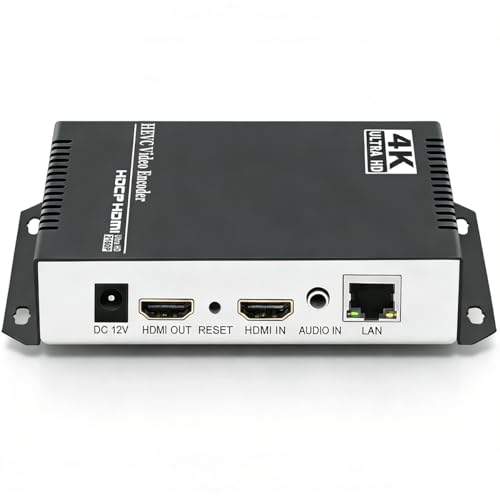
- Encodes HDMI video using H.264 or H.265
- Supports a broad range of streaming protocols
- Can deliver up to four differently configured streams
Best For: Flexible HDMI-to-IP and multi-platform streaming
Best Professional Compact Recorder

- Accepts 1080p60 HDMI and 12G-SDI sources
- Includes recording, pass-through, and cloud management tools
- Supports SRT, HLS, RTMP, and RTMPS
Best For: Professional HDMI and SDI recording workflows
Best Field Production Switcher

- Combines switching, encoding, recording, and monitoring
- Supports HDMI, USB, IP, NDI HX, SRT, and RTMP sources
- Uses touchscreen control and dual hot-swappable NP-F batteries
Best For: Mobile 1080p multi-source production
Compact NDI Encoder

- 4K HDMI encoding with zero-lag passthrough
- NDI|HX, SRT, RTMP(S), and RTSP support
- USB-C, PoE, and tripod-mount flexibility
Best For: Portable gaming, PTZ, and IP video workflows
Broadcast-Ready Encoder
Blackmagic Streaming Encoder 4K
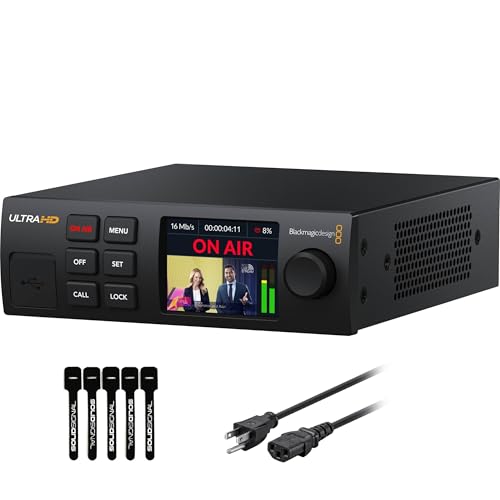
- 12G-SDI encoding up to 2160p60
- Ethernet and 4G/5G mobile failover
- Captions, timecode, monitoring, and webcam output
Best For: Professional SDI broadcasts and live events
All-in-One HDMI Encoder
Magewell Ultra Encode HDMI Plus

- 4K HDMI input with loop-through monitoring
- Multi-protocol, multi-destination streaming
- Simultaneous streaming and 128GB recording
Best For: HDMI productions needing recording and overlays
Best Multi-Protocol Value

- 4K input and output with H.265/H.264 encoding
- Supports up to four protocol-based video streams
- Lifetime warranty with customization support
Best For: Multi-platform HDMI streaming and IPTV workflows
Best Professional All-in-One

- Combines HDMI and SDI inputs with dual-input mixing
- Streams to up to six destinations
- Records while streaming to local or network storage
Best For: Professional live production and broadcast workflows
Best Compact 1080p Option

- Hardware encoding supports 1080P60
- Browser setup works without PC software
- Palm-sized design supports flexible placement
Best For: Compact Full HD streaming, monitoring, and signage
Best All-in-One Studio – YoloBox Ultra
For creators seeking portable streaming encoders with built-in production controls, the YoloBox Ultra combines a 4K encoder, switcher, recorder, monitor, and touchscreen in one battery-powered unit. It supports horizontal and vertical streaming, multi-camera inputs, and cellular bonding for mobile productions.
Best For: Churches, schools, sports teams, and creators who need a self-contained multi-camera streaming setup without a laptop.
Pros:
- Combines switching, encoding, recording, and monitoring in one device.
- Supports up to four HDMI sources plus USB inputs and 10 or more total sources.
- Offers NDI, SRT, ISO recording, and bonding across up to five network connections.
- Handles both horizontal and vertical multi-platform streaming.
Cons:
- Some advanced network and cellular features may involve additional charges.
- Battery recovery may require a specific dual-charger procedure.
The YoloBox Ultra is a strong choice when mobility and production flexibility matter more than a minimal hardware footprint. Its broad input support and integrated tools make it particularly useful for field and event broadcasts.
Best Protocol Flexibility – URayCoder 4K HDMI Encoder
This URayCoder model is one of the more protocol-rich portable streaming encoders for turning an HDMI source into network video. It supports 4K input, H.264 and H.265 encoding, multiple simultaneous outputs, and extensive control over stream and image settings.
Best For: Users who need flexible HDMI-to-IP streaming for YouTube, Facebook, OBS, custom servers, or multi-protocol workflows.
Pros:
- Supports 4K input and up to 120fps at 2K and lower resolutions.
- Works with RTMP, RTMPS, SRT, HLS, RTSP, WebRTC, UDP, and other protocols.
- Can output up to four video streams using different protocols.
- Provides overlays, captions, logos, timestamps, cropping, and audio adjustments.
Cons:
- Designed around HDMI-to-Ethernet encoding rather than multi-camera switching.
- Its extensive settings may be more than casual streamers need.
This encoder favors connectivity and customization over an integrated touchscreen studio. It is a practical fit for technically varied streaming environments where protocol support and configurable outputs are priorities.
Best Professional Compact Recorder – Epiphan Pearl Nano
The Epiphan Video Pearl Nano is a compact option among portable streaming encoders for professional video capture and distribution. It accepts HDMI and 12G-SDI sources, supports 1080p60, and provides recording, pass-through, layout, and cloud-management features in a small enclosure.
Best For: Professional teams that need reliable single-system recording and streaming with SDI or HDMI sources.
Pros:
- Supports 1080p60 HDMI and 12G-SDI inputs.
- Offers H.265 encoding, HDMI pass-through, and program output.
- Supports SRT, HLS, RTMP, and RTMPS workflows.
- Includes a front display, SD card recording, and M.2 SATA SSD support.
Cons:
- 4K support requires an optional add-on license.
- It lacks the built-in multi-source touchscreen switching emphasized by some all-in-one competitors.
- Its approximately two-pound form factor is portable but not battery-powered according to the supplied details.
The Pearl Nano makes the most sense for production environments that value professional input support, recording options, and managed streaming over an ultra-mobile, self-contained design.
Best Field Production Switcher – Magewell Director Mini
The Magewell Director Mini is a compact choice for buyers comparing portable streaming encoders with switching and production features. Its 5.44-inch AMOLED touchscreen controls HDMI, USB, IP, media, and mobile-camera sources, while H.264/H.265 encoding supports streaming and recording up to 1080p60.
Best For: Mobile producers who need touchscreen scene control, multiple source types, recording, and battery-supported field operation.
Pros:
- Combines switching, encoding, recording, monitoring, and streaming without an external PC.
- Accepts two HDMI, two USB-A, and up to three simultaneous IP sources.
- Supports NDI HX, SRT, RTMP, RTSP, graphics, chroma key, webpages, and overlays.
- Offers Ethernet, Wi-Fi, DC power, and dual hot-swappable NP-F battery slots.
Cons:
- Maximum listed encoding resolution is 1080p60 rather than 4K.
- USB cellular modems are supported but not included.
- Its feature set may require more setup than a basic single-input encoder.
The Director Mini is well suited to field productions that need real switching and graphics in a compact package. Its battery slots and broad source support give it a practical advantage for mobile crews.
Compact NDI Encoder – ZowieBox 4K HDMI Streamer
If you need portable streaming encoders for gaming, events, or flexible IP video workflows, the Zowietek ZowieBox packs substantial functionality into a compact aluminum unit. It accepts HDMI sources, supports up to 4K capture with zero-lag passthrough, and can encode or decode video for network-based production.
Best For: Console gamers, mobile productions, PTZ camera workflows, and users who want PC-free RTMP, SRT, RTSP, or NDI streaming.
Pros:
- Compact design with LCD status screen, tally light, and tripod mount.
- Supports HDMI encoding up to 4K with zero-lag passthrough.
- Offers NDI|HX3/HX2/HX, SRT, RTMP(S), and RTSP workflows.
- Can be powered through USB-C, PoE, or DC input.
Cons:
- Encoder and decoder modes cannot operate simultaneously.
- Full NDI signals are not supported.
- USB capture card functionality is not currently supported.
The ZowieBox is a strong fit when size and connection flexibility matter more than a conventional desktop setup. Its web interface, PTZ support, and broad protocol selection make it especially useful for portable or networked productions.
Broadcast-Ready Encoder – Blackmagic Streaming Encoder 4K
Among portable streaming encoders, the Blackmagic Design Streaming Encoder 4K is aimed at more demanding SDI-based productions. It handles H.264 or H.265 streams up to 2160p60, includes 12G-SDI input and loop output, and can use Ethernet or tethered mobile data with automatic failover.
Best For: Broadcast teams, live events, SDI camera systems, and productions that need 4K60 streaming with monitoring, captions, and resilient connectivity.
Pros:
- Supports H.264 and H.265 streaming up to Ultra HD 2160p60.
- 12G-SDI input, loop output, and Teranex standards conversion support.
- Ethernet and USB-C mobile connectivity with automatic failover.
- Provides SDI and HDMI monitor outputs plus USB-C webcam outputs.
Cons:
- Its SDI-focused design may be more equipment than basic HDMI streaming requires.
- At 1.7 pounds and a 1/3 RU form factor, it is less compact than pocket-sized encoders.
- Advanced broadcast features may be unnecessary for simple personal streams.
This encoder stands out for professional reliability and production control rather than minimal size. Closed-caption embedding, timecode, REST API control, tally, and talkback make it a practical choice for structured broadcast environments.
All-in-One HDMI Encoder – Magewell Ultra Encode HDMI Plus
The Magewell Ultra Encode HDMI Plus is one of the more versatile portable streaming encoders for HDMI-based setups. It supports up to 4096×2160p30 input, provides loop-through monitoring, and can stream to multiple destinations while recording to internal, USB, or network storage.
Best For: Live producers, educators, corporate AV teams, and mobile operators who need HDMI streaming, recording, overlays, and flexible network options.
Pros:
- Supports 4K HDMI encoding with loop-through output.
- Streams through RTMP, RTMPS, SRT, NDI|HX, HLS, and TS over UDP/RTP.
- Can stream and record simultaneously to 128GB internal, USB, or network storage.
- Includes Ethernet with PoE, Wi-Fi, and support for optional 4G/5G USB modems.
Cons:
- 4K input support is limited to 30 frames per second.
- 4G/5G USB modems are supported but not included.
- Its feature set may be more extensive than needed for basic single-platform streaming.
With recording, scheduling, overlays, NDI|HX, and multi-destination streaming in one unit, the Ultra Encode HDMI Plus is well suited to repeatable production workflows. It is particularly appealing when a single HDMI source needs both local monitoring and network distribution.
Best Multi-Protocol Value – 4K HDMI Streaming Encoder
For shoppers comparing portable streaming encoders, the URayCoder UHE265-1L-4K stands out with 4K input and output, broad protocol support, and flexible stream customization. It can produce up to four streams using different protocols, making it useful for multi-platform distribution without additional encoding hardware.
Best For: Creators, IPTV operators, and businesses that need customizable 4K HDMI streaming to multiple platforms.
Pros:
- Supports 4K at up to 30fps and up to 120fps at 2K or lower resolutions.
- Works with RTMP(S), RTSP, SRT, HLS, UDP, WebRTC, and other protocols.
- Supports up to four simultaneous outputs and overlays such as logos, captions, and timestamps.
- Includes a lifetime free warranty and technical support.
Cons:
- Designed around a single HDMI input.
- Advanced configuration and multi-platform streaming may require networking knowledge.
This is a strong feature-per-dollar option for HDMI-based workflows that prioritize protocol flexibility and 4K capability. Its customization tools also make it appealing for branded broadcasts and enterprise deployments.
Best Professional All-in-One – Ultra Encode AIO 4K Encoder
The Magewell Ultra Encode AIO is a versatile choice among portable streaming encoders for live production teams that need HDMI and SDI connectivity in one unit. It combines 4K encoding, dual-input mixing, multi-destination streaming, recording, and network flexibility in a professional enclosure.
Best For: Broadcast, event, and live-production users who need HDMI/SDI flexibility, recording, and advanced workflow control.
Pros:
- Accepts HDMI and SDI sources, with picture-in-picture and side-by-side mixing.
- Supports 4K encoding with H.264 or HEVC compression.
- Streams to up to six destinations using protocols including RTMP(S), SRT, NDI|HX, HLS, and UDP/RTP.
- Can record to SD cards, USB storage, or network drives while streaming.
Cons:
- At 3.6 pounds and with a rack-mountable form factor, it is less pocketable than compact HDMI-only units.
- Its professional feature set may be more than casual streamers need.
The Ultra Encode AIO is the most comprehensive option in this group. Choose it when source compatibility, simultaneous recording, multi-destination delivery, and production controls matter more than minimal size.
Best Compact 1080p Option – H.265 HDMI Streaming Encoder
The UNISHEEN BM1000 is a practical pick for buyers seeking compact portable streaming encoders for 1080p workflows. Its hardware H.265/H.264 encoding, browser-based setup, and small palm-sized enclosure support straightforward deployment for live events, monitoring, IPTV, and digital signage.
Best For: Users who need a small HDMI encoder for reliable 1080P60 streaming without PC software.
Pros:
- Provides hardware H.265/H.264 encoding at 1080P60.
- Supports RTMP(S), RTSP, SRT, HLS, WebRTC, UDP, HTTP, and additional protocols.
- Browser-based setup requires no dedicated software or drivers.
- Compact 90 × 54 × 29 mm design supports behind-monitor and rack deployments.
Cons:
- Limited to 1080P rather than 4K output workflows.
- Advanced configurations may require basic networking knowledge.
- Includes a 1-year limited warranty rather than lifetime coverage.
For straightforward Full HD streaming, the BM1000 offers a useful balance of size, protocol compatibility, and ease of setup. It is especially suitable when 4K capture is unnecessary and space or continuous operation is a priority.
How We Picked the Best Portable Streaming Encoders
We focused on features that matter in real-world mobile and remote productions: video resolution, supported inputs, encoding formats, network options, streaming protocols, onboard recording, monitoring, and ease of setup. The selection includes compact single-input devices, standalone network encoders, and more capable production systems with switching or multiple inputs.
Because “portable” can mean anything from a small HDMI adapter to a complete touchscreen production unit, we also considered workflow. A lightweight encoder may be ideal for a single camera, while a larger unit can replace several pieces of equipment for events, education, houses of worship, and corporate broadcasts.
Quick Comparison
| Best For | Look For |
|---|---|
| Single-camera streaming | HDMI input, compact design, RTMP or SRT |
| Professional field production | 4K support, SDI, redundant networking, recording |
| Multi-platform broadcasts | Multiple destinations, RTMP, SRT, RTSP, HLS, or NDI |
| Portable production and switching | Touchscreen controls, multiple inputs, mixing, and overlays |
| IP video workflows | NDI, WebRTC, low-latency modes, and flexible transport protocols |
Key Buying Factors for Portable Streaming Encoders
Inputs and Video Resolution
Start with the outputs on your camera or switcher. HDMI is common for mirrorless cameras and consumer production gear, while SDI is better suited to longer cable runs and professional environments. If you shoot in 4K, choose an encoder that can accept and stream 4K; otherwise, a reliable 1080p60 model may deliver better value and lower bandwidth requirements.
Encoding and Streaming Protocols
H.264 remains the broadest-compatible format, while H.265/HEVC can reduce bandwidth at comparable quality when your platform supports it. RTMP is widely accepted, but SRT is valuable for unstable networks and remote contribution. RTSP, HLS, WebRTC, and NDI can be important for IPTV, internal networks, low-latency delivery, and production over IP.
Network Connections and Reliability
Check whether the device uses Ethernet, Wi-Fi, USB networking, or cellular connectivity. Ethernet is generally the most dependable choice. For field work, mobile-network support, stream failover, configurable bitrate controls, and a clear status display can matter more than maximum resolution.
Recording, Monitoring, and Control
Onboard recording provides a backup copy and makes it easier to repurpose live content. Look for loop-through output, local storage support, audio controls, confidence monitoring, and browser-based or touchscreen configuration. These features can reduce the need for extra hardware during a live event.
Who Should Buy Which Portable Streaming Encoders?
Choose a compact HDMI encoder if you need a simple camera-to-platform workflow for classes, presentations, interviews, or small events. A 4K HDMI model is a better fit when you want higher-resolution capture, loop-through, or flexible protocol support. Choose an SDI-capable encoder for professional cameras, longer cable runs, and installed production environments.
If you need to combine sources, add graphics, record locally, or stream to several destinations, consider an all-in-one production encoder or touchscreen switcher. For NDI-based facilities and IP production teams, prioritize NDI support and compatible network performance. Finally, confirm platform compatibility, power requirements, storage options, and your available upload speed before buying.