
Recording a podcast away from the studio means dealing with changing locations, unpredictable noise, and limited setup time. The right recorder can make those challenges easier with dependable battery power, flexible inputs, and clean audio capture.
This roundup compares 10 portable options for interviews, documentaries, video production, music, and on-location podcasting, including models with multiple microphone inputs and 32-bit float recording.
Best 10 Podcast Recorders for Field Recording Picks for 2026
Best Podcast Hub

- Four XLR inputs and four headphone outputs
- Automatic mix-minus for remote interviews
- Battery-powered multitrack podcast workflow
Best For: Mobile group podcasts and interviews
Best Clip-Free Capture
Zoom F3 Professional Field Recorder

- 32-bit float recording handles changing levels
- Two locking XLR/TRS inputs for secure connections
- Low-noise preamps and flexible power options
Best For: External-mic field and filmmaking setups
Best Touchscreen Workflow

- 32-bit float recording up to 96 kHz
- Built-in mics plus two XLR inputs
- Touchscreen presets for podcasts and field work
Best For: Versatile location recording with guided controls
Best Accessible Handheld
Zoom H4 Essential Handheld Recorder

- 32-bit float recording for varied sound levels
- Built-in stereo mics and two XLR/TRS inputs
- USB-C connectivity plus SD-card backup
Best For: Portable podcasts, music, and video audio
Flagship Field Detail

- Large 19.4mm X/Y stereo microphones
- Clip-free 32-bit float recording
- Up to four-track, 192kHz WAV capture
Best For: Serious field recording, filmmaking, and music sessions
Everyday Podcast Portability

- Compact stereo X/Y microphone design
- 32-bit float recording for safer levels
- USB-C microphone mode and 10-hour battery life
Best For: Mobile podcasts, interviews, and content creation
Interchangeable Input Flexibility
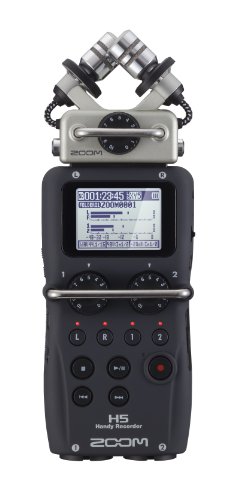
- Swappable input capsule system
- Two XLR/TRS inputs with phantom power
- Four-track recording and USB interface
Best For: Expandable field setups for film and music
Best XLR Field Recorder

- 32-bit float/96kHz recording
- Two locking XLR/TRS inputs
- OLED waveform display
Best For: Compact two-input podcast and interview setups
Best Built-In Mic Recorder

- Three built-in mics with nine patterns
- 32-bit float/96kHz recording
- USB mic and SD recording together
Best For: Flexible, low-setup field recording
Best Multitrack Field Recorder

- Six-track 32-bit float recording
- Four XLR/TRS inputs plus X/Y mics
- Interchangeable capsule system
Best For: Multi-source podcasts, events, and music recording
Best Podcast Hub – Zoom PodTrak P4
The Zoom PodTrak P4 is a practical choice among podcast recorders for field recording when you need to manage several speakers, headphones, and remote contributors. Its four XLR inputs, individual headphone controls, and battery-powered design suit mobile interview and podcast setups.
Best For: Mobile podcasts, group interviews, and remote call-in recording.
Pros:
- Four XLR microphone inputs with phantom power
- Four headphone outputs with individual volume control
- Automatic mix-minus for phone and USB remote interviews
- Sound pads and multitrack recording add production flexibility
Cons:
- Battery life is listed at up to 3.5 hours on two AA batteries
- Its podcast-focused design may be more than needed for simple one-mic recording
The P4 stands out when a field podcast involves multiple people or remote guests. It is less focused on compact ambient recording than a handheld recorder, but its connectivity and monitoring options are well suited to interview production.
Best Clip-Free Capture – Zoom F3 Professional Field Recorder
The Zoom F3 is a compact, professional option among podcast recorders for field recording, especially when unpredictable volume is a concern. Its 32-bit float recording and dual A/D converters help capture quiet dialogue and sudden peaks without requiring constant level adjustments.
Best For: Filmmakers, musicians, and field recordists working with external microphones.
Pros:
- 32-bit float recording helps reduce clipped takes
- Dual locking XLR/TRS inputs keep connections secure
- Ultra-low-noise preamps support clean recordings
- Flexible battery and USB workflows suit extended sessions
Cons:
- It relies on external microphones rather than built-in recording microphones
- Only two XLR/TRS inputs are provided
The F3 is a strong fit for run-and-gun work where input levels may change quickly. Its small form factor and secure connectors favor professional rigs, though users wanting built-in microphones or several simultaneous speakers may prefer another model.
Best Touchscreen Workflow – TASCAM Portacapture X6
The TASCAM Portacapture X6 combines built-in microphones, two XLR inputs, and a large touchscreen in a versatile option among podcast recorders for field recording. Its recording presets and 32-bit float capability make it approachable for podcasts, interviews, music, and location work.
Best For: Creators who want built-in microphones, external inputs, and guided touchscreen controls.
Pros:
- Records at up to 96 kHz with 32-bit float recording
- Captures six tracks simultaneously, including four tracks plus a mix
- Built-in microphones offer switchable AB and true-XY patterns
- Presets simplify podcast, interview, and field-recording setups
Cons:
- Battery life is listed at approximately six hours
- Its wireless adapter compatibility is limited to the AK-BT1
The X6 is a flexible middle ground for users who want to record immediately with built-in microphones but retain the option to connect external sources. The touchscreen and presets are particularly useful when changing between recording scenarios in the field.
Best Accessible Handheld – Zoom H4 Essential Handheld Recorder
The Zoom H4 Essential is a straightforward handheld choice among podcast recorders for field recording, offering built-in stereo microphones alongside two XLR/TRS inputs. It can record four tracks, connect to a phone, tablet, or computer over USB-C, and save a backup to an SD card.
Best For: Podcasters, musicians, and filmmakers who need a compact recorder with built-in and external input options.
Pros:
- 32-bit float recording helps protect against distorted takes
- Built-in stereo microphones support quick recording
- Two XLR/TRS inputs accommodate microphones, instruments, mixers, or soundboards
- Spoken menu guidance improves accessibility and navigation
Cons:
- Battery life is listed at up to 10 hours on two AA batteries
- It offers two external inputs, which may limit larger group recordings
The H4 Essential is a versatile handheld recorder for creators who move between spontaneous field audio and more connected setups. Its four-track design and 32-bit float recording add useful protection, while USB-C and SD recording support flexible workflows.
Flagship Field Detail – Zoom H5 Studio
For serious podcast recorders for field recording, the Zoom H5 Studio combines large 19.4mm X/Y microphones with clip-free 32-bit float capture. Dedicated gain knobs, portable battery power, and multi-track recording make it well suited to demanding location work.
Best For: Filmmakers, musicians, and field podcasters who need high-resolution audio and hands-on level control.
Pros:
- Large stereo microphones provide detailed audio and a wide dynamic range.
- 32-bit float recording helps prevent clipped takes.
- Records up to four tracks simultaneously at up to 192kHz in WAV format.
- Includes two XLR/TRS inputs and works as a USB audio interface.
Cons:
- Requires four AA batteries, which is more than the other H5 model listed here.
- Its advanced feature set may be more than casual users need.
The H5 Studio is the strongest choice here when sound quality, flexible inputs, and precise on-location control matter most. It is a capable flagship option for complex field sessions.
Everyday Podcast Portability – Zoom H1 Essential
The Zoom H1 Essential is a compact option for podcast recorders for field recording, with stereo X/Y microphones and clip-free 32-bit float capture. Its simple portable design suits interviews, ambient sound, voice notes, and content made away from a desk.
Best For: Podcasters, interviewers, and content creators who want a lightweight recorder that also works as a USB microphone.
Pros:
- Records clear stereo audio for podcasts, interviews, videos, and real-world ambience.
- 32-bit float recording helps protect against clipped audio.
- USB-C microphone mode supports livestreams, calls, and desktop or mobile recording.
- Runs for up to 10 hours on two AAA batteries.
Cons:
- Its stereo microphone design is less suited to multi-source recording than models with XLR inputs.
- It offers a more streamlined feature set for users who need advanced multitrack control.
Choose the H1 Essential for straightforward, portable recording rather than complex production. It is particularly practical for mobile interviews, podcast segments, and quick content capture.
Interchangeable Input Flexibility – Zoom H5 4-Track Recorder
The original Zoom H5 is a flexible pick among podcast recorders for field recording, pairing an interchangeable capsule system with four-track recording. Its detachable shock-mounted X/Y capsule and two XLR/TRS inputs give creators useful options for microphones, instruments, and location audio.
Best For: Filmmakers and musicians who want expandable inputs, multitrack recording, and a battery-powered field setup.
Pros:
- Interchangeable input capsules can adapt the recorder to different recording needs.
- Two XLR/TRS combo inputs include selectable phantom power and -20dB pads.
- Records four tracks simultaneously and includes a multichannel USB audio interface.
- Shock-mounted microphones help reduce handling noise.
Cons:
- Records to SD/SDHC cards up to 32GB, limiting storage compared with newer high-capacity options.
- It uses a more traditional feature set than the H5 Studio, including no supplied 32-bit float claim.
The H5 remains a strong choice when capsule compatibility and physical input flexibility are priorities. It is especially useful for users building a modular field-recording kit around microphones and external sources.
Best XLR Field Recorder – Zoom H1 XLR
The Zoom H1 XLR is a practical choice among podcast recorders for field recording when you want a compact setup with two external microphone or instrument inputs. Its 32-bit float/96kHz recording, waveform display, and 3.5mm connectivity make it suitable for interviews, podcasts, and mobile production.
Best For: Podcasters and filmmakers who need two XLR/TRS inputs in a compact recorder.
Pros:
- 32-bit float/96kHz recording helps deliver clip-free, detailed audio.
- Two locking XLR/TRS combo inputs support microphones and instruments.
- OLED waveform display provides quick visual level monitoring.
- Supports SDXC cards up to 1TB and offers up to 10 hours of battery life.
Cons:
- Requires two AA batteries.
- Its two-input design is less suited to larger multi-microphone sessions.
Choose the H1 XLR if portability and straightforward external-input recording matter more than extensive track counts. It offers a focused feature set for field interviews and small podcast setups.
Best Built-In Mic Recorder – Zoom H2 Essential
The Zoom H2 Essential stands out among podcast recorders for field recording because its three built-in microphones offer nine selectable recording patterns. It can capture mono, stereo, or surround material at up to 32-bit float/96kHz without requiring manual gain adjustments.
Best For: Field recordists and podcasters who want flexible built-in microphone coverage with minimal setup.
Pros:
- Three microphones and nine patterns accommodate intimate interviews and wider soundscapes.
- 32-bit float recording supports clip-free audio across changing volume levels.
- Works as a USB microphone while recording to an SD card simultaneously.
- Offers up to 20 hours of battery life and Bluetooth timecode syncing for multiple units.
Cons:
- It relies on built-in microphones rather than XLR inputs for external microphone connections.
- Requires two AA batteries.
The H2 Essential is a strong fit when speed, flexibility, and self-contained recording are priorities. Its pattern selection makes it especially useful for changing field environments and varied podcast formats.
Best Multitrack Field Recorder – Zoom H6 Essential
The Zoom H6 Essential is designed for demanding podcast recorders for field recording workflows that involve several sources. It combines six-track 32-bit float recording, four XLR/TRS inputs, built-in X/Y microphones, and interchangeable capsule support for broader production flexibility.
Best For: Multi-person podcasts, live events, bands, and filmmakers recording several sources at once.
Pros:
- Six-track 32-bit float recording helps preserve takes across multiple sources.
- Four XLR/TRS inputs work alongside built-in X/Y microphones.
- Interchangeable capsule system supports stereo and mid-side recording options.
- Functions as a USB audio interface while recording to an SD card for backup.
Cons:
- Its 450 g weight is higher than the supplied H1 XLR and H2 Essential figures.
- Requires four AAA batteries.
- Optional capsules may be needed to access additional microphone configurations.
Pick the H6 Essential when your field sessions need more inputs and tracks than a compact two-channel recorder can provide. It is the most adaptable option here for complex, source-heavy recordings.
How We Picked These Podcast Recorders for Field Recording
We focused on practical features that matter when recording outside a controlled studio: microphone connectivity, portability, recording quality, monitoring options, battery operation, and ease of use. The selection includes compact handheld recorders for quick interviews, multitrack models for larger setups, and podcast-focused units with multiple XLR inputs and headphone outputs.
We also considered workflow flexibility. Some recorders are better suited to connecting professional microphones, while others are designed for fast ambient capture, camera audio, or remote conversations. Features such as 32-bit float recording, interchangeable microphone capsules, sound pads, USB connectivity, and phone inputs can significantly affect how useful a recorder is in the field.
Quick Comparison
| Best For | Look For | Most Suitable Type |
|---|---|---|
| Solo interviews and quick notes | Small size, built-in microphones, simple controls | Compact handheld recorder |
| Two-person microphone setups | Two XLR inputs, headphone monitoring, reliable preamps | Dual-input field recorder |
| Multi-person podcasts | Four or more inputs, separate headphone outputs, mix-minus or phone support | Dedicated podcast recorder |
| Video production | Camera connectivity, low-noise preamps, mounting flexibility | Professional field recorder |
| Unpredictable recording levels | 32-bit float capture and forgiving gain control | Modern 32-bit float recorder |
Key Buying Factors for Podcast Recorders for Field Recording
Inputs and Microphone Compatibility
Choose the input layout around the people you expect to record. A single built-in stereo microphone works for fast ambient recordings, but interviews generally benefit from XLR inputs and phantom power. For group podcasts, count both microphone inputs and headphone outputs so every participant can monitor comfortably.
Recording Format and Gain Control
32-bit float recording can help protect against unexpected volume changes, making it valuable for run-and-gun work. It does not eliminate background noise or poor microphone technique, but it reduces the risk of unusable clips caused by incorrectly set recording levels. Traditional recorders can still deliver excellent results when gain is set carefully.
Portability, Power, and Storage
Check weight, battery type, estimated battery life, memory-card requirements, and whether the recorder can operate as a USB audio interface. Built-in microphones are convenient, while detachable or interchangeable capsules offer more flexibility. A windscreen and spare batteries or a power bank are also worthwhile for outdoor sessions.
Monitoring and Workflow Features
Headphone monitoring, overdubbing, multitrack recording, onboard mixing, sound pads, and phone connectivity can speed up production. Prioritize features that match your editing process rather than paying for controls you will rarely use.
Who Should Buy Which Podcast Recorders for Field Recording?
Choose a compact handheld model if you prioritize low weight, fast setup, and simple interviews or voice notes. Pick a dual-XLR recorder when you regularly connect two professional microphones or need cleaner control over a conversation. A dedicated podcast recorder is the better choice for several guests, multiple headphones, remote call integration, and live-production features.
Filmmakers and musicians should favor recorders with strong preamps, flexible mounting or capsule options, and dependable multitrack capture. If you often record unpredictable speakers or changing sound levels, a 32-bit float model is a practical choice. Before buying, match the recorder’s inputs, monitoring, and power requirements to your usual field kit.