
The best podcast recorders for musicians need to do more than capture clear speech. They should handle vocals, instruments, rehearsals, interviews, and live performances without slowing down your creative process.
These 10 picks cover compact handheld recorders, multitrack podcasting systems, video-capable models, and flexible tools for musicians who want reliable recording on the road or at home.
Best 10 Podcast Recorders for Musicians Picks for 2026
Best Multi-Person Podcast Hub

- Four XLR inputs and four headphone outputs
- Mix-minus supports phone and USB remote interviews
- Battery-powered with multitrack recording and sound pads
Best For: Group podcasts, interviews, and music discussions
Best Clip-Free Handheld

- 32-bit float recording helps avoid distorted takes
- Built-in stereo mics and two XLR/TRS inputs
- USB-C recording or streaming with SD backup
Best For: Musicians, podcasters, and field recording
Best AI-Assisted Podcast Mixer

- Four XLR inputs and four headphone outputs
- AI noise reduction, Tone Enhancement, and COMP
- Up to +70 dB of gain for demanding microphones
Best For: Multi-person podcasts and direct-to-phone video audio
Best Expandable Handheld
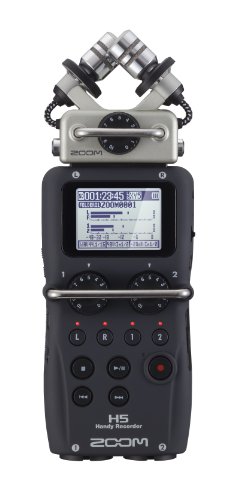
- Interchangeable capsules support flexible mic setups
- Two XLR/TRS inputs with phantom power and pads
- Four-track recording and multichannel USB interface
Best For: Musicians needing adaptable handheld recording
Best Podcast Mixing Bundle

- Four XLR inputs with phantom power
- Four independent headphone outputs
- Includes two Zoom ZDM-1 microphones
Best For: Multi-person podcasts with music and sample playback
Best for Layered Music Ideas

- Four-track recording with bounce workflow
- 32-bit float clip-free capture
- Built-in rhythms and combo inputs
Best For: Mobile songwriting, demos, and layered instrument recordings
Best Compact Clip-Free Recorder

- Three microphones and nine recording patterns
- 32-bit float recording without gain setting
- USB microphone and SD backup recording
Best For: Portable rehearsals, interviews, and stereo field recording
Best Video Recorder

- 4K video with a 150° wide-angle lens
- X/Y mics rated to 120 dB SPL
- USB streaming and built-in tripod mount
Best For: Performance videos, rehearsals, and livestreams
Best Compact XLR Recorder

- 32-bit/96kHz recording
- Two XLR/TRS combo inputs
- Waveform display and SDXC support up to 1TB
Best For: Portable two-source podcast and music recording
Best Multitrack Recorder

- Six-track 32-bit float recording
- Four XLR/TRS inputs plus X/Y mics
- USB interface with simultaneous SD backup
Best For: Bands, multi-mic podcasts, and live-event recording
Best Multi-Person Podcast Hub – Zoom PodTrak P4
For musicians comparing podcast recorders for musicians, the Zoom PodTrak P4 is a practical choice when several people need to record together. Its four XLR inputs, individual headphone controls, remote-call features, and battery operation suit mobile interviews, rehearsal discussions, and music-focused shows.
Best For: Groups recording podcasts with up to four microphones and remote guests.
Pros:
- Four XLR microphone inputs with phantom power
- Four headphone outputs with separate volume control
- Automatic mix-minus for phone and USB remote interviews
- Multitrack recording with programmable sound pads
Cons:
- Battery life is limited to up to 3.5 hours on two AA batteries
- Designed around 3.5 mm headphone connections
The P4 stands out when group monitoring and call-in flexibility matter more than a compact handheld design. It also works as a 2-in/2-out USB audio interface for computer-based recording.
Best Clip-Free Handheld – Zoom H4 Essential
The Zoom H4 Essential is a versatile option among podcast recorders for musicians who also capture rehearsals, performances, interviews, or video audio. Its built-in stereo microphones, two XLR/TRS inputs, four-track recording, and 32-bit float support provide a flexible setup for changing sources.
Best For: Musicians and creators recording performances, podcasts, and field audio with extra protection against distorted takes.
Pros:
- 32-bit float recording helps provide clip-free audio
- Built-in stereo microphones plus two XLR/TRS inputs
- Records to an SD card while connecting by USB-C to a phone, tablet, or computer
- Spoken menu guidance supports more accessible operation
Cons:
- Uses two AA batteries
- Offers two external mic or instrument inputs rather than four
Choose the H4 Essential when portability and recording flexibility are priorities. It can serve as a handheld recorder, a USB audio device, and a backup-capable recorder that saves to both a connected device and SD card.
Best AI-Assisted Podcast Mixer – Zoom PodTrak P4next
The Zoom PodTrak P4next adds automated processing to the podcast recorders for musicians category. It combines four XLR inputs, four independently controlled headphone outputs, up to +70 dB of gain, and AI noise reduction for creators who want a streamlined multi-person setup.
Best For: Four-person podcasts and phone-video workflows that benefit from built-in audio enhancement.
Pros:
- Four XLR inputs support up to four people plus a call-in guest
- AI noise reduction, Tone Enhancement, and COMP simplify processing
- Up to +70 dB of gain supports demanding microphones
- Four headphone outputs provide separate volume controls
Cons:
- Requires two AA batteries for portable operation
- Its processing-focused features may be more than a simple solo setup needs
The P4next is a strong fit for creators who want hands-on input capacity with less post-production effort. Its phone connection can also send audio directly into video, reducing the need for later syncing or editing.
Best Expandable Handheld – Zoom H5
The Zoom H5 is a flexible pick among podcast recorders for musicians who need a handheld recorder that can grow with their setup. Its interchangeable capsule system, detachable shock-mounted X/Y microphones, two XLR/TRS inputs, and four-track recording cover music, interviews, and audio for video.
Best For: Musicians who want interchangeable microphone options and a compact recorder for multitrack work.
Pros:
- Interchangeable input capsules expand microphone options
- Two XLR/TRS inputs include phantom power and -20 dB pads
- Four-track simultaneous recording with an audio safety net
- Functions as a multichannel or stereo USB audio interface
Cons:
- Records directly to SD/SDHC cards up to 32GB
- Provides two external combo inputs rather than four
The H5 makes the most sense when adaptability is more important than a dedicated podcast layout. Its capsule compatibility and USB interface support let it move between field recording, music production, and podcast-style sessions.
Best Podcast Mixing Bundle – Zoom PodTrak P4
Zoom PodTrak P4 Portable Multitrack Podcast Recorder Bundle with 2X Zoom ZDM-1 Podcast Pack
Check Price On AmazonFor musicians seeking podcast recorders for musicians with a group-friendly setup, the Zoom PodTrak P4 combines four high-gain XLR inputs, headphone monitoring, and sound pads in a portable recorder. This bundle also includes two Zoom ZDM-1 podcast microphones.
Best For: Musicians and small podcast teams recording multiple microphones with independent headphone monitoring.
Pros:
- Four high-gain XLR microphone inputs with +48V phantom power.
- Four independent headphone outputs for collaborative monitoring.
- Four sound pads support music and sample playback.
- Includes two Zoom ZDM-1 Podcast Pack microphones.
Cons:
- Its feature set is oriented toward podcast production rather than multitrack music layering.
- The listed microphone form factor is built-in, so verify compatibility with your preferred microphones and accessories.
The P4 is a practical choice when several performers need to connect and monitor at once. Its four inputs and sound pads make it especially useful for conversational shows with musical elements.
Best for Layered Music Ideas – Zoom R4 Multi-Track Recorder
The Zoom R4 is one of the more music-focused podcast recorders for musicians, offering four-track recording, bouncing, 32-bit float capture, and XLR/TRS combo inputs. Its built-in rhythms and battery operation make it suited to mobile songwriting and performance recording.
Best For: Musicians who want to layer vocals and instruments, build ideas with rhythm patterns, and use the recorder as a USB audio interface.
Pros:
- Records up to four tracks and lets you bounce tracks to continue layering.
- 32-bit float recording helps provide clip-free capture without manual gain adjustments.
- XLR/TS combo inputs accommodate microphones, instruments, keyboards, and other sources.
- Includes more than 80 built-in drum patterns and runs on four AA batteries or USB-C.
Cons:
- It has two XLR/TRS combo inputs, so larger simultaneous setups may need additional equipment.
- Its music-production workflow may be more than needed for simple voice-only podcasting.
With track bouncing, effects, rhythms, and USB interface functionality, the R4 is a flexible sketchpad for musicians. It is particularly compelling for recording layered demos away from a computer.
Best Compact Clip-Free Recorder – Zoom H2 Essential
The Zoom H2 Essential is a compact option among podcast recorders for musicians, using three built-in microphones and nine recording patterns to cover interviews, rehearsals, and wider stereo soundscapes. Its 32-bit float recording and USB microphone mode simplify both field and computer-based recording.
Best For: Musicians and podcasters who need a lightweight recorder for rehearsals, interviews, ambient sound, and stereo capture.
Pros:
- Three built-in microphones provide nine selectable recording patterns.
- 32-bit float recording captures audio without requiring gain adjustments.
- Can operate as a USB microphone while recording a backup to an SD card.
- Supports mono, stereo, and surround recording, plus Bluetooth timecode syncing.
Cons:
- It relies on built-in microphones rather than listed XLR inputs for external microphone connections.
- Its two-AA battery design is less suited to extended multi-input studio setups.
The H2 Essential is a strong grab-and-go recorder for musicians who value simplicity and portability. Its multiple patterns and backup recording capability make it useful for capturing ideas reliably in changing environments.
Best Video Recorder – Zoom Q2n-4K
For musicians who want video and audio in one compact device, the Zoom Q2n-4K is a practical choice among podcast recorders for musicians. It combines 4K video, a 150-degree wide-angle lens, and X/Y microphones rated to 120 dB SPL for rehearsals, concerts, livestreams, and performance content.
Best For: Musicians recording performances, rehearsals, and livestreamed podcast or video content.
Pros:
- Records 4K video with five field-of-view settings.
- X/Y microphones handle sound levels up to 120 dB SPL.
- USB streaming works with YouTube, Twitch, Facebook, and more.
- Compact body includes a built-in tripod mount.
Cons:
- No image stabilization.
- Requires two AA batteries.
- Fixed-focus lens offers less focusing flexibility.
The Q2n-4K makes the most sense when visual presentation matters as much as audio. Its compact design and direct USB streaming are convenient, though dedicated audio-only recorders offer more input flexibility.
Best Compact XLR Recorder – Zoom H1 XLR
The Zoom H1 XLR is a straightforward option for musicians seeking podcast recorders for musicians with external microphone and instrument support. Its two XLR/TRS combo inputs, 32-bit/96kHz recording, and waveform display suit podcasts, interviews, and small recording setups.
Best For: Solo creators and musicians who need a portable recorder with two professional inputs.
Pros:
- Records in 32-bit float at up to 96kHz for detailed audio.
- Two XLR/TRS combo inputs accept microphones and instruments.
- Waveform display helps monitor recording levels.
- Supports SDXC cards up to 1TB.
Cons:
- Only two XLR/TRS inputs are provided.
- Requires two AA batteries.
- Small 0.96-inch screen may limit on-device visibility.
Choose the H1 XLR when you want a relatively simple, compact setup with professional connections. It is less suited to larger ensembles than the H6 Essential, but its smaller format can be easier to carry and operate.
Best Multitrack Recorder – Zoom H6 Essential
The Zoom H6 Essential is the most capable choice here for musicians who need podcast recorders for musicians that can grow with a more involved setup. It records six tracks in 32-bit float, includes four XLR/TRS inputs and built-in X/Y microphones, and can also function as a USB audio interface.
Best For: Bands, multi-microphone podcasts, live events, and creators who need flexible routing and backup recording.
Pros:
- Six-track 32-bit float recording helps prevent clipped takes.
- Four XLR/TRS inputs support multiple microphones and instruments.
- Built-in X/Y microphones handle up to 135 dB SPL.
- Works as a USB audio interface while recording to an SD card.
Cons:
- Heavier and larger than the H1 XLR.
- Requires four AAA batteries.
- Optional capsules may add to the overall setup cost.
The H6 Essential is the strongest fit when your recordings involve several sources or you want room to expand. Its extra inputs and six-track capability add flexibility, while the larger body is a tradeoff for portable work.
How We Picked the Best Podcast Recorders for Musicians
We focused on recording flexibility, input quality, portability, monitoring, workflow, and suitability for both spoken-word and musical sources. The lineup includes dedicated podcast recorders, handheld field recorders, multitrack devices, and video-oriented options so you can match the recorder to your actual setup.
We also considered features that matter in real use, including XLR and combo inputs, multitrack recording, onboard microphones, headphone outputs, remote-interview support, effects, noise reduction, 32-bit float recording, and video resolution.
Quick Comparison
| Best For | Look For | Recommended Type |
|---|---|---|
| Remote interviews | Multiple mic inputs, headphone monitoring, phone or USB connectivity | PodTrak P4 or P4next |
| Song ideas and rehearsals | Portable microphones, simple operation, dependable storage | H2 Essential or H4 Essential |
| Multitrack music production | Combo inputs, overdubbing, bouncing, effects | Zoom R4 |
| Video performances | High-quality audio paired with camera recording | Zoom Q2n-4K |
| Expanded microphone setups | More inputs and flexible routing | Zoom H6 Essential |
Key Buying Factors for Podcast Recorders for Musicians
Inputs and Connectivity
Count the microphones and instruments you expect to connect at once. XLR inputs suit microphones, while combo XLR/TRS inputs can also accept line-level or instrument connections. If you plan to host guests, four inputs and multiple headphone outputs can be more useful than a smaller recorder with better portability.
Recording Format and Headroom
Higher-resolution recording can preserve detail, while 32-bit float models provide extra protection against unexpected peaks during rehearsals, live sets, and location work. It does not replace good microphone placement, but it can reduce the risk of unusable takes.
Monitoring and Workflow
Dedicated headphone outputs, direct monitoring, sound pads, overdubbing, and onboard effects can make a major difference during interviews and music sessions. Choose a recorder that keeps common tasks accessible rather than forcing you to manage every adjustment in software.
Portability and Power
Handheld models are ideal for songwriting, field recording, and quick interviews. Check battery life, storage requirements, mounting options, and whether the unit fits comfortably in your travel or performance kit.
Audio Versus Video
If you publish live sessions, lessons, or performance clips, a video recorder with a quality stereo microphone can simplify production. For audio-only podcasts and multitrack music, a dedicated recorder usually offers a more focused workflow.
Who Should Buy Which Podcast Recorders for Musicians?
- Choose the PodTrak P4 or P4next if your priority is podcasting with several guests, remote callers, and independent headphone monitoring.
- Choose the H4 Essential, H2 Essential, or H1 XLR for portable recording of rehearsals, instruments, interviews, and spontaneous ideas.
- Choose the R4 if you want a compact music-production tool for layering, bouncing, effects, and direct instrument connections.
- Choose the H5 or H6 Essential when you need a more adaptable handheld recorder with expanded microphone or input options.
- Choose the Q2n-4K if recording synchronized video and audio for performances or streaming is central to your setup.
- Choose the P4 bundle if you want a ready-to-use podcast package that includes microphones rather than buying the core accessories separately.
Before buying, prioritize the inputs and recording workflow you will use most often. The right recorder is usually the one that supports your current microphones, monitoring needs, and publishing routine without adding unnecessary setup.