
Finding a capable synthesizer on a $300 budget is easier than ever, but the best choice depends on how you plan to play, record, and perform. This roundup covers compact MIDI controllers, standalone digital instruments, pocket synths, and analog-focused options.
Use the guide below to compare connectivity, key feel, sound design tools, portability, and included features before choosing the instrument that fits your setup.
Best 10 Synthesizers Under 300 Picks for 2026
Best Acid Bass Pick

- Analog bass engine with saturation and delay
- 128 patterns plus Song Mode and arpeggiator
- USB-C, MIDI, and Sync connectivity
Best For: Hands-on acid basslines and pattern-based electronic production
Best 37-Key Controller

- 37-key controller with three full octaves
- CV/Gate, MIDI, pads, knobs, and DAW controls
- Built-in 64-step drum and melodic sequencer
Best For: Compact studio control with software and external hardware
Best Portable Novelty Synth
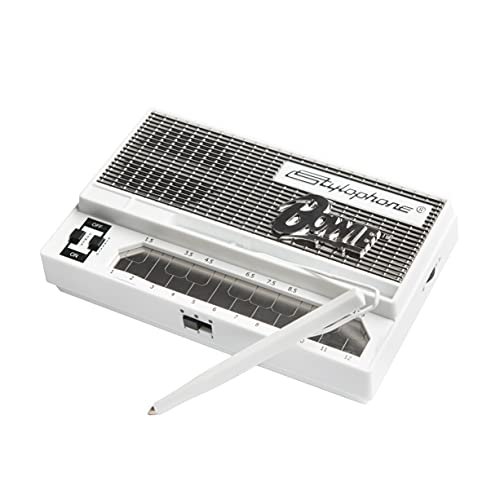
- Limited-edition Bowie design
- Battery-powered and compact
- Stylus control with three synth and bass modes
Best For: Beginners, fans, and portable creative play
Best Standalone Mini Keyboard

- Built-in speaker and 100-plus internal sounds
- 25 keys, MPC pads, knobs, and arpeggiator
- Battery or USB power for portable creation
Best For: Mobile beat making, songwriting, and beginner-friendly production
Best Portable FM Pick
M-VAVE Wireless FM Synthesizer

- Battery-powered with built-in speaker
- Six-operator FM engine with 32 algorithms
- Effects, arpeggiator, sequencer, and three MIDI options
Best For: Portable FM sound design and quick musical sketching
Best MIDI Controller

- 25 velocity-sensitive mini keys
- Eight pads, eight knobs, and pitch/modulation control
- Includes production software and sound content
Best For: Computer-based beat making and virtual synthesizer control
Best Analog Sound Design Pick

- Portable analog synthesizer with built-in speaker
- LFO, filter, envelope, PWM, and analog delay
- CV/Gate outputs for modular integration
Best For: Experimental analog tones and portable hardware performance
Best with Extra Features

- 25-key controller with pads and performance controls
- Smart scales, arpeggio, and chord functions
- Requires a computer or mobile DAW for sound
Best For: Beginners and mobile music producers
Best Pocket Synth

- Compact, battery-powered pocket synthesizer
- Three octaves with vintage analog-style sound
- Built-in speaker, headphone output, and 3.5mm connectivity
Best For: Beginners, collectors, and portable experimentation
Best FM Synth

- Six-operator FM engine with 128 presets
- Sequencer, arpeggiator, effects, and 12-voice polyphony
- USB-C, Bluetooth MIDI, and 3.5mm MIDI connectivity
Best For: Guitarists, producers, and portable performers
Best Acid Bass Pick – Donner Essential B1
For shoppers comparing synthesizers under 300, the Donner Essential B1 is a focused analog bass synthesizer and sequencer built around classic acid-style sounds. Its intuitive step sequencer, 128 pattern slots, haptic performance pads, and onboard saturation and delay make it practical for creating and performing basslines.
Best For: Electronic musicians who want an affordable analog bass synth with hands-on sequencing and acid-oriented sound.
Pros:
- Fully analog signal path with one VCO, VCF, and VCA for straightforward bass synthesis
- 128 pattern memories, Song Mode, and an intuitive step sequencer
- Haptic pads, an eight-mode arpeggiator, saturation, and delay support live performance
- USB-C, dual five-pin MIDI, and Sync I/O provide flexible connectivity
Cons:
- Its single-oscillator design is specialized for bass rather than broad multi-timbral synthesis
- Best suited to electronic and acid-focused production instead of general keyboard playing
The Essential B1 is a strong choice when sequencing and analog bass character matter more than a full keyboard interface. It offers useful performance tools and connectivity in a compact format.
Best 37-Key Controller – Akai MPK Mini Plus
Among synthesizers under 300, the Akai Professional MPK Mini Plus is a versatile USB MIDI keyboard controller for producers who want more playing range than a typical mini controller. It combines 37 keys, MPC pads, assignable knobs, CV/Gate and MIDI connectivity, and a built-in 64-step sequencer.
Best For: Home producers who need a compact controller for melodic parts, beat making, DAW control, and modular or hardware gear.
Pros:
- 37-key layout provides three full octaves for melodic and harmonic performance
- Eight RGB MPC pads, eight assignable knobs, arpeggiator, Chords mode, and Scales mode
- CV/Gate and MIDI I/O expand control to modular equipment and external synthesizers
- Built-in 64-step sequencer supports drums and melodies or chords without a computer
Cons:
- It is a MIDI controller rather than a standalone synthesizer with internal sound generation
- USB-powered operation may be less convenient for setups away from a computer or USB source
The MPK Mini Plus is a well-rounded control center for a compact studio. Choose it if you already use software or external sound sources and want broader keyboard range plus tactile sequencing and pad control.
Best Portable Novelty Synth – Bowie Stylophone
For buyers browsing synthesizers under 300, the limited-edition Bowie Stylophone offers a simple, portable way to experiment with classic electronic tones. Its stylus-based interface, battery-powered design, and three sound modes make it approachable for casual playing and creative sound effects.
Best For: David Bowie fans, beginners, and musicians who want a compact stylus-controlled analog-style instrument.
Pros:
- Distinctive limited-edition white design with an embossed Bowie logo
- Compact and battery-powered for portable use
- Simple stylus interface with three analog synth and bass sound modes
Cons:
- Its stylus layout is less suitable for conventional keyboard-style playing
- Limited to three sound modes and a simple feature set
The Bowie Stylophone is more of a compact creative instrument than a full production synthesizer. Its appeal is the combination of recognizable design, easy operation, and playful portability.
Best Standalone Mini Keyboard – Akai MPK Mini Play MK3
When comparing synthesizers under 300, the Akai MPK Mini Play MK3 stands out as a compact keyboard controller that can also operate independently. Its built-in speaker, internal library of more than 100 drum and instrument sounds, pads, arpeggiator, and battery option make it useful both at a desk and on the go.
Best For: Beat makers, songwriters, students, and mobile musicians who want built-in sounds alongside USB MIDI control.
Pros:
- Standalone operation with built-in speaker and over 100 internal drum and instrument sounds
- 25 velocity-sensitive keys, eight MPC pads, four encoder knobs, and an OLED display
- Arpeggiator, note repeat, USB MIDI, and included music software support varied workflows
- Can run on batteries or USB power for portable use
Cons:
- Its 25-key layout offers less playing range than a larger keyboard controller
- Batteries are not included
- Built-in sounds and speaker are convenient but do not replace a full studio monitoring setup
The MPK Mini Play MK3 is a flexible option for sketching ideas without a computer while still functioning as a USB controller. It is especially practical for beginners and mobile producers who value internal sounds and portability.
Best Portable FM Pick – M-VAVE Wireless FM Synthesizer
If you want synthesizers under 300 that can travel easily, the M-VAVE FM Synthesizer combines battery operation, a built-in speaker, and a compact 27-key design. Its six-operator FM engine, 128 presets, effects, arpeggiator, and sequencer give beginners and experienced players plenty to explore.
Best For: Portable sound design, classic FM tones, and hands-on experimentation away from a full studio setup.
Pros:
- Battery-powered design with built-in speaker for playing almost anywhere.
- Six operators, 32 algorithms, and support for FM SYSEX sound banks offer substantial sound-shaping flexibility.
- Includes six effects, a 16-step sequencer, arpeggiator, and three MIDI connection options.
Cons:
- The 27 silicone keys may feel less substantial than a conventional keyboard.
- Its FM-focused architecture may require more experimentation than simpler preset-based instruments.
This is a feature-rich choice for shoppers prioritizing portability and FM synthesis. The built-in speaker and wireless MIDI make it especially convenient for sketching ideas, while USB MIDI and the 3.5mm MIDI input help it fit into a broader setup.
Best MIDI Controller – Akai MPK Mini MK3
Among synthesizers under 300, the Akai MPK Mini MK3 is best understood as a compact USB MIDI controller for virtual instruments rather than a standalone sound-producing synthesizer. It pairs 25 velocity-sensitive mini keys with pads, knobs, an arpeggiator, and included production software.
Best For: Home-studio producers who want compact control over software synthesizers, beats, effects, and DAW projects.
Pros:
- Eight velocity-sensitive MPC-style pads support drum programming and sample triggering.
- Eight assignable knobs and a four-way pitch/modulation thumbstick provide hands-on control.
- Includes an arpeggiator, MPC Beats, virtual instruments, sound content, and a Splice offer.
Cons:
- It requires a USB-compatible computer and software to produce or control sounds.
- The 25 mini keys offer less playing range than a full-size keyboard.
The MPK Mini MK3 is a practical entry point for computer-based production. Choose it when flexible software control, beat pads, and a small footprint matter more than built-in speakers, battery operation, or an onboard synthesizer engine.
Best Analog Sound Design Pick – Stylophone GENX-2
For shoppers comparing synthesizers under 300, the Stylophone GENX-2 offers an unusual portable analog experience. Its stylus keyboard, built-in speaker, battery operation, flexible LFO, resonant filter, envelope, pulse-width modulation, and analog delay make it geared toward creating distinctive tones rather than simply browsing presets.
Best For: Experimental players, retro-style sound design, and portable setups that use CV/Gate equipment.
Pros:
- Portable battery-powered design with a built-in speaker, headphone output, and audio output.
- Analog controls include an LFO, resonant low-pass filter, attack/decay envelope, PWM, and dual sub-octave switches.
- CV and Gate outputs allow control of modular and semi-modular equipment.
Cons:
- The stylus-based keyboard has a different playing feel from a conventional keyboard.
- Its compact performance format may be less suitable for traditional keyboard technique.
The GENX-2 stands out for tactile, characterful sound creation in a very small instrument. Its expression strip, analog delay, and CV/Gate connectivity make it a particularly interesting option for creative performance and hardware experimentation.
Best with Extra Features – Donner DMK 25 Pro
If you’re shopping for synthesizers under 300 and want hands-on control rather than a standalone instrument, the Donner DMK 25 Pro is a compact MIDI keyboard controller for computer and mobile music setups. It requires a phone, tablet, or computer with compatible DAW software to produce sound.
Best For: Beginners and mobile producers who want a portable controller with guided lessons, smart scales, and performance controls.
Pros:
- Includes 25 velocity-sensitive keys, eight drum pads, arpeggio, note repeat, chord functions, and a touch bar.
- Smart Dynamic Scale Mode offers 16 scale options for creating melodies, bass lines, and leads.
- USB-C connectivity, mobile compatibility, four DAW software offerings, and 40 teaching courses support a broad range of users.
- Compact 680 g design includes customizable wheels and six transport controls.
Cons:
- It does not generate sound independently and must connect to a compatible device and DAW.
- Additional adapters may be needed for devices using Micro USB or Lightning ports.
The DMK 25 Pro is a feature-rich choice for learning and portable arrangement, but it is better suited to software-based production than standalone play.
Best Pocket Synth – Stylophone Original
Among synthesizers under 300, the Stylophone Original stands out as an especially compact, beginner-friendly instrument. Its touch-sensitive metal surface and stylus create a distinctive vintage sound without requiring a computer or external sound module.
Best For: Beginners, collectors, and musicians who want a pocket-sized analog-style synth for casual playing and creative effects.
Pros:
- Produces an iconic retro analog sound across three octaves, with optional vibrato.
- Stylus-controlled touch surface is simple to play and offers a distinctive performance style.
- Built-in speaker and headphone socket allow portable practice and private listening.
- Can connect to a computer or other gear through a 3.5mm stereo cable for recording and sound manipulation.
Cons:
- Its compact touch-surface design is less suitable for conventional keyboard technique.
- Runs on three AA batteries, which must be available for portable use.
The Stylophone is a fun, highly portable option when character and simplicity matter more than extensive sequencing or full-size keys.
Best FM Synth – M-VAVE FM-1
For shoppers comparing synthesizers under 300, the M-VAVE FM-1 offers a surprisingly broad feature set in a small, standalone format. Its six-operator FM engine, built-in sounds, effects, sequencing, and multiple MIDI connections make it suitable for both independent playing and software-based setups.
Best For: Guitarists, producers, and portable performers who want FM sounds, MIDI flexibility, and onboard production tools.
Pros:
- Six-operator FM synthesis provides 32 algorithms and 128 factory presets, with FM SysEx import.
- Includes a seven-mode arpeggiator, 16-step sequencer with 16 independent sequences, and six effects.
- Offers USB-C, Bluetooth BLE MIDI, and 3.5mm MIDI IN connectivity for guitar rigs, DAWs, and controllers.
- Rechargeable 2,000mAh battery provides up to 12 hours of play, while the built-in speaker supports standalone use.
Cons:
- The 27-key silicone keyboard may feel different from a traditional piano-style keyboard.
- Its feature-rich FM architecture may require a learning period for users new to FM synthesis.
The FM-1 is a strong fit for sound designers and guitarists who value portability and connectivity, especially when a standalone synth with deep FM capabilities is preferred.
How We Picked the Best Synthesizers Under 300
We focused on instruments and controllers that offer meaningful value below the $300 mark, prioritizing usable sounds, hands-on controls, portability, and straightforward operation. The selection includes standalone synthesizers with built-in speakers and batteries, as well as USB MIDI controllers that require a computer, tablet, or external sound source.
We also considered features that affect long-term usefulness, including onboard sequencing, preset variety, drum pads, arpeggiators, scales, effects, CV/Gate connectivity, displays, and wireless or USB-C support. Because these products serve different purposes, the right pick is less about having the most features and more about matching the instrument to your workflow.
Quick Comparison
| Best For | Look For | Product Types |
|---|---|---|
| Computer-based production | USB MIDI, pads, knobs, software compatibility | MPK Mini, MPK Mini Plus, Donner controllers |
| Standalone playing | Built-in speaker, battery power, onboard sounds | M-VAVE FM models, MPK Mini Play |
| Analog experimentation | Filters, LFOs, effects, CV/Gate, sequencing | Donner B1, Stylophone GENX-2 |
| Casual and portable fun | Small size, simple controls, built-in speaker | Stylophone Original and Bowie editions |
Key Buying Factors for Synthesizers Under 300
Standalone or MIDI Controller?
A standalone synth produces sound on its own, making it useful for travel, quick practice, and performance without a computer. A MIDI controller does not generate sound independently; it sends notes and control information to music software or another synth. Controllers are often better for recording because they integrate with a larger software setup.
Sound Engine and Controls
Analog instruments can provide immediate, hands-on control over oscillators, filters, envelopes, and effects. FM synths offer a different type of digital synthesis, often with bright, metallic, or complex tones and many presets. Pocket synths typically sacrifice range and depth for portability, while larger controllers provide more playable keys and performance controls.
Keys, Pads, and Playability
Twenty-five keys are convenient for compact desks and mobile setups, but a 37-key controller gives you more room for two-handed parts. Drum pads are valuable for beatmaking, while mini keys keep the overall footprint small. If you are learning piano-style technique, check key size and whether the limited range will become restrictive.
Power, Connectivity, and Expansion
Check whether the instrument uses USB, USB-C, batteries, or an external power supply. Built-in speakers are convenient but may not replace headphones or studio monitors. CV/Gate outputs can expand an analog setup, while Bluetooth or wireless features may simplify mobile use but can introduce compatibility limits.
Who Should Buy Which Synthesizers Under 300?
Choose a USB MIDI controller if you already produce music on a computer and want compact keys, pads, knobs, or performance controls. The MPK Mini Plus is the more flexible choice when you want extra range, while smaller 25-key models suit limited desk space and travel.
Choose a standalone FM synth if you want immediate sound without connecting a laptop. Pick an analog-focused option if sound shaping, sequencing, and experimentation matter more than a large preset library. Stylophone models are best for casual players, beginners, and anyone seeking an inexpensive, highly portable instrument with a distinctive playing experience.
Before buying, confirm the included cables, software, power requirements, key layout, and operating-system compatibility. Those details often determine whether a budget synthesizer becomes a useful daily tool or a novelty that stays on the shelf.