
If you need a simple way to clone, back up, or swap drives on a Windows PC, the right dock can save time and reduce setup headaches.
We rounded up 10 of the best hard drive duplicators for Windows, focusing on compatible drive types, cloning speed, and practical features for home and office use.
Best 10 Hard Drive Duplicators for Windows Picks for 2026
Dual-Bay USB 3.0 Cloner Dock
SABRENT EC-HD2B dual-bay SATA cloner dock
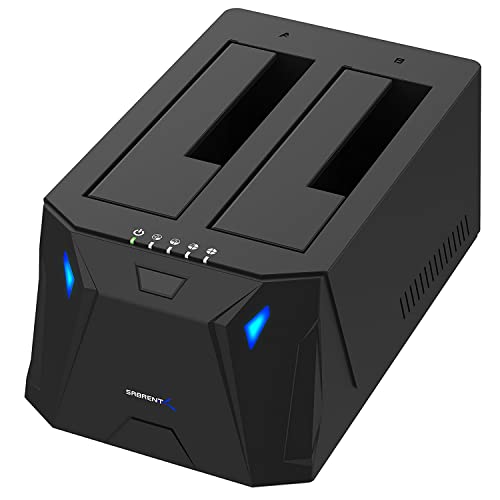
- Offline cloning up to 60Mbps
- USB 3.0 plug-and-play on Windows
- Fits 2.5-inch and 3.5-inch SATA drives
Best For: Windows users who want a simple dock with offline cloning
Standalone Erase & Clone Unit
Systor SYS101HS-DP standalone HDD/SSD duplicator

- No computer or software required
- Copies data only or full drives
- Includes drive erase and sanitization support
Best For: IT teams needing standalone cloning and sanitization
USB-C Offline Cloner Dock
SABRENT EC-CH2B USB-C dual-bay cloner dock

- Offline clone with one-button operation
- USB-C plug-and-play on Windows and Mac
- Supports 2.5-inch and 3.5-inch SATA drives
Best For: Users who want USB-C docking plus offline cloning
IT-Grade SATA Duplicator Dock
StarTech SDOCK2U313R standalone SATA duplicator dock
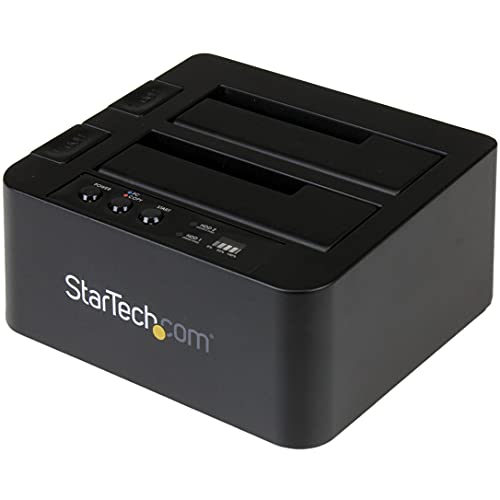
- Standalone sector-by-sector cloning
- Works as a USB-to-SATA dock
- Supports 2.5-inch and 3.5-inch SATA drives
Best For: IT professionals needing a reliable standalone SATA duplicator
4-Bay Offline Clone Dock
SABRENT 4-Bay USB 3.0 Hard Drive Docking Station

- Holds up to four 2.5-inch or 3.5-inch SATA drives
- Offline cloning works without a computer
- USB 3.0 plug-and-play design with no drivers
Best For: Windows users who need multi-drive handling and offline cloning
Dual-Bay USB-C Cloner
ORICO USB Type C to SATA 2 Bay Hard Drive Docking Station

- Dual-bay dock with offline clone mode
- Includes USB-C and USB-A 2-in-1 cable
- Compatible with Windows and multiple other systems
Best For: Windows users who want a compact dual-bay duplicator with USB-C support
Single-Bay SATA Dock
SABRENT USB 3.0 to SATA Hard Drive Docking Station
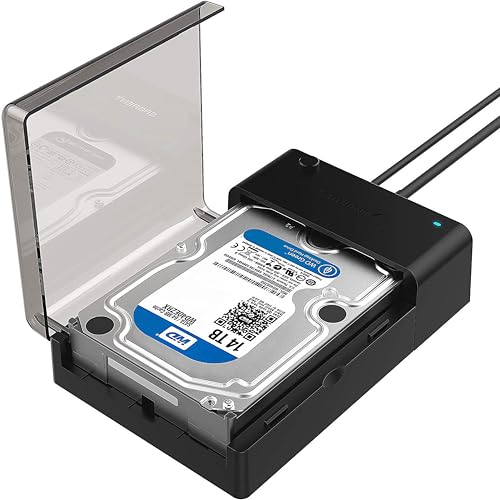
- Single-bay dock for 2.5-inch and 3.5-inch SATA drives
- Windows plug-and-play with no drivers
- USB 3.0 UASP support and hot-swap design
Best For: Windows users who want a simple single-drive SATA dock
Budget-Friendly Dual-Bay Cloner
WAVLINK USB 3.0 and USB C to SATA Dock

- Supports 2.5"/3.5" SATA HDDs and SSDs
- Offline cloning works without a PC
- Windows support from XP through 10
Best For: Windows users who want an affordable dual-bay SATA dock with offline cloning
Versatile Triple-Bay Cloner
ICY BOX USB-C NVMe Cloner & Reader

- Clones NVMe and SATA drive types
- Triple-bay, tool-free design for multiple drives
- USB 3.2 Gen 2 supports up to 10Gbps
Best For: Users who need a flexible cloner for mixed NVMe and SATA setups
High-Capacity Dual-Bay Cloner
ORICO Dual Bay Hard Drive Docking Station

- Supports up to 44TB total capacity
- Offline cloning starts with a 3-second button press
- USB 3.0 with UASP and Trim
Best For: Windows users who want a dual-bay SATA dock with large capacity support and simple cloning
Dual-Bay USB 3.0 Cloner Dock – SABRENT EC-HD2B dual-bay SATA cloner dock
If you need hard drive duplicators for windows that also double as a day-to-day dock, the SABRENT EC-HD2B is a flexible pick. It handles 2.5-inch and 3.5-inch SATA HDDs or SSDs, supports plug-and-play use with no drivers, and can offline clone drives without needing a computer.
Best For: Windows users who want a simple dual-bay dock that can clone drives offline and also connect over USB for normal access.
Pros:
- Supports both 2.5-inch and 3.5-inch SATA hard drives and SSDs
- Offline cloning works at up to 60Mbps with no PC required
- USB 3.0 connection offers up to 5Gbps transfer speeds
- Plug and play design with no drivers needed
Cons:
- Offline clone speed is limited compared with faster duplicators
- Target drive must be large enough for the source drive
This is a practical dual-purpose dock for users who want both cloning and quick drive access in one unit. Its biggest strength is convenience: you can duplicate drives offline, then reconnect to Windows for file transfers or troubleshooting.
Standalone Erase & Clone Unit – Systor SYS101HS-DP standalone HDD/SSD duplicator
For hard drive duplicators for windows users who need a fully standalone workstation, the Systor SYS101HS-DP focuses on cloning and sanitizing without relying on software. It works with both 2.5-inch and 3.5-inch drives, can copy data or whole drives, and also includes erase functions for drive disposal or reuse.
Best For: IT and support workflows that need computer-free drive duplication and secure sanitization.
Pros:
- Complete standalone operation with no computer or software required
- Works with both 2.5-inch and 3.5-inch HDDs and SSDs
- Can copy data only or clone the whole drive
- Includes erase support aligned with DoD 5220.22-M sanitization
Cons:
- Duplication speed tops out at 90MB/s
- Best suited to SATA-style drive workflows rather than general USB docking
This model is a strong match when the priority is dependable, self-contained drive copying and erasure. It is less about convenience docking and more about controlled duplication tasks where software-free operation matters.
USB-C Offline Cloner Dock – SABRENT EC-CH2B USB-C dual-bay cloner dock
If you are comparing hard drive duplicators for windows and want USB-C plus offline cloning, the SABRENT EC-CH2B is a strong all-around dock. It copies one SATA drive to another at the press of a button, supports both 2.5-inch and 3.5-inch SATA HDDs and SSDs, and mounts both bays as separate drives when connected to a PC.
Best For: Windows and Mac users who want a USB-C dual-bay dock with offline cloning and dual-drive access.
Pros:
- Offline cloning works without a connected computer
- USB-C connection supports plug-and-play use on Windows and Mac
- Both bays can be read and written as separate drives over USB
- Tool-free, hot-swappable design with drive LEDs per bay
Cons:
- Does not support IDE/PATA, M.2, or NVMe drives
- Target drive must be the same size as the source or larger
- Offline cloning is limited to up to 60MBps by design
This dock is a good fit if you want a modern USB-C setup that still handles offline duplication. It balances cloning, live drive access, and simple operation in a single enclosure.
IT-Grade SATA Duplicator Dock – StarTech SDOCK2U313R standalone SATA duplicator dock
Among hard drive duplicators for windows, the StarTech SDOCK2U313R stands out for IT-style cloning and flexible dock use. It offers standalone sector-by-sector duplication for 2.5-inch and 3.5-inch SATA drives, and it can also function as a USB-to-SATA dock for quick access to drives from a PC.
Best For: IT professionals who want a standalone duplicator with broad SATA compatibility and desktop dock functionality.
Pros:
- Standalone sector-by-sector cloning requires no computer
- Supports 2.5-inch and 3.5-inch SATA HDDs and SSDs of any capacity
- Also works as a USB-to-SATA adapter for drive access
- Includes tool-less design, eject buttons, and status LEDs
Cons:
- Target disk must be equal to or larger than the source disk
- IDE support requires a separately sold adapter
- Designed around SATA workflows rather than mixed-drive compatibility
This is a practical choice when cloning accuracy and broad SATA support matter more than compact consumer features. The dual role as both duplicator and dock makes it especially useful for service desks and repair benches.
4-Bay Offline Clone Dock – SABRENT 4-Bay USB 3.0 Hard Drive Docking Station
If you need hard drive duplicators for windows that can also handle multiple drives at once, this SABRENT 4-bay dock is built for practical desktop workflows. It supports up to four 2.5-inch or 3.5-inch SATA HDDs and SSDs, connects over USB 3.0, and includes an offline clone function so you can duplicate drives without launching software.
Best For: Windows users who want a four-drive dock with simple offline cloning and plug-and-play operation.
Pros:
- Supports up to four SATA HDDs or SSDs in one trayless dock
- Offline clone mode works without a computer
- USB 3.0 connection offers up to 5Gbps transfer support
- No drivers or software required for setup
Cons:
- Requires power adapter for stable multi-drive use
- Only supports SATA drives, not IDE or M.2 formats
For Windows-focused drive handling, this model stands out because it combines multi-bay access with direct drive-to-drive cloning. It is a straightforward choice when you want to manage several bare SATA drives and keep the process as simple as possible.
Dual-Bay USB-C Cloner – ORICO USB Type C to SATA 2 Bay Hard Drive Docking Station
Among hard drive duplicators for windows, this ORICO dual-bay dock is a flexible pick for users who want both cloning and everyday drive access. It supports 2.5-inch and 3.5-inch SATA HDDs and SSDs, offers offline clone mode, and includes USB-C and USB-A connectivity for broader system compatibility.
Best For: Windows users who want a two-bay duplicator with USB-C/USB-A support and offline cloning.
Pros:
- Supports offline cloning for two SATA drives
- Includes 2-in-1 USB-C and USB-A cable
- Works with Windows, Mac, Linux, and more
- LED indicators help monitor cloning progress
Cons:
- Clone target must have larger capacity than the source drive
- Only supports two drives at a time
This is a useful middle-ground option if you want a duplicator that also fits mixed-device setups. The dual-bay design and broad compatibility make it a practical dock for cloning and general drive access on a Windows system.
Single-Bay SATA Dock – SABRENT USB 3.0 to SATA Hard Drive Docking Station
If your version of hard drive duplicators for windows is really about quick access to one bare drive at a time, this SABRENT single-bay dock keeps things simple. It supports SATA I/II/III 2.5-inch and 3.5-inch drives, uses USB 3.0 with UASP support, and is designed for tool-free hot-swapping on Windows systems.
Best For: Windows users who need a straightforward single-drive SATA dock for everyday transfers and swapping.
Pros:
- Supports SATA HDDs and SSDs in 2.5-inch and 3.5-inch sizes
- Plug-and-play with no drivers on Windows 10/11
- USB 3.0 with UASP support for efficient transfers
- Tool-free, hot-swap lay-flat design
Cons:
- Does not support IDE/PATA, M.2 NVMe, M.2 SATA, SAS, or USB-enclosed drives
- 3.5-inch drives require the included 12V power adapter
- Single-bay design is not for multi-drive cloning
For users who only need one drive connected at a time, this dock is a clean, dependable option. It is less of a duplicator and more of a practical Windows-friendly SATA dock for fast access and drive swapping.
Budget-Friendly Dual-Bay Cloner – WAVLINK USB 3.0 and USB C to SATA Dock
If you want hard drive duplicators for windows that can also work as a simple dock, this WAVLINK model is a practical pick. It supports 2.5-inch and 3.5-inch SATA HDDs and SSDs, works with Windows from XP through 10, and offers offline cloning without needing drivers or software.
Best For: Windows users who want an affordable dual-bay SATA dock with offline clone support.
Pros:
- Supports 2.5-inch and 3.5-inch SATA HDDs and SSDs
- Offline clone function works without connecting to a computer
- UASP support for faster transfers up to 6Gbps
- Tool-free setup with hot-swapping support
Cons:
- Offline cloning is limited to source-to-target use, not online cloning
- Target drive must be the same size or larger than the source
- Cloning speed is listed at up to 60Mbps
For basic drive duplication and everyday dock use, this unit covers the essentials well. It is especially useful if you want a straightforward Windows-compatible option that combines external drive access with standalone cloning.
Versatile Triple-Bay Cloner – ICY BOX USB-C NVMe Cloner & Reader
Among hard drive duplicators for windows, this ICY BOX unit stands out if you work with both NVMe and SATA drives. It supports one-touch offline cloning, handles M.2 PCIe NVMe SSDs plus 2.5-inch and 3.5-inch SATA SSDs and HDDs, and connects over USB 3.2 Gen 2 for up to 10Gbps transfers.
Best For: Users who need a flexible Windows and macOS cloner for mixed NVMe and SATA drive setups.
Pros:
- Clones between NVMe and SATA drive types
- Triple-bay design lets you connect multiple drives at once
- USB-C 10Gbps performance with USB-C/USB-A combo cable
- Tool-free, one-touch offline cloning
Cons:
- More complex than a basic dual-bay SATA dock
- Designed around mixed drive types, so it may be more than some users need
- Offline cloning still requires a source and target drive arrangement
If your workflow includes both NVMe and SATA hardware, this dock offers more flexibility than a standard duplicator. It is a strong fit for users who want fast transfers, easy swapping, and broad OS compatibility in one unit.
High-Capacity Dual-Bay Cloner – ORICO Dual Bay Hard Drive Docking Station
This ORICO model is a straightforward choice if you want hard drive duplicators for windows with broad SATA compatibility. It supports 2.5-inch and 3.5-inch SATA HDDs and SSDs, includes offline cloning without a computer, and is built around a dual-bay dock with USB 3.0 and UASP support.
Best For: Windows users who want a dual-bay SATA dock with strong capacity support and simple offline cloning.
Pros:
- Supports up to 44TB total capacity across two drives
- Offline clone function works with a 3-second button press
- USB 3.0 with UASP and Trim for up to 5Gbps transfers
- Works with Windows, Mac, Linux, iPad OS, and Android
Cons:
- Target disk must be larger than the source disk for cloning
- Will not power on without a hard drive inserted
- Transfer speed is capped at USB 3.0 levels rather than newer USB-C speeds
For users who value easy cloning, broad device support, and large storage capacity, this ORICO dock is a dependable option. It keeps the workflow simple while covering the basics needed for standalone drive duplication.
How We Picked These Hard Drive Duplicators for Windows
We focused on Windows-friendly hard drive duplicators that support common 2.5-inch and 3.5-inch SATA drives, plus SSDs where applicable. We also weighed offline cloning support, transfer speed, bay count, build quality, and whether the dock works as both a duplicator and a day-to-day reader for backups and file access.
Quick Comparison
Dual-bay models are the best fit for most buyers because they balance simplicity, speed, and value. Four-bay options suit users who manage multiple drives or want a more flexible desktop setup. If you need broader compatibility, look for units that support both HDDs and SSDs, USB 3.0 or USB-C, and UASP for better performance in Windows.
Key Buying Factors for Hard Drive Duplicators for Windows
Drive Compatibility
Check whether the dock supports 2.5-inch and 3.5-inch SATA drives, as well as SSDs. Some models also support newer NVMe drives, but that is less common and usually adds cost.
Cloning Mode
Offline cloning is a major convenience because it lets you duplicate a drive without booting software in Windows. If you plan to migrate systems often, make sure the clone direction and status indicators are easy to understand.
Speed and Interface
USB 3.0 is still solid for many users, while USB-C and 10Gbps-rated docks can help when moving large data sets. Actual results depend on the source drive, target drive, and whether UASP is supported.
Bay Count and Workflow
Two-bay docks are the most versatile for most buyers. Four-bay units are better for multi-drive workflows, backups, or comparing several drives at once, but they take up more desk space.
Who Should Buy Which Hard Drive Duplicators for Windows?
If you want the simplest setup for occasional cloning, choose a dual-bay dock with offline copy support. If you manage backups regularly or work with multiple drives, a four-bay model is more efficient. Power users who need broader format support should consider docks that handle both SATA and NVMe, while budget buyers can stay with a straightforward USB 3.0 cloning station.
For most shoppers comparing Hard Drive Duplicators for Windows, the best choice is the model that matches your drive types today and leaves room for the next upgrade.