
Choosing the right duplicator can make backup jobs faster, safer, and far less hands-on. The best hard drive duplicators for backups let you clone drives without a PC, which is ideal for IT closets, small offices, and home labs.
In this roundup, we focus on practical features that matter most: supported drive types, cloning speed, bay count, and whether you need simple one-to-one copies or higher-volume duplication.
Best 10 Hard Drive Duplicators for Backups Picks for 2026
Dual-Bay SATA Cloner Dock
SABRENT USB 3.0 Dual Bay Docking Station
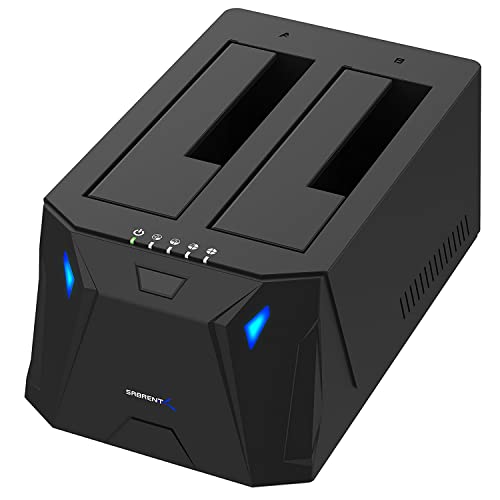
- Offline cloning up to 60Mbps
- Works with 2.5-inch and 3.5-inch SATA HDDs/SSDs
- Plug and play with no drivers needed
Best For: A simple dual-bay dock for offline SATA backups and drive access
USB Thumb Drive Duplicator
StarTech 1:2 Standalone Cloner

- Standalone 1-to-2 USB drive cloner and eraser
- Supports copy, verify, and overwrite modes
- LCD menu with copy-and-compare checks
Best For: Technicians managing USB flash backups, wipes, and quick duplication
USB-C Offline SATA Cloner

- Offline 1-to-1 SATA cloning
- USB-C dock with separate drive access
- Tool-free, hot-swappable dual bays
Best For: Users who want USB-C convenience plus offline SATA drive cloning
Standalone HDD/SSD Duplicator
Systor 1:1 Hard Drive Duplicator

- Standalone 1:1 copying with no computer needed
- Supports 2.5-inch and 3.5-inch HDDs/SSDs
- Up to 90MB/s with DoD sanitization
Best For: Standalone copying and erasing of HDDs or SSDs for backup workflows
High-Capacity Offline Cloning Dock
ORICO 5-Bay Hard Drive Docking Station

- 1-to-4 standalone duplication without a PC
- Supports 2.5-inch/3.5-inch SATA SSDs and HDDs
- USB-C, aluminum build, and anti-vibration pads
Best For: Multi-drive backup workflows that need offline cloning and large SATA capacity
IT-Ready Two-Bay Cloner
StarTech Dual-Bay SATA Duplicator Dock
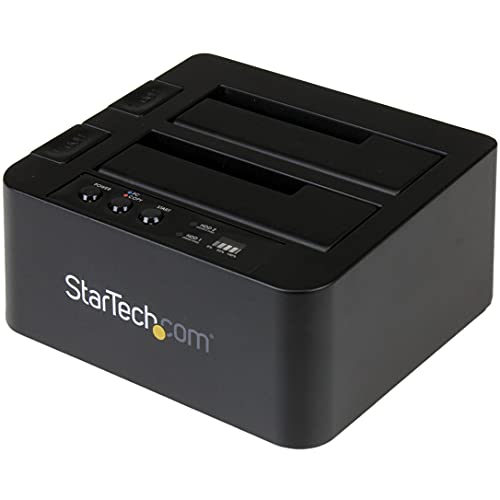
- Standalone sector-by-sector cloning with no PC required
- Works with 2.5-inch and 3.5-inch SATA HDDs and SSDs
- Tool-less dock with USB 3.2 Gen 2 support
Best For: IT professionals who need a reliable two-bay cloning dock for full-drive backups
Portable Clone-and-Erase Tool
Vinpower 1-to-3 SATA HDD/SSD Duplicator

- Standalone 1-to-3 cloning with no PC required
- Smart Copy, Raw Mode, and Read Error Skip options
- Includes DoD-style secure erase capability
Best For: Portable backup and recovery workflows that also need secure drive erasing
Flexible 3-Slot Cloner

- Clones NVMe and SATA drives offline.
- Three slots for multi-drive access.
- USB 3.2 Gen 2 up to 10 Gbps.
Best For: Mixed-drive backup setups needing NVMe and SATA support
4-Bay SATA Backup Dock

- Handles up to four 2.5-inch/3.5-inch SATA drives.
- Offline cloning works without a computer.
- Trayless, plug-and-play setup with USB 3.0.
Best For: Simple SATA backup cloning and multi-drive handling
4-Bay Clone & Erase Dock

- Clones and erases drives standalone.
- Supports SATA and older IDE drives.
- Includes LCD menu and secure erase modes.
Best For: IT workflows that need backup cloning and secure drive wiping
Dual-Bay SATA Cloner Dock – SABRENT USB 3.0 Dual Bay Docking Station
If you want one of the most straightforward hard drive duplicators for backups, this SABRENT dual-bay dock keeps the process simple: drop in two SATA drives, clone offline, and use it as a USB 3.0 docking station when you need access from a computer. It supports 2.5-inch and 3.5-inch SATA HDDs and SSDs, with plug-and-play setup and no driver installation.
Best For: Users who want a no-fuss dual-bay SATA dock that can both clone drives offline and work as a USB drive reader.
Pros:
- Offline cloning up to 60Mbps without a computer
- Supports standard 2.5-inch and 3.5-inch SATA hard drives and SSDs
- USB 3.0 connection for up to 5Gbps transfer speeds
- Plug and play with no drivers needed
Cons:
- Limited to SATA drives only
- Offline cloning speed is capped at 60Mbps by design
- Drive capacity support is listed up to 10TB per drive in the notes
For backup workflows that value simplicity, this is a practical two-in-one choice: clone a drive offline, then reuse the dock for day-to-day file access. It is best suited to users who already work with SATA drives and want easy, tool-free handling.
USB Thumb Drive Duplicator – StarTech 1:2 Standalone Cloner
For teams that need to copy or wipe USB flash media, this StarTech unit is a focused option among hard drive duplicators for backups. It is a standalone 1-to-2 USB duplicator and eraser with no computer required, making it useful for technicians who need to manage multiple thumb drives quickly and consistently.
Best For: IT and support teams that need standalone USB flash drive duplication, erasure, and verification.
Pros:
- Duplicates and erases USB 3.0/2.0 flash drives without a computer
- Supports system/file copy and sector-by-sector copying
- Includes quick erase, single-pass, and 3-pass overwrite modes
- LCD menu plus copy-and-compare verification
Cons:
- Designed for USB flash media, not SATA hard drives
- Asynchronous copy mode is limited by 64 MB internal memory
- External USB devices may need their own power source
This is a strong pick when your backup or distribution workflow centers on USB thumb drives rather than internal drives. It adds useful sanitization and verification tools, but it is not the right choice if you need a SATA drive duplicator.
USB-C Offline SATA Cloner – SABRENT Dual-Bay USB-C Dock
If you need hard drive duplicators for backups with modern connectivity, this SABRENT dual-bay USB-C dock is built for offline SATA cloning and computer-connected drive access. It copies one SATA drive to another at the push of a button, while also letting both bays mount separately over USB when plugged into a PC or Mac.
Best For: Buyers who want a USB-C dual-bay dock that can clone SATA drives offline and serve as a two-drive workstation dock.
Pros:
- Offline 1-to-1 cloning with no computer needed
- Supports 2.5-inch and 3.5-inch SATA HDDs and SSDs
- USB 3.0 speeds up to 5Gbps when connected to a computer
- Tool-free, hot-swappable design with per-bay activity LEDs
Cons:
- Does not support IDE/PATA, M.2, or NVMe drives
- Target drive must be the same size as the source or larger for cloning
- Cloning speed is up to 60MBps by design, not full USB transfer speed
As a backup tool, this model stands out for combining offline cloning with USB-C convenience. It is a sensible fit for users who want a flexible dock for both duplicate jobs and everyday data access, provided they stay within SATA-only requirements.
Standalone HDD/SSD Duplicator – Systor 1:1 Hard Drive Duplicator
For buyers comparing hard drive duplicators for backups, the Systor SYS101HS-DP is a dedicated standalone 1:1 copier and eraser for HDDs and SSDs. It does not require a computer or software, and it supports both 2.5-inch and 3.5-inch drives, which makes it a straightforward choice for higher-volume duplicate and sanitization tasks.
Best For: Users who want a fully standalone 1:1 duplicator for copying and erasing SATA hard drives or SSDs.
Pros:
- Standalone operation with no computer or software required
- Supports both 2.5-inch and 3.5-inch HDDs and SSDs
- Copies at up to 90MB per second / 5.4GB per minute
- Supports whole-drive duplication and DoD 5220.22-M sanitization
Cons:
- Product notes do not mention USB dock-style file access
- 1:1 design means it is not built for multi-target duplication
- Best suited to SATA-style drive workflows rather than mixed interfaces
This model leans toward serious duplication and erasure work instead of general docking convenience. If your priority is dependable standalone backup cloning with built-in sanitization, it offers a clean, purpose-built setup.
High-Capacity Offline Cloning Dock – ORICO 5-Bay Hard Drive Docking Station
If you want hard drive duplicators for backups with room to scale, this ORICO 5-bay dock is built for multi-drive workflows and standalone cloning. It can duplicate up to four copies at once without a computer, while also serving as a large-capacity SATA dock for 2.5-inch and 3.5-inch SSDs and HDDs.
Best For: Users who need a high-capacity multi-bay duplicator for offline backup and cloning jobs.
Pros:
- Standalone 1-to-4 offline duplication with no computer required.
- Supports 2.5-inch and 3.5-inch SATA SSDs and HDDs up to 20TB each.
- USB 3.2 Gen 1 Type-C connectivity with included C-to-C/C-to-A cable.
- Aluminum-alloy vertical design with anti-vibration pads for heat dissipation and stability.
Cons:
- Cloning will overwrite the target disk, so the destination must be prepared carefully.
- Best suited to SATA drives; not a universal solution for every storage format.
This is a practical pick if your backup process regularly involves multiple SATA drives and you want a dock that handles duplication plus everyday access in one unit. Its main advantage is capacity, but the user still needs to manage source and target disks correctly before cloning.
IT-Ready Two-Bay Cloner – StarTech Dual-Bay SATA Duplicator Dock
For hard drive duplicators for backups that prioritize speed and simplicity, this StarTech dual-bay dock offers standalone sector-by-sector cloning with no computer required. It also doubles as a USB-to-SATA dock, so you can clone drives or access them quickly over USB when you are not duplicating.
Best For: IT users who want a straightforward two-bay SATA duplicator and dock for backup cloning jobs.
Pros:
- Standalone cloning of 2.5-inch and 3.5-inch SATA HDDs and SSDs.
- Sector-by-sector duplication copies the entire drive, including empty sectors.
- Supports 4Kn, TRIM, SATA III, and USB 3.2 Gen 2 host connectivity.
- Tool-less, tray-less design with eject buttons and status LEDs.
Cons:
- Target disk must be equal to or larger than the source disk.
- Two-bay design limits duplication to one source and one target at a time.
This dock is a strong fit when you want a dependable cloning station rather than a multi-disk expansion hub. Its sector-by-sector approach is useful for full-drive backup copies, but the two-bay limit means it is best for focused cloning tasks.
Portable Clone-and-Erase Tool – Vinpower 1-to-3 SATA HDD/SSD Duplicator
If your backup workflow includes cloning, recovery, or secure wipe jobs, this Vinpower unit is a versatile option among hard drive duplicators for backups. It runs completely standalone, supports both 2.5-inch and 3.5-inch HDDs and SSDs, and adds a DOD-level erase mode for drives that need to be cleared before reuse or disposal.
Best For: Users who need a portable standalone duplicator that also supports secure erasing.
Pros:
- Standalone operation with no PC required.
- Smart Copy and Raw Mode offer both accessible-data and bit-by-bit duplication.
- Read Error Skip can keep copying through bad sectors to recover as much data as possible.
- Secure Erase mode performs a DoD 5220.22-M-style wipe.
Cons:
- Only supports cloning up to three drives in its 1-to-3 configuration.
- Best fit for SATA-based drives rather than broader storage types.
This model stands out when you need more than cloning alone and want a field-ready tool for erasing as well. It is especially practical for drive recovery scenarios or backup refresh tasks where a secure wipe is part of the workflow.
Flexible 3-Slot Cloner – Triple-Bay NVMe & SATA Cloner
If you want hard drive duplicators for backups that can handle mixed drive types, this ICY BOX triple-bay dock is built for practical, one-touch offline cloning. It supports M.2 PCIe NVMe SSDs plus 2.5-inch and 3.5-inch SATA SSDs/HDDs, so it works well when your backup workflow spans different storage formats.
Best For: Users who need a versatile backup dock for NVMe and SATA drives in a single unit.
Pros:
- One-touch offline cloning requires no software installation or PC setup.
- Supports cloning between NVMe and SATA drive types for more flexible backup tasks.
- Three independent slots make it easy to connect and access multiple drives at once.
- USB 3.2 Gen 2 with up to 10 Gbps transfer speed helps with fast data movement.
Cons:
- Only supports up to three drives, so it is not the highest-capacity option here.
- Cloning flexibility is broad, but the setup is still centered on docking-station use.
This is a strong choice if your backup needs include both NVMe and SATA drives and you value simple standalone cloning. The tool-free design and multi-OS support make it especially convenient for mixed environments.
4-Bay SATA Backup Dock – 4-Bay SATA Trayless Cloner
For buyers focused on hard drive duplicators for backups, this SABRENT 4-bay dock keeps the job straightforward with offline clone support and easy trayless drive loading. It is designed for 2.5-inch and 3.5-inch SATA HDDs and SSDs, making it a practical dock for users who routinely rotate multiple backup drives.
Best For: People who want a simple 4-bay SATA dock for backup cloning and drive access.
Pros:
- Supports up to four SATA drives in a single dock for easier multi-drive management.
- Offline clone function lets you copy drives without using a computer.
- Trayless, tool-free insertion simplifies setup when the dock is powered off.
- USB 3.0 connection offers up to 5 Gbps transfer with plug-and-play use.
Cons:
- Limited to SATA drives, so it does not support NVMe storage.
- Transfers are slower than newer 10 Gbps USB 3.2 Gen 2 models.
This dock makes sense if your backup workflow is built around SATA drives and you want a no-fuss cloning station. It balances capacity and simplicity well for everyday drive access and duplication.
4-Bay Clone & Erase Dock – IT Pro 4-Bay Cloner & Eraser
If your version of hard drive duplicators for backups also needs secure wiping, this StarTech.com 4-bay unit adds clone and erase functions in one standalone dock. It supports 2.5-inch and 3.5-inch SATA drives, plus older IDE drives with included adapters, so it is built for more varied disk handling than a basic clone dock.
Best For: IT users who need backup cloning plus drive erasing and sanitizing in one dock.
Pros:
- Standalone duplication and erasing work without a host computer.
- Supports SATA and IDE drives with included adapters for older hardware.
- Quick Erase and Secure Erase modes add sanitizing capability.
- LCD menu and push-button controls make operation more direct.
Cons:
- Target disk must be equal to or larger than the source disk for cloning.
- Focused on SATA/IDE, so it is not designed for NVMe drives.
This is the most specialized option in the group if your backup workflow includes data sanitization as well as duplication. It is especially appealing for IT environments that need standalone control and broader drive compatibility.
How We Picked These Hard Drive Duplicators for Backups
We prioritized standalone duplicators with reliable SATA support, clear status indicators, and backup-friendly workflows. We also looked at whether each unit handles 2.5-inch and 3.5-inch drives, supports SSDs as well as HDDs, and offers useful extra functions like erasing, dock mode, or multi-bay expansion.
For Hard Drive Duplicators for Backups, speed matters, but consistency matters more. A slightly slower unit that verifies clones and supports your drive format is often the better buy than a faster model with tighter compatibility limits.
Quick Comparison: What Matters Most
If you need simple one-to-one cloning, a standalone 1:1 or dual-bay dock is usually enough. If you manage multiple backups at once, a 4-bay or 5-bay station saves time and desk space. For mixed media environments, look for broad support across HDDs, SSDs, SATA, and, where needed, M.2 NVMe.
Standby modes, tool-free trays, and clear LCD readouts can also make day-to-day backup work easier, especially when you’re duplicating drives regularly.
Key Buying Factors for Hard Drive Duplicators for Backups
Drive Type and Interface
Check whether the duplicator supports 2.5-inch and 3.5-inch SATA drives, SSDs, or more specialized formats like NVMe. If your backup workflow includes different drive sizes, compatibility should be a top priority.
Clone Mode Vs. Docking Mode
Some units are built mainly for cloning, while others also work as everyday docks. If you want one device for both backup copies and drive access on a PC, a hybrid dock/cloner is often the best value.
Bay Count and Workflow
One-to-one duplicators are best for straightforward backups. Multi-bay stations are better when you need to stage drives, compare systems, or copy data to several targets in a single session.
Erasing and Security Features
Many Hard Drive Duplicators for Backups also include erase functions. That’s useful if you’re repurposing drives, but make sure the erasure process matches your security requirements before relying on it for sensitive data.
Who Should Buy Which Hard Drive Duplicators for Backups?
Buy a dual-bay standalone cloner if you want an easy backup tool with minimal setup. Choose a 4-bay or 5-bay dock if you maintain several drives and want more flexibility. If your environment includes NVMe, select a model that supports both NVMe and SATA instead of trying to force a SATA-only workflow.
For small businesses, technicians, and power users, the best choice is the unit that balances speed, drive compatibility, and a backup process you’ll actually use consistently.