
Choosing the right gear for a home studio is about more than finding a keyboard with impressive specifications. Your available space, computer setup, playing style, and need for hands-on control all shape which synthesizer or controller makes sense.
This roundup brings together 10 useful options, including compact keyboards, MIDI controllers, desktop stands, studio furniture, and connection accessories. Use the guide below to narrow the list by workflow, workspace, and budget.
Best 10 Synthesizers for Home Studios Picks for 2026
Versatile Controller

- 61 keys with aftertouch
- 12 pads and nine encoders
- USB-C with included software
Best For: Full-size home-studio control
Space-Saving Stand

- Stacks two desktop devices
- Adjusts from 10.6 to 18.5 inches
- Steel build with support lips
Best For: Compact desktop studio organization
Portable Synth

- 25 full-size keys
- Polyphonic aftertouch
- Integrated audio/MIDI interface
Best For: Compact expressive studio setups
Compact Budget Controller

- 25 weighted keys
- USB-powered, no driver needed
- Four knobs and touch controls
Best For: Affordable computer-based production
Best Space-Saving Gear Stand
Adjustable Desktop Stand for Compact Synths

- 6.6–10.6-inch adjustable width
- 30° angled design with non-slip pads
- Raises compact gear to free desk space
Best For: Compact home studio desktops and production stations
Best Compact Studio Workstation
Monoprice Stage Right Recording Desk

- Fits a typical 49-key MIDI controller
- Raised platform and pullout keyboard tray
- Supports up to 175 pounds
Best For: Apartment-sized home studios needing a dedicated desk
Best Adjustable Synth Riser
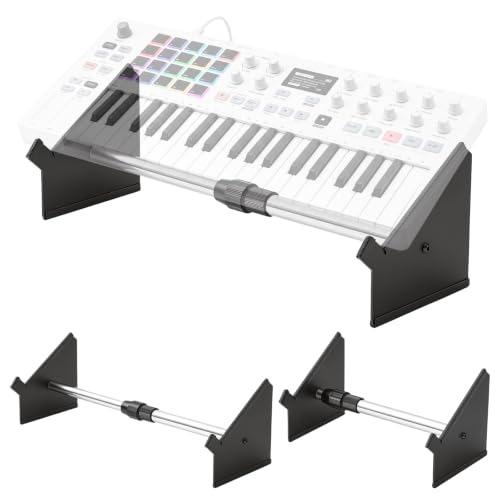
- Adjusts from 10.6 to 18.6 inches
- Six-inch lift with a 30° viewing angle
- Anti-slip pads help stabilize desktop gear
Best For: Medium-sized desktop synths, samplers, and drum machines
Connectivity Essential
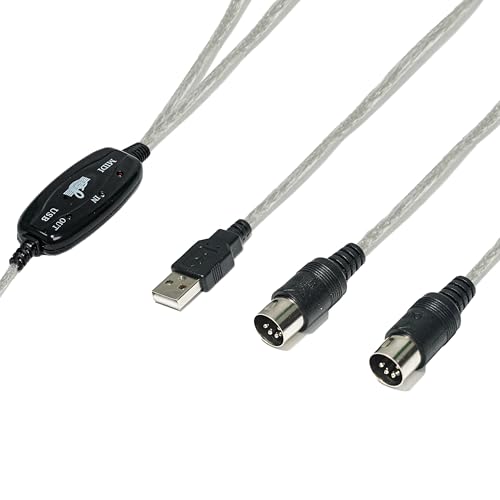
- Plug-and-play MIDI-to-USB connection
- Low-latency transmission with activity LEDs
- Compatible with Windows, Mac, and major DAWs
Best For: Connecting MIDI instruments to a computer-based studio
Desktop Angle Upgrade

- Raises compatible Volca units for easier control
- Tool-free friction-fit design
- Keeps ports accessible and saves desk space
Best For: Ergonomic desktop organization for Korg Volca setups
Portable Control Hub
M-VAVE K5 25-Key MIDI Controller

- 25 velocity-sensitive keys with pads and knobs
- Bluetooth, USB, and rechargeable battery
- Works with major DAWs across multiple platforms
Best For: Portable control of virtual synths, beats, and plugins
Versatile Controller – Arturia KeyLab mk3 61-Key
The Arturia KeyLab mk3 is a strong centerpiece for synthesizers for home studios, combining a 61-key keyboard with aftertouch, performance pads, and hands-on controls. Its USB-C connection and included software suite make it suitable for computer-based production on Mac or Windows.
Best For: Home-studio producers who want a full-size controller with expressive keys and broad DAW and instrument control.
Pros:
- 61 keys with aftertouch for expressive playing.
- Includes 12 pressure-sensitive performance pads and nine assignable encoders.
- Offers sustain and auxiliary pedal inputs plus USB-C connectivity.
- Includes software such as Analog Lab Pro and Ableton Live Lite.
Cons:
- Its 18.7-pound weight may be substantial for a portable setup.
- The 61-key format requires more desk or stand space than compact controllers.
Choose this model if you want one central keyboard controller for playing software instruments, triggering beats, and adjusting parameters without relying entirely on a mouse.
Space-Saving Stand – Adjustable 2-Tier Synth Stand
This adjustable desktop stand helps organize synthesizers for home studios by stacking two compatible desktop devices vertically. Its telescoping width, steel construction, and front support lips are designed to keep controls accessible while reclaiming desk space.
Best For: Producers arranging two samplers, synthesizers, drum machines, controllers, or effects units on a compact desktop.
Pros:
- Two-tier layout improves vertical organization.
- Width adjusts from 10.6 to 18.5 inches.
- 2mm cold-rolled steel side plates provide a solid build.
- Upturned front lips help keep equipment positioned during operation.
Cons:
- Compatibility depends on whether equipment fits the adjustable width.
- The stand is intended for desktop use on a flat surface rather than as a freestanding rack.
This is a practical accessory rather than an instrument, making it useful when your studio’s main limitation is desk space and you need both devices visible and within reach.
Portable Synth – ESI Xsynth 25-Key
ESI Xsynth Ultra-Thin 25-Key Synthesizer with Integrated Master Keyboard and Audio/MIDI Interface
Check Price On AmazonThe ESI Xsynth is a compact option for synthesizers for home studios, combining a 25-key keyboard with an integrated master keyboard and audio/MIDI interface. Its full-size velocity-sensitive keys and polyphonic aftertouch provide expressive control in a slim, lightweight format.
Best For: Producers who want a small, expressive keyboard with integrated audio and MIDI connectivity.
Pros:
- 25 full-size keys support a compact setup.
- Velocity sensitivity and polyphonic aftertouch enable nuanced performance.
- Integrated master keyboard and audio/MIDI interface reduce the need for separate devices.
- Thin, lightweight design is convenient for limited spaces.
Cons:
- 25 keys provide less playing range than a 61-key controller.
- The supplied notes do not specify included software or detailed control features.
The Xsynth stands out when desk space and portability matter, while its full-size keys and polyphonic aftertouch preserve a more expressive playing experience than many compact keyboards.
Compact Budget Controller – midiplus X2 mini 25-Key
The midiplus X2 mini is a straightforward, USB-powered controller for synthesizers for home studios, offering 25 weighted keys, customizable knobs, and capacitive pitch and modulation controls. It supports Mac, Windows, and several major music programs without requiring an external power supply.
Best For: Beginners and producers seeking an inexpensive, compact controller for computer-based music production.
Pros:
- 25 weighted keys in a compact format.
- USB-powered and hot-plug supported with no driver required.
- Includes four customizable knobs and pitch/modulation touch controls.
- Compatible with Ableton Live, Avid Pro Tools, and FL Studio.
Cons:
- Its 25-key range is limited for two-handed performances.
- It provides fewer physical controls than larger MIDI keyboards.
- The supplied notes do not indicate aftertouch.
This controller makes sense for a compact workstation or first MIDI keyboard, especially if you value simple USB operation and direct access to basic mixing and performance parameters.
Best Space-Saving Gear Stand – Adjustable Desktop Stand for Compact Synths
For synthesizers for home studios, this adjustable desktop stand is a practical way to raise compact gear and reclaim workspace. Its 6.6-to-10.6-inch width range fits many small synthesizers, MIDI controllers, samplers, drum machines, interfaces, and effects pedals, though you should verify your equipment dimensions first.
Best For: Compact desktop setups that need a raised, angled position for easier access and cleaner organization.
Pros:
- Adjustable width accommodates a variety of compact music-production devices.
- 30° angle improves access to controls and displays.
- Non-slip pads and a front stopper help keep gear in place.
- Lightweight PETG construction is easy to reposition and assemble.
Cons:
- Designed for compact equipment rather than larger keyboards or synthesizers.
- Device dimensions should be checked before purchase.
This is a focused desktop-organizing accessory rather than a full workstation, making it a good fit when your main priority is elevating one compact piece of gear while preserving desk space.
Best Compact Studio Workstation – Monoprice Stage Right Recording Desk
Monoprice Recording Studio Desk - with Raised Platform and Keyboard Tray, Black - Stage Right
Check Price On AmazonWhen building a setup around synthesizers for home studios, the Monoprice Stage Right provides a compact workstation with room for a typical 49-key MIDI controller. Its raised platform, pullout keyboard tray, and 175-pound support rating make it a practical choice for apartment-sized production spaces.
Best For: Home producers who want a dedicated desk for a MIDI keyboard, monitor speakers, and essential recording gear.
Pros:
- 31.5-inch width and 24-inch depth suit smaller rooms and apartments.
- Pullout keyboard tray can be tucked away to reduce the footprint.
- Raised platform places monitor speakers at approximately 38 inches without separate stands.
- Steel construction supports up to 175 pounds and includes assembly hardware.
Cons:
- The compact dimensions may limit larger or especially gear-heavy setups.
- Assembly is required, even though the included hardware is designed for quick setup.
This desk offers more complete studio infrastructure than a tabletop riser, but its limited width favors streamlined home rigs over expansive collections of keyboards and outboard equipment.
Best Adjustable Synth Riser – Konohan Desktop Synth Stand
For synthesizers for home studios, the Konohan desktop stand offers a wider adjustable range than many compact risers. It expands from 10.6 to 18.6 inches and adds a six-inch lift with a 30° tilt, helping producers keep compatible synthesizers, samplers, drum machines, and MIDI controllers visible and accessible.
Best For: Producers and beat makers using medium-sized desktop instruments who want an elevated, organized workstation.
Pros:
- 10.6-to-18.6-inch adjustable length supports a broad range of desktop gear.
- Six-inch elevation and 30° tilt improve visibility and control.
- Anti-slip pads on the base and contact points help reduce shifting and wobbling.
- Designed for synthesizers, MIDI controllers, grooveboxes, samplers, and drum machines.
Cons:
- It is intended for tabletop equipment, not full-size keyboards.
- Compatibility still depends on the dimensions of your device and desk.
With its broad adjustment range and ergonomic elevation, this stand is a versatile choice for organizing a modern electronic-music setup while keeping controls within comfortable reach.
Connectivity Essential – GREATLINK USB MIDI Cable
For synthesizers for home studios, the GREATLINK MIDI-to-USB cable provides a straightforward way to connect a compatible MIDI instrument to a computer or other supported device. Its plug-and-play setup, activity LEDs, and low-latency transmission make it a practical link between hardware and a DAW.
Best For: Home producers connecting keyboards, pianos, synthesizers, controllers, or other MIDI instruments to Windows or Mac setups.
Pros:
- Plug-and-play operation without additional drivers on supported Windows and Mac systems.
- Designed for low-latency MIDI transmission and accurate timing.
- LED indicators show MIDI input and output activity.
- Works with many MIDI instruments and major DAWs.
Cons:
- Uses a USB Type-B connector, so check your instrument and computer connections before buying.
- It is a MIDI connection cable rather than a standalone synthesizer or audio interface.
The GREATLINK is a useful connectivity accessory when your existing synthesizer or keyboard needs a simple computer connection. Confirm that your equipment uses compatible MIDI ports and that your device supports the listed connection method.
Desktop Angle Upgrade – Angled Stand for Korg Volca
When arranging synthesizers for home studios, an angled stand can make compact hardware easier to see and control. This friction-fit stand is designed for Korg Volca synthesizers, raising the unit for a more ergonomic working angle while keeping ports and connections accessible.
Best For: Korg Volca users who want a cleaner desktop layout and a more comfortable angle for knob adjustments.
Pros:
- Tilts a compatible compact synthesizer toward the user for easier control access.
- Friction-fit cradle requires no screws, clamps, or adhesives.
- Open-frame design leaves ports, jacks, and connections accessible.
- Lightweight ABS construction suits desktop and portable setups.
Cons:
- Designed specifically for Korg Volca synthesizers, limiting compatibility.
- It holds and angles the synth but does not add storage or connectivity features.
This stand is a focused ergonomic accessory rather than a core instrument. It makes the most sense if you own a compatible Volca and want to free some desk space while keeping the controls at a useful angle.
Portable Control Hub – M-VAVE K5 25-Key MIDI Controller
For musicians building synthesizers for home studios around software instruments, the M-VAVE K5 combines a 25-key velocity-sensitive keyboard with pads and hands-on controls. USB and Bluetooth connectivity, a rechargeable battery, and broad DAW compatibility make it suitable for both desktop production and portable composition.
Best For: Songwriters, beat makers, and producers who want a compact controller for virtual synthesizers, drum programming, and plugin control.
Pros:
- Includes 25 velocity-sensitive keys, eight backlit pads, eight assignable knobs, and touch strips.
- Bluetooth operation and a built-in 2,000 mAh battery provide up to about 16 hours of use according to the supplied details.
- Compatible with Windows, Mac, Android, and iOS devices.
- Supports major DAWs including Ableton Live, FL Studio, Cubase, Logic Pro X, and GarageBand for iOS.
Cons:
- The 25-key layout is compact, so it offers less range than a full-size keyboard.
- Bluetooth and software compatibility may still depend on the specific device and DAW setup.
- It is a controller for software and MIDI hardware, not a standalone synthesizer with built-in sounds.
The K5 is a flexible command surface for a compact studio, especially when portability matters. Its combination of keys, pads, knobs, and touch controls gives software-synth users more tactile control without requiring a larger keyboard.
How We Picked These Synthesizers for Home Studios
We selected products that address the main needs of a compact music-production setup: playable keys, MIDI control, desktop organization, ergonomic positioning, and reliable computer connectivity. Because many modern home studios use software instruments alongside hardware, the roundup includes both keyboard controllers and synth-oriented accessories rather than focusing only on traditional standalone synthesizers.
We also considered footprint, adjustability, compatibility, and practical setup value. A compact controller may be better for a small desk, while a larger 61-key option can offer a more natural playing experience. Stands and a suitable desk can improve access and reduce clutter, but buyers should verify dimensions and device compatibility before ordering.
Quick Comparison
| Best For | Look For | Featured Type |
|---|---|---|
| Fuller playing range | 61 keys and broad MIDI control | Arturia KeyLab mk3 |
| Portable production | Compact keys, USB, or Bluetooth | ESI, midiplus, or M-VAVE |
| Desktop hardware | Adjustable width and stable support | Konohan or adjustable gear stands |
| Small studio furniture | Keyboard tray and raised monitor platform | Monoprice Recording Studio Desk |
| Legacy MIDI connections | USB-to-MIDI interface support | GREATLINK MIDI cable |
Key Buying Factors for Synthesizers for Home Studios
Keyboard Size and Playing Feel
Choose 25 keys for portability and simple bass, lead, or loop parts; 49 or 61 keys are more comfortable for two-handed playing and wider arrangements. Also check whether the keybed is velocity-sensitive, semi-weighted, or designed primarily for triggering software.
Connectivity and Software Control
USB MIDI is the basic requirement for most computer-based setups. Bluetooth can reduce cable clutter, while an integrated audio interface may simplify recording and monitoring. If you own older hardware with five-pin MIDI ports, a dedicated MIDI-to-USB cable or interface may be necessary.
Space, Stability, and Ergonomics
Measure your desk before buying. Confirm the controller’s width, the stand’s supported range, and the available clearance for cables. Angled stands can improve screen visibility and knob access, but they should remain stable when pads or keys are played firmly. A desk with a raised platform and keyboard tray can free up usable surface area.
Workflow and Expandability
Prioritize controls you will actually use, such as drum pads, knobs, transport buttons, or assignable MIDI functions. A simple controller may be enough for a software-based studio, while hardware-focused producers may benefit more from adjustable stands and multiple connection options.
Who Should Buy Which Synthesizers for Home Studios?
Choose a Larger Controller If You Play Piano-Style Parts
The 61-key option is the strongest fit for musicians who want more range and a familiar performance layout without committing to a full digital piano.
Choose a Compact Controller for Limited Space
Twenty-five-key models suit bedroom studios, mobile rigs, beginners, and producers who enter notes with a combination of keys, pads, and a computer mouse.
Choose Stands and a Studio Desk for Hardware-Heavy Setups
If you use samplers, drum machines, or several desktop synthesizers, prioritize stable adjustable stands and organized furniture before adding another controller. Better placement can make existing gear faster and more comfortable to use.
Choose Connectivity Accessories When Compatibility Is the Obstacle
A MIDI-to-USB cable is useful when an older keyboard or synth works properly but lacks modern computer connectivity. Check the required MIDI ports, channel support, and operating-system compatibility before purchase.