
The right equalizer can help you tame harsh frequencies, add low-end impact, and shape a more balanced sound without replacing your entire audio system. This roundup compares 10 affordable models for car audio, home stereo, DJ, recording, and streaming applications.
Our selections range from compact 1/2-DIN car equalizers to multi-band rack units and Bluetooth-enabled home audio preamps. Use the guide below to match the equalizer’s band count, connections, controls, and installation style to your setup.
Best 10 Audio Equalizers Under 200 Picks for 2026
Best Car Audio Control
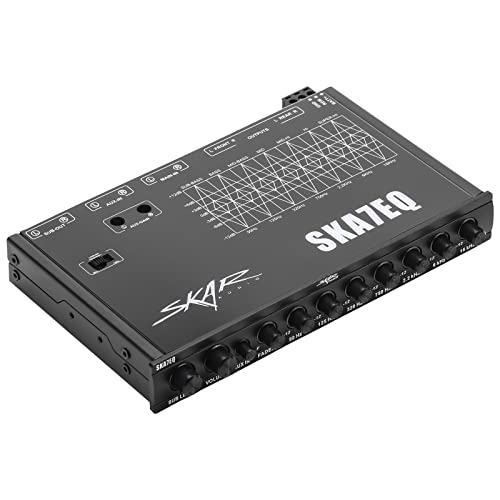
- Seven adjustable EQ bands with ±12 dB range
- Front, rear, and subwoofer RCA outputs
- Includes mounting hardware and two-year limited warranty
Best For: Car audio systems needing flexible RCA routing and subwoofer control
Best Home Stereo Visualizer

- Five-band EQ with independent op-amp processing
- Bluetooth 5.0 for wireless streaming
- Dual 45 mm VU meters with adjustable settings
Best For: Home stereo and computer audio setups with Bluetooth
Best Compact Headphone EQ

- Seven bands with ±12 dB control
- Dual-channel 3.5 mm design
- Headphone-compatible amplifier circuit
Best For: Recording, streaming, podcasting, and headphone setups
Best Parametric Car EQ
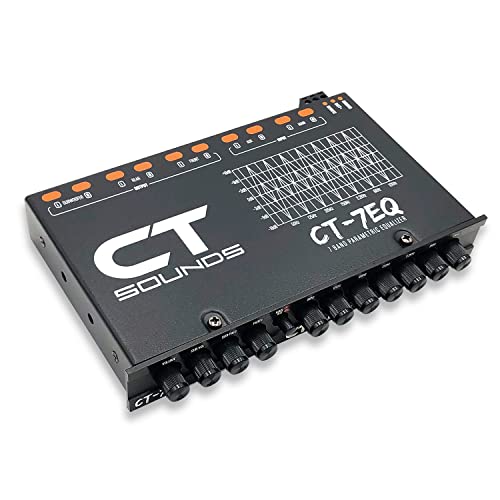
- Seven-band control across 20 Hz–20 kHz
- Separate bass, mid, and treble adjustment
- Selectable 43 Hz and 60 Hz sub-bass
Best For: Car audio enthusiasts seeking detailed tonal control
Most Versatile

- 31-band tuning with spectrum monitoring
- 12 customizable modes and auto-save presets
- Optical, coaxial, USB, and broad system compatibility
Best For: Home theaters, studios, KTV, DJs, and multi-device audio setups
Best for Cars
Taramps TEQ 7.4 7-Band Car Equalizer

- Designed for 12V car audio systems
- Two RCA inputs and three stereo outputs
- Seven bands with ±12dB gain adjustment
Best For: Car audio systems requiring flexible RCA routing
Best Rack-Mount Option
EQ-215 15-Band Stereo Equalizer
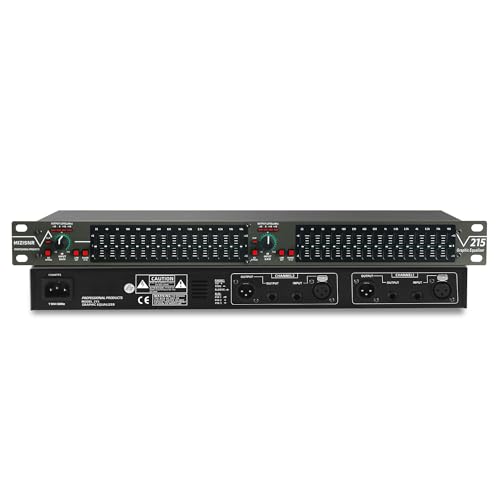
- Dual-channel 15-band graphic equalization
- Low-cut filter for rumble and hum
- 1U rack mount with XLR and TRS connections
Best For: Studios, live sound, and fixed audio installations
Compact Precision Pick
Douk Audio T7 7-Band Balanced EQ

- Seven bands with ±6dB adjustment
- XLR and RCA inputs and outputs
- Compact, low-distortion aluminum design
Best For: Home audio users seeking simple, flexible EQ control
Professional Control Choice
EQ-231 31-Band Stereo Equalizer

- 31 bands per channel for detailed shaping
- Low-cut and bypass switches
- XLR and 1/4-inch TRS connectivity
Best For: Live, studio, DJ, and installation audio systems
Rack-Mount Flexibility Pick

- 15 bands per channel with ±12dB range
- Adjustable low-cut and bass output
- 1U rack-mount design with XLR/TRS
Best For: Rack-based home, live, and installation audio systems
Best Car Audio Control – Skar Audio SKA7EQ
If you need audio equalizers under 200 for a car system, the Skar Audio SKA7EQ offers seven adjustable bands, multiple RCA outputs, and front-panel control in a 1/2-DIN chassis. Its selectable main and auxiliary inputs also make it useful for systems with more than one source.
Best For: Car audio installations needing flexible RCA routing and dedicated subwoofer control.
Pros:
- Seven adjustable bands from 50 Hz to 16 kHz with ±12 dB control
- Front, rear, and subwoofer RCA outputs with variable subwoofer level control
- Includes mounting brackets and hardware, plus a two-year limited warranty
- Offers selectable main and auxiliary RCA inputs with auxiliary gain control
Cons:
- Designed for 1/2-DIN car installation rather than general home audio use
- Its 1.72-pound chassis and installation hardware may require careful fitting
With 7V maximum RCA output, a 100 dB signal-to-noise ratio, and a selectable 60/120 Hz low-pass switch, this is a feature-rich choice for tuning a multi-amplifier car system.
Best Home Stereo Visualizer – Douk Audio EQ5 Tone
Among audio equalizers under 200 for home stereo or computer listening, the Douk Audio EQ5 Tone combines five-band adjustment with Bluetooth 5.0 and large VU meters. It is a compact preamp-style option for listeners who want both sound shaping and real-time level visualization.
Best For: Home stereo, computer speaker, and amplifier setups that benefit from Bluetooth and visual metering.
Pros:
- Five independently processed frequency bands for targeted sound adjustment
- Bluetooth 5.0 supports wireless music streaming
- Dual 45 mm VU meters provide real-time signal monitoring
- Compact metal case includes bypass and balance controls
Cons:
- Provides five bands rather than the seven-band control found on some alternatives
- Requires a DC 5V power source
The adjustable VU meter speed, brightness, and gain add useful flexibility, while the bypass function makes it easy to compare processed and unprocessed audio.
Best Compact Headphone EQ – 7 Band Sound Equalizer
This compact seven-band unit is worth considering among audio equalizers under 200 for recording, streaming, podcasting, and headphone use. It supports dual-channel operation, ±12 dB EQ adjustment, and a 3.5 mm connection with microphone-compatible output features.
Best For: Creators and headphone users who need a small, adjustable two-channel preamp.
Pros:
- Seven bands cover 60 Hz through 15 kHz with ±12 dB adjustment
- Dual-channel design supports stereo signal control
- 3.5 mm input and microphone-compatible headphone output add connection flexibility
- Aluminum-alloy construction supports a freestanding setup
Cons:
- Power supply range is limited to DC 5V–12V
- The product notes provide limited information about included accessories
- Its compact interface may require manual setup for more involved recording chains
With a stated 14 dB preamp gain and a headphone driver circuit, this model focuses on accessible tone shaping for small audio and voice setups rather than large installed systems.
Best Parametric Car EQ – CT Sounds CT-7EQ
For shoppers comparing audio equalizers under 200 for a vehicle, the CT Sounds CT-7EQ provides seven-band parametric control across the 20 Hz–20 kHz range. Its separate bass, mid, treble, and sub-bass adjustments are aimed at detailed car-audio tuning.
Best For: Car audio enthusiasts who want dedicated tonal controls and selectable sub-bass frequencies.
Pros:
- Seven bands divide the 20 Hz–20 kHz range for targeted adjustments
- Separate bass, mid, and treble controls offer ±10 dB adjustment
- Selectable 43 Hz and 60 Hz sub-bass settings
- Includes installation brackets and hardware
Cons:
- Designed for a 1/2-DIN car installation
- Includes a one-year manufacturer warranty, shorter than some alternatives
The CT-7EQ combines a 25 Hz–50 kHz frequency response with a stated +16 dB output level and more than 60 dB channel separation, making it a focused option for hands-on vehicle-system tuning.
Most Versatile – 31-Band Home Audio Equalizer
For shoppers comparing audio equalizers under 200, this 31-band model is a flexible choice for home audio, studio, KTV, and live-use setups. Its real-time spectrum monitoring, customizable modes, noise reduction, and broad connectivity make it useful when detailed sound shaping matters.
Best For: Home theaters, recording studios, DJs, KTV systems, and users integrating multiple audio sources.
Pros:
- 31-band tuning with real-time frequency monitoring.
- Offers 12 customizable modes and auto-save presets.
- Supports optical, coaxial, USB, and other audio connections.
- Portable design suits both permanent and on-the-go setups.
Cons:
- The extensive controls may be more than casual listeners need.
- The supplied notes do not specify exact dimensions or power requirements.
This is the strongest all-around option of the three for buyers who want detailed control and compatibility across several audio environments.
Best for Cars – Taramps TEQ 7.4 7-Band Car Equalizer
Among audio equalizers under 200, the Taramps TEQ 7.4 is tailored specifically to 12V car audio systems. It provides seven adjustable bands, separate gain control, fader adjustment, and multiple RCA outputs for building a more personalized vehicle sound system.
Best For: Car audio enthusiasts who need a compact, RCA-connected equalizer with front, rear, and subwoofer outputs.
Pros:
- Seven adjustable bands spanning 50Hz to 12kHz.
- Provides gain adjustment from -12dB to +12dB.
- Includes two RCA inputs and three RCA stereo outputs.
- Compact 4 x 3 x 1-inch design with blue LED lighting.
Cons:
- Designed for 12V systems, so it is not a general-purpose home equalizer.
- Requires careful installation in a ventilated, accessible location.
- Its seven bands offer less detailed control than the 15- and 31-band models.
Choose this model when vehicle integration is the priority. Its dedicated RCA routing and compact form are better suited to car audio than home or studio applications.
Best Rack-Mount Option – EQ-215 15-Band Stereo Equalizer
For buyers seeking audio equalizers under 200 for rack-based systems, the EQ-215 combines dual-channel 15-band control with practical installation features. Its low-cut filter helps reduce rumble and hum, while balanced and unbalanced connections support varied studio, live, and installation setups.
Best For: Studios, live sound applications, and fixed audio installations using a standard 1U rack.
Pros:
- Dual-channel 15-band graphic EQ with ±12dB adjustment.
- Low-cut switch helps attenuate wind noise, floor rumble, and electrical hum.
- Includes XLR balanced and 1/4-inch TRS unbalanced inputs and outputs.
- BYpass switch simplifies system testing and debugging.
Cons:
- The 1U rack-mount format is less convenient for portable setups.
- At 18.9 inches wide and 4.64 pounds, it needs dedicated installation space.
- The supplied notes do not mention digital or wireless connectivity.
This model is a practical fit for users who value rack compatibility, dual-channel control, and noise filtering over portability or modern digital inputs.
Compact Precision Pick – Douk Audio T7 7-Band Balanced EQ
If you want audio equalizers under 200 for a home stereo, amplifier, or computer speaker setup, the Douk Audio T7 offers straightforward seven-band tone shaping in a compact chassis. Its XLR and RCA connectivity makes it flexible for systems with balanced or unbalanced connections.
Best For: Home listeners who want simple, precise EQ adjustment without a volume-control knob.
Pros:
- Seven adjustable bands from 64Hz to 8kHz, with a -6dB to +6dB range.
- Supports XLR and RCA inputs and outputs simultaneously.
- Lists a signal-to-noise ratio above 104dB and distortion as low as 0.003%.
- Compact aluminum-alloy enclosure measures about 4.94 x 1.65 x 5.98 inches.
Cons:
- No volume control knob; it outputs at the rated level.
- Seven bands provide less detailed adjustment than 15- or 31-band models.
The T7 is a practical choice when space and simple operation matter more than extensive professional controls. Its balanced and RCA support also makes it easier to integrate into varied home audio systems.
Professional Control Choice – EQ-231 31-Band Stereo Equalizer
Among audio equalizers under 200, the EQ-231 stands out for users who need extensive tone-shaping control. Its dual-channel, 31-band layout, low-cut filter, and balanced or unbalanced connections suit live audio, installations, and studio environments.
Best For: DJs, studios, live setups, and audio installations requiring detailed channel-by-channel adjustments.
Pros:
- Provides 31 adjustable bands per channel for highly detailed sound shaping.
- Offers up to ±12dB adjustment per band.
- Low-cut switch helps reduce wind noise, floor rumble, and electrical hum.
- Includes bypass control and four-segment LED level monitoring.
Cons:
- Large 18.9-inch-wide chassis may not suit compact home systems.
- At 6.69 pounds, it is less portable than smaller equalizers.
- Its extensive controls may be more than casual listeners need.
The EQ-231 is the most adjustment-focused option in this group. Choose it when visual monitoring and fine frequency control are priorities, and make sure your rack or equipment space can accommodate its full-size design.
Rack-Mount Flexibility Pick – EQX-215S 15-Band Equalizer
For shoppers comparing audio equalizers under 200, the EQX-215S balances detailed control with a professional 1U rack-mount format. It provides 15 bands per channel, adjustable low-cut control, and a dedicated bass output for systems that need more low-end flexibility.
Best For: Home audio enthusiasts, live-event users, and installers who need rack-friendly stereo EQ with subwoofer control.
Pros:
- Offers 15 adjustable bands per channel with a ±12dB range.
- Low-cut frequency can be adjusted with a dedicated rotary control.
- Includes XLR and 1/4-inch TRS connections plus a dedicated adjustable bass output.
- 1U rack-mount design supports professional installation.
Cons:
- Its 18.9-inch-wide rack format requires suitable equipment space.
- Fewer bands than a 31-band equalizer.
- Designed for corded 110-volt operation.
The EQX-215S is a strong middle ground for buyers who want more control than a compact seven-band unit but do not need 31 bands. Its adjustable low-cut and bass output are especially useful when managing low-frequency performance across a larger system.
How We Picked the Best Audio Equalizers Under 200
We selected models across the most common use cases, including car audio, home listening, DJ systems, computer speakers, recording, and streaming. Our evaluation focuses on practical specifications: number of EQ bands, input and output options, channel layout, installation format, control range, and compatibility with existing amplifiers or source devices.
We also considered features that affect day-to-day usability, such as Bluetooth support, VU meters, spectrum displays, subwoofer outputs, fader controls, balanced XLR connections, auxiliary inputs, and rack-mount construction. A higher band count can offer finer control, but it may also make setup more involved.
Quick Comparison
| Best For | Look For | Typical Options in This Roundup |
|---|---|---|
| Car audio | 1/2-DIN housing, RCA connections, fader or auxiliary controls | 7-band car equalizers |
| Home stereo | RCA or XLR connectivity, stereo channels, preamp functionality | 5-, 7-, 15-, and 31-band models |
| DJ and rack systems | Dual-channel controls, noise reduction, rack mounting | 15- and 31-band graphic EQs |
| Computer and streaming setups | Compact design, 3.5mm input, Bluetooth, simple controls | Desktop and Bluetooth EQ preamps |
Key Buying Factors for Audio Equalizers Under $200
Band Count and Adjustment Range
Five or seven bands are usually sufficient for basic tonal shaping and car audio tuning. Fifteen bands provide more precise correction, while 31-band units are better suited to advanced room, PA, or studio-style adjustment. Check whether the controls offer a useful boost and cut range rather than focusing only on the number of sliders.
Connections and Signal Routing
Confirm that the equalizer matches your source and amplifier. RCA is common in home and car systems, while XLR connections are useful for balanced audio runs and pro-style equipment. A subwoofer output, multiple outputs, auxiliary input, or fader control can simplify a more complex system.
Format and Installation
Car models designed for a 1/2-DIN opening are not direct substitutes for tabletop or rack-mounted units. Home and DJ equalizers may need shelf space or a standard rack. Measure the available space and verify power requirements before ordering.
Extra Features
Bluetooth, VU meters, spectrum analyzers, and rhythm displays can improve convenience or visual feedback, but they should not outweigh essential compatibility. For a simple system, straightforward analog controls may be preferable to features you will rarely use.
Who Should Buy Which Audio Equalizers Under 200?
Choose a compact seven-band car equalizer if you want front-panel control over a vehicle system and need features such as RCA outputs, auxiliary input, gain, or fader adjustment. Pick a Bluetooth desktop preamp if you are tuning a computer speaker or home stereo setup and want wireless playback in a small footprint.
For DJ, PA, or home systems requiring more detailed correction, a 15- or 31-band graphic equalizer offers finer frequency control. Buyers using balanced equipment should prioritize an XLR-compatible model, while anyone building a conventional RCA stereo system can focus on channel layout, output flexibility, and simple operation. Regardless of format, set levels carefully and make small adjustments to avoid clipping, added noise, or an unnatural sound.