
Live sound systems can change dramatically from venue to venue. The right equalizer helps shape vocals, instruments, and speaker outputs while reducing harsh frequencies, muddiness, and feedback-prone buildup.
We selected 10 options ranging from dedicated rack-mount graphic EQs to compact mixers with built-in equalization, giving performers, DJs, venues, and small production teams practical choices for different setups and budgets.
Best 10 Audio Equalizers for Live Sound Picks for 2026
Professional Rack EQ
dbx 231s Dual Channel 31-Band Equalizer

- Dual 31-band, 1/3-octave control
- Switchable ±6 dB or ±12 dB range
- TRS/XLR I/O with LED monitoring
Best For: Detailed live-sound frequency shaping
All-in-One Mixer
FULUODE CT-80S 8-Channel Audio Mixer

- Eight channels for microphones and instruments
- Bluetooth, MP3/USB, and USB recording
- 48V phantom power and built-in reverb
Best For: Small events needing mixing and playback features
Subwoofer-Control EQ
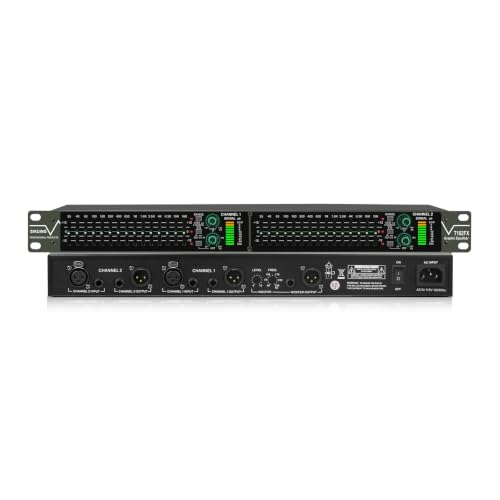
- Dual 15-band EQ from 25Hz–16kHz
- Adjustable low-cut filter and signal metering
- Dedicated 50Hz–250Hz subwoofer output
Best For: Stereo systems with active subwoofer control
Compact Personal EQ
7-Band Dual-Channel Sound Equalizer

- Seven bands with ±12 dB adjustment
- Dual-channel aluminum-alloy design
- 3.5mm connectivity and headphone support
Best For: Streaming, podcasting, and personal monitoring
Versatile 31-Band Tuning

- 31-band EQ with spectrum monitoring
- 12 customizable, auto-saved modes
- Optical, coaxial, and USB inputs
Best For: Detailed EQ control across home, studio, DJ, and live setups
Live Mixing Control
Phenyx Pro PTX-15 4-Channel Mixer

- Four XLR/line combo input channels
- Five-band stereo EQ and 16 DSP effects
- USB, Bluetooth, AUX, and EFX connectivity
Best For: Small live gigs, karaoke, DJ, and performance mixing
Rack-Ready Spectrum Control
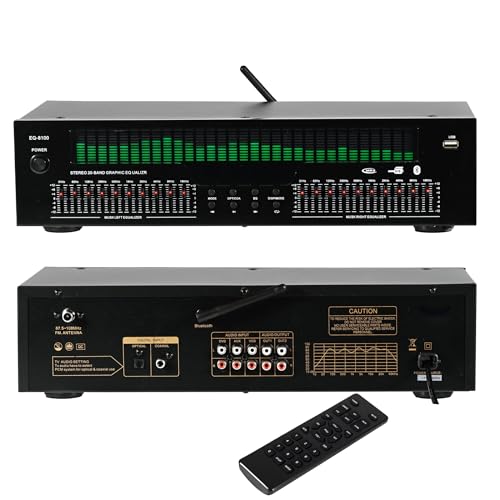
- 20-band EQ with 31-band spectrum analyzer
- 1U aluminum chassis for rack setups
- Optical, coaxial, USB, and RCA connections
Best For: Stage, concert, studio, and DJ rack systems
Most Detailed Control
31-Band Stereo Graphic Equalizer

- 31 bands per channel for precise shaping
- Low-cut filter reduces unwanted low-frequency noise
- LED meters plus XLR and 1/4-inch connectivity
Best For: Live systems needing extensive tonal control
Best Low-End Flexibility
15-Band EQ with Subwoofer Output

- Dedicated bass output with adjustable frequency
- Variable low-cut control for unwanted low-end noise
- 1U rack mount with included cables
Best For: Live rigs requiring dedicated bass management
Best Rack-Mount Value
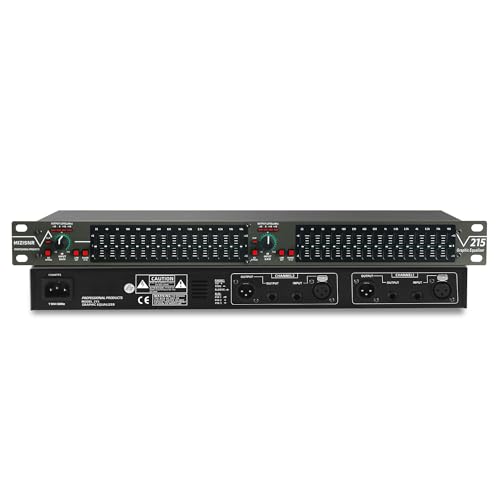
- Dual-channel 15-band tone shaping
- 1U rack-mount design for easy installation
- Low-cut, bypass, XLR, and 1/4-inch TRS connections
Best For: Straightforward live-system EQ in a rack format
Professional Rack EQ – dbx 231s Dual Channel 31-Band Equalizer
For audio equalizers for live sound, the dbx 231s is a practical rack-style choice when you need detailed control over two channels. Its dual 31-band, 1/3-octave layout supports precise frequency shaping, while the bypass switch and LED monitoring help during setup and operation.
Best For: Live sound operators and musicians who need detailed dual-channel EQ control in a standard rack setup.
Pros:
- Dual 31-band constant-Q graphic equalization
- Switchable ±6 dB or ±12 dB boost/cut ranges
- TRS and XLR inputs and outputs
- Front-panel bypass and four-segment LED output monitoring
Cons:
- More rack space and setup than a compact mixer-based solution
- Offers manual graphic EQ rather than the broader mixing features of a console
The 231s stands out when precise, hands-on frequency adjustment is more important than portability. Its dual-channel design and professional connections make it a strong fit for fixed or mobile live rigs.
All-in-One Mixer – FULUODE CT-80S 8-Channel Audio Mixer
Among audio equalizers for live sound, the FULUODE CT-80S is better viewed as an all-in-one mixing solution with channel controls and built-in playback features. It combines eight inputs with Bluetooth, MP3/USB playback, USB recording, reverb, and 48V phantom power for varied small-event setups.
Best For: Karaoke, campus events, conferences, family KTV, and small live performances needing mixing and playback in one unit.
Pros:
- Eight-channel design supports microphones and instruments
- Includes 48V phantom power and reverb
- Bluetooth 5.0, MP3/USB input, and USB recording
- Ultra-thin 1.57-inch design with a large LED display
Cons:
- Not a dedicated multi-band graphic equalizer
- Its feature set may be more than needed for simple EQ-only applications
- Uses a 110V American plug
The CT-80S makes sense when live sound requires source mixing, effects, wireless playback, and recording rather than standalone rack EQ. Its compact format adds flexibility for multipurpose events.
Subwoofer-Control EQ – 15-Band Stereo Rack Equalizer
This 15-band stereo unit is a useful option for audio equalizers for live sound when low-end management is a priority. It provides independent dual-channel EQ from 25Hz to 16kHz, an adjustable low-cut filter, and a dedicated subwoofer output with a 50Hz–250Hz adjustment range.
Best For: Rack-based home, studio, and live systems that need stereo EQ plus separate active-subwoofer control.
Pros:
- Independent 15-band stereo EQ covering 25Hz–16kHz
- Adjustable low-cut filter helps reduce low-end hum and muddiness
- Dedicated adjustable subwoofer output from 50Hz–250Hz
- Metal 1U rack-mountable chassis with XLR and TRS connections
Cons:
- Fewer EQ bands than a 31-band professional graphic equalizer
- Designed for corded 110V operation
The dedicated subwoofer output gives this model a useful advantage for systems with active bass reinforcement. It is a compact, rack-friendly choice for shaping the main stereo signal and managing low frequencies separately.
Compact Personal EQ – 7-Band Dual-Channel Sound Equalizer
For compact audio equalizers for live sound, this seven-band dual-channel unit is aimed at recording, streaming, podcasting, and headphone use rather than conventional rack systems. Its ±12 dB controls cover 60Hz to 15kHz, with 3.5mm connectivity and a 5V–12V DC power range.
Best For: Personal recording, streaming, podcasting, mobile voice calls, and headphone-based monitoring.
Pros:
- Seven frequency bands with ±12 dB control
- Dual-channel design with compact aluminum-alloy housing
- 3.5mm input and headphone-oriented output support
- Works with 5V–12V DC power
Cons:
- Not a full-size live-sound rack equalizer
- 3.5mm connections may be less suitable for professional stage cabling
- Notes do not specify a rack-mount format or balanced XLR connections
This model is best for lightweight personal audio setups where portability and headphone compatibility matter. For larger live systems, its compact interfaces and seven-band layout may be limiting.
Versatile 31-Band Tuning – Home Audio Graphic Equalizer
For shoppers comparing audio equalizers for live sound, this 31-band graphic equalizer offers detailed frequency control, real-time spectrum monitoring, and noise and echo reduction. Its optical, coaxial, and USB connections also make it adaptable to home, studio, DJ, and stage setups.
Best For: Users who want highly adjustable EQ with broad device compatibility for live venues, recording, or home audio.
Pros:
- 31-band tuning with independent band adjustment and real-time monitoring
- 12 customizable modes with auto-save presets for quick switching
- Optical, coaxial, and USB connectivity for multiple audio sources
- Portable design suitable for gigs, DJ events, and rack installation
Cons:
- The supplied notes do not specify detailed input and output connector counts
- Its wide feature set may be more than casual listeners need
This is a flexible choice when precise tonal shaping matters. The spectrum analyzer and preset storage are particularly useful for repeatable adjustments, while the portable build supports both permanent and mobile installations.
Live Mixing Control – Phenyx Pro PTX-15 4-Channel Mixer
Among audio equalizers for live sound, this four-channel mixer is a practical option for combining microphones, instruments, and other sources while applying channel-level EQ. It adds a five-band stereo graphic equalizer, built-in effects, monitor sends, and USB and Bluetooth connectivity for flexible gig setups.
Best For: Live performers, DJs, karaoke operators, and small-stage users who need mixing, EQ, effects, and multiple input options in one console.
Pros:
- Four mono XLR/line combo inputs for microphones, instruments, and audio sources
- Independent channel gain, EQ, pan, AUX, EFX, solo, and fader controls
- Five-band stereo graphic EQ plus 16 built-in DSP effects
- USB audio, Bluetooth streaming, and +48V phantom power are included
Cons:
- Four channels may limit larger live productions
- The unit is a mixer with integrated EQ rather than a dedicated multi-band equalizer
The PTX-15 is strongest when EQ is part of a broader live mixing workflow. Its channel controls, effects, sends, and connectivity make it more useful than a standalone equalizer for compact performances and karaoke systems.
Rack-Ready Spectrum Control – EQ8100 20-Band Equalizer
For audio equalizers for live sound that need visual feedback and rack integration, the EQ8100 combines a 20-band graphic equalizer with a 31-band spectrum analyzer. Optical, coaxial, USB, and RCA connections support varied signal chains, while its 1U aluminum chassis is suited to mobile or permanent installations.
Best For: Stage, concert, studio, and DJ users who want rack-ready EQ, spectrum visibility, and digital and analog connectivity.
Pros:
- 20-band graphic EQ with a 31-band real-time spectrum analyzer
- 12 customizable modes and auto-save presets for repeatable setups
- Optical, coaxial, USB, and RCA connectivity
- Ultra-thin 1U rugged aluminum chassis with dust-sealed knobs
Cons:
- The supplied dimensions are listed as 19 inches on each axis and may need verification before installation
- Its corded design is less convenient where mains power is unavailable
The EQ8100 suits systems where fast visual monitoring and rack compatibility are priorities. Its combination of graphic EQ, spectrum display, presets, and multiple connection types makes it a capable signal-processing hub for live and studio environments.
Most Detailed Control – 31-Band Stereo Graphic Equalizer
For live sound engineers who want granular tonal control, this 31-band stereo EQ provides extensive adjustment across both channels. Its low-cut filter, bypass switch, visual LED monitoring, and balanced or unbalanced connections make it a flexible choice for live applications, installations, and studio setups.
Best For: Live sound systems and users who need detailed frequency shaping across two stereo channels.
Pros:
- 31 adjustable bands per channel with up to ±12dB of control.
- Low-cut switch helps reduce wind noise, floor rumble, and electrical hum.
- XLR balanced and 1/4-inch TRS unbalanced inputs and outputs.
- Four-segment LED ladders provide gain and output-level monitoring.
Cons:
- Its 31-band layout may be more control than simple setups require.
- At 6.69 pounds, it is heavier than the other listed options.
This is the strongest fit when precise, hands-on EQ adjustment and clear visual feedback matter more than minimizing rack weight or controls.
Best Low-End Flexibility – 15-Band EQ with Subwoofer Output
This 15-band dual-channel equalizer is a practical option for audio equalizers for live sound when low-end routing is a priority. Along with adjustable band control, it offers a variable low-cut frequency, dedicated bass output, rack-mount installation, and included connection cables.
Best For: Live rigs that need dedicated bass-output control and flexible low-frequency management.
Pros:
- 15 adjustable bands per channel with up to ±12dB of adjustment.
- Dedicated bass output with adjustable frequency.
- Low-cut frequency can be fine-tuned with a rotary control.
- Includes power, XLR, and 1/4-inch TRS cables, plus a two-year warranty.
Cons:
- Provides fewer adjustment bands than the 31-band model.
- The dedicated bass-output feature may be unnecessary for simpler systems.
Choose this model when a live setup benefits from more deliberate subwoofer or bass management without giving up dual-channel graphic EQ control.
Best Rack-Mount Value – 15-Band Stereo Graphic EQ
For straightforward audio equalizers for live sound, this dual-channel 15-band EQ combines essential tone-shaping controls with a standard 1U rack-mount design. Its low-cut and bypass switches, along with XLR and 1/4-inch TRS connections, support practical integration into live, studio, and installed systems.
Best For: Users seeking a compact, conventional rack-mounted EQ for everyday live-sound adjustments.
Pros:
- 15 adjustable bands per channel with up to ±12dB of control.
- Low-cut switch helps attenuate wind noise, floor rumble, and electrical hum.
- Standard 1U rack-mount form factor simplifies installation.
- Supports XLR balanced and 1/4-inch TRS unbalanced connections.
Cons:
- Offers less frequency-resolution control than a 31-band equalizer.
- Does not list the dedicated bass output included with the EQX-215S.
This model makes sense for buyers who want core dual-channel EQ functions in a rack-friendly format without needing specialized bass routing.
How We Picked the Best Audio Equalizers for Live Sound
We compared these products by looking at the controls most useful during setup and performance: frequency-band count, channel configuration, output flexibility, noise-reduction features, rack-mount suitability, connectivity, and ease of adjustment. We also considered whether each model is best used as a dedicated system processor or as part of an all-in-one mixer.
Dedicated graphic equalizers generally offer more precise tonal shaping, while mixer-based options combine EQ with microphone inputs, effects, USB playback, Bluetooth, or phantom power. The best choice depends on whether you already own a mixing console and how much control your system requires.
Quick Comparison
- Most versatile dedicated format: A dual-channel 31-band equalizer provides detailed control for left and right outputs, monitor systems, or separate signal paths.
- Best for compact setups: A mixer with built-in EQ, effects, and playback features can reduce the amount of equipment needed for small gigs.
- Best for simpler systems: Fifteen-band models offer useful tonal adjustment without the complexity of a larger control surface.
- Best for modern home or hybrid systems: Bluetooth-equipped equalizers and spectrum displays add convenient playback and visual monitoring features.
Key Buying Factors for Audio Equalizers for Live Sound
Band Count and Control Range
More bands allow finer corrections across the audible spectrum. A 31-band unit is useful for detailed room tuning and feedback control, while a 15-band model is often faster to operate and sufficient for smaller systems. Compact seven-band designs suit basic shaping rather than precise venue correction.
Channels, Outputs, and System Placement
Check whether you need dual stereo channels, separate left and right control, a subwoofer output, or independent monitor and main-system processing. Confirm that the input and output connections match your mixer, amplifiers, powered speakers, or recording equipment.
Live-Use Features
Look for clear sliders or displays, sturdy rack-mount construction, low-noise operation, and controls that are easy to identify under stage lighting. Spectrum analyzers, presets, Bluetooth, USB, and effects can be helpful, but they should not replace reliable signal routing and straightforward controls.
Gain Staging and Compatibility
An equalizer cannot fix clipping caused elsewhere in the signal chain. Verify operating levels, balanced connections, phantom-power requirements, and available headroom before installation. Place the EQ where it can shape the intended signal without creating unwanted noise.
Who Should Buy Which Audio Equalizers for Live Sound?
Touring bands, venues, and sound technicians should prioritize a dedicated dual-channel 31-band model for detailed room and monitor tuning. DJs and mobile performers may prefer a rack-mount 15-band or 31-band EQ with subwoofer output and noise reduction. Small bands, presenters, and home-studio users can save space with a mixer that includes microphone inputs, reverb, USB or Bluetooth playback, and built-in equalization. Streaming and recording users should focus on clean signal routing, convenient connectivity, and the amount of hands-on control they actually need.