
Capturing clean production sound on a film set requires more than a basic handheld recorder. The right model must offer dependable preamps, practical input options, strong battery life, and a workflow that suits your crew.
We compare 10 field recorders for film set audio, including compact 32-bit float options, handheld units, and multichannel recorders built for larger productions.
Best 10 Field Recorder for Film Set Audio Picks for 2026
Top Choice

- 32-bit float recording for wide dynamic range
- Six XLR inputs and up to 14 tracks
- Timecode I/O for accurate sync
Best For: Professional film crews needing flexible multi-mic recording
Compact Bundle

- 32-bit float recording simplifies level management
- Built-in X/Y mics plus 3.5mm input
- Includes windscreen, memory card, and charger
Best For: Portable dialogue, ambience, and sound-effects recording
Professional Workhorse
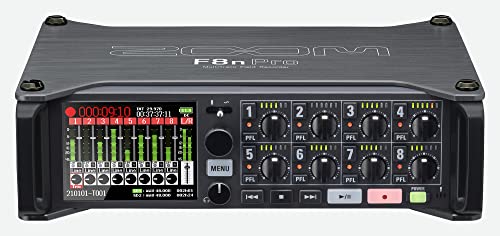
- Eight inputs and 10-track recording
- 0.2 ppm timecode accuracy
- Dual SD slots for redundant recording
Best For: Multi-mic professional productions requiring backup media
Sync-Ready Compact Pick

- Two locking XLR inputs with phantom power
- 32-bit float recording with low-noise preamps
- Includes TCA-1 timecode adapter
Best For: Compact two-channel dialogue and audio-for-video setups
Professional Set Essential

- 32-bit float recording for clip-resistant takes
- Dual locking XLR/TRS inputs
- Compact design with low-noise preamps
Best For: Filmmakers and location recordists needing dependable two-input audio
Ready-to-Roll Bundle

- Includes headphones, memory card, batteries, and charger
- 32-bit float recording with two XLR inputs
- USB-C interface and portable 8.5-ounce design
Best For: Small crews wanting a ready-to-use field recording kit
Versatile Handheld Pick

- Built-in stereo microphones plus two XLR/TRS inputs
- 32-bit float and four-track recording
- USB-C recording or streaming with SD backup
Best For: Creators needing both quick handheld capture and external mic flexibility
Flagship 32-Bit Production Pick

- 32-bit float recording helps prevent clipped takes
- Large X/Y mics and up to four-track recording
- Two XLR/TRS inputs with dedicated gain knobs
Best For: High-flexibility film and location recording
Interchangeable-Capsule Value Pick
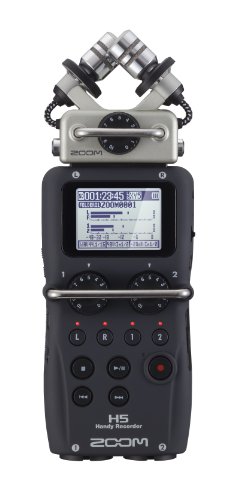
- Swap input capsules for different recording setups
- Four-track recording with two XLR/TRS inputs
- Shock-mounted X/Y mics help reduce handling noise
Best For: Flexible, portable audio-for-video work
Compact Two-Channel Starter

- 32-bit float recording up to 96kHz
- Two locking XLR/TRS inputs for external sources
- Waveform display and SDXC support up to 1TB
Best For: Interviews and small film crews
Top Choice – Zoom F6
The Zoom F6 is a strong field recorder for film set audio when you need multiple microphone inputs, generous track capacity, and dependable sync. Its 32-bit float recording and dual A/D converters are designed to handle everything from quiet dialogue to loud action without clipping.
Best For: Film crews needing six XLR inputs, timecode, and a portable professional workflow.
Pros:
- 32-bit float recording helps capture wide dynamic range without clipping.
- Six XLR inputs support simultaneous multi-microphone recording and up to 14 tracks.
- Timecode I/O supports frame-accurate audio-video synchronization.
- Can operate as a standalone recorder or USB audio interface.
Cons:
- Its feature set may be more than needed for simple two-channel recordings.
- Requires four AA batteries for portable operation.
The F6 is a particularly capable choice for compact professional productions. It balances a travel-friendly design with the inputs, tracks, monitoring, and timecode connectivity needed for demanding location work.
Compact Bundle – Zoom H4essential
The Zoom H4essential bundle is a practical field recorder for film set audio when portability and simple operation matter. It combines 32-bit float recording with built-in X/Y microphones, an input for an external lavalier, and useful accessories including a windscreen and 64GB memory card.
Best For: Filmmakers, creators, and small crews recording dialogue, ambience, or sound effects with a compact setup.
Pros:
- 32-bit float recording reduces the need for constant input-level adjustment.
- Built-in X/Y microphones handle up to 120 dB SPL.
- 3.5mm mic/line input supports lavalier microphones with plug-in power.
- Includes a windscreen, 64GB card, card reader, and rechargeable battery kit.
Cons:
- It offers fewer dedicated inputs and tracks than the F-series recorders.
- Battery life is listed at up to 10 hours on two AAA batteries.
For lightweight productions, the H4essential offers an accessible mix of built-in microphones, external input, USB-C connectivity, and bundled accessories. It is best suited to crews that value convenience over extensive routing and input expansion.
Professional Workhorse – Zoom F8n Pro
The Zoom F8n Pro is built for demanding field recorder for film set audio workflows, with eight inputs, 10-track recording, high-gain low-noise preamps, and precise timecode. Dual SD slots also allow redundant recording, adding practical protection for important production takes.
Best For: Professional film and field productions managing multiple microphones, camera feeds, and backup recording.
Pros:
- Eight-channel, 10-track recording supports complex production setups.
- 32-bit float recording and dual A/D converters help preserve dynamic range.
- Timecode accuracy is specified at 0.2 ppm for stable picture synchronization.
- Dual SD slots support redundant recording, while USB provides an 8-in/4-out interface.
Cons:
- Its larger professional feature set may be excessive for small, simple shoots.
- Listed battery life is approximately 8.5 hours.
- At 1.8 kg, it is less lightweight than the compact recorders in this roundup.
The F8n Pro is the most production-oriented option here. Choose it when input count, reliable timecode, high-performance preamps, and redundant media matter more than minimizing size and weight.
Sync-Ready Compact Pick – Zoom F3
The Zoom F3 bundle is a compact field recorder for film set audio that pairs two locking XLR inputs with a TCA-1 timecode adapter. Its 32-bit float recording, low-noise preamps, and flexible power options make it well suited to focused dialogue or small production setups.
Best For: Small film crews and camera operators needing two quality XLR channels with an included timecode solution.
Pros:
- 32-bit float recording and dual A/D converters accommodate changing sound levels.
- Two locking XLR inputs provide 24V/48V phantom power for professional microphones.
- Included TCA-1 adapter adds 3.5mm timecode input/output for compatible setups.
- Supports AA batteries, USB power, or an AD-17 AC adapter.
Cons:
- Two XLR inputs and two tracks limit expansion for larger crews.
- Timecode functionality depends on compatible firmware and connected equipment.
- The bundle is focused on core recording rather than extensive mixing or routing.
The F3 is a smart choice when you want professional 32-bit float capture without carrying a larger multichannel recorder. The included timecode adapter makes this bundle especially appealing for compact audio-for-video workflows.
Professional Set Essential – Zoom F3 Field Recorder
For a field recorder for film set audio, the Zoom F3 is a compact, professional-focused option built around dependable 32-bit float recording. Its dual locking XLR/TRS inputs, low-noise preamps, and flexible power options suit run-and-gun production and demanding location work.
Best For: Filmmakers and recordists who need clip-resistant dialogue capture in compact or complex rigs.
Pros:
- 32-bit float recording helps handle quiet dialogue and sudden peaks without constant level adjustments.
- Dual locking XLR/TRS inputs help keep microphone connections secure.
- Ultra-low-noise preamps and flexible battery or USB workflows support location recording.
- Compact 8.48-ounce design with up to 512GB microSD storage support.
Cons:
- It does not include microphones, headphones, or memory media in the listed package.
- The recorder uses a small 2-inch screen, which may feel limited for detailed menu work.
The F3 is a focused choice when clean, reliable two-input recording matters more than built-in microphones or extra bundled accessories.
Ready-to-Roll Bundle – Zoom F3 Recorder Kit
This Zoom F3 bundle gives a film set audio kit a practical starting point, combining the recorder with a 64GB memory card, headphones, rechargeable batteries, and a charger. The recorder’s 32-bit float capture and two XLR inputs are useful for mobile production where quick setup and dependable operation matter.
Best For: Shooters and small crews who want a complete portable recording package rather than the recorder alone.
Pros:
- Includes headphones, 64GB memory card, rechargeable AA batteries, and a four-bay charger.
- 32-bit float recording provides wide dynamic range without requiring constant gain adjustments.
- Two XLR inputs with phantom power support external microphones and professional audio setups.
- Compact 8.5-ounce form factor is easy to carry on location.
Cons:
- The bundled 64GB card provides less stated capacity than the standalone model’s supported 512GB storage.
- Battery life varies by battery type, so extended shoots may still require power planning.
Choose this package if you need the F3’s production-oriented recording features and also want essential accessories ready for the next shoot.
Versatile Handheld Pick – Zoom H4 Essential Recorder
The Zoom H4 Essential is a flexible field recorder for film set audio when you want built-in stereo microphones alongside external connectivity. It combines 32-bit float recording, four-track capability, two XLR/TRS inputs, and USB-C connection for recording or streaming.
Best For: Filmmakers, interviewers, and creators who need a handheld recorder for both quick ambient capture and external microphones.
Pros:
- Built-in stereo microphones allow fast recording without additional microphone setup.
- 32-bit float recording helps reduce concern about distorted takes across varied sound levels.
- Two XLR/TRS inputs support external microphones, instruments, mixers, or soundboards.
- USB-C enables use with a phone, tablet, or computer while recording backup audio to SD card.
Cons:
- Its handheld design is less specialized for discreet two-channel rig mounting than the F3.
- The listed digital recording time is 10 hours, so storage and recording plans may need attention on longer projects.
- It requires two AA batteries and does not list bundled headphones or rechargeable batteries.
The H4 Essential is the better fit for mixed workflows: use its built-in microphones for quick scenes and interviews, then connect professional sources when the setup calls for them.
Flagship 32-Bit Production Pick – Zoom H5 Studio
The Zoom H5 Studio is a strong field recorder for film set audio when you want clip-resistant recording and hands-on level control. Its 32-bit float workflow, large X/Y microphones, and two XLR/TRS inputs support detailed location recording with flexible setup options.
Best For: Filmmakers who need high-resolution, portable recording with extra dynamic range and direct gain control.
Pros:
- 32-bit float recording helps protect against clipped takes.
- Large 19.4mm X/Y microphones capture detailed stereo sound.
- Records up to four tracks simultaneously at up to 192kHz in WAV format.
- Dedicated gain knobs and two XLR/TRS inputs support quick adjustments.
Cons:
- Requires four AA batteries.
- Its feature set may be more than needed for simple two-channel recording.
Choose the H5 Studio if maximum recording flexibility and clip-free capture matter more than keeping the setup minimal. It is especially well suited to demanding location work where levels can change quickly.
Interchangeable-Capsule Value Pick – Zoom H5
The Zoom H5 is a practical field recorder for film set audio when you want a compact four-track unit with adaptable microphone options. Its interchangeable capsule system, two XLR/TRS inputs, and battery-powered design make it useful for changing production setups.
Best For: Filmmakers who want flexible microphone configurations, four-track recording, and a portable audio-for-video workflow.
Pros:
- Interchangeable input capsules can be swapped for different recording needs.
- Detachable shock-mounted X/Y microphones help reduce handling noise.
- Two XLR/TRS inputs offer selectable phantom power and a -20dB pad.
- Works as a multichannel or stereo USB audio interface.
Cons:
- Records to SD/SDHC cards up to 32GB.
- Uses two AA batteries, so spare batteries may be useful on longer shoots.
The H5 is a versatile choice for crews that may change microphones or sources from one scene to the next. Its four-track capacity and camera-oriented connectivity provide a useful balance of portability and control.
Compact Two-Channel Starter – Zoom H1 XLR
The Zoom H1 XLR is a compact field recorder for film set audio that keeps the connection options straightforward. It offers two locking XLR/TRS inputs, 32-bit recording up to 96kHz, a waveform display, and a 3.5mm stereo input for varied small-production setups.
Best For: Interviews, compact film crews, and creators who need two-channel recording with broad input compatibility.
Pros:
- 32-bit float recording supports clip-free capture.
- Two locking XLR/TRS inputs connect microphones and other sources.
- OLED waveform display provides a quick view of recording levels.
- Supports SDXC cards up to 1TB and includes a 3.5mm stereo input.
Cons:
- Limited to two-channel recording.
- Requires two AA batteries.
For productions that do not need multitrack expansion, the H1 XLR offers a focused and portable recording setup. Its locking inputs, simple level visibility, and 32-bit workflow make it a sensible option for interviews and smaller shoots.
How We Picked the Best Field Recorder for Film Set Audio
We focused on features that matter during real production work: input count, microphone compatibility, recording resolution, timecode support, portability, monitoring, power options, and ease of operation. The lineup includes simple two-channel recorders for solo filmmakers as well as higher-capacity models for boom operators, camera teams, and multitrack workflows.
We also considered how each recorder fits a typical set. A compact unit may be ideal for a single microphone or backup track, while a larger recorder is better suited to multiple wireless receivers, a boom mic, plant microphones, and isolated channels.
Quick Comparison
- Best for flexible professional production: Zoom F6
- Best for larger multitrack setups: Zoom F8n Pro
- Best compact 32-bit float option: Zoom F3
- Best with timecode workflow: Zoom F3 bundle with TCA-1
- Best handheld versatility: Zoom H4essential or H5
- Best simple two-channel entry option: Zoom H1 XLR
Key Buying Factors for a Field Recorder for Film Set Audio
Input Count and Connector Type
Count the microphones and wireless receivers you expect to use at the same time. Two inputs can cover a boom and one lavalier receiver, while four or more inputs provide room for multiple cast members, stereo microphones, or isolated backup tracks. XLR inputs with reliable phantom power are important for professional condenser microphones.
32-Bit Float Recording
32-bit float recording gives you considerable protection against gain-setting mistakes when levels change quickly. It does not fix clipping caused by an overloaded microphone or poor placement, but it can make production work more forgiving, especially for solo operators and unpredictable dialogue.
Timecode and Synchronization
For multicamera shoots, timecode can reduce syncing work in post-production. If your cameras and other recorders support timecode, choose a compatible recorder or add-on system rather than relying entirely on waveform syncing.
Portability, Power, and Monitoring
A recorder should be easy to mount, carry, and monitor throughout a shooting day. Check battery type and runtime, headphone output, screen visibility, locking connectors, and whether the unit supports external power. A smaller recorder may be easier to place close to the action, while a larger model can offer better control and connectivity.
Who Should Buy Which Field Recorder for Film Set Audio?
Solo filmmakers and small crews should prioritize a compact two-channel recorder with 32-bit float capture and straightforward controls. Dialogue-focused operators may prefer the Zoom F3 for its small footprint and focused workflow. Production sound mixers handling several sources should look toward the F6 or F8n Pro, depending on the required input count and track capacity.
Creators who also record music, podcasts, or interviews may benefit from a handheld H-series model with built-in microphone functionality. Before buying, match the recorder to your microphone collection, camera synchronization needs, and expected crew size rather than choosing solely by track count.