
Recording birdsong, flowing water, rustling leaves, and distant wildlife requires more than a basic voice recorder. The right field recorder combines quiet preamps, capable microphones, reliable storage, and outdoor-friendly controls.
These 10 options cover compact stereo recorders, adjustable-microphone models, XLR-equipped units, and 32-bit-float designs. Use the guide below to match your recording style, environment, and budget with the most suitable setup.
Best 10 Field Recorder for Nature Recording Picks for 2026
Professional Pick

- 32-bit float recording helps prevent clipped peaks.
- Dual locking XLR/TRS inputs for external microphones.
- Low-noise preamps and flexible power options.
Best For: Professional nature recording with external microphones
Everyday Field Choice

- Built-in omnidirectional stereo condenser microphones.
- 32-bit float and multiple recording formats.
- USB-C interface with up to 17.5 hours of battery operation.
Best For: Accessible stereo nature and ambient recording
Lightweight Starter

- Compact X/Y stereo microphones for quick recording.
- 32-bit float capture helps avoid clipped audio.
- USB-C microphone mode and 92-gram weight.
Best For: Portable, spontaneous nature and ambience recording
Adjustable Mic Pick

- Adjustable AB/XY stereo condenser microphones.
- 32-bit float recording and external mic input.
- USB-C interface and support for cards up to 512GB.
Best For: Flexible stereo nature recording with room to expand
Flexible XLR Pick

- 32-bit/96kHz recording
- Two locking XLR/TRS inputs
- Waveform display and SDXC support
Best For: Outdoor recording with external microphones
Outdoor Kit Pick
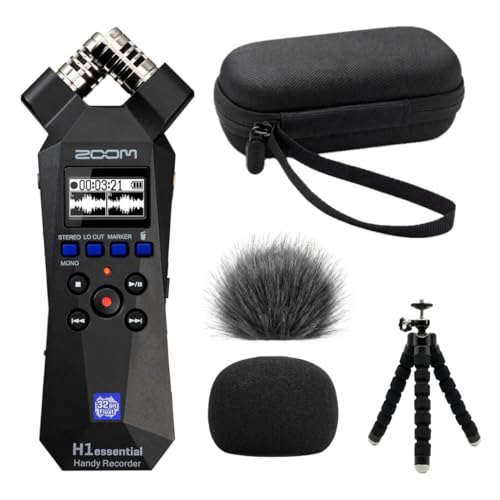
- Includes furry and foam windscreens
- 32-bit float stereo recording
- Case and flexible tripod included
Best For: Ready-to-go outdoor and ambient recording
Long-Range Capture Pick
Xvive XV1-R Portable Stereo Recorder

- 32-bit float stereo recording
- X/Y microphones up to 130 dB SPL
- Auto-record and pre-record modes
Best For: Portable ambient and high-dynamic-range recording
Premium Field Control

- 32-bit float recording with X/Y microphones
- Two combo inputs with phantom power
- Includes memory, power, and travel accessories
Best For: Nature recordists needing external-mic flexibility and a ready-to-use bundle
Lightweight Soundscapes

- Three mics with nine selectable patterns
- 32-bit float/96kHz clip-free recording
- Up to 20 hours of battery life
Best For: Portable nature ambience and soundscape recording
Expandable Field Recording

- Four-track, 32-bit float recording
- Stereo mics plus two XLR/TRS inputs
- USB-C recording with SD-card backup
Best For: Nature recordists who may add external microphones or mixers
Professional Pick – Zoom F3 Field Recorder
For serious field recording, the Zoom F3 is a strong choice when clean audio, flexible connections, and protection against clipping matter most. Its 32-bit float recording and dual locking XLR/TRS inputs suit demanding nature recording setups with external microphones.
Best For: Filmmakers, musicians, and nature recordists using professional microphones or complex recording rigs.
Pros:
- 32-bit float recording helps capture quiet sounds and sudden peaks without constant level adjustments.
- Dual locking XLR/TRS inputs provide secure connections for external microphones.
- Ultra-low-noise preamps support clean recordings in unpredictable environments.
- Flexible battery, USB, standalone, and wireless-control workflows support long recording sessions.
Cons:
- Built-in microphone functionality is not the focus, so an external microphone is likely needed for nature recording.
- Its professional input setup may be more than casual users require.
The F3 is the most capable option here for a microphone-based nature recording kit, particularly when you need dependable gain handling and secure connections in the field.
Everyday Field Choice – TASCAM DR-05XP Recorder
The TASCAM DR-05XP is a compact handheld option for anyone seeking a practical field recorder for nature recording, ambient sound, voice, or video audio. Its built-in omnidirectional stereo microphones and 32-bit float mode make it straightforward to use in changing sound environments.
Best For: Beginners and general-purpose recordists who want built-in stereo microphones and USB-C connectivity.
Pros:
- Built-in omnidirectional condenser microphones record stereo sound and handle sources up to 125dB SPL.
- Supports 32-bit float, 24-bit, 16-bit, and MP3 recording modes.
- Works as a 2-in/2-out USB-C audio interface for direct computer recording.
- Offers up to 17.5 hours of operation with two AA alkaline batteries.
Cons:
- MicroSD card and batteries are not included.
- It does not offer adjustable built-in microphones.
With simple stereo capture and multiple recording formats, the DR-05XP is a sensible all-around choice for portable nature recording without adding an external microphone.
Lightweight Starter – Zoom H1essential Recorder
The Zoom H1essential is a lightweight field recorder for nature recording, travel audio, ambience, and everyday sound capture. Its built-in X/Y stereo microphones and 32-bit float recording offer a simple way to collect detailed audio without carrying a larger rig.
Best For: Mobile creators, beginners, and recordists who prioritize a compact built-in stereo microphone setup.
Pros:
- X/Y stereo microphones provide a convenient built-in recording setup.
- 32-bit float recording supports clip-free audio capture.
- USB-C microphone mode works with computers and compatible mobile devices.
- Lightweight 92-gram design is easy to carry on walks and travel.
Cons:
- Battery life is listed at about 10 hours, shorter than some alternatives here.
- It uses two AAA batteries rather than AA batteries.
- Its built-in stereo microphone design may be less suitable for advanced external-microphone rigs.
The H1essential is a convenient pick when portability matters most. It is especially well suited to spontaneous ambience and nature recordings where a small, ready-to-use device is preferable.
Adjustable Mic Pick – TASCAM DR-07XP Recorder
The TASCAM DR-07XP gives nature recordists more control over stereo capture through its adjustable AB/XY condenser microphones. It combines 32-bit float recording, external microphone input, and USB-C connectivity in a portable handheld design.
Best For: Recordists who want built-in microphones with adjustable stereo positioning and room to connect an external mic.
Pros:
- Adjustable AB/XY stereo condenser microphones help tailor the recording perspective.
- 32-bit float, 24-bit, 16-bit, and MP3 modes support different workflows.
- External 3.5mm microphone input can provide plug-in power.
- Supports microSD, microSDHC, and microSDXC cards up to 512GB.
Cons:
- Memory card and batteries are sold separately.
- Its 17-hour listed recording time requires two AA batteries.
- Adjustable microphone controls may be unnecessary for users seeking the simplest setup.
The DR-07XP stands out for flexible stereo microphone positioning. It is a strong middle ground for nature recording when you want more control than a fixed handheld recorder provides, plus an external input for future expansion.
Flexible XLR Pick – Zoom H1 XLR
For a field recorder for nature recording that can also handle external microphones, the Zoom H1 XLR offers a flexible setup. Its two locking XLR/TRS combo inputs, 32-bit/96kHz recording, and waveform display suit detailed outdoor sessions where you may want to use different microphones.
Best For: Nature recordists who need external mic connections and adaptable recording options.
Pros:
- 32-bit float recording and up to 96kHz sample rate support detailed audio.
- Two locking XLR/TRS inputs accommodate microphones and other sources.
- Waveform OLED display helps monitor levels at a glance.
- 3.5mm input and headphone output add connection flexibility.
Cons:
- Its supplied features do not mention a furry windscreen for reducing outdoor wind noise.
- It requires two AA batteries.
The H1 XLR is a strong choice when microphone connectivity matters more than an included outdoor accessory kit. Its large SDXC capacity support and stated battery life also suit extended recording sessions.
Outdoor Kit Pick – Zoom H1essential Bundle
The Zoom H1essential bundle is a practical field recorder for nature recording because it includes both furry and foam windscreens, a protective case, and a flexible tripod. Its built-in X/Y microphones and 32-bit float recording simplify capture when conditions change outdoors.
Best For: Beginners and travelers who want a ready-to-use outdoor recording kit.
Pros:
- 32-bit float recording helps avoid clipping or distortion from changing levels.
- Furry windscreen is designed for windy outdoor environments.
- Hard EVA case protects the recorder and accessories during travel.
- Octopus tripod supports hands-free or creative placement.
Cons:
- The included recorder uses two AAA batteries.
- The bundled accessories are third-party 99KOLB items rather than Zoom-branded accessories.
Among these options, this bundle requires the fewest additional purchases for outdoor use. The combination of wind protection, portability, and built-in stereo X/Y microphones makes it especially convenient for ambient nature recordings.
Long-Range Capture Pick – Xvive XV1-R Portable Stereo Recorder
The Xvive XV1-R is a compact field recorder for nature recording with built-in X/Y microphones rated for sound up to 130 dB SPL. 32-bit float recording, auto-record, pre-record, and noise reduction support a straightforward workflow for ambient sound and other high-dynamic-range sources.
Best For: Portable stereo recording where high sound-level handling and automatic features are useful.
Pros:
- 32-bit float recording reduces the need for manual gain adjustment.
- X/Y microphones support stereo capture up to 130 dB SPL.
- Auto-record and pre-record features simplify spontaneous recording.
- Up to 12 hours of stated battery life supports extended sessions.
Cons:
- There is no headphone jack for direct monitoring.
- Storage support is listed up to 128GB, less than the H1 XLR’s stated 1TB SDXC support.
- The supplied notes do not mention an included windscreen.
The XV1-R is appealing for lightweight, self-contained recording and can also function as a USB microphone. Choose it when portability, automatic capture, and loud-source handling outweigh the need for headphone monitoring.
Premium Field Control – Zoom H4essential Bundle
For a field recorder for nature recording that can handle changing volume levels and external microphones, the Zoom H4essential offers 32-bit float recording, built-in X/Y microphones, and a ruggedly versatile setup. This bundle adds batteries, memory, cables, power, and carrying accessories for extended outdoor sessions.
Best For: Nature recordists who want built-in stereo capture plus XLR connectivity and a comprehensive travel bundle.
Pros:
- 32-bit float recording and X/Y microphones capture detailed audio with substantial dynamic range.
- Dual XLR-1/4-inch combo inputs support external microphones and +48V phantom power.
- Functions as a 4-in/2-out USB-C audio interface while recording to an SD card.
- Bundle includes a 64GB microSDXC card, batteries, charger, power bank, cable, bag, and other accessories.
Cons:
- At 2.9 pounds, it is heavier than the H2essential for lightweight hikes.
- The extensive bundle may include accessories you do not need if you already own field-recording gear.
The H4essential is the more expandable choice for capturing nature ambience with external microphones or monitoring equipment. Its battery life is listed at up to 10 hours, and USB-C power provides another option for longer recording sessions.
Lightweight Soundscapes – Zoom H2essential
The Zoom H2essential is a compact field recorder for nature recording, combining three built-in microphones with nine selectable patterns. Its 32-bit float/96kHz capture and clip-free gain handling make it practical for unpredictable outdoor sounds, from quiet ambience to sudden calls.
Best For: Hikers, soundscape recordists, and creators who prioritize a lightweight recorder with flexible built-in microphone patterns.
Pros:
- Three microphones and nine patterns support mono, stereo, and surround-style recording options.
- 32-bit float recording reduces the need to adjust gain during changing outdoor conditions.
- Up to 20 hours of battery life suits long recording outings.
- Can operate as a USB microphone while recording a backup to an SD card.
Cons:
- It lacks the H4essential’s XLR/TRS inputs for connecting external microphones or instruments.
- The 1.3-inch screen is smaller than the H4essential’s 2-inch display.
Choose the H2essential when portability and adaptable built-in microphone coverage matter most. Bluetooth timecode support can also help synchronize multiple H2essential units for broader nature-recording setups.
Expandable Field Recording – Zoom H4 Essential
The Zoom H4 Essential is a practical field recorder for nature recording when you want built-in stereo microphones alongside connections for external gear. It records four tracks with 32-bit float processing and can save to an SD card while connecting to a phone, tablet, or computer over USB-C.
Best For: Creators recording nature, interviews, or video audio who need a straightforward recorder with two external input channels.
Pros:
- Built-in stereo microphones provide a simple way to capture outdoor ambience.
- Two XLR/TRS inputs accommodate external microphones, instruments, mixers, or soundboards.
- 32-bit float recording helps protect against distorted takes as sound levels change.
- USB-C connectivity supports recording or streaming while saving a backup to an SD card.
Cons:
- The listed digital recording time is 10 hours, so extended sessions may require power planning.
- It is less compact and lighter than the H2essential, which weighs 6.72 ounces.
The H4 Essential is a strong middle ground for nature recording: more expandable than a basic handheld unit, while retaining built-in microphones for quick setup. Spoken menu guidance adds accessibility and may make operation easier in the field.
How We Picked the Best Field Recorder for Nature Recording
We focused on features that matter when recording outdoors: microphone quality and placement, self-noise, gain flexibility, file formats, battery life, portability, and resistance to difficult recording levels. Models with 32-bit float recording received particular attention because they can provide useful protection against unexpected volume peaks, although they do not replace careful microphone placement or wind protection.
We also considered whether each recorder supports external microphones, headphones, USB connectivity, and accessories such as tripods, cases, and windscreens. The selected range includes simple handheld options for beginners and more flexible multitrack or XLR-capable recorders for serious field work.
Quick Comparison
| Best For | Look For | Recommended Type |
|---|---|---|
| Birdsong and ambient sound | Quiet preamps, stereo microphones, wind protection | Compact stereo recorder |
| Unpredictable wildlife levels | 32-bit float recording and limiter-free workflow | 32-bit-float handheld recorder |
| Close or distant microphone placement | External mic input or XLR connectors | Recorder with mic expansion |
| Film and documentary work | Headphone monitoring, dependable inputs, tripod mounting | Professional multi-input recorder |
| Travel and casual recording | Small size, simple controls, USB power | Entry-level handheld recorder |
Key Buying Factors for a Field Recorder for Nature Recording
Microphones and Stereo Image
Built-in X/Y microphones are convenient for capturing a natural stereo field, while adjustable microphone capsules let you change the width of the recording. A narrower pattern can help isolate a subject; a wider pattern can create a more spacious environmental recording.
Wind Protection
Wind is one of the biggest threats to outdoor recordings. A foam cover is useful for light air movement, but a furry windshield is usually more effective in exposed locations. Check that compatible windscreens are available before buying.
32-Bit Float and Recording Levels
32-bit float is useful when a bird call, branch crack, or nearby animal may suddenly become much louder than expected. It simplifies level management during editing, but the microphones and analog front end still influence noise, distortion, and overall quality.
Inputs, Monitoring, and Storage
If you plan to use lavalier, shotgun, or stereo external microphones, choose a model with the required 3.5mm or XLR inputs and suitable plug-in power. Headphone monitoring helps detect handling noise, wind rumble, and cable problems before they ruin a session. Confirm supported microSD capacity, WAV resolution, and battery requirements as well.
Who Should Buy Which Field Recorder for Nature Recording?
Choose a compact basic stereo recorder if you want an easy, affordable way to capture walks, sound effects, birds, or family nature trips. A 32-bit-float handheld model is a better fit for beginners who want more forgiving level management or who record unpredictable wildlife.
Pick a recorder with adjustable microphones when stereo width is important, and choose an XLR-equipped model if you already own professional microphones or expect to build a larger field-recording kit. For filmmaking, interviews, and more complex sessions, prioritize multiple inputs, headphone monitoring, secure mounting, and dependable battery life over the smallest possible size.
Whatever model you choose, budget for a quality windscreen, spare batteries or a power bank, a fast microSD card, and a stable tripod or grip. Those accessories often improve outdoor results as much as moving to a more expensive recorder.