
If you need more wired ports, better reliability, or PoE support for cameras and access points, the right switch can make a big difference without blowing your budget.
We narrowed this roundup to the best network switches under 300 for home labs, small offices, and smart-home setups, with options ranging from simple plug-and-play models to managed PoE choices.
Best 10 Network Switches Under 300 Picks for 2026
Large-Home & Rack Ready
NETGEAR 24-Port Gigabit Unmanaged Switch

- 24 gigabit ports for larger wired networks
- Plug-and-play setup with no configuration
- Fanless metal design with flexible mounting
Best For: Large homes, offices, and racks needing simple gigabit expansion
PoE Camera & AP Control
TP-Link 24-Port Smart PoE+ Switch

- 24 PoE+ ports with 250W total budget
- Easy smart management with VLAN support
- Auto recovery for unresponsive PoE devices
Best For: Small businesses and prosumer PoE installs
Quiet Budget Desktop Pick
Tenda 5-Port Gigabit Desktop Switch

- Five full-gigabit ports for small setups
- Plug-and-play with Auto MDI/MDIX
- Fanless compact design for quiet spaces
Best For: Small home, dorm, or office device expansion
Mini Metal Value Pick
TRENDnet 5-Port Mini Gigabit Switch

- Five gigabit ports with 10Gbps capacity
- Pocket-sized metal housing with wall mount
- Fanless and energy-saving design
Best For: Tiny spaces needing reliable gigabit expansion
Smart Managed Pick
NETGEAR 8-Port Gigabit Easy Smart Switch

- 8 Gigabit auto-negotiating ports
- Easy Smart web GUI on Mac, Windows, Linux
- VLAN, QoS, IGMP snooping, port mirroring
Best For: Home offices and small businesses needing simple managed control
PoE Power Pick
YuanLey 16-Port Gigabit PoE Switch

- 16 PoE/PoE+ Gigabit ports plus 2 uplinks
- 250W PoE budget, up to 30W per port
- Plug-and-play with VLAN isolation support
Best For: Security cameras, APs, and other multi-device PoE setups
Value Expansion Pick
TP-Link TL-SG116 16-Port Gigabit Switch
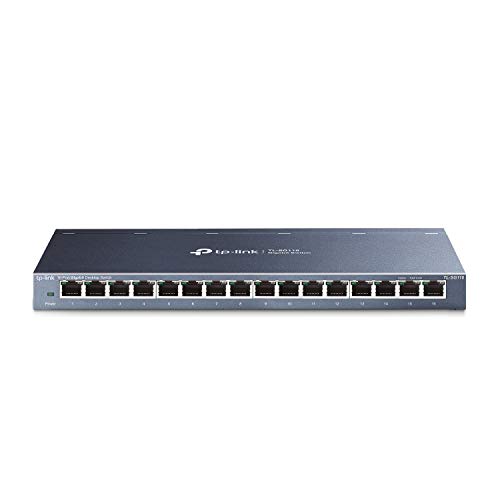
- 16 Gigabit ports with auto-negotiation
- Plug-and-play, unmanaged setup
- Fanless metal design with QoS support
Best For: Quiet, simple wired expansion in homes or small offices
Compact 5-Port Gigabit Switch
TP-Link LS1005G 5-Port Unmanaged Gigabit

- 5 gigabit RJ45 ports
- Fanless plug-and-play design
- Compact, energy-efficient build
Best For: Simple wired expansion in homes or small offices
Managed 8-Port Desktop Switch
TP-Link TL-SG108E Easy Smart Gigabit
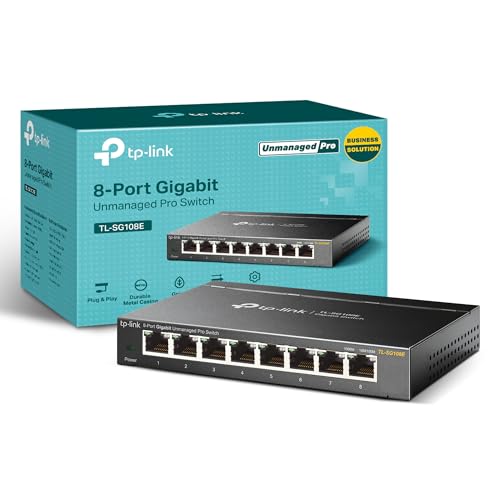
- 8 gigabit Ethernet ports
- VLAN, QoS, and link aggregation support
- Desktop or wall-mount metal design
Best For: Budget-friendly managed networking with extra control
High-Capacity PoE Switch
NETGEAR GS324P 24-Port PoE Gigabit

- 24 gigabit ports for large setups
- 16 PoE+ ports with 190W budget
- Silent, unmanaged plug-and-play design
Best For: Larger networks needing lots of PoE and port capacity
Large-Home & Rack Ready – NETGEAR 24-Port Gigabit Unmanaged Switch
If you want one of the most practical network switches under 300 for a bigger wired setup, the NETGEAR GS324 keeps things simple. It gives you 24 gigabit ports, plug-and-play installation, and a fanless metal build that can sit on a desk, mount to a wall, or fit into a rack.
Best For: Homes, offices, and AV setups that need a quiet, no-configuration 24-port switch.
Pros:
- 24 x 1.0Gbps Ethernet ports for high-speed wired expansion
- Unmanaged design means no software or setup is required
- Fanless operation keeps noise out of living spaces and work areas
- Flexible mounting options: desktop, wall-mount, or rack-mount
Cons:
- No smart management features like VLAN or PoE
- Made for U.S. and Canada use only
This is a straightforward pick for buyers who value port count and easy deployment over advanced controls. It fits best when you just need reliable gigabit connectivity with minimal fuss.
PoE Camera & AP Control – TP-Link 24-Port Smart PoE+ Switch
For network switches under 300 that need both power and control, the TP-Link TL-SG1428PE stands out with 24 PoE+ ports and a 250W power budget. It also adds easy smart management, VLAN support, two Gigabit non-PoE ports, and two SFP slots for more flexible network builds.
Best For: Small business and prosumer installs with PoE cameras, access points, or other powered devices.
Pros:
- 24 PoE+ ports with up to 30W per port and 250W total budget
- Easy smart management via web-based interface and utility
- VLAN features help segment traffic and improve network security
- Auto recovery can reboot dropped or unresponsive PoE devices
Cons:
- More complex than an unmanaged switch
- Gigabit data rate is listed as 1Gbps, so this is not a multi-gig option
This is a strong choice if your setup needs PoE power plus basic management tools instead of a simple plug-and-play box. The extra ports and recovery features make it especially useful for devices that need to stay online.
Quiet Budget Desktop Pick – Tenda 5-Port Gigabit Desktop Switch
If you only need a small expansion point, this is one of the most affordable network switches under 300 for everyday home use. The Tenda 5-port gigabit switch keeps setup simple with plug-and-play operation, silent fanless cooling, and a compact body that works on a desk or on the wall.
Best For: Budget-friendly wired expansion for a few devices in a home, dorm, or small office.
Pros:
- 5 x 10/100/1000Mbps ports for full gigabit speed
- Plug and play with Auto MDI/MDIX for easy connection
- Fanless design makes it ideal for quiet spaces
- Compact, wall-mountable form factor saves space
Cons:
- No management features or PoE support
- Only five ports, so it is best for small setups
This is a practical pick when you want simple wired reliability without paying for extras. It is best suited to light-duty network expansion where size, silence, and ease of use matter most.
Mini Metal Value Pick – TRENDnet 5-Port Mini Gigabit Switch
For buyers comparing network switches under 300, the TRENDnet TEG-S50g is a tiny, no-frills option that focuses on speed and durability. It offers five gigabit ports, a fanless metal housing, wall-mount support, and GREENnet technology to reduce power use.
Best For: Space-saving wired expansion where a compact, quiet switch is more important than advanced features.
Pros:
- Five gigabit ports with 10Gbps switching capacity
- Mini metal housing is pocket-sized and wall-mountable
- Fanless operation keeps noise and power use down
- Lifetime manufacturer protection adds long-term peace of mind
Cons:
- Unmanaged design offers no advanced configuration tools
- Port count is limited to five
This model makes sense when you need a tough, compact switch that simply works out of the box. Its small footprint and lifetime protection are the main reasons to choose it over bigger, more feature-rich alternatives.
Smart Managed Pick – NETGEAR 8-Port Gigabit Easy Smart Switch
If you’re comparing network switches under 300, this NETGEAR GS308E is a strong choice for people who want Gigabit speed plus a little more control. It’s a managed switch that stays simple to use, with an Easy Smart web GUI that works on Windows, Mac, or Linux and no app required.
Best For: Home offices, small businesses, and users who want easy VLAN and QoS control without complicated setup.
Pros:
- 8 auto-negotiating 1Gbps ports for full Gigabit performance
- Easy Smart web GUI works across Windows, Mac, and Linux
- Supports VLANs, QoS, IGMP snooping, and port mirroring
- Fanless metal housing runs cool and silent
Cons:
- Only 8 ports, so it’s not ideal for larger wired setups
- Advanced management features may be more than some users need
This is a practical pick if you want a quiet, reliable switch that adds useful traffic controls without making setup difficult. It fits well where stability, segmentation, and simple management matter more than sheer port count.
PoE Power Pick – YuanLey 16-Port Gigabit PoE Switch
For buyers looking at network switches under 300 that can also power devices, this YuanLey PoE switch offers a lot of capacity. It combines 16 PoE/PoE+ Gigabit ports with 2 Gigabit uplinks, making it useful for cameras, access points, phones, and other wired gear.
Best For: Security camera setups, access points, and offices that need many PoE connections in one box.
Pros:
- 16 Gigabit PoE/PoE+ ports plus 2 Gigabit uplinks
- 250W total PoE power with up to 30W per port
- Plug-and-play operation with automatic device detection
- VLAN isolation on ports 1-16 to reduce congestion
Cons:
- Unmanaged design limits configuration flexibility
- Bulkier than a simple desktop switch due to PoE hardware
This is a capacity-first option for setups that need lots of powered ports. If your priority is connecting multiple PoE devices with minimal fuss, the built-in power budget and port count make it especially useful.
Value Expansion Pick – TP-Link TL-SG116 16-Port Gigabit Switch
If you want one of the easiest network switches under 300 for adding wired devices, the TP-Link TL-SG116 keeps things straightforward. It’s an unmanaged 16-port Gigabit switch with plug-and-play setup, fanless operation, and a metal case built for everyday use.
Best For: Simple network expansion in homes or small offices where quiet operation matters.
Pros:
- 16 Gigabit RJ45 ports with auto-negotiation and Auto MDI/MDIX
- Plug-and-play setup with no software or configuration needed
- Fanless design keeps operation quiet
- QoS and IGMP Snooping help with voice and video traffic
Cons:
- Unmanaged design offers limited control compared with smart switches
- No PoE support for powering cameras or access points
For buyers who just need more reliable wired ports, this is an easy recommendation. It focuses on quiet, efficient expansion rather than advanced management, which makes it a good fit for straightforward installs.
Compact 5-Port Gigabit Switch – TP-Link LS1005G 5-Port Unmanaged Gigabit
If you need simple network switches under 300 for adding a few wired devices, the TP-Link LS1005G is a small, quiet option built for basic expansion. It offers 5 gigabit RJ45 ports with auto-negotiation and Auto MDI/MDIX, so setup is straightforward when you just want more Ethernet connections without extra configuration.
Best For: Home offices, gaming setups, and small device clusters that need plug-and-play wired expansion.
Pros:
- 5 gigabit ports for adding multiple wired connections
- Plug-and-play setup with no software or configuration required
- Fanless design keeps operation quiet
- Compact body makes it easy to tuck out of sight
Cons:
- Unmanaged design offers no advanced traffic controls
- Only 5 ports, so it may be too small for larger setups
Overall, this switch is a practical pick if you want a low-friction way to expand Ethernet access. Its focus on quiet operation, energy efficiency, and simple connectivity makes it a good fit for everyday use.
Managed 8-Port Desktop Switch – TP-Link TL-SG108E Easy Smart Gigabit
Among network switches under 300, the TP-Link TL-SG108E stands out if you want more control than a basic unmanaged model. It provides 8 gigabit ports plus easy smart management features like a web interface, VLAN support, port mirroring, loop prevention, cable diagnostics, QoS, IGMP snooping, and link aggregation.
Best For: Users who want affordable managed features for a desktop or wall-mounted wired network.
Pros:
- 8 gigabit ports for flexible wired expansion
- Easy smart management through web interface and free software
- Supports VLAN, QoS, IGMP snooping, and link aggregation
- Metal housing with desktop or wall-mount installation
Cons:
- More advanced than a simple plug-and-play switch
- Data sheet notes a lower listed transfer rate than the gigabit port speed
This is the better choice when you need basic network management tools without moving up to a full enterprise switch. The feature set adds useful control and monitoring while still keeping installation flexible and practical.
High-Capacity PoE Switch – NETGEAR GS324P 24-Port PoE Gigabit
If your search for network switches under 300 includes bigger installs, the NETGEAR GS324P is designed for far more than a small home setup. It includes 24 gigabit ports, 16 PoE+ ports, and a 190W total PoE budget, making it useful when you need to power compatible devices directly through Ethernet.
Best For: Larger wired networks that need multiple PoE devices and quiet operation.
Pros:
- 24 gigabit ports for high-density connectivity
- 16 PoE+ ports with 190W total power budget
- Unmanaged plug-and-play setup
- Fanless, energy-efficient operation
Cons:
- Larger and more overbuilt than a small desktop switch
- Unmanaged design provides no configuration features
This model makes sense when port count and PoE support matter more than management tools. Its silent, plug-and-play design keeps installation simple while still handling demanding wired device layouts.
How We Picked the Best Network Switches Under 300
We focused on value, port count, switching speed, PoE needs, management features, build quality, and ease of setup. The best Network Switches Under 300 should solve a real wiring problem, not just add ports for the sake of it.
That means balancing unmanaged simplicity with smart-management features like VLAN support, QoS, and basic traffic control when those tools actually matter.
Quick Comparison: Which Type Fits Your Setup?
Unmanaged switches are best if you want a simple expand-and-go solution for desktops, consoles, printers, or streaming devices. Smart-managed switches are a better fit when you need more control over traffic, separate devices with VLANs, or prioritize latency-sensitive gear.
PoE switches are especially useful for network cameras, VoIP phones, and wireless access points because they can deliver power and data over one cable. If you are building out a larger wired setup, higher port counts can be more important than advanced controls.
Key Buying Factors for Network Switches Under 300
Port Count and Expansion Headroom
Choose a switch with more ports than you currently need if you expect to add devices later. A 5-port model suits a small desk setup, while 16- or 24-port options are better for growing homes, studios, and offices.
Managed Vs. Unmanaged
Unmanaged models are the easiest to use. Managed and easy smart switches add configuration options, but only buy them if you will actually use features such as VLANs, QoS, or port monitoring.
PoE Budget and Device Needs
For PoE models, check total power budget as well as per-port support. A switch may have many PoE ports, but if the overall wattage is too low, you may not be able to power all devices at once.
Speed, Build, and Mounting
Gigabit is the sweet spot for most buyers in this price range. Metal housings, fanless designs, and desktop or wall-mount flexibility are practical advantages, especially in quiet home or office environments.
Who Should Buy Which Network Switches Under 300?
If you want the simplest setup, choose an unmanaged switch. If you need to separate traffic, improve performance for specific devices, or manage a mixed network, a smart-managed model is the better choice. If your project includes cameras, access points, or phones, prioritize PoE first and port count second.
In short, the best Network Switches Under 300 are the ones that match your current devices and leave enough room for the next upgrade.