
Choosing the right switch can make a wired network feel faster, cleaner, and more reliable. If you need more ports, better multi-gig support, or a simple plug-and-play setup, the best high speed network switches can improve everyday performance without adding complexity.
Below, we focus on practical options for home labs, gaming setups, small offices, and media-heavy networks. The goal is to help you match port count, speed, and features to your devices, not overbuy for specs you will never use.
Best 10 High Speed Network Switches Picks for 2026
Compact Multi-Gig Upgrade

- 8 x 2.5Gbps ports for faster wired networking
- Plug-and-play unmanaged setup
- Fanless metal case for quiet use
Best For: Users who want an easy 2.5G switch for multiple devices
Reliable Gigabit Expander
TP-Link 8-Port Gigabit TL-SG108

- 8 gigabit ports for wired expansion
- Fanless plug-and-play design
- Metal housing with traffic optimization
Best For: Anyone needing a simple, quiet gigabit switch
Five-Port 2.5G Hub

- 5 x 2.5Gbps ports in a compact design
- Works with Cat5e/Cat6 cables
- Fanless plug-and-play operation
Best For: Small networks that need a few multi-gig ports
Gaming-Friendly 2.5G Switch

- Five 2.5Gbps ports with 25Gbps switching capacity
- QoS, Flow Control, and IGMP Snooping
- Fanless metal design with plug-and-play setup
Best For: Wi-Fi 6, gaming, NAS, and media-heavy setups
Compact Gigabit Starter
NETGEAR 8-Port Gigabit Ethernet Unmanaged Network Switch
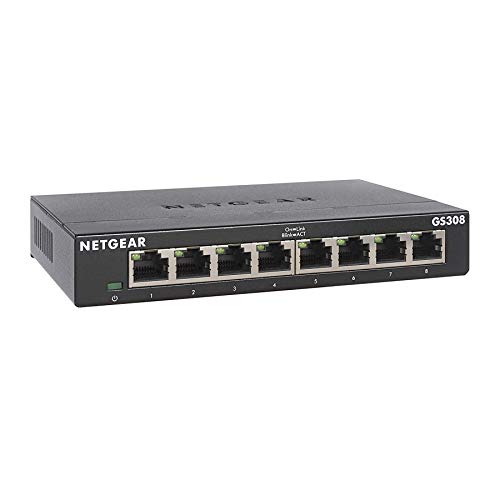
- 8 Gigabit ports with auto-negotiation
- Plug-and-play unmanaged setup
- Fanless metal design for silent use
Best For: Basic wired expansion for home offices and small networks
Budget Multi-Gig Pick
BrosTrend 5 Port 2.5Gb Switch Unmanaged for PC, Game Consoles, NAS, Server

- Five 2.5Gbps RJ45 ports
- Quiet fanless unmanaged design
- Good for gaming PCs, consoles, and NAS
Best For: A small number of multi-gig devices on a budget
Best Multi-Gig Value
TP-Link TL-SG108S-M2 8-Port Multi-Gigabit 2.5G Unmanaged Ethernet Switch

- 8 ports at 2.5Gbps with 40Gbps capacity
- Auto-negotiates 100Mb, 1G, and 2.5G
- Fanless and desktop/wall-mount friendly
Best For: Users who want eight-port multi-gig expansion with simple setup
Multi-Gig Budget Pick
BrosTrend 2.5Gb 8-Port Unmanaged Switch

- Eight 2.5Gbps RJ45 ports
- Fanless and silent operation
- Plug-and-play, unmanaged setup
Best For: Home offices, gaming PCs, NAS, and LAN parties
Compact Multi-Gig Pick
TP-Link 5-Port 2.5G Unmanaged Switch

- Five 2.5Gb ports with 25 Gbps capacity
- Auto-negotiation from 100Mb to 2.5G
- Fanless metal case with wall-mount option
Best For: Small offices and home setups needing a compact 2.5Gb switch
High-Port Gigabit Pick
NETGEAR GS316v3 16-Port Gigabit Switch

- 16 gigabit Ethernet ports
- Fanless plug-and-play operation
- Energy Efficient Ethernet support
Best For: Gigabit networks that need lots of wired ports
Compact Multi-Gig Upgrade – NETGEAR 8-Port 2.5G MS308
If you’re shopping for high speed network switches, this NETGEAR MS308 is a straightforward way to move multiple devices onto 2.5Gbps Ethernet without adding setup complexity. It keeps things simple with unmanaged, plug-and-play operation while still giving you eight multi-gig ports and support for existing Cat5e or Cat6 cabling.
Best For: Homes or small offices that want an easy 2.5G upgrade for several wired devices.
Pros:
- 8 x 2.5Gbps ports for multi-gig wired connections
- Works with Cat5e and Cat6 cables
- Plug-and-play unmanaged design requires no configuration
- Fanless metal build supports silent desktop or wall mounting
Cons:
- U.S. and Canada only
- No advanced management features
This is a practical pick if you want a quiet, compact switch that delivers faster-than-gigabit speeds with minimal fuss. It focuses on straightforward performance and flexible placement rather than enterprise extras.
Reliable Gigabit Expander – TP-Link 8-Port Gigabit TL-SG108
This TP-Link model is a dependable choice if you need high speed network switches for standard gigabit networking. It offers eight 10/100/1000 Mbps ports, simple plug-and-play setup, and a sturdy metal housing built for quiet everyday use.
Best For: Basic wired network expansion for home offices, gaming setups, and small shared spaces.
Pros:
- 8 gigabit RJ45 ports for fast wired connectivity
- Plug-and-play setup with no configuration required
- Fanless design keeps operation silent
- Metal case with shielded ports and traffic optimization
Cons:
- Limited to gigabit speeds, not multi-gig
- No advanced management features
For users who only need solid gigabit expansion, this switch covers the essentials well. The metal build, quiet operation, and lifetime protection make it a practical long-term networking add-on.
Five-Port 2.5G Hub – NETGEAR 5-Port 2.5G MS305
For smaller setups that still want high speed network switches, the NETGEAR MS305 gives you five 2.5Gbps ports in a compact, unmanaged package. It auto-negotiates with connected devices and works with existing Cat5e or Cat6 cabling, making it an easy upgrade path for faster wired links.
Best For: Small desks, compact offices, or home networks that only need a few multi-gig ports.
Pros:
- 5 x 2.5Gbps ports for multi-gig connectivity
- Auto-negotiation works with Cat5e and Cat6 cables
- Plug-and-play setup with no software needed
- Fanless metal design for quiet, flexible placement
Cons:
- Only five ports
- U.S. and Canada only
This switch is a good fit when you want multi-gig speed without paying for extra ports you won’t use. It keeps the setup simple and the footprint small while still delivering faster-than-gigabit performance.
Gaming-Friendly 2.5G Switch – D-Link 5-Port 2.5G DMS-105
The D-Link DMS-105 is a strong option if you’re comparing high speed network switches for Wi-Fi 6, gaming, or media-heavy devices. Its five 2.5Gbps ports, QoS support, and IGMP Snooping are aimed at keeping faster wired links responsive and efficient without adding setup hassle.
Best For: Wi-Fi 6 access points, gaming PCs, NAS devices, and media streams that benefit from 2.5G networking.
Pros:
- Five 2.5Gbps ports with up to 25Gbps switching capacity
- QoS, Flow Control, and IGMP Snooping for traffic handling
- Fanless metal housing for quiet operation
- Plug-and-play design with auto-negotiation and LED link indicators
Cons:
- Limited to five ports
- No software configuration or advanced management
This is a well-rounded multi-gig switch for users who want a bit more traffic tuning than the simplest unmanaged models. It balances ease of use with useful performance features for bandwidth-heavy homes and small offices.
Compact Gigabit Starter – NETGEAR 8-Port Gigabit Ethernet Unmanaged Network Switch
If you need one of the simplest high speed network switches for a basic wired setup, the NETGEAR GS308 keeps things straightforward with 8 auto-negotiating Gigabit ports. It is a practical pick for home offices, small networks, or connecting computers, servers, and other networking gear without any setup work.
Best For: Home offices and small networks that want reliable plug-and-play Gigabit expansion.
Pros:
- 8 x 1.0Gbps ports for Gigabit connectivity
- Plug-and-play unmanaged design with no software required
- Fanless metal build for silent operation
- Desktop or wall-mount placement for flexible installation
Cons:
- Limited to standard 1Gbps speeds
- Unmanaged design offers no advanced configuration options
This is a no-fuss switch for buyers who want dependable wired expansion and quiet operation rather than multi-gig performance. If Gigabit is enough for your devices, it offers an easy way to add ports with minimal hassle.
Budget Multi-Gig Pick – BrosTrend 5 Port 2.5Gb Switch Unmanaged for PC, Game Consoles, NAS, Server
For buyers looking at high speed network switches with a clear step up from Gigabit, the BrosTrend 5-port 2.5Gb switch delivers 2.5Gbps across all ports. It is aimed at gaming PCs, consoles, NAS, servers, and other Ethernet devices that can benefit from faster wired throughput in a simple unmanaged package.
Best For: Small setups that want affordable 2.5Gbps networking for gaming and home devices.
Pros:
- 5 ports all running at 2.5Gbps
- Up to 25Gbps switching capacity
- Fanless operation for quiet use
- Plug-and-play setup with no software installation
Cons:
- Only 5 ports, which may be limiting for larger setups
- No SFP ports for fiber-based expansion
This model makes sense if you want multi-gig speed without adding complexity. It is compact, quiet, and well suited to a few high-demand wired devices in a home or small office.
Best Multi-Gig Value – TP-Link TL-SG108S-M2 8-Port Multi-Gigabit 2.5G Unmanaged Ethernet Switch
The TP-Link TL-SG108S-M2 is a strong fit if you want high speed network switches that can handle a busier multi-gig setup. Its 8 ports support 2.5Gbps connectivity with auto-negotiation across 100Mb, 1G, and 2.5G, making it useful for devices like WiFi 6 access points, NAS units, gaming PCs, and workstations.
Best For: Faster home or small office networks that need eight multi-gig ports and quiet operation.
Pros:
- 8 x 2.5Gbps ports with up to 40Gbps switching capacity
- Auto-negotiation for 100Mb, 1G, and 2.5G devices
- Fanless design for silent operation
- Desktop or wall-mount use for flexible placement
Cons:
- Unmanaged design limits configuration options
- Best suited to desktop devices rather than broad enterprise deployments
Overall, this is the most balanced option here if you want more ports and more speed without stepping into a managed switch. It offers a clean upgrade path for multi-gig networks while staying simple to deploy.
Multi-Gig Budget Pick – BrosTrend 2.5Gb 8-Port Unmanaged Switch
If you want high speed network switches without adding complexity, this BrosTrend 8-port 2.5Gb model is built for straightforward multi-gig upgrades. It delivers 2.5Gbps on all eight RJ45 ports, supports plug-and-play setup, and keeps things quiet with a fanless design.
Best For: Home offices, gaming setups, NAS users, and LAN parties that need more 2.5Gb connections.
Pros:
- Eight 2.5Gbps ports for multi-device wired connectivity
- Fanless operation for silent use in shared spaces
- Plug-and-play setup with no software required
- Good value if you want 2.5Gb networking without SFP hardware
Cons:
- Unmanaged design offers no advanced configuration features
- No SFP ports for fiber-based setups
- 2.5Gb speed may be more than some devices need
For buyers comparing practical high speed network switches, this one stands out for simple expansion and quiet operation. It is especially appealing if you want to connect several wired devices at 2.5Gbps without dealing with extra setup steps.
Compact Multi-Gig Pick – TP-Link 5-Port 2.5G Unmanaged Switch
This TP-Link model is a compact choice among high speed network switches, giving you five 2.5Gb ports in a simple unmanaged design. It supports auto-negotiation across 100Mb, 1G, and 2.5G speeds, and it is built for quiet operation with a fanless metal case.
Best For: Small homes, home offices, and gaming or media setups that need a compact 2.5Gb upgrade.
Pros:
- Five 2.5Gb ports with up to 25 Gbps switching capacity
- Auto-negotiation helps match devices at 100Mb, 1G, or 2.5G
- Fanless metal design for silent operation
- Desktop or wall-mount flexibility
Cons:
- Only five ports, so expansion room is limited
- Unmanaged switch with no advanced network controls
- Best suited to multi-gig devices rather than very large networks
If you need a small, quiet, and practical 2.5Gb upgrade, this switch is easy to recommend. It is a strong fit when you want multi-gig performance without changing your wiring or dealing with a complicated setup.
High-Port Gigabit Pick – NETGEAR GS316v3 16-Port Gigabit Switch
For buyers who prioritize port count over multi-gig speeds, this NETGEAR unit is a straightforward option in the high speed network switches category. It provides 16 gigabit Ethernet ports, plug-and-play installation, and a fanless metal design for quiet everyday use.
Best For: Users who need a simple 16-port wired expansion for gigabit devices.
Pros:
- 16 auto-negotiating gigabit ports for lots of wired connections
- Plug-and-play unmanaged setup keeps installation simple
- Fanless design supports silent operation
- Energy Efficient Ethernet helps reduce power use
Cons:
- Only supports 1Gbps ports, not 2.5Gb multi-gig speeds
- Made for U.S. and Canada only
- No advanced management features
This is a good fit when your priority is adding many reliable wired connections rather than chasing multi-gig throughput. It makes the most sense for standard gigabit networks where simplicity, silence, and port count matter most.
How We Picked These High Speed Network Switches
We looked for switches that offer a strong balance of speed, port count, ease of use, and build quality. For this roundup, that meant prioritizing unmanaged models with reliable multi-gig or gigabit performance, fanless designs where possible, and options that fit common use cases like gaming PCs, NAS devices, access points, and office workstations.
We also favored brands with a solid track record for straightforward setup and broad compatibility. Since most buyers want a simple wired upgrade, we focused on devices that are easy to deploy and do not require advanced networking knowledge.
Quick Comparison: Which Type Fits Your Setup?
If your devices only support 1GbE, a standard gigabit switch is still a smart way to expand wired connections. If you have a fast NAS, modern motherboard, gaming rig, or Wi-Fi 6/6E access point with 2.5GbE ports, a multi-gig switch is the better choice and can help remove a bottleneck on your local network.
Smaller households and desk setups may only need 5 ports, while growing setups, media centers, and home labs usually benefit from 8 or 16 ports. More ports give you room to expand, but only buy what you will realistically use.
Key Buying Factors for High Speed Network Switches
Speed and Port Mix
Check whether the switch is gigabit-only or supports 2.5Gbps on every port. A multi-gig switch is most useful when at least a few connected devices can actually take advantage of the higher speed.
Unmanaged Simplicity
Most buyers shopping for High Speed Network Switches want plug-and-play operation. Unmanaged models are ideal if you do not need VLANs, traffic shaping, or other advanced controls.
Fanless Vs. Active Cooling
Fanless switches are quieter and better for desks, bedrooms, and media cabinets. If the unit has more ports or runs warmer, active cooling may be used instead, so check placement and noise tolerance.
Build and Mounting Options
Metal cases, wall-mount support, and shielded ports can improve durability and installation flexibility. These details matter more if the switch will sit in a shared living space or a small network closet.
Who Should Buy Which High Speed Network Switches?
Choose a 5-port 2.5Gb switch if you need a compact upgrade for a PC, NAS, console, and router. Go with an 8-port multi-gig model if you expect multiple fast devices or want room to expand. Pick a 16-port gigabit switch if your priority is adding many wired connections at the lowest cost, even if most devices stay at 1GbE.
In short, match the switch to your slowest bottleneck and your future device upgrades. That approach gives you the best value without paying for speed you cannot use yet.