
Virtual machine hosts often outgrow their built-in I/O long before they outgrow their CPUs or memory. The right PCIe expansion card can add NVMe lanes, external connectivity, or extra USB and storage options without rebuilding your system.
This roundup focuses on practical options for homelabs, workstations, and servers that need reliable expansion for virtualization workloads in 2026.
Best 10 PCIe Expansion Card for Virtual Machines Picks for 2026
Server NVMe Splitter
PCIe 4.0 X16 to 6-Port SlimSAS Adapter

- Driver-free NVMe expansion for VM and server platforms
- Works with ESXi, Linux, Windows Server, FreeBSD, and Ubuntu
- Multiple PCIe 4.0 split modes for flexible storage layouts
Best For: Virtualized server builds that need broad OS support and SlimSAS NVMe expansion
Thunderbolt NAS Add-On
QNAP Thunderbolt 3 Expansion Card

- Adds two Thunderbolt 3 ports over PCIe Gen3 x4
- Includes low-profile bracket and full-height bracket
- Compatible with QNAP TVS-h1288X and TVS-h1688X
Best For: QNAP NAS owners who need Thunderbolt 3 connectivity
Legacy PCI Bridge
StarTech 4-Slot PCI Expansion System

- Adds four 32-bit/33 MHz PCI slots via PCI Express
- Self-powered box with on/off button and no driver setup
- Supports both 5V and 3.3V/5V PCI cards
Best For: Legacy PCI card users who need expansion through a PCIe host
High-Density U.2 Switch
PLX88096 PCIe 4.0 X16 SFF-8654 Expansion

- PLX88096-based PCIe 4.0 switch card for wide lane fan-out
- No drivers and no motherboard bifurcation required
- Supports up to 20 U.2 SSDs in multiple split modes
Best For: Dense U.2 SSD expansion in server or virtualization builds
Thunderbolt PCIe Chassis

- Three PCIe 3.0 slots over Thunderbolt 3
- Supports broad non-GPU PCIe card compatibility
- 400W PSU with automatic power on/off
Best For: Thunderbolt-based expansion for multiple non-GPU PCIe cards
Bifurcation Splitter Card
JMT PCIe 3.0 x16 1-to-4 Split Card

- Splits one x16 slot into four x4 links
- Supports many PCIe devices, from NICs to SSDs
- Needs motherboard BIOS bifurcation support
Best For: Supported systems needing four PCIe devices from one slot
NVMe RAID Adapter
ASUS Hyper M.2 X16 PCIe 3.0 X4 V2
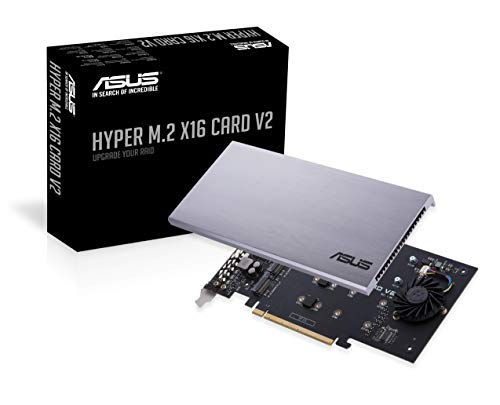
- Adds support for four NVMe M.2 drives
- Compatible with Intel VROC and Threadripper RAID
- Includes heatsink and blower-style fan
Best For: Four-drive NVMe RAID builds on compatible platforms
High-Port USB Add-In Pick
8-Port USB-C/USB-A PCIe Card for Windows/Linux

- Adds 2 USB-C and 6 USB-A ports from one PCIe x1 slot.
- Works with Windows, Server 2012–2022, and most Linux setups.
- Self-powered design with 3-group 5V power management.
Best For: PC, server, and NAS builds needing lots of USB ports
NVMe Storage Expansion Choice
4-Slot PCIe 4.0 M.2 Carrier Card
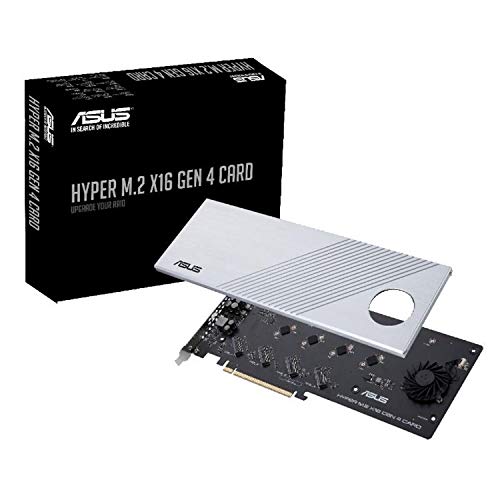
- Fits four NVMe M.2 drives on one PCIe x16 card.
- Up to 256Gbps bandwidth on PCIe 4.0 systems.
- Built-in heatsink and fan help prevent throttling.
Best For: Compatible AMD and Intel systems needing dense NVMe expansion
Dual SFF-8654 Bridge Option

- Dual SFF-8654 X8 design for internal storage links.
- Supports virtual RAID on Windows 10, not hardware RAID.
- Works only with motherboards that support detachable PCI-E channels.
Best For: Advanced Windows 10 builds with compatible PCIe channel split support
Server NVMe Splitter – PCIe 4.0 X16 to 6-Port SlimSAS Adapter
If you need a PCIe expansion card for virtual machines or storage-heavy servers, this PCIe 4.0 x16 to SlimSAS adapter is built for broad OS support and flexible NVMe fan-out. It uses a PEX88096/PLX88096 switch design, works without drivers, and is meant for direct plug-in use even when the motherboard does not support lane splitting.
Best For: VM hosts and server builds that need driver-free PCIe 4.0 NVMe expansion across Windows Server, Linux, ESXi, FreeBSD, or Ubuntu.
Pros:
- Supports Windows Server, Linux, VMware ESX/ESXi 5/6/7, FreeBSD 11/12/13/14, and Ubuntu 20/22
- Driver-free, plug-and-play use with no motherboard PCIe splitting required
- Offers multiple NVMe output modes, including 3 x 16, 6 x 8, and 12 x 4 PCIe 4.0 configurations
- Can use all interfaces simultaneously in dynamic allocation mode
Cons:
- Not compatible with SATA SSDs
- Not applicable to FreeBSD 15.0
- Designed for SlimSAS/SFF-8654 NVMe connectivity, so it is not a general-purpose adapter
Overall, this is a strong choice when you want a server-focused PCIe expansion card for virtual machines with broad compatibility and flexible NVMe routing. Its value is highest in builds that specifically need U.2/SlimSAS storage expansion rather than mixed-purpose connectivity.
Thunderbolt NAS Add-On – QNAP Thunderbolt 3 Expansion Card
This PCIe expansion card for virtual machines is really aimed at QNAP NAS users who want Thunderbolt connectivity rather than storage lane splitting. The QXP-T32P adds two Thunderbolt 3 ports on PCIe Gen3 x4, with a low-profile bracket pre-installed and support for Windows, macOS, and Linux.
Best For: QNAP TVS-h1288X and TVS-h1688X owners who need Thunderbolt 3 expansion for fast transfer and workflow acceleration.
Pros:
- Two Thunderbolt 3 (USB-C) ports on a PCIe Gen3 x4 card
- Low-profile bracket installed, with a full-height bracket included
- Works with Windows, macOS, and Linux
- Compatible with Thunderbolt 4 devices when used with approved cables
Cons:
- Only listed for QNAP TVS-h1288X and TVS-h1688X compatibility
- Not a storage breakout or PCIe lane-splitting card
- Focused on NAS expansion, so it is not a general PC add-in solution
In practice, this card makes sense when Thunderbolt is the real requirement and your NAS model is supported. For users building around virtualization or media workflows, it is best viewed as a specialized connectivity upgrade rather than a broad PCIe expansion option.
Legacy PCI Bridge – StarTech 4-Slot PCI Expansion System
If you are looking for a PCIe expansion card for virtual machines that also keeps older PCI hardware alive, this StarTech system adds four 32-bit/33 MHz PCI slots through PCI Express. It is a self-powered expansion box with no driver or software installation required, making it practical for legacy add-in cards in mixed environments.
Best For: Users who need to connect older PCI cards to a modern PCIe system in a simple, self-powered chassis.
Pros:
- Adds 4 PCI slots from a PCI Express connection
- Supports both 5V and 3.3V & 5V PCI add-in cards
- Self-powered design with an on/off button
- No driver or software installation required
Cons:
- Uses 32-bit/33 MHz PCI, not PCIe expansion for modern devices
- Bulkier than a simple adapter card
- Best suited to legacy compatibility rather than high-speed workloads
This is the right choice only if your goal is PCI backward compatibility. For virtualization or storage expansion, it is less relevant than a modern PCIe switch card, but it can still be useful in specialized lab or industrial setups.
High-Density U.2 Switch – PLX88096 PCIe 4.0 X16 SFF-8654 Expansion
This PCIe expansion card for virtual machines is built around the PLX88096 chip and is focused on large-scale U.2 SSD fan-out. It supports broad PCIe lane usage, works without drivers, and does not require the motherboard to support bifurcation, which makes it attractive for storage expansion in server and VM environments.
Best For: High-capacity U.2 SSD expansion on systems that need flexible PCIe splitting without motherboard bifurcation support.
Pros:
- Uses a PLX88096 switch chip with PCIe 4.0 support
- No drivers required and no motherboard splitting support needed
- Supports multiple split modes, including 20 x 4, 10 x 8, and 5 x 16
- Expandable to as many as 20 U.2 SSDs
Cons:
- Setup may need seller assistance for mode configuration
- Requires SFF-8654-8i cabling with AB crossover cable
- Product notes are focused on storage fan-out rather than general-purpose expansion
For storage-centric virtualization builds, this is a powerful option because it handles wide PCIe fan-out without depending on motherboard bifurcation. It is best used when your priority is dense U.2 SSD scaling rather than mixed peripheral support.
Thunderbolt PCIe Chassis – Sonnet Echo III Desktop
If you need a PCIe expansion card for virtual machines or workstation add-ons but your host system lacks internal slots, the Sonnet Echo III Desktop turns a Thunderbolt 3 connection into a compact three-slot expansion system. It is geared toward non-GPU PCIe cards, with broad compatibility and automatic power behavior that fits into a practical desktop setup.
Best For: Users who want Thunderbolt 3-based expansion for multiple non-GPU PCIe cards, including Pro Tools | HDX setups.
Pros:
- Provides three PCIe 3.0 slots over Thunderbolt 3
- Supports Thunderbolt 3 compatible non-GPU cards regardless of length or height
- Includes a 400W power supply with 75W auxiliary power
- Power turns on and off automatically with the computer
Cons:
- Designed for non-GPU PCIe cards, so it is not a general graphics expansion box
- Requires a Thunderbolt 3 connection to the host system
This is a strong choice when you want a tidy external expansion chassis with real slot count and built-in power. The Pro Tools | HDX compatibility mode also makes it especially useful for audio and professional PCIe workflows.
Bifurcation Splitter Card – JMT PCIe 3.0 x16 1-to-4 Split Card
This PCIe expansion card for virtual machines and other multi-device builds is made to split one PCIe 3.0 x16 slot into four x4 links, as long as your motherboard BIOS supports the required bifurcation setting. It is a straightforward way to mount four PCIe devices in one adapter, but it is limited to Gen3 and depends on the platform configuration.
Best For: Builders who need a low-cost 1-to-4 PCIe bifurcation card for supported motherboards.
Pros:
- Splits one x16 slot into x4x4x4x4 for four PCIe cards
- Supports a wide range of PCIe devices, including network cards, SSDs, capture cards, and passthrough cards
- Includes SATA power input and four power-on LED indicators
- Uses gold-plated slot connectors and a high-TG board
Cons:
- Requires motherboard BIOS support for the correct bifurcation mode
- Must be set to Gen3 maximum link speed before use
- Delivers up to x4 performance per device rather than full x16 bandwidth
For the right motherboard, this card is an efficient way to hang multiple devices off a single slot. Just make sure your BIOS supports the split configuration before you buy.
NVMe RAID Adapter – ASUS Hyper M.2 X16 PCIe 3.0 X4 V2
If your goal is to add fast NVMe storage through a PCIe expansion card for virtual machines or storage-heavy work, the ASUS Hyper M.2 X16 PCIe 3.0 X4 Expansion Card V2 is built for four M.2 drives and RAID-oriented setups. It works in PCIe x8 or x16 slots and adds active cooling to help prevent M.2 throttling during sustained use.
Best For: Users building four-drive NVMe RAID arrays on Intel VROC or AMD Ryzen Threadripper systems.
Pros:
- Supports up to four NVMe M.2 drives
- Compatible with Intel VROC and AMD Ryzen Threadripper NVMe RAID
- Includes a heatsink and blower-style fan to reduce throttling
- Works with PCIe x8 and x16 slots
Cons:
- Built for NVMe storage rather than general PCIe expansion
- Requires a compatible platform for RAID use
- Uses a PCIe 3.0 x16 interface, so it is not a newer-generation card
This card makes sense when your priority is dense NVMe storage rather than broad peripheral support. Its cooling and RAID focus make it a practical pick for high-throughput storage projects.
High-Port USB Add-In Pick – 8-Port USB-C/USB-A PCIe Card for Windows/Linux
If you need a PCIe expansion card for virtual machines or general server expansion, this GLOTREND card is a practical way to add a lot of USB ports from one PCIe x1 slot. It gives you 2 USB-C and 6 USB-A ports, supports USB 3.2 Gen 1 speeds, and is aimed at Windows, Linux, and server/NAS use where reliable peripheral connectivity matters more than flashy extras.
Best For: PC, server, and NAS builds that need many USB ports for peripherals, backup devices, or VM host expansion on Windows or Linux.
Pros:
- 8 total ports in a compact PCIe x1 card: 2 USB-C and 6 USB-A.
- Plug-and-play on Windows 11/10/8, Server 2012–2022, and most Linux systems.
- 3-group 5V power management helps support multiple high-power USB devices.
- No extra power input required; standard-profile bracket included.
Cons:
- Not compatible with Mac OS.
- Uses shared PCIe 2.0 x1 bandwidth, so all ports do not get full 5Gbps simultaneously.
- Standard bracket only, so it is not suited to slim cases.
This is a strong fit when you want a simple, self-powered USB expansion card rather than storage or GPU passthrough hardware. Its main advantage is port count and broad Windows/Linux compatibility, making it useful for multi-device setups in hosts and lab systems.
NVMe Storage Expansion Choice – 4-Slot PCIe 4.0 M.2 Carrier Card
For a PCIe expansion card for virtual machines or storage-heavy workstations, the ASUS Hyper M.2 X16 is built to turn one x16 slot into four NVMe M.2 slots. It supports PCIe 4.0 bandwidth, works with x8 and x16 slots, and is designed for motherboards that can take advantage of PCIe bifurcation or Intel VROC NVMe RAID features.
Best For: High-speed NVMe storage expansion on compatible AMD TRX40/X570 systems and Intel VROC-capable builds.
Pros:
- Supports up to 4 NVMe M.2 drives in one card.
- PCIe 4.0 x16 interface with up to 256Gbps bandwidth.
- Compatible with M.2 sizes from 2242 to 22110.
- Includes a heatsink and blower-style fan to reduce throttling.
Cons:
- Requires compatible motherboard support for best results.
- Intended for AMD TRX40/X570 and Intel VROC NVMe RAID platforms.
- Bulkier than simple add-in cards because of cooling hardware.
This card makes sense when your priority is packing multiple NVMe drives into one expansion slot. It is less of a universal add-on and more of a platform-specific storage upgrade, so compatibility planning is important before buying.
Dual SFF-8654 Bridge Option – PCIe X16 to 2-Port 8i Adapter
If you are looking for a PCIe expansion card for virtual machines or disk passthrough-style projects, this chenyang adapter is a niche internal bridge for SFF-8654 8i connections. It is aimed at setups with detachable PCI-E channels and can be used with two disks, while also supporting a virtual RAID setup in Windows 10 or third-party software instead of hardware RAID.
Best For: Windows 10 systems and hardware configurations that need dual SFF-8654 8i internal connections for custom storage builds.
Pros:
- Dual slimline SFF-8654 X8 design for internal storage or eGPU-style connectivity.
- Can run 4 PCIe disks at full speed simultaneously in supported setups.
- Includes high-power DC modules for stable operation.
- Ships with 8cm and 12cm slot bracket options.
Cons:
- No hardware RAID support.
- Requires motherboards with detachable PCI-E channels.
- Without PCIe signal split support, the board may only recognize one disk.
This is a specialized expansion card, not a general-purpose solution. It is best viewed as a compatibility-sensitive adapter for advanced Windows 10 storage or external graphics experiments where the motherboard layout already supports the needed features.
How We Picked the Best PCIe Expansion Card for Virtual Machines
We prioritized cards that make sense for a PCIe Expansion Card for Virtual Machines: stable chipset support, lane efficiency, broad OS compatibility, and expansion options that help real host workloads. We also looked at whether a card is useful for common VM tasks such as fast scratch storage, passthrough-friendly NVMe arrays, external PCIe devices, and extra USB connectivity.
Because virtualization setups vary widely, we favored cards that clearly state their lane requirements, slot spacing, and platform support. That matters more than raw port count if your motherboard, CPU, or BIOS cannot provide the right bifurcation or lane allocation.
Quick Comparison
Use NVMe expansion cards when you want more high-speed VM datastores. Choose Thunderbolt-to-PCIe enclosures when you need removable expansion or a compact host. Pick USB expansion only if your VMs rely on dongles, peripherals, or passthrough devices. Multi-slot PCIe expansion systems are best when you need to host multiple add-in cards externally or in a flexible chassis.
Key Buying Factors for a PCIe Expansion Card for Virtual Machines
Lane Width and Bifurcation
Check whether your motherboard supports x4/x4/x4/x4 or similar bifurcation. Many NVMe carrier cards depend on it, and without it you may only see one drive instead of four. For a PCIe Expansion Card for Virtual Machines, lane planning is often the difference between a smooth build and a frustrating one.
Host Platform Compatibility
Confirm CPU and chipset support, especially on Intel and AMD platforms where bifurcation behavior can differ. Also verify BIOS options for PCIe split modes, above-4G decoding, and passthrough readiness if you plan to assign devices directly to guests.
Storage Vs. General I/O
NVMe-focused cards are ideal for VM datastores, cache, or backup targets. USB expansion cards are better for licensing dongles, input devices, and test hardware. Thunderbolt or external PCIe options make more sense for flexible labs that change hardware frequently.
Thermals and Physical Space
High-density NVMe and multi-slot cards can run hot. Make sure your case airflow, slot spacing, and power delivery are adequate, especially if the card includes multiple drives or an external enclosure.
Who Should Buy Which PCIe Expansion Card for Virtual Machines?
If you want the cleanest path to more VM storage, choose a bifurcation-based NVMe expansion card. If you need portability or a shared lab setup, a Thunderbolt PCIe expansion system is often the better fit. If your bottleneck is device access rather than storage, a USB expansion card may solve the problem more cheaply. For advanced homelabs and servers, multi-slot or PLX-based cards are worth a closer look because they offer more flexibility when your VM environment keeps growing.
In short, match the card to the workload first, then confirm motherboard support before you buy. That simple step prevents most compatibility issues and helps your virtual machines get the bandwidth they need.