
If you need more GPU power for Blender, Cinema 4D, Maya, or similar 3D workloads, an external enclosure can be a practical upgrade without replacing your whole laptop or mini PC.
The best external GPU enclosure for 3D rendering balances bandwidth, power delivery, card support, and thermal design so your renders stay fast and stable.
Best 10 External GPU Enclosure for 3D Rendering Picks for 2026
Premium Thunderbolt 5 eGPU Pick
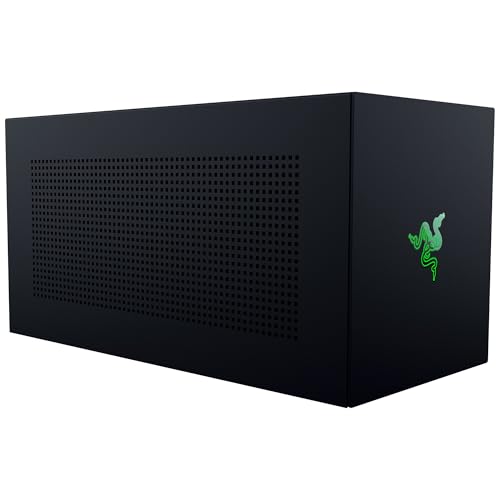
- Thunderbolt 5 with up to 80 Gbps bandwidth
- Fits up to 4-slot NVIDIA or AMD desktop GPUs
- 140W USB-C power delivery and active cooling
Best For: Windows users who want a premium, upgrade-friendly eGPU enclosure for creative workloads
Open-Frame USB4 Budget Pick

- Thunderbolt 3/4 and USB4 compatibility
- 85W PD charging with certified controller support
- Open-frame aluminum build with no GPU length limit
Best For: Users wanting a lightweight, flexible eGPU enclosure for supported Windows or Linux systems
Workhorse Rendering eGPU Enclosure
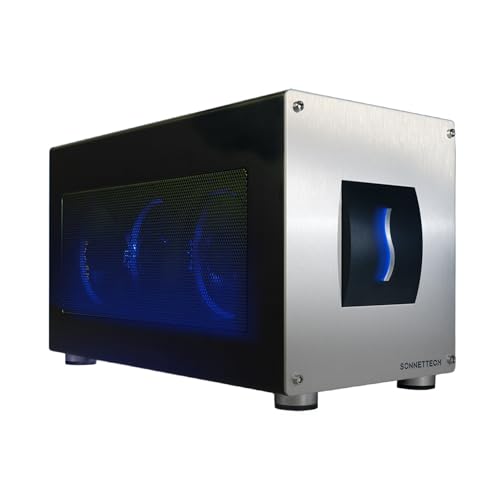
- 80 Gbps Thunderbolt 5 performance for Windows 11
- 850W PSU supports triple-wide NVIDIA and AMD GPUs
- Adds USB ports plus 5GbE Ethernet
Best For: Professionals who need a powerful, workstation-style eGPU enclosure for rendering and VFX
USB4 eGPU Dock for Laptops
RIITOP 40Gbps External GPU Enclosure
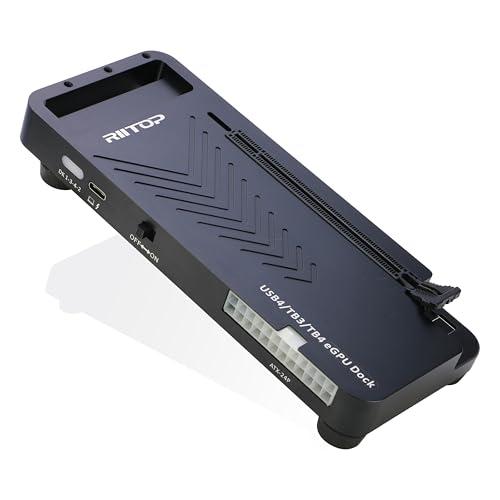
- USB4/TB4 40Gbps connection
- Supports large PCIe 4.0 x16 GPUs
- Open design with no card-size limits
Best For: USB4 or Thunderbolt 4 users building a flexible rendering dock
Oculink GPU Dock for Workstations

- Oculink-only PCIe 4.0 x4 dock
- Supports ATX/SFX power supplies
- Built for RTX 4090 and RX 7900 XTX
Best For: Users with Oculink systems who want a straightforward high-end GPU dock
Elite Performance Dock
Thunderbolt 3/4 & USB4 Graphics Station

- Certified JHL7440 controller
- Supports modern NVIDIA and AMD GPUs
- 85W PD plus hub-style ports
Best For: Thunderbolt/USB4 users who want a versatile rendering dock
High-Bandwidth OCuLink Dock
PCIe 4.0 x4 External GPU Enclosure

- 64Gbps OCuLink bandwidth
- Supports RTX 4090 and RX 7900
- Shielded cable and secure open-frame design
Best For: OCuLink systems needing high-bandwidth rendering performance
Compact TB4 GPU Dock
Mini eGPU Enclosure with 85W PD

- Certified JHL7440 controller
- Supports ATX, SFX, FLEX, and DC 12V power
- Compact dock with USB-A and daisy chain
Best For: Compact Thunderbolt setups that need rendering-ready GPU expansion
Premium Thunderbolt 5 eGPU Pick – Razer Core X V2
If you want an external GPU enclosure for 3D rendering that prioritizes modern connectivity and easy GPU swaps, the Razer Core X V2 is built around Thunderbolt 5 performance. It supports up to 4-slot NVIDIA or AMD desktop graphics cards, includes a Thunderbolt 5 cable, and adds 140W USB-C power delivery for compatible laptops and devices.
Best For: Creators who want a flexible Thunderbolt 5 eGPU enclosure for Windows laptops and devices.
Pros:
- Supports desktop NVIDIA and AMD GPUs up to 4 slots wide
- Thunderbolt 5 connection with up to 80 Gbps bandwidth
- 140W power delivery via USB-C for compatible devices
- Tool-free GPU and PSU installation with active cooling
Cons:
- Graphics card and power supply are sold separately
- Mac devices with M1 or later chips do not support eGPUs
- Requires compatible Thunderbolt 4/5 or USB4 hardware
For 3D rendering workflows on supported Windows systems, this enclosure stands out for its combination of next-gen bandwidth, broad GPU support, and straightforward setup. If you already have a desktop-class card and want a premium enclosure that can scale with future upgrades, this is a strong fit.
High-Power OCuLink Dock Choice – AOOSTAR AG02
The AOOSTAR AG02 is an external GPU enclosure for 3D rendering when you need a dock-style setup with serious built-in power. It combines OCuLink and USB4 support, a PCIe x16 slot, and an 800W server-grade power supply to handle many desktop graphics cards in Windows 11 systems.
Best For: Power users with compatible OCuLink or USB4 devices who want a high-wattage GPU dock.
Pros:
- Built-in 800W PSU with up to 600W GPU power output
- OCuLink plus USB4 connectivity for supported hosts
- PCIe x16 slot and three 8-pin GPU power connectors
- Designed for Windows 11 mini PCs, laptops, and handhelds
Cons:
- Graphics card is not included
- OCuLink does not support hot-plugging
- Compatibility can vary by host device, BIOS, firmware, and GPU
This is a strong option if your priority is raw dock capability and you already know your system supports OCuLink or USB4 eGPU connections. The high wattage and flexible power setup make it well suited to demanding rendering builds, but compatibility checks matter here more than with simpler Thunderbolt enclosures.
Open-Frame USB4 Budget Pick – Maskedfish MK-L18
The Maskedfish MK-L18 is an external GPU enclosure for 3D rendering that focuses on broad USB4 and Thunderbolt compatibility in a compact open-frame design. It supports NVIDIA and AMD cards, includes 85W PD charging, and uses certified JHL7540/7440 controllers with PCIe 4.0 x16 mode.
Best For: Users who want a lightweight open-frame enclosure for Windows, Linux, or select Mac setups.
Pros:
- Works with Thunderbolt 4/3 and USB4 devices
- Supports NVIDIA and AMD GPUs, including RTX 50 series models
- 85W PD charging for single-cable use with compatible devices
- Open-frame aluminum design with unlimited graphics card length
Cons:
- Non-Thunderbolt/USB4 Type-C ports are not supported
- Notes indicate it is not applicable to gaming or 3D rendering for the listed Mac AI use case
- Requires compatible host support for best results
For buyers who want a simpler, lighter enclosure with modern USB4 connectivity, the MK-L18 offers a flexible starting point. Just be sure your host device matches the supported interface, especially if you are aiming for stable rendering performance on Windows or Linux.
Workhorse Rendering eGPU Enclosure – Sonnet Breakaway Box 850 T5
If your priority is an external GPU enclosure for 3D rendering, the Sonnet Breakaway Box 850 T5 is built for serious Windows workflows. It delivers 80 Gbps Thunderbolt 5 bandwidth, supports triple-wide NVIDIA and AMD cards, and pairs that with an 850W power supply and a temperature-controlled fan.
Best For: Creators and professionals running GPU-accelerated rendering, animation, or visual effects on Windows 11.
Pros:
- 80 Gbps Thunderbolt 5 bandwidth for demanding workflows
- Supports triple-wide NVIDIA and AMD graphics cards
- 850W built-in power supply for power-hungry GPUs
- Includes extra connectivity with USB ports and 5GbE Ethernet
Cons:
- Windows-focused external GPU solution
- Large desktop enclosure with a 14.1-pound weight
- Premium feature set may be more than casual users need
This enclosure is the most workstation-like option in the group, especially if your rendering setup benefits from strong power delivery and integrated expansion ports. For users who want a dependable Thunderbolt 5 enclosure that can support heavy GPU workloads, it is a compelling pick.
Oculink eGPU Dock for Mini PCs – MINISFORUM DEG1 External GPU Dock Station
If you want an external GPU enclosure for 3D rendering and you already have an Oculink-based mini PC, the MINISFORUM DEG1 is built around PCIe 4.0 x4 connectivity and is designed for high-end cards like the RTX 4090 and AMD RX 7900 XTX. It uses an open dock layout and supports standard ATX or SFX power supplies, so it fits straightforward desktop-style builds rather than portable, plug-and-play setups.
Best For: Oculink mini-PC owners who need a flexible dock for heavy rendering GPUs.
Pros:
- Supports RTX 4090 and AMD RX 7900 XTX class GPUs.
- Works with ATX and SFX standard power supplies.
- Compact dock dimensions suit tight desk setups.
- PCIe 4.0 x4 Oculink link is aimed at high-bandwidth use.
Cons:
- Oculink does not support hot plugging; the machine must be powered off first.
- The locking connector must be released properly to avoid port damage.
- Follow-start is only compatible with MINISFORUM Mini PCs using original wires.
For a workstation-style external GPU enclosure for 3D rendering, this model makes the most sense when your system already has Oculink and you want support for top-tier cards. It is less about convenience and more about building a capable GPU dock around compatible hardware.
USB4 eGPU Dock for Laptops – RIITOP 40Gbps External GPU Enclosure
For buyers looking for an external GPU enclosure for 3D rendering on a laptop or compact system, the RIITOP 40Gbps dock is built around USB4 and Thunderbolt 4 compatibility. It supports PCIe 4.0 x16 graphics cards, uses an open design for broader card fit, and is positioned for demanding workloads like rendering, video editing, AI computing, and gaming.
Best For: USB4 or Thunderbolt 4 systems that need a flexible eGPU setup for creative workloads.
Pros:
- Compatible with Thunderbolt 4 and USB4 full-function 40Gbps ports.
- Supports modern NVIDIA RTX 50 and RTX 40 series, plus AMD RX 7000 series cards.
- Open design has no restrictions on graphics card size.
- Includes a USB4 cable and mounting hardware for the graphics card and PSU.
Cons:
- Requires a full-spec 40Gbps USB4 or Thunderbolt 4 port to work.
- Power supply and graphics card are not included.
- Mac support is AMD-only and does not support NVIDIA on macOS.
This is the most flexible choice here for mixed device compatibility, especially if your 3D rendering setup lives on a laptop or NUC with USB4 or TB4. Just make sure the host port is the full-featured 40Gbps version before buying.
Oculink GPU Dock for Workstations – MINISFORUM DEG1 eGPU Dock
The MINISFORUM DEG1 eGPU Dock is another external GPU enclosure for 3D rendering, but this version stays strictly focused on Oculink systems and PCIe 4.0 x4 connectivity. It supports RTX 4090 and AMD RX 7900 XTX class cards and accepts ATX or SFX standard power supplies, making it a practical dock for users building around compatible mini PCs or workstation-style setups.
Best For: Oculink-based systems that need a simple dock for high-end rendering GPUs.
Pros:
- Supports RTX 4090 and AMD RX 7900 XTX graphics cards.
- Works with ATX and SFX standard power supplies.
- Compact open-frame design keeps the dock footprint small.
- PCIe 4.0 x4 Oculink connection is purpose-built for supported systems.
Cons:
- Does not support Thunderbolt.
- Oculink is not hot-pluggable and requires the machine to be turned off.
- Power supply is not included.
If your machine already uses Oculink, this dock gives you a direct path to a serious rendering GPU without extra interface complexity. It is best treated as a system-specific expansion dock rather than a universal eGPU solution.
Elite Performance Dock – Thunderbolt 3/4 & USB4 Graphics Station
If you want an external GPU enclosure for 3D rendering that leans toward workstation-style performance, this Thunderbolt 3/4 and USB4 dock is built around the officially certified JHL7440 controller. It supports NVIDIA and AMD PCIe graphics cards, adds 85W PD charging, and can also function as a small hub for connected accessories.
Best For: Users with Thunderbolt 3/4 or USB4 laptops and handhelds who want a versatile eGPU dock for rendering, creative work, and general expansion.
Pros:
- Officially certified JHL7440 controller for stable Thunderbolt-based expansion
- Supports NVIDIA RTX 50 series and AMD RX 7000 series GPUs
- Includes a TB4 port, USB-A port, and daisy chain port for added connectivity
- 85W PD charging helps simplify laptop setups
Cons:
- Graphics card and ATX power supply are not included
- Requires a Thunderbolt 3/4 or USB4 port to work
- Must avoid inserting a CPU cable into the PCIe-8pin port
Overall, this is a flexible choice if you need an external GPU enclosure for 3D rendering and want Thunderbolt compatibility plus extra I/O. Just be sure your device matches the required port type and follow the power-cabling instructions carefully.
High-Bandwidth OCuLink Dock – PCIe 4.0 x4 External GPU Enclosure
For buyers comparing an external GPU enclosure for 3D rendering, this OCuLink dock stands out for its PCIe 4.0 x4 64Gbps bandwidth and lower-latency native PCIe passthrough design. It is aimed at laptops and mini PCs that already support OCuLink and need a more direct GPU expansion path than Thunderbolt.
Best For: OCuLink-equipped laptops or mini PCs that need maximum bandwidth for gaming, rendering, and AI workloads.
Pros:
- PCIe 4.0 x4 64Gbps bandwidth with native PCIe passthrough
- Supports mainstream NVIDIA and AMD GPUs, including RTX 4090 and RX 7900
- Includes a 50cm shielded OCuLink cable for stable connection
- Open-frame structure with side bracket helps secure GPU and ATX PSU
Cons:
- Graphics card and power supply are not included
- Not hot-plug friendly; connections must be made with power off
- Requires an ATX PSU and a PSU sized well above GPU full-load power
This is a strong fit if your system already has OCuLink and you care more about bandwidth than Thunderbolt convenience. It is especially appealing for heavy rendering workflows where cable shielding, stability, and direct PCIe access matter.
Compact TB4 GPU Dock – Mini eGPU Enclosure with 85W PD
If you need an external GPU enclosure for 3D rendering in a compact setup, this mini dock focuses on Thunderbolt 3/4 and USB4 compatibility with an officially certified JHL7440 controller. It supports NVIDIA and AMD PCIe cards, offers 85W PD charging, and includes daisy chain plus USB-A connectivity for a cleaner workspace.
Best For: Thunderbolt 3/4 or USB4 users who want a compact eGPU dock for rendering and everyday workstation expansion.
Pros:
- Certified JHL7440 controller for stable Thunderbolt expansion
- Supports ATX, SFX, FLEX, and DC 12V power supplies
- 85W PD charging plus daisy chain support
- Includes a 10Gbps USB-A port and TB4 port for extra device support
Cons:
- Does not work with Thunderbolt 1/2 or generic USB-C ports
- Graphics card, ATX power supply, and DC adapter are not included
- Requires Windows 11 and the proper PCIe card power setup
This dock makes sense if you want a relatively small external GPU enclosure without giving up useful connectivity. It is a practical rendering option for compatible laptops or NUC-style systems, provided you match the port and power requirements carefully.
How We Picked the Best External GPU Enclosure for 3D Rendering
For an External GPU Enclosure for 3D Rendering, the main priorities are real-world bandwidth, PSU headroom, card compatibility, and host connection type. We favored models that support modern interfaces like Thunderbolt 4, Thunderbolt 5, USB4, and OCuLink, since 3D workflows benefit from higher sustained throughput and fewer bottlenecks. We also looked at whether the enclosure can physically and electrically support larger GPUs that are common in rendering setups.
Quick Comparison
Thunderbolt 5 and high-bandwidth OCuLink options are best when you want the least performance loss, especially with heavier scenes or GPU-accelerated effects. Thunderbolt 3 and USB4 enclosures are still useful and widely compatible, but they are better suited to users who value convenience and broad device support over maximum speed. Open-frame dock-style designs can fit very large cards and flexible power supplies, while closed enclosures are usually cleaner and easier to set up.
Key Buying Factors for an External GPU Enclosure for 3D Rendering
Bandwidth and Connection Type
Bandwidth matters more for some workloads than others, but 3D rendering can be sensitive to transfer limits when scenes, textures, or simulation data move between system memory and the GPU. If your laptop or mini PC supports it, prioritize Thunderbolt 5 or OCuLink first, then Thunderbolt 4 or USB4.
Power Supply and GPU Size
Check the included PSU wattage and the connector support for your target graphics card. High-end GPUs can draw a lot of power, so the enclosure must handle both peak wattage and physical dimensions. If you plan to use flagship cards, verify clearance, slot width, and any auxiliary power requirements before buying.
Cooling and Noise
Rendering sessions can run for long periods, so ventilation is more important than it looks on paper. Larger enclosures and open docks often cool big cards better, while compact units may be quieter at idle but more constrained under sustained load.
Host Compatibility
Not every External GPU Enclosure for 3D Rendering works equally well across Windows, Linux, gaming handhelds, mini PCs, and laptops. Confirm OS support, BIOS/firmware requirements, and whether your device has full Thunderbolt, USB4, or OCuLink support rather than just a port that looks similar.
Who Should Buy Which External GPU Enclosure for 3D Rendering?
Choose a Thunderbolt 5 enclosure if you want the most future-ready option for a newer workstation laptop. Pick a Thunderbolt 4 or USB4 model if you need broad compatibility and solid performance for everyday rendering. Go with OCuLink if you want the best bandwidth efficiency and your mini PC or system already supports it. If you use a very large GPU, an open-frame dock with a high-wattage ATX or SFX PSU is usually the safest fit.