
Choosing an external GPU enclosure for dual-slot graphics card builds is all about matching bandwidth, power delivery, and physical clearance to your laptop or mini PC.
Below, you’ll find the strongest options for 2026, from Thunderbolt and USB4 docks to faster OCuLink and next-gen PCIe enclosures.
Best 10 External GPU Enclosure for Dual-Slot Graphics Card Picks for 2026
Premium Thunderbolt 5 eGPU Pick
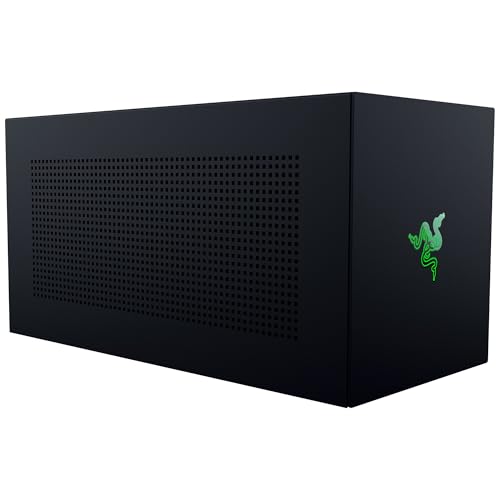
- Fits PCIe desktop GPUs up to 4 slots wide
- Thunderbolt 5 with up to 80 Gbps bandwidth
- 140W USB-C PD and 120 mm active cooling
Best For: Users who want a premium Windows eGPU enclosure with easy upgrades
Budget OCuLink GPU Dock
Yoidesu Aluminum PCIe X16 Dock

- OCuLink plus PCIe 4.0 x4 at 64Gbps
- Aluminum alloy enclosure for durability
- Supports ATX and SFX systems
Best For: OCuLink users who want a basic, durable GPU dock
Expansion Chassis for Add-In Cards
StarTech Thunderbolt 3 PCIe Enclosure

- Dual PCIe 3.0 x16 slots over Thunderbolt
- Supports non-GPU add-in cards only
- Toolless aluminum chassis with active cooling
Best For: PCIe expansion users who do not need GPU support
High-Power OCuLink eGPU Dock
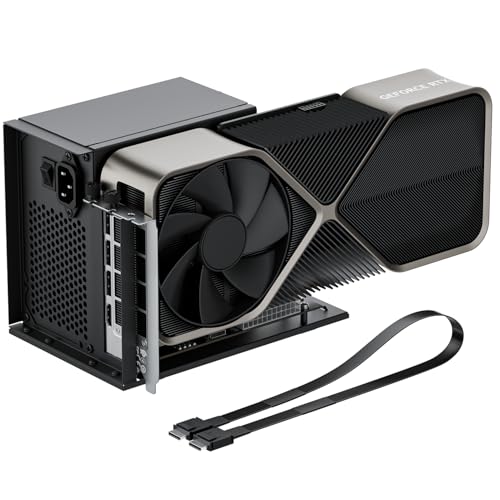
- Supports large GPUs like RTX 4090 and RX 7900 XTX
- OCuLink PCIe 4.0 x4 64Gbps connection
- Detachable dock with flexible shielded cable
Best For: Users who want a flexible OCuLink dock for high-end GPUs
Compact Hot-Swap PCIe Dock
LICAEVEY PCIe 16X Expansion Dock

- USB4 and Thunderbolt 3/4 support
- Hot-swappable PCIe 16X slot
- Also fits SSDs, sound cards, and 10G NICs
Best For: users who want a basic hot-swappable PCIe expansion dock for GPUs and add-in cards
Dual-Link Performance Dock
MINISFORUM DEG2 USB4 V2 eGPU Dock

- USB4 V2/TBT5 and OCuLink dual-mode support
- Built-in M.2 2280 NVMe storage slot
- Works with ATX and SFX power supplies
Best For: power users who want a fast eGPU dock with storage and flexible power options
PCIe 5.0 M.2 eGPU Enclosure
OwlTree 128Gbps NVMe eGPU Dock

- PCIe 5.0 x4 M.2-to-x16 design
- Supports RTX 50 and RX 90xx series
- Flexible shielded 50cm riser cable
Best For: NVMe-only laptop and mini PC users upgrading to newer high-bandwidth GPUs
Thunderbolt 5 Power Hub

- Dual Thunderbolt 5 ports with 80 Gbps bidirectional bandwidth
- PCIe 4.0 x4 slot plus M.2 SSD and SD card expansion
- Supports ATX and SFX power supplies with 140W PD uplink
Best For: Thunderbolt 5 users who want a feature-packed eGPU dock
Simple PCIe 16X Dock
Serounder External Graphics Dock
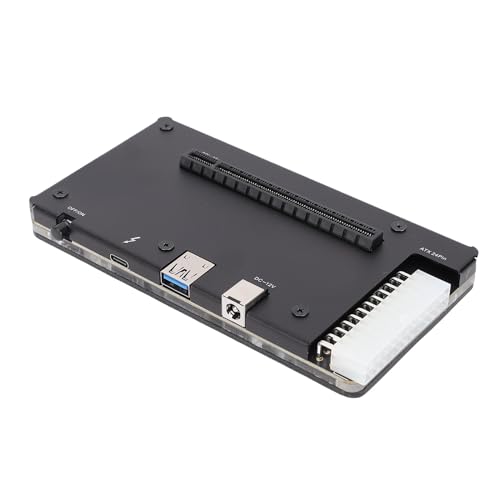
- Thunderbolt 3/4 and USB4 connectivity for eGPU use
- Full PCIe 16X slot for desktop graphics cards
- 12V DC or PD spoofing power options
Best For: Users who want a basic, low-frills external GPU dock
OCuLink Performance Dock
OwlTree PCIe 4.0 x4 eGPU Enclosure

- 64Gbps PCIe 4.0 x4 OCuLink connection
- Detachable enclosure with flexible shielded cable
- Supports large GPUs like RTX 4090 and RX 7900 XTX
Best For: OCuLink systems that want a portable, high-bandwidth eGPU enclosure
Premium Thunderbolt 5 eGPU Pick – Razer Core X V2
If you want an external GPU enclosure for a dual-slot graphics card alternative that can also handle much larger desktop cards, the Razer Core X V2 is built for modern Thunderbolt 4/5 and USB4 setups. It supports PCIe desktop GPUs up to 4 slots wide, adds 140W USB-C power delivery, and uses a tool-free design for fast GPU and PSU swaps.
Best For: Laptop and handheld users who want a high-end Thunderbolt 5 eGPU enclosure with broad compatibility and easy upgrades.
Pros:
- Supports PCIe desktop graphics cards up to 4 slots wide
- Thunderbolt 5 connection with up to 80 Gbps bandwidth
- Compatible with Thunderbolt 4, Thunderbolt 5, and USB4 devices
- Includes 140W power delivery via USB-C and a 120 mm cooling fan
Cons:
- Graphics card and power supply are sold separately
- Mac devices with M1 or later chips do not support eGPUs
This is the strongest premium pick in the group if you want a future-facing external GPU enclosure for a dual-slot graphics card or larger desktop GPU, especially on a Windows 11 laptop. The tradeoff is that you are buying into a more serious enclosure with separate GPU and PSU requirements.
Budget OCuLink GPU Dock – Yoidesu Aluminum PCIe X16 Dock
This external GPU enclosure for dual-slot graphics card setups uses an OCuLink connection and PCIe 4.0 x4 bandwidth to bring desktop-class graphics to a laptop. The aluminum build is aimed at durability, and the dock includes support for both ATX and SFX systems, though setup is more hands-on than a typical plug-and-play enclosure.
Best For: Laptop users who want an OCuLink eGPU dock with PCIe 4.0 x4 speed and a sturdy aluminum shell.
Pros:
- OCuLink interface with PCIe 4.0 x4 and 64Gbps transfer speed
- Supports ATX and SFX systems
- Aluminum alloy construction for durability
- Graphics card bracket helps with installation
Cons:
- Requires 10 64-bit system support per the listing
- Technical knowledge is required for optimal setup
If you already have an OCuLink-compatible device, this dock offers a practical path to external graphics without paying for extra enclosure features you may not need. It is best suited to users who are comfortable assembling a more technical GPU dock.
Expansion Chassis for Add-In Cards – StarTech Thunderbolt 3 PCIe Enclosure
If your priority is expansion rather than graphics, this Thunderbolt 3 PCIe enclosure gives laptops and desktops dual PCIe 3.0 x16 slots for add-in cards. It is a solid choice for storage, networking, capture, and other single-width PCIe cards, but it explicitly does not support GPU graphics cards.
Best For: Buyers who need a Thunderbolt PCIe expansion chassis for non-GPU add-in cards.
Pros:
- Dual external PCIe 3.0 x16 slots
- Supports TB3/TB4-capable systems and is driverless on macOS and Windows
- Toolless aluminum design with built-in fan
- Includes Thunderbolt cable and universal power adapter
Cons:
- Does not support GPU graphics cards
- Only supports single-width cards up to 8 inches long
This is a good expansion chassis, but not an external GPU enclosure for a dual-slot graphics card. Choose it only if your use case is PCIe accessories like NVMe, Ethernet, or capture hardware.
High-Power OCuLink eGPU Dock – OwlTree PCIe 4.0 x4 Dock
This external GPU enclosure for dual-slot graphics card and larger-card setups is designed around OCuLink and PCIe 4.0 x4 64Gbps bandwidth. It supports desktop GPUs such as the RTX 4090 and RX 7900 XTX, uses a detachable design for easier storage, and includes a flexible 50cm SFF-8611 cable to reduce strain on the port.
Best For: Desktop, laptop, or mini PC users who want an OCuLink eGPU dock with generous GPU compatibility and a detachable layout.
Pros:
- Compatible with large graphics cards including RTX 4090 and RX 7900 XTX
- PCIe 4.0 x4 OCuLink connection with 64Gbps transfer rate
- Detachable design improves portability and storage
- Flexible flat cable includes shielding and EMI-focused materials
Cons:
- OCuLink does not support hot plugging
- Standard ATX power supply only
For buyers who want a more flexible OCuLink route to external graphics, this dock offers strong card support and a practical cable design. Just plan on powering down before disconnecting and using an ATX PSU.
Compact Hot-Swap PCIe Dock – LICAEVEY PCIe 16X Expansion Dock
If you want an external GPU enclosure for dual-slot graphics card setups on a budget, this LICAEVEY dock is a straightforward PCIe 16X expansion solution for USB4 and Thunderbolt 3/4 systems. It’s designed to add a desktop-style x16 slot for graphics cards, and it also works with select PCIe add-in cards like SSDs, sound cards, and 10G NICs.
Best For: Users who want a simple hot-swappable PCIe 16X dock for external GPU use and other expansion cards.
Pros:
- Supports USB4 and Thunderbolt 3/4 connections for flexible host compatibility.
- PCIe 16X slot works with desktop graphics cards and select PCIe devices like SSDs and 10G NICs.
- Hot-swappable design adds convenience when changing hardware configurations.
- Can be powered for low-power devices using a power adapter or PD dummy cable.
Cons:
- Notes specify AMD RX full series support; compatibility details are narrower than some universal docks.
- DMA cards are not supported.
- Requires external power handling, so it is less plug-and-play than a fully integrated enclosure.
Overall, this dock makes sense if you need a basic external GPU enclosure for dual-slot graphics card expansion and want extra flexibility for other PCIe devices. It’s not the most feature-rich option, but the hot-swap support and broad device categories make it practical for compact setups.
Dual-Link Performance Dock – MINISFORUM DEG2 USB4 V2 eGPU Dock
The MINISFORUM DEG2 is a high-bandwidth external GPU enclosure for dual-slot graphics card builds that aims at performance-focused users. With USB4 V2/TBT5 compatibility and OCuLink support, it offers up to 80Gbps or 64Gbps links, plus a hardware switch for choosing between docking convenience and pure GPU mode.
Best For: Power users who want a fast dual-link eGPU dock with storage expansion and flexible power support.
Pros:
- Dual-mode USB4 V2/TBT5 compatible and OCuLink connectivity for up to 80Gbps or 64Gbps.
- Hardware switch lets you toggle between all-in-one docking mode and GPU-focused mode.
- Built-in M.2 2280 NVMe slot supports local storage for models and project files.
- Supports standard ATX and SFX power supplies and a wide range of desktop graphics cards.
Cons:
- May be more complex than a basic enclosure if you only need simple GPU expansion.
- Best suited to users who can take advantage of its dual-link and storage features.
- Requires external PSU selection, so total build cost can rise.
If you need an external GPU enclosure for dual-slot graphics card performance and want modern connectivity options, this dock is built for demanding workloads. The built-in NVMe slot and signal boosting features make it especially appealing for workflow-heavy setups where stability and speed matter.
PCIe 5.0 M.2 eGPU Enclosure – OwlTree 128Gbps NVMe eGPU Dock
This OwlTree dock is an external GPU enclosure for dual-slot graphics card builds that connects through an NVMe M.2 interface rather than Thunderbolt. It targets laptops, NUCs, and ITX/STX systems with NVMe-only slots, and it is built around PCIe 5.0 x4 bandwidth for newer graphics cards.
Best For: NVMe-system users who want a flexible M.2-to-PCIe x16 eGPU dock for newer high-performance cards.
Pros:
- Supports PCIe 5.0 x4 speeds up to 128Gbps, with backward compatibility for newer GPUs.
- Works with NVIDIA RTX 50 Series and AMD RX 90xx Series graphics cards.
- Uses a flexible 50cm M.2 to PCIe x16 cable with EMI shielding.
- Standard ATX power supply support helps accommodate full-size high-performance cards.
Cons:
- Requires an M.2 slot with NVMe protocol only; SATA, WiFi, and WWAN M.2 slots are not supported.
- ATX power supplies only, with a 500W+ requirement.
- GPU and power supply are not included.
For compatible systems, this is a strong choice if you want a direct M.2-based external GPU enclosure for dual-slot graphics card upgrades and newer PCIe 5.0 hardware. Its flexible cable and stability-focused design make it a practical pick for clean high-performance builds.
Thunderbolt 5 Power Hub – PELADN S-3 eGPU Dock
If you want an external GPU enclosure for dual-slot graphics card setups with modern connectivity, the PELADN S-3 is built around Thunderbolt 5 and wide device support. It pairs a PCIe 4.0 x4 slot with extra storage expansion, making it a strong option for users who want more than just a basic graphics dock.
Best For: Thunderbolt 5 laptops, mini PCs, and users who want high-bandwidth expansion plus extra ports.
Pros:
- Dual Thunderbolt 5 ports with up to 80 Gbps bidirectional bandwidth and 140W PD on the uplink
- PCIe 4.0 x4 slot plus PCIe 3.0 M.2 SSD slot and SD 4.0 card slot for added flexibility
- Supports ATX and SFX power supplies, with compatibility listed for many RTX and RX cards
- Includes 2.5G Ethernet, USB 3.2 Gen2 Type-A, and a Thunderbolt 5 cable
Cons:
- Requires a compatible Thunderbolt 5, Thunderbolt 4, or USB4-class setup for best use
- ATX power supply length is limited to 180mm
- Not a simple minimal dock if you only need basic GPU support
Overall, the S-3 is the most feature-rich enclosure here and makes sense if you want an external GPU enclosure for dual-slot graphics card use with storage and networking built in. It is aimed at users who value expansion and current-generation Thunderbolt connectivity over simplicity.
Simple PCIe 16X Dock – Serounder External Graphics Dock
This external GPU enclosure for dual-slot graphics card use focuses on straightforward PCIe 16X expansion over Thunderbolt 3, Thunderbolt 4, or USB4. It is aimed at users who want to add a desktop GPU to a laptop or small PC without extra dock features getting in the way.
Best For: Budget-minded users who need a basic eGPU enclosure for Thunderbolt 3/4 or USB4 systems.
Pros:
- Connects through Thunderbolt 3, Thunderbolt 4, or USB4 interfaces
- Full PCIe 16X slot for desktop graphics cards, with support also noted for some PCIe add-in cards
- Can be powered by a 12V DC adapter or PD spoofing cable for single-machine use
- Suitable for graphics-heavy tasks like video editing, 3D rendering, and gaming
Cons:
- Only one port and no extra expansion features like storage or networking built in
- Uses a 12V DC power approach rather than a full-featured integrated PSU setup
- Warranty is listed at 90 days
This is a practical pick if you mainly want a straightforward way to attach an external GPU and do not need premium extras. It keeps the design focused on core PCIe x16 functionality for compatible Thunderbolt and USB4 machines.
OCuLink Performance Dock – OwlTree PCIe 4.0 x4 eGPU Enclosure
If your system supports OCuLink, this external GPU enclosure for dual-slot graphics card setups offers PCIe 4.0 x4 bandwidth and a detachable design for easier transport. It is built for laptop and mini PC users who want a direct, high-speed link and a simple enclosure around a standard ATX power supply.
Best For: OCuLink-compatible laptops and mini PCs that need a portable high-bandwidth eGPU dock.
Pros:
- PCIe 4.0 x4 link rated at 64Gbps for high-speed GPU connection
- Detachable enclosure design makes storage and portability easier
- Supports large cards such as RTX 4090 and AMD RX 7900 XTX
- Includes multi-status LED indicators for live device monitoring
Cons:
- OCuLink does not support hot plugging, so shutdown is required before disconnecting
- Requires a standard ATX power supply only
- GPU and PSU are not included
For compatible systems, this dock is a focused choice that prioritizes speed, cable quality, and easy handling. It is less universal than Thunderbolt-based options, but it can be a strong fit when OCuLink is available.
How We Picked the Best External GPU Enclosure for Dual-Slot Graphics Card
For this roundup, we prioritized enclosures that can realistically handle a dual-slot graphics card without unnecessary fitment issues, while also offering the right connection type for modern systems. That means looking at interface speed, internal clearance, PSU support, thermal design, and whether the enclosure is friendly to frequent upgrades or hot-swapping.
We also favored models with broad device compatibility, including Thunderbolt 3/4/5, USB4, and OCuLink, since the right External GPU Enclosure for Dual-Slot Graphics Card use depends heavily on the host machine’s port support.
Quick Comparison: What Matters Most
If you want the simplest setup, Thunderbolt and USB4 enclosures are usually easiest to use. If you want better bandwidth and lower overhead, OCuLink-based docks are often the stronger performance choice. Newer PCIe 4.0 and PCIe 5.0 designs can offer even more headroom, but only if your laptop or mini PC supports them properly.
Also compare power options carefully. Some enclosures include built-in power support for the GPU and accessories, while others expect you to provide a separate ATX or SFX PSU. That detail can affect noise, cable management, and long-term upgrade flexibility.
Key Buying Factors for an External GPU Enclosure for Dual-Slot Graphics Card
1. Host Connection Standard
Match the enclosure to your system first. Thunderbolt 3 is common and convenient, Thunderbolt 4 and USB4 improve compatibility, and Thunderbolt 5 or OCuLink can provide more bandwidth for demanding cards and workloads.
2. Physical Card Support
Dual-slot support is not just about width. Check card length, thickness, bracket space, and whether the enclosure leaves enough room for power cables and cooling. If you plan to use a large aftermarket GPU, extra internal clearance is important.
3. Power Delivery and PSU Type
Some users need an enclosure that works with an ATX power supply, while others prefer integrated or compact power support. Make sure the enclosure can meet the GPU’s wattage needs and has the correct PCIe power connectors.
4. Expansion and Storage Features
Many buyers want more than graphics. An enclosure with an NVMe slot, extra PCIe add-in support, or SSD expansion can make the dock more useful as a long-term workstation accessory.
Who Should Buy Which External GPU Enclosure for Dual-Slot Graphics Card?
Choose a Thunderbolt or USB4 enclosure if you want the easiest plug-and-play path for a laptop or office setup. Choose an OCuLink dock if you care most about performance and your system supports it. If you’re building around a larger desktop-style GPU and want maximum flexibility, a model with ATX PSU support is usually the smartest choice.
For most shoppers, the best External GPU Enclosure for Dual-Slot Graphics Card use is the one that balances fit, power, and host compatibility instead of chasing bandwidth numbers alone. Matching the enclosure to your real workload is what delivers the best experience.