
Choosing a KVM switch with remote control can make a cluttered desk feel instantly more manageable. The right model lets you switch between computers faster, keep peripherals shared, and avoid constant cable swapping.
In this roundup, we focused on practical features that matter most: video resolution, monitor count, remote-switch convenience, USB performance, and compatibility across Windows, macOS, and Linux.
Best 10 KVM Switch with Remote Control Picks for 2026
Remote Access KVM

- Remote BIOS access and OS installation
- 4K@30Hz video with low latency
- Instant file transfer and no host software
Best For: remote admins, home labs, and off-site device control
Dual-Monitor Desk KVM

- Two computers and two monitors in mirror or extend mode
- 8K@60Hz and 4K@120Hz support
- Four USB 3.0 ports plus wired remote
Best For: high-resolution dual-monitor desks and quick local switching
PoE Remote KVM

- PoE and Type-C dual power support
- Built-in 32GB eMMC storage
- Remote access via browser, app, or Tailscale
Best For: server rooms, home labs, and cleaner PoE-based installs
Single-Monitor USB KVM
Hearvo 4K@60Hz KVM with Wired Remote
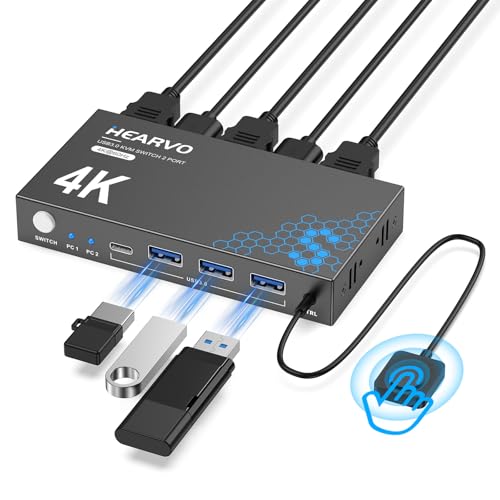
- Two computers share one monitor and USB peripherals
- 4K@60Hz with HDCP 2.2 support
- Wired desktop controller and USB-C port included
Best For: simple two-PC desk setups needing easy switching
8K HDMI Remote Switch
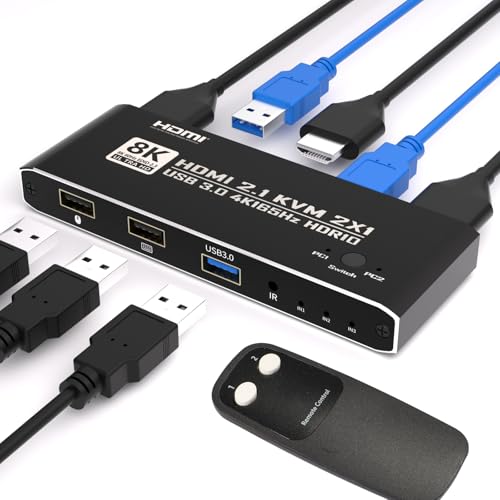
- 8K@60Hz and 4K@165Hz support
- IR remote plus front button switching
- USB 3.0 hub for shared peripherals
Best For: Users who want a single-monitor HDMI KVM with remote switching and high refresh rates
Dual-Monitor Wired KVM

- Dual-monitor sharing for two computers
- Wired desktop controller included
- Four USB 3.0 ports for peripherals
Best For: Dual-monitor users who want HDMI + DisplayPort switching with a wired controller
DP Remote-Control KVM

- Up to 8K@60Hz output support
- Wired remote and button switching
- 3 USB 3.0 ports for shared devices
Best For: DisplayPort setups that need easy remote-style switching and USB sharing
4-Computer Desk Share
4 Computers, 4K@60Hz with Wired Remote

- Four computers share one monitor and peripherals
- Wired remote keypad and front buttons for switching
- 3 USB 3.0 ports plus 1 USB-C port
Best For: People who want a simple four-PC HDMI KVM with remote-style switching
Dual-PC Remote Switch
1 Monitor, 2 Computers, 4K@60Hz

- Two PCs share one monitor and USB devices
- Wired remote and button switching included
- 3 USB 3.0 hubs plus 4K@60Hz support
Best For: Dual-computer desks that need easy wired remote switching
Quad-Monitor Workstation KVM
2 PCs, 4 Monitors, Wired Remote

- Two PCs can share four monitors
- Wired remote controller included
- 4 USB 3.0 ports for shared devices
Best For: Workstation users with desktop GPUs and advanced multi-monitor needs
Remote Access KVM – GL.iNet Comet (GL-RM1)
If you need a KVM switch with remote control for managing a PC, server, or home-office machine from anywhere, the GL.iNet Comet is built for that job. It focuses on remote BIOS access, OS installation, file transfer, and low-latency 4K video without requiring software on the computer being controlled.
Best For: IT admins, remote workers, and home-lab users who want browser/app-based remote KVM access over the internet.
Pros:
- Remote reboot and BIOS-level OS installation support
- 4K@30Hz video with H.264 hardware encoding and low latency
- Instant file transfer between connected computers
- Works with laptops, desktops, servers, and more with no software on the host
Cons:
- Not designed as a traditional local multi-PC desk KVM
- PD adapters cannot be used
- Single USB port may limit peripheral expansion
This is a strong fit if your main priority is true remote control rather than just switching peripherals on a desk. The Comet leans into secure, practical remote administration and makes sense for users who need dependable out-of-band access.
Dual-Monitor Desk KVM – 8K HDMI KVM with Wired Remote
For a KVM switch with remote control that stays focused on a desk setup, this dual-monitor HDMI model is aimed at users who want fast switching between two computers and one shared peripheral set. It supports mirror and extend modes, includes a wired remote, and adds USB 3.0 sharing for a practical workstation layout.
Best For: Dual-monitor users who want high-resolution switching, USB sharing, and a wired remote for quick desk access.
Pros:
- Supports two computers and two monitors with mirror/extend modes
- 8K@60Hz and 4K@120Hz display support
- Four USB 3.0 ports for shared peripherals and fast data access
- Wired remote and front button make switching simple
Cons:
- Requires powered operation with a 5V/2A adapter
- More desk-oriented than remote-over-internet solutions
- Setup is best suited to HDMI-based systems only
This model makes the most sense if you want a powerful, no-software desk switch rather than remote administration. Its high refresh and high-resolution support make it especially attractive for demanding work or mixed productivity setups.
PoE Remote KVM – GL.iNet Comet PoE (GL-RM1PE)
If you want a KVM switch with remote control that is easier to power in rack or lab environments, the GL.iNet Comet PoE adds PoE and Type-C power options to the brand’s remote-access design. It keeps the emphasis on browser/app-based access, 4K@30Hz remote video, and tools for managing systems over the internet.
Best For: Home labs, offices, and server setups that benefit from PoE power and remote KVM access.
Pros:
- PoE support reduces cable clutter and simplifies installation
- Dual power options with PoE and Type-C
- Built-in 32GB eMMC storage with pre-loaded system images
- Tailscale support plus local and remote browser access
Cons:
- 4K output is limited to 30Hz
- ATX Board and Fingerbot accessories are sold separately
- Not intended as a traditional multi-PC desktop KVM
This is the most installation-friendly option in the group for rack-style or always-on remote management. PoE, built-in storage, and remote access features make it especially practical when you want fewer adapters and smoother device maintenance.
Single-Monitor USB KVM – Hearvo 4K@60Hz KVM with Wired Remote
This KVM switch with remote control is aimed at users who want to share one monitor and a set of USB peripherals between two computers without a complicated setup. The Hearvo model adds a wired desktop controller, USB 3.0 sharing, and 4K@60Hz support for a clean everyday workstation.
Best For: People who want a simple two-computer, one-monitor KVM with a wired remote for desk use.
Pros:
- Supports two computers with one monitor, keyboard, and mouse
- Four USB 3.0 ports including one USB-C port
- 4K@60Hz output with HDCP 2.2 support
- Wired remote plus top button for easy switching
Cons:
- Single-monitor design only
- No power supply required, which may suit some users but not all setups
- Best fit is basic sharing, not advanced remote-access use
For straightforward desktop sharing, this Hearvo unit covers the essentials well. It is a sensible choice if your priority is dependable peripheral switching, good image quality, and a remote button that can sit right on your desk.
8K HDMI Remote Switch – 8K HDMI KVM for 2 PCs
If you want a KVM switch with remote control for a single-monitor setup, this HDMI model keeps two computers on one display while also sharing your keyboard, mouse, and USB devices. It is built for users who want high refresh rates, clean desk management, and easy switching without software or drivers.
Best For: Gaming, creative work, or home office setups that need 8K/4K performance and remote switching.
Pros:
- Supports up to 8K@60Hz and 4K@165Hz with 4:4:4 color.
- Includes both front-button switching and an IR remote control.
- Built-in USB 3.0 hub lets two computers share peripherals.
- Aluminum alloy housing and plug-and-play setup keep it simple.
Cons:
- Only works with one monitor.
- No driver-free convenience if you need hotkey switching, since that is not listed.
This is a practical pick if you want premium HDMI performance plus the flexibility to hide the unit and switch from across the room. Its strengths are clear: strong video specs, USB sharing, and remote control in one compact box.
Dual-Monitor Wired KVM – HDMI + DP KVM for 2 PCs
This KVM switch with remote control is aimed at dual-monitor users who need to manage two computers from one desk setup. With one HDMI display and one DisplayPort display, it offers a straightforward way to share screens, keyboard, mouse, and USB devices while keeping switching simple.
Best For: Dual-monitor workstations that need HDMI + DisplayPort support and wired desktop control.
Pros:
- Shares two monitors across two computers in a single box.
- Supports up to 8K@60Hz/4K@144Hz with HDMI 2.1 and DP 1.4.
- Includes four USB 3.0 ports for sharing peripherals.
- Wired remote controller lets you hide the unit on the desk.
Cons:
- Does not support hotkey switching.
- Requires both HDMI and DisplayPort connections, so cable matching matters.
For mixed-input dual-monitor setups, this model is a strong fit because it combines wide format support with EDID adaptive handling and easy wired control. It is especially appealing if you value a tidy desk and want the switch out of sight.
DP Remote-Control KVM – 8K DP KVM for 2 PCs
If you need a KVM switch with remote control for a DisplayPort-only setup, this model covers the essentials for two PCs and one monitor. It also shares USB devices through three USB 3.0 ports, making it a tidy option for a desktop with a keyboard, mouse, and a few extras.
Best For: DisplayPort monitor setups that need simple switching, USB sharing, and 8K-capable output.
Pros:
- Supports up to 8K@60Hz, with backward compatibility for other high resolutions.
- Includes wired remote and button switching.
- Three USB 3.0 ports allow sharing of common peripherals.
- Adaptive EDID and plug-and-play setup simplify installation.
Cons:
- No hotkey switching support.
- Designed for one monitor only.
This is a good pick when your setup centers on DisplayPort and you want remote-style control without adding software or extra complexity. Its value comes from the combination of 8K support, USB sharing, and a straightforward wired controller.
4-Computer Desk Share – 4 Computers, 4K@60Hz with Wired Remote
If you need a KVM switch with remote control for a multi-PC desk, this 4-port HDMI model keeps things straightforward: four computers share one monitor and one set of peripherals, with switching handled by front buttons or the included wired remote keypad. It supports 4K@60Hz, includes three USB 3.0 ports plus a USB-C port for shared devices, and is designed for plug-and-play setup.
Best For: Users who want one monitor and one peripheral set for up to four HDMI computers, with simple wired remote switching.
Pros:
- Supports 4 computers sharing 1 monitor and 1 keyboard/mouse set
- Includes a wired remote keypad with clearly labeled 1/2/3/4 switching
- Offers 4K@60Hz support with adaptive EDID
- Provides 3 USB 3.0 ports plus 1 USB-C port for shared USB devices
Cons:
- Hotkey switching is not supported
- Requires HDMI output and USB connectivity on the connected computers
For a practical desktop setup, this model stands out by combining four-way switching with a wired remote that makes direct source changes easy to follow. It is a good fit when you want a tidy, no-software solution and do not need advanced hotkey control.
Dual-PC Remote Switch – 1 Monitor, 2 Computers, 4K@60Hz
This KVM switch with remote control is built for a clean two-computer workspace, letting two PCs share one monitor and one USB peripheral set without swapping cables. It supports 4K@60Hz, includes three USB 3.0 hubs for devices like keyboards, mice, scanners, printers, and flash drives, and offers wired remote plus button control for quick source changes.
Best For: Users who want a straightforward 2-computer HDMI KVM for a laptop-and-desktop or dual-PC setup.
Pros:
- Two computers share one monitor and one USB 3.0 keyboard/mouse set
- Wired remote control and button control for switching
- Supports 4K@60Hz with adaptive EDID compatibility
- Includes 3 USB 3.0 hub ports for shared peripherals
Cons:
- Does not support hotkey switching
- Does not support ultra-wide screens
For buyers who want a basic dual-PC switcher with a remote on the desk, this model covers the essentials well. Its plug-and-play design and included cabling make it a sensible choice when you want simple sharing rather than advanced display features.
Quad-Monitor Workstation KVM – 2 PCs, 4 Monitors, Wired Remote
For a high-end KVM switch with remote control, this 4-monitor unit is aimed at desktop workstations that already support multi-display output. It lets two computers share four monitors and four USB 3.0 ports, with wired remote switching and support for resolutions up to 8K@30Hz or 4K@120Hz depending on the HDMI and DisplayPort side of the setup.
Best For: Desktop users with dedicated graphics cards who need a multi-monitor KVM for two PCs.
Pros:
- Supports 2 computers sharing 4 monitors
- Includes a wired remote controller for switching
- Offers 4 USB 3.0 ports for shared peripherals
- Supports up to 8K@30Hz and 4K@120Hz on the HDMI side
Cons:
- Requires strong multi-display support and a dedicated graphics card
- Laptops are not acceptable per the product notes
- Does not support EDID emulation
This is a specialized option for users building a serious multi-screen desktop setup, not a general-purpose KVM for casual use. If your PCs already have the required display outputs and you want remote switching with quad-monitor support, it offers a capable package.
How We Picked the Best KVM Switch with Remote Control
We prioritized models that offer reliable switching, solid video passthrough, and enough USB ports for everyday accessories like keyboards, mice, storage drives, and printers. We also looked for a KVM Switch with Remote Control that fits real-world use cases, whether that means a wired remote, IR remote, or internet-based remote access.
Quick Comparison
The best choice depends on your setup: single-monitor users usually want the simplest two-computer switch, while creators and power users may need dual- or quad-monitor support, higher refresh rates, and DisplayPort or HDMI flexibility. Remote-access models are especially useful for headless PCs, home labs, and BIOS-level management.
Key Buying Factors for a KVM Switch with Remote Control
Video Resolution and Refresh Rate
Match the switch to your display needs first. If you use 4K productivity monitors, 4K@60Hz is a safe baseline. Gamers and high-refresh users should look for 4K@120Hz, 8K support, or higher bandwidth interfaces such as DisplayPort 1.4 or HDMI 2.1 where applicable.
Monitor Count and Input Types
Not every KVM Switch with Remote Control supports the same layout. Confirm whether you need one monitor, dual monitors, or even quad monitors, and make sure the unit supports the right mix of HDMI and DisplayPort for your PCs and displays.
Remote Switching Method
Remote control can mean different things: a physical wired button, an IR remote, software-based switching, or true remote KVM over the internet. Choose the option that matches how you work. For desk setups, a wired or IR remote is often enough. For remote administration, internet-enabled control is more useful.
USB Sharing and Peripheral Support
Check how many USB ports are available and whether the switch supports USB 3.0 speeds. If you regularly move files, use webcams, or connect shared devices, stronger USB performance can make a noticeable difference.
EDID and Compatibility
EDID emulation helps keep display layouts stable when switching between computers. This is especially valuable for multi-monitor setups and mixed operating systems, where resolution handshakes can otherwise cause annoying re-detection delays.
Who Should Buy Which KVM Switch with Remote Control?
If you want the simplest setup for two PCs and one monitor, choose a compact HDMI or DisplayPort switch with basic remote control. If you run multiple monitors, look for dual- or quad-display support with the highest refresh rate your workflow demands. If you manage servers, home lab machines, or BIOS-level access from another location, a remote KVM over internet model is the best fit.
For most buyers, the right KVM Switch with Remote Control is the one that balances display support, USB sharing, and switching convenience without adding unnecessary complexity.