
If you regularly juggle multiple PCs, a KVM switch with hotkey switching can make your desk feel instantly more organized and efficient. Instead of reaching for buttons or swapping cables, you can change inputs from the keyboard in seconds.
Below, we focus on practical options for different monitor setups, resolution needs, and USB sharing use cases, so you can choose the right switch for your workflow.
Best 10 KVM Switch with Hotkey Switching Picks for 2026
Dual-PC Desk Upgrade
Hearvo 2-PC 4K HDMI KVM with USB 3.0
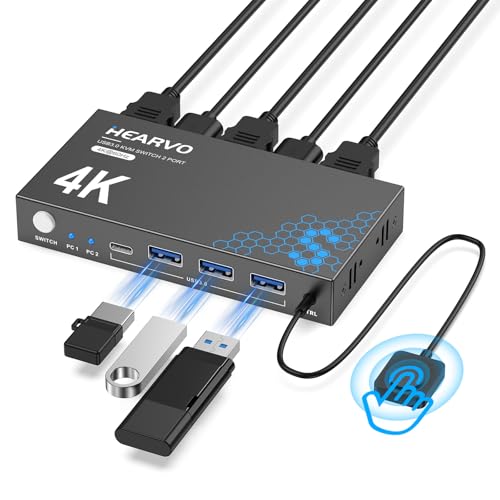
- 2-computer/1-monitor HDMI KVM
- 4 USB 3.0 ports with USB-C
- 4K@60Hz with wired controller
Best For: Users who want a clean two-PC setup with fast USB sharing
Hotkey-Ready 4-Port Choice
CKL 4-Port HDMI KVM with Hotkeys

- Hotkey switching with multiple shortcut modes
- 4 PCs share 1 monitor and peripherals
- 4K@60Hz 4:4:4 plus audio support
Best For: Multi-PC users who want flexible hotkey control
Large-Scale Desk Switch

- Controls up to 8 computers
- Hotkey and button switching
- Adaptive EDID with USB 2.0 sharing
Best For: Users managing multiple computers from one workstation
Premium Dual-PC Pick
Aluminum 2-Port HDMI KVM with Hotkeys

- Hotkey, manual, and automatic switching
- Digital display with audio/mic support
- 4K@60Hz with HDR10 and auto EDID
Best For: Two-PC users who want hotkeys and audio support
8-Port Value Pick
8-Port HDMI KVM with Hotkey Switching

- Switches 8 computers to one HDMI monitor
- Hotkeys use Scroll Lock or Ctrl combos
- 4 USB 2.0 ports support shared peripherals
Best For: Budget-minded users managing up to eight computers from one desk
4K Performance Pick

- 4K@60Hz output with ultrawide support
- Hotkey switching plus remote and RS232 options
- 4 USB 3.0 ports for shared devices
Best For: High-resolution multi-PC setups that need flexible switching methods
2-Port Classic Pick
IOGEAR 2-Port HDMI KVM with Hotkey

- Shares 2 computers on one HDMI monitor
- Hotkey, pushbutton, or wired mouse switching
- USB 2.0 peripheral sharing via mouse port
Best For: Small two-PC desks that want simple, reliable switching
Dual-Monitor Productivity Pick

- 2 PCs share 2 monitors in mirror or extended mode
- Hotkey and front-button switching with EDID emulation
- Built-in USB 3.0 hub for shared peripherals
Best For: Two-computer dual-monitor workstations
High-Count Budget Option
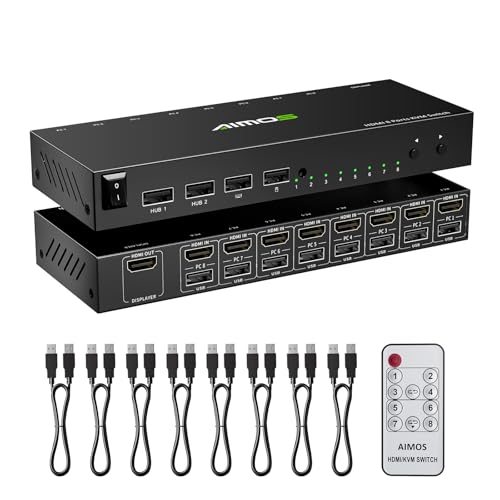
- Shares one monitor with up to 8 computers
- Hotkey, button, and remote switching supported
- Includes 4 USB 2.0 hub ports and 8 cables
Best For: Large desktop setups that need lots of computer sharing
Flexible Rack-Mount Choice

- 8 computers share one monitor, keyboard, and mouse
- Button, hotkey, and RS232 switching options
- Adaptive EDID with Windows, Mac, and Linux support
Best For: Users who want multiple control methods and RS232 support
Dual-PC Desk Upgrade – Hearvo 2-PC 4K HDMI KVM with USB 3.0
If you want a KVM switch with hotkey switching for a simple two-computer desk, this Hearvo model keeps the setup focused on a single monitor and shared USB peripherals. It combines HDMI and USB switching in one unit, supports 4K at 60Hz, and includes a wired desktop controller for quick changes without reaching behind your gear.
Best For: Shared home or office desks with two computers and a single 4K monitor.
Pros:
- Supports 2 computers on 1 monitor with keyboard and mouse sharing
- 4 USB 3.0 ports, including USB-A and USB-C, for peripherals and drives
- 4K@60Hz output with HDCP 2.2 and Adaptive EDID
- Two switching options: onboard button and wired remote controller
Cons:
- Only designed for 2 computers, so it is not a multi-PC expansion choice
- Hotkey switching is not listed among the supported switching methods
- Best suited to HDMI-based setups with one display
This is a practical pick if you want a tidy, plug-and-play KVM switch with hotkey switching alternatives replaced by simple button and remote control operation. The USB 3.0 hub and 4K support make it a well-rounded option for everyday productivity.
Hotkey-Ready 4-Port Choice – CKL 4-Port HDMI KVM with Hotkeys
For buyers specifically looking for a KVM switch with hotkey switching, this CKL 4-port HDMI model is built around multiple control methods and a strong feature set. It lets four computers share one monitor, keyboard, and mouse, supports 4K at 60Hz 4:4:4, and includes audio support plus four included cable kits for an easier setup.
Best For: Users who want flexible switching across four computers with hotkeys and remote control.
Pros:
- Supports hotkey switching with multiple shortcut options
- Also offers mouse, manual button, and wired remote switching
- 4-port design shares one monitor and one keyboard/mouse set
- Supports 4K@60Hz 4:4:4 and includes audio support
Cons:
- Requires a DC5V 2A power adapter for more stable operation
- Bulkier than a basic 2-port KVM
- Many switching methods may be more than some users need
This is one of the strongest picks if hotkey access matters and you want multiple ways to switch between sources. The combination of 4K output, four PC support, and included cables makes it especially convenient for multi-system desks.
Large-Scale Desk Switch – 8-Port HDMI KVM with Hotkeys
If you need a KVM switch with hotkey switching for a large desktop setup, this 8-port HDMI unit is aimed at users managing many computers from one station. It supports up to eight PCs on one monitor, includes hotkey support along with panel buttons, and offers Adaptive EDID for broader compatibility.
Best For: Workstations or labs that need to control up to eight computers from one display.
Pros:
- Controls up to 8 computers from one monitor, keyboard, and mouse
- Supports hotkey switching as well as front-panel button switching
- Adaptive EDID helps with different display environments
- USB 2.0 sharing for devices like printers, scanners, and flash drives
Cons:
- Limited to 4K@30Hz rather than 4K@60Hz
- Hotkeys only work when the keyboard and mouse are connected to the K/M port
- Signal switching can briefly show a black screen for 3-5 seconds
This model is best when scale matters more than premium display refresh rate. If you want a straightforward eight-way KVM with hotkeys and shared USB access, it delivers the core tools without unnecessary extras.
Premium Dual-PC Pick – Aluminum 2-Port HDMI KVM with Hotkeys
This 2-port KVM switch with hotkey switching is a good fit if you want a compact, premium-feeling way to share one monitor and a full USB 3.0 hub between two HDMI computers. It adds a digital display for easy channel checks, supports audio and microphone connections, and includes both automatic switching and keyboard hotkeys.
Best For: Two-computer setups that need hotkeys, audio support, and a more polished metal build.
Pros:
- Hotkey switching plus manual and automatic switching options
- Digital display shows the active channel clearly
- Supports audio and microphone pass-through
- 4K@60Hz, HDR10, HDCP, and auto EDID support
Cons:
- Only supports 2 computers
- Requires both USB cables connected for front USB ports to work
- Automatic switching has a default 10-second interval unless changed
For a two-PC desk, this model stands out for combining hotkey convenience with audio features and a visible channel indicator. The aluminum shell and included cables make it feel a bit more complete than a barebones switch.
8-Port Value Pick – 8-Port HDMI KVM with Hotkey Switching
If you need a KVM switch with hotkey switching for multiple machines, this 8-port HDMI model is built for straightforward shared control. It lets eight computers use one monitor plus one keyboard and mouse set, with hotkeys for faster switching and support for common systems like Windows, Mac, and Linux.
Best For: Users who want an affordable 8-computer setup with hotkey-based switching and basic USB peripheral sharing.
Pros:
- Supports 8 computers sharing 1 HDMI monitor
- Hotkey switching via Scroll Lock or Ctrl combinations
- Includes 4 USB 2.0 ports for peripherals
- Compatible with Windows, Mac OS, Linux, and game consoles
Cons:
- Maximum output is 4K@30Hz, not 4K@60Hz
- No EDID function
- Keyboard must be connected to the dedicated hotkey USB ports
This is a practical pick if your priority is handling many PCs from one desk rather than chasing premium display features. The tradeoff is clear: it focuses on core switching utility, not higher-end 4K performance.
4K Performance Pick – 8-Port HDMI KVM with 4K@60Hz
This KVM switch with hotkey switching is aimed at users who want faster movement between multiple computers without giving up image quality. It supports up to eight PCs on one monitor, adds hotkey access for instant changes, and delivers 4K@60Hz with compatibility for ultrawide displays.
Best For: Power users, office setups, and shared workstations that need 4K@60Hz plus multiple switching methods.
Pros:
- Supports 8 computers on 1 monitor with hotkey switching
- Outputs up to 4K@60Hz and supports ultrawide monitors
- Includes 4 USB 3.0 ports for shared peripherals
- Offers button, hotkey, IR remote, wired remote, RS232, and TTL control options
Cons:
- More feature-rich than a basic KVM, so it may be more than casual users need
- Requires a 12V/1A power adapter for stable operation
- Advanced control features may be unnecessary for simple desktop setups
For buyers who care about both switching speed and display quality, this model stands out with 4K@60Hz, USB 3.0 sharing, and flexible control options. It is especially strong where multiple devices or automation-friendly switching methods matter.
2-Port Classic Pick – IOGEAR 2-Port HDMI KVM with Hotkey
If you only need to share one monitor and input set between two systems, this KVM switch with hotkey switching keeps things simple. It supports hotkeys, a pushbutton, or a wired mouse button for switching, and it adds USB peripheral sharing through the mouse port.
Best For: Two-computer setups that value proven brand support, simple switching, and peripheral sharing.
Pros:
- Shares 2 computers with one keyboard, mouse, and HDMI monitor
- Switching via pushbutton, hotkeys, or 3-button wired mouse
- USB 2.0 peripheral sharing through the mouse port
- Supports digital audio, microphone, Mac, Windows, and game consoles
Cons:
- Only supports 2 connected computers
- Resolution is limited to 1920 x 1200 at 60Hz
- USB 2.0 sharing is more limited than USB 3.0 models
This is a dependable choice if your setup is small and you want familiar controls with broad device compatibility. It is less about raw specs and more about straightforward everyday use.
Dual-Monitor Productivity Pick – AV Access 2×2 HDMI KVM Switch
If you want a KVM switch with hotkey switching for two PCs and two monitors, this AV Access model is built for flexible day-to-day productivity. It supports extended or mirror display modes, includes a built-in USB 3.0 hub, and offers both front-button and keyboard hotkey switching for faster transitions between systems.
Best For: Users who need to share dual monitors and USB peripherals between two computers.
Pros:
- Supports 2 PCs with 2 monitors in extended or mirror mode.
- Hotkey switching plus front-button control for quick changes.
- USB 3.0 hub supports peripherals like webcams, printers, and drives.
- Up to 4K@60Hz with broad high-refresh-rate support.
Cons:
- On macOS, it supports mirror mode only.
- Best fit is limited to a 2-computer setup.
Overall, this is a strong choice if your priority is a smooth dual-monitor KVM workflow with reliable hotkey switching and modern video support. The EDID emulation and automatic PC wake-up features are also helpful for reducing display handoff issues.
High-Count Budget Option – 8-Port HDMI KVM with Remote
This KVM switch with hotkey switching is aimed at users who need to control many machines from one desk. It lets up to 8 computers share one monitor, keyboard, and mouse, and adds remote, button, and hotkey control for flexible switching. Just note that hotkey use requires the keyboard and mouse to be connected to the dedicated K/M port.
Best For: Managing up to eight computers from one display and one set of controls.
Pros:
- Supports 8 computers on a single HDMI monitor setup.
- Three switching methods: button, remote control, and hotkey.
- Includes 4 USB 2.0 hub ports for shared devices.
- Comes with 8 USB cables and a wired controller.
Cons:
- Maximum resolution is 4K@30Hz, not 4K@60Hz.
- Hotkey switching requires the keyboard and mouse to be connected to the K/M port.
- Remote control can be affected by home appliance remotes.
For a large multi-PC setup, this model focuses on coverage and convenience rather than premium video specs. It is a practical fit when you value hotkey switching, remote control, and broad computer sharing more than higher refresh-rate output.
Flexible Rack-Mount Choice – 8-Port HDMI KVM with RS232
If you need a KVM switch with hotkey switching for an 8-computer setup, this HDMI model adds a few control options that make it stand out. It supports button switching, keyboard hotkey switching, and RS232 commands, while also offering adaptive EDID, USB 2.0 sharing, and plug-and-play setup for common operating systems.
Best For: Users who want an 8-port KVM with multiple switching methods and RS232 support.
Pros:
- Controls 8 computers through one monitor, keyboard, and mouse.
- Three switching methods: button, hotkey, and RS232 commands.
- Adaptive EDID and plug-and-play compatibility with Windows, Mac, and Linux.
- Includes USB 2.0 ports for shared scanners, drives, and similar devices.
Cons:
- Top video resolution is 4K@30Hz.
- Hotkey switching requires the keyboard and mouse to be connected to the K/M port.
This is a solid pick when you want more control flexibility than a basic switch offers. The RS232 option and adaptive EDID make it especially appealing for users who value system compatibility and command-based switching.
How We Picked the Best KVM Switch with Hotkey Switching
We focused on the features that matter most in a KVM Switch with Hotkey Switching: reliable input switching, solid video output for the target resolution, stable USB sharing, and compatibility with common desktop peripherals. We also favored models with useful extras like EDID support, audio passthrough, and bundled cables, since these can reduce setup issues and improve daily use.
Quick Comparison
Before buying, match the switch to your setup first. Two-computer models are usually the simplest and best for home offices, while 4-port and 8-port units are better for power users, labs, creators, and small IT environments. Also check whether you need one monitor or dual-monitor support, because not every switch handles both.
Key Buying Factors for a KVM Switch with Hotkey Switching
Video Resolution and Refresh Rate
Make sure the switch supports the resolution and refresh rate you actually use. Many buyers will be fine with 4K at 30Hz, but if you want smoother desktop work or better compatibility with modern displays, 4K at 60Hz is the better choice.
Number of Computers and Monitors
The right port count depends on your setup today and how much you may expand later. A 2-port switch is ideal for two systems sharing one workspace, while 8-port models make sense when you need to manage multiple machines from a single station. If you run two displays, confirm the unit is designed for dual-monitor use.
USB and Peripheral Sharing
Look closely at which USB devices can be shared. Basic models may handle only keyboard and mouse well, while stronger options can also support printers, drives, webcams, or audio accessories. If you depend on these devices daily, this is a major decision point.
Hotkeys, EDID, and Stability
Hotkey switching is the main convenience feature, but EDID support can be just as important because it helps prevent display re-detection issues when you switch computers. For smoother operation, prefer switches that clearly advertise hotkey support and stable display handoff.
Who Should Buy Which KVM Switch with Hotkey Switching?
If you want the cleanest setup for two PCs and one monitor, choose a compact 2-port model with 4K@60Hz if possible. If you manage several workstations or test machines, an 8-port unit offers more flexibility. Dual-monitor users should narrow the list to dual-display-capable models only. For mixed-use desks, prioritize a KVM Switch with Hotkey Switching, good EDID handling, and the USB features that match your peripherals.