
If your build needs more than standard 2.5GbE, a motherboard with dual 10GbE can make a dramatic difference in file transfers, shared storage, virtualization, and creator workflows.
Below, we focus on practical choices for NAS, workstation, and server use so you can match the right board to your CPU platform, expansion needs, and budget.
Best 10 Motherboard with Dual 10GbE Picks for 2026
Server-Grade NAS Pick
C612 Mini-ITX Dual 10GbE NAS Board

- Dual X550-T2 10GbE networking
- Up to 10 SATA drives via breakout cables
- ECC and Registered ECC DDR4 SO-DIMM support
Best For: Compact NAS and homelab builds with heavy storage needs
Low-Power NAS Option
N150 Dual 10GbE Mini-ITX Board

- Dual Intel X550-AT2 10G RJ45 ports
- Six SATA 3.0 ports and three M.2 NVMe slots
- Low-power Intel N150 for 24/7 use
Best For: Compact, efficient NAS builds with strong networking
Dual-Socket Budget Server
X99 Dual CPU Board with Dual LAN
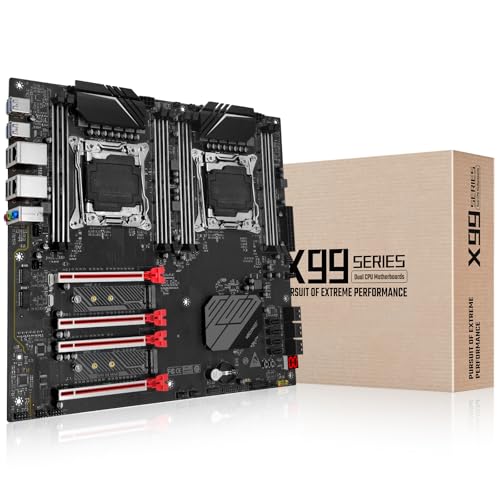
- Dual CPU support for Xeon E5 v3/v4 and Core i7
- 10 SATA 3.0 ports for large arrays
- Four PCIe 3.0 x16 slots for expansion
Best For: Large dual-socket builds needing drive capacity and PCIe room
Workstation-Grade TRX50 Board

- Dual LAN with 10GbE and 2.5GbE
- USB4, PCIe 5.0, and Wi-Fi 7 support
- Built for Threadripper PRO 7000 CPUs
Best For: Premium TRX50 workstation builds
Compact NAS Builder Pick
8-Bay Mini-ITX NAS Motherboard

- Mini-ITX board sized for 8-bay NAS builds
- 10GbE plus dual 2.5GbE networking
- Eight SATA ports via dual SFF-8643
Best For: Compact 8-bay NAS systems
Dual 10GbE Server Platform

- Dual 10GbE built for EPYC servers
- Seven PCIe 4.0 x16 slots plus OCuLink
- Eight DDR4 DIMM slots for server memory
Best For: EPYC server builds needing dual 10GbE
Creator-Grade Workstation Pick
ASUS ProArt X870E-CREATOR WiFi

- 10 Gb + 2.5 Gb Ethernet
- Dual USB4 and WiFi 7
- Four M.2 slots with PCIe 5.0 support
Best For: Creators and AI workstation builds
Value Networking Upgrade

- 10GbE wired networking
- 16+2+2 power design
- Three M.2 slots with PCIe 5.0
Best For: Balanced AM5 builds with long warranty coverage
Dual-LAN Creator Flagship

- 10GbE plus 5GbE dual LAN
- Dual USB4 Type-C ports
- Dual PCIe 5.0 x16 slots
Best For: High-end workstations and creator rigs
Server-Grade NAS Pick – C612 Mini-ITX Dual 10GbE NAS Board
If you want a motherboard with dual 10GbE for a compact storage server, this C612 Mini-ITX board is built around Xeon E5 v3/v4 support and a NAS-friendly feature set. It combines dual X550-T2 10GbE networking, up to 10 SATA drives via breakout cables, and dual M.2 NVMe slots, making it a practical foundation for storage-heavy homelabs and virtualization setups.
Best For: NAS builders and homelab users who need dual 10GbE, lots of SATA, and ECC support in a Mini-ITX layout.
Pros:
- Dual X550-T2 10GbE controllers for high-bandwidth networking
- Supports up to 10 SATA drives with compatible breakout cables
- Two PCIe 3.0 x4 M.2 NVMe slots for cache or fast storage
- ECC and Registered ECC DDR4 SO-DIMM support for reliability
Cons:
- Requires E5 v3/v4 processors and LGA2011-3 platform hardware
- Mini-ITX format can limit overall expansion compared with larger boards
- Uses breakout cabling for full drive-count flexibility
This is a strong fit if your priority is storage density and network throughput over mainstream compatibility. The included M.2 adapter and SFF-8643 cables make it easier to get started, while the server-grade chipset and ECC support keep it aimed squarely at NAS and always-on workloads.
Premium ATX Choice – Z890 AORUS Master with 10GbE
This motherboard with dual 10GbE search also points to high-end boards like the GIGABYTE Z890 AORUS Master, which includes 10GbE LAN alongside a modern Intel Core Ultra platform. While it is not a dual-port 10GbE board, it stands out for builders who want premium networking with strong storage, USB-C, and Thunderbolt 4 support in an enthusiast ATX design.
Best For: Enthusiast PC builders who want a premium Intel platform with 10GbE, Wi-Fi 7, and extensive M.2 expansion.
Pros:
- 10GbE LAN plus Wi-Fi 7 for fast wired and wireless networking
- Five M.2 slots and PCIe 5.0 support for storage expansion
- Dual Thunderbolt 4 and front USB-C for modern connectivity
- Tool-friendly features like M.2 EZ-Latch and PCIe EZ-Latch
Cons:
- Single Ethernet port, not dual 10GbE
- Built for Intel Core Ultra Series 2 and LGA 1851 CPUs only
- ATX enthusiast board may be more than some storage-only builds need
If you want a premium motherboard with high-speed networking and lots of expansion, this board is a polished option. Its 10GbE, Thunderbolt 4, and five M.2 slots make it much more versatile than a basic workstation board, though it is better suited to modern desktop builds than dedicated NAS systems.
Low-Power NAS Option – N150 Dual 10GbE Mini-ITX Board
For buyers looking for a motherboard with dual 10GbE in a low-power NAS build, this Mini-ITX board pairs an Intel N150 processor with dual Intel X550-AT2 10G RJ45 ports. It is designed for 24/7 storage use and adds six SATA 3.0 ports plus three M.2 NVMe slots, which makes it a compelling option for a compact but expandable home server.
Best For: Quiet, power-efficient NAS builds that still need dual 10GbE and flexible storage expansion.
Pros:
- Dual Intel X550-AT2 10GBASE-T ports for high-speed networking
- Six SATA 3.0 ports plus three M.2 NVMe slots
- Low-power Intel N150 processor for 24/7 operation
- Compact standard ITX size with included cooling setup
Cons:
- Single SO-DIMM slot limits memory expansion
- Requires both 24-pin and 4-pin power connections
- First boot may take several minutes to detect memory
This board makes sense if efficiency and network speed matter more than CPU horsepower. Its dual 10GbE ports, small footprint, and NAS-oriented storage layout make it especially appealing for file sharing, backups, and always-on home infrastructure.
Dual-Socket Budget Server – X99 Dual CPU Board with Dual LAN
This dual-CPU server motherboard is a different kind of alternative to a motherboard with dual 10GbE: it focuses on maximum expandability rather than integrated high-speed networking. With dual LGA 2011-3 CPU support, dual LAN, 10 SATA ports, and four PCIe x16 slots, it is built for large server-style builds where you may add your own networking or storage cards.
Best For: Users building a dual-socket storage or workstation server who want lots of expansion and drive support.
Pros:
- Dual CPU support for Xeon E5 v3/v4 and Core i7 processors
- 10 SATA 3.0 ports for large storage arrays
- Four PCIe 3.0 x16 slots for flexible expansion
- Dual network ports and dual M.2 slots
Cons:
- No built-in 10GbE networking listed
- Requires a dedicated 24+8+8 pin power setup
- Not a compact board and is geared toward bigger cases
This board is best viewed as a high-expansion server platform rather than a turnkey 10GbE solution. If you are comfortable adding your own NICs, it offers a lot of room for drives, graphics cards, and server-class processing power.
Workstation-Grade TRX50 Board – GIGABYTE TRX50 AERO D
If you want a motherboard with dual 10GbE for a high-end Threadripper PRO build, the GIGABYTE TRX50 AERO D is aimed at serious workstation users who need fast networking and modern platform features. It combines Marvell 10GbE and 2.5GbE LAN with Wi-Fi 7, plus USB4 Type-C and PCIe 5.0 support for a well-rounded creator or compute-focused setup.
Best For: Threadripper PRO users building a premium workstation with fast wired networking and USB4.
Pros:
- Dual wired networking with 10GbE + 2.5GbE, plus Wi-Fi 7
- USB4 Type-C and PCIe 5.0 M.2 support for modern expansion
- 16+8+4 phase digital VRM and thermal armor for demanding builds
- Four DDR5 RDIMM slots with EXPO and XMP support
Cons:
- Requires AMD Ryzen Threadripper PRO 7000 series processors
- E-ATX size may be too large for compact cases
- Feature set is more workstation-focused than mainstream
This is a strong fit if networking speed, platform headroom, and storage expansion matter more than cost or compactness. It’s best viewed as a premium TRX50 foundation for professional workloads.
Compact NAS Builder Pick – 8-Bay Mini-ITX NAS Motherboard
For a compact motherboard with dual 10GbE-style utility in a NAS-focused layout, this Mini-ITX board is built around fast storage and practical network connectivity. It pairs one 10GbE port with dual 2.5GbE, so it works well when you want high-throughput file access in an 8-bay build without giving up a tiny footprint.
Best For: Small NAS systems that need lots of SATA expansion in a Mini-ITX case.
Pros:
- Mini-ITX 6.7-inch form factor for space-limited NAS builds
- One 10GbE port plus dual 2.5GbE for flexible networking
- Eight SATA 3.0 ports via dual SFF-8643 connectors
- Two M.2 NVMe slots and a PCIe x4 slot for expansion
Cons:
- Only a single SO-DIMM slot, capped at 48GB DDR5
- Networking is not true dual 10GbE
- Designed around N150/NAS-style use rather than general-purpose performance
This board makes the most sense when storage density and compact size come first. If your priority is a small 8-bay NAS with strong connectivity and room for SSD caching, it’s a practical fit.
Dual 10GbE Server Platform – Asrock Rack ROMED8-2T/BCM
If you need a motherboard with dual 10GbE for an AMD EPYC server, the ASRock Rack ROMED8-2T/BCM is built for serious rack and storage workloads. It supports EPYC 7003 and 7002 processors, adds dual 10GbE, and gives you plenty of PCIe 4.0 expansion for servers that need both networking and I/O headroom.
Best For: AMD EPYC servers that need dual 10GbE and broad PCIe expansion.
Pros:
- Dual 10GbE networking for fast server connectivity
- Supports AMD EPYC 7003 and 7002 processors on SP3
- Eight DIMM slots for DDR4 RDIMM, LRDIMM, and NVDIMM-N
- Seven PCIe 4.0 x16 slots plus two OCuLink ports
Cons:
- Server-focused design is overkill for typical desktop use
- Requires SP3-compatible AMD EPYC processors
- Large ATX server layout may not suit smaller cases
For environments where networking throughput and expandability matter, this board is a straightforward server platform. It is especially compelling if you want dual 10GbE without sacrificing PCIe resources.
Creator-Grade Workstation Pick – ASUS ProArt X870E-CREATOR WiFi
If you want a motherboard with dual 10GbE-style networking for a high-end AM5 build, the ASUS ProArt X870E-CREATOR WiFi stands out for creator and AI-focused workstations. It pairs an X870E platform with Ryzen 9000/8000/7000 support, DDR5, PCIe 5.0 x16 graphics support, and dual USB4 for a very modern connectivity stack.
Best For: Creators, AI PC builds, and workstation users who want flagship AM5 connectivity.
Pros:
- 10 Gb and 2.5 Gb Ethernet for fast wired networking
- Dual USB4 ports plus a USB 20Gbps front-panel connector with 30W PD/Quick Charge 4+
- 16+2+2 teamed power stages with ProCool II power connectors
- Four M.2 slots, including two PCIe 5.0 and two PCIe 4.0
Cons:
- Premium feature set may be more than a basic gaming build needs
- ATX board size requires a compatible mid-tower or larger case
This is a strong choice if your priority is a creator-oriented motherboard with dual 10GbE-class connectivity and broad expansion options. The AI tuning tools, WiFi 7, and PCIe 5.0 support make it especially appealing for modern productivity rigs.
Value Networking Upgrade – GIGABYTE B850 AI TOP
The GIGABYTE B850 AI TOP is a practical motherboard with dual 10GbE-era networking on the B850 platform, making it a strong fit for builders who want fast wired connectivity without jumping to a flagship chipset. It supports Ryzen 9000/8000/7000 CPUs, DDR5 up to 8600MT/s+, PCIe 5.0, and three M.2 slots.
Best For: Builders who want a balanced AM5 board with fast networking, strong power delivery, and a long warranty.
Pros:
- 10GbE networking for high-speed wired connections
- 16+2+2 power design with 110A Smart Power Stage
- Three M.2 slots and PCIe 5.0 support
- Five-year manufacturer warranty
Cons:
- Only one Ethernet tier is listed, so it is less networking-rich than creator-focused dual-LAN boards
- B850 chipset is less expansive than X870/X870E options
This board makes sense if you want speed and stability first. It offers the core features most enthusiasts need, plus the benefit of 10GbE and a strong warranty without moving into top-tier creator pricing.
Dual-LAN Creator Flagship – ASRock X870 Taichi Creator
If your search is for a motherboard with dual 10GbE-class networking and creator-grade expansion, the ASRock X870 Taichi Creator is built for exactly that use case. It combines an X870 chipset with Ryzen 9000/8000/7000 support, DDR5 8000+ overclocking support, dual PCIe 5.0 x16 slots, and a serious storage and I/O layout.
Best For: High-end creators and workstation users who need dual fast LAN and premium AM5 features.
Pros:
- 10GbE plus 5GbE dual LAN for flexible high-speed networking
- Dual USB4 Type-C ports for fast data and 8K display output support
- 18+2+1 phase 80A SPS power delivery with enlarged heatsinks
- Dual PCIe 5.0 x16 slots and multiple Gen5/Gen4/Gen3 M.2 options
Cons:
- Premium creator positioning may be excessive for simpler builds
- ATX layout and dual-slot GPU spacing require case planning
For users who care about networking, storage, and workstation stability, this board checks a lot of boxes. The dual-LAN setup and USB4 ports make it one of the most capable AM5 options for content creation and heavy multitasking.
How We Picked the Best Motherboard with Dual 10GbE
For this roundup, we prioritized boards that pair strong networking with the rest of the platform’s fundamentals: CPU compatibility, memory support, storage options, expansion lanes, and overall build suitability. A Motherboard with Dual 10GbE is most useful when it also has enough PCIe bandwidth, M.2 slots, SATA ports, and stable power delivery to support the rest of the system.
We also looked at real-world buyer fit. Some options are clearly aimed at NAS builds, while others are better for creator workstations or server-oriented deployments. That distinction matters because dual 10GbE is only one part of the package.
Quick Comparison
Broadly speaking, the best choices fall into three groups. NAS-focused mini-ITX boards emphasize storage density and compact size. Workstation boards tend to add premium USB, PCIe 5.0, and modern AM5 or Intel platforms. Server boards prioritize ECC support, multi-core CPU compatibility, and reliability under sustained loads.
If you want maximum storage per square inch, favor mini-ITX NAS models with multiple SATA and M.2 connections. If you want a fast everyday workstation, an ATX creator board with dual high-speed networking may be the better balance. If your priority is virtualization, containers, or lab use, server-class boards with ECC and strong expansion usually make more sense.
Key Buying Factors for a Motherboard with Dual 10GbE
1. Platform and CPU Support
Start with the socket and chipset. Dual 10GbE is only valuable if the motherboard supports the processor you actually plan to use. Check whether the board targets Intel Xeon, Core Ultra, AMD Ryzen, Threadripper, or EPYC, and make sure the platform matches your performance and upgrade goals.
2. Lane Allocation and Expansion
Two 10GbE controllers can consume significant PCIe resources. That can affect GPU support, M.2 performance, and add-in card capacity. Look for boards that clearly document lane sharing so you do not lose storage speed or expansion flexibility.
3. Storage Layout
For NAS and mixed-use systems, storage matters as much as networking. A strong Motherboard with Dual 10GbE should ideally include enough SATA ports for hard drives plus at least one or two NVMe slots for cache, boot, or scratch storage. Mini-ITX models can be especially space-efficient, but they may trade off upgrade headroom.
4. Memory and Reliability Features
ECC support is important for server and NAS workloads, while higher-speed DDR5 can help modern workstation builds. Also consider board-level durability, firmware support, and any vendor-specific management features if uptime is a priority.
5. Cooling and Noise
Dual 10GbE controllers can run warm, especially in compact cases. Heatsinks, active cooling, and case airflow all matter. A quiet board on paper may still need direct airflow to stay stable under sustained network and storage loads.
Who Should Buy Which Motherboard with Dual 10GbE?
Choose a compact NAS board if your main goal is shared storage, backups, and media serving. Choose an AM5 or Intel workstation board if you need fast networking plus modern I/O for editing, content creation, or home lab work. Choose a server-class motherboard if you want ECC memory, heavy multitasking, and long-term reliability for virtual machines or always-on services.
In short, the best Motherboard with Dual 10GbE is the one that balances networking with the rest of your system design. Match the board to your CPU platform, case size, and storage plan, and you will get far more value from those high-speed ports.