
Choosing the best condenser microphone for a home studio means balancing sound quality, connection type, room acoustics, and budget. The right model can make vocals, instruments, podcasts, and streaming sound clearer without requiring a professional recording space.
We compare 10 popular microphones across USB and XLR formats, including complete starter kits and studio-focused models. Use the guide below to narrow your options based on your equipment, recording goals, and experience level.
Best 10 Condenser Microphone for Home Studio Picks for 2026
Proven Home-Studio Value
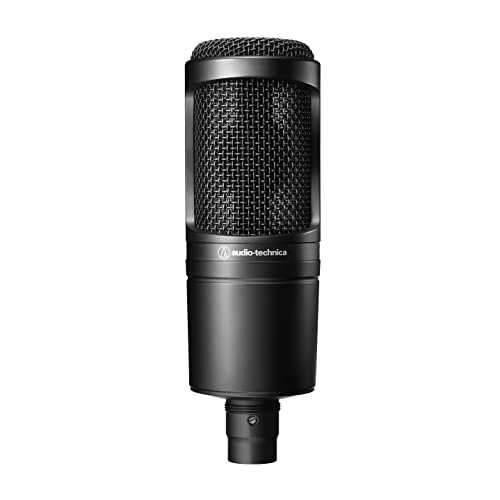
- Cardioid pattern helps isolate the source
- High SPL handling and wide dynamic range
- Includes stand mount and protective pouch
Best For: Project studios and home vocal recording
Budget Studio Starter

- Affordable large-diaphragm condenser
- Cardioid pattern reduces ambience
- Includes shock mount and XLR cable
Best For: Entry-level home studios on a budget
Noise-Resistant Recording Kit
Shure SM4 XLR Studio Condenser

- Shielding helps reduce RF interference
- Integrated pop filter supports clean takes
- Includes shock mount and carrying case
Best For: Home vocals, podcasts, and video recording
Quiet Vocal Specialist
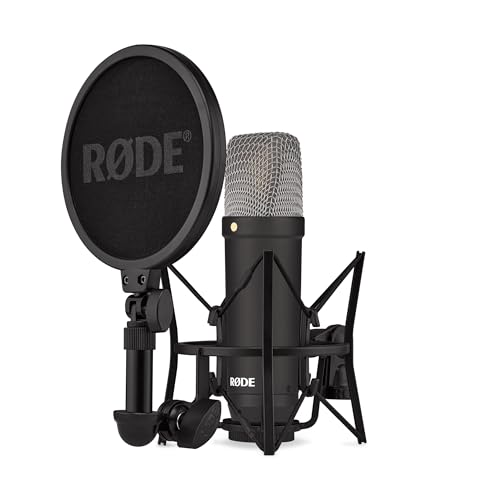
- Extremely low 4.5 dBA self-noise
- Tight cardioid pattern focuses on vocals
- Includes shock mount, pop filter, and XLR cable
Best For: Quiet home-studio vocals and streaming
Best Flexible USB/XLR Pick

- USB and XLR connections
- 192kHz/24-bit USB recording
- Includes boom arm and noise-control accessories
Best For: Creators moving between USB and interface-based recording
Best Simple XLR Studio Pick

- Clear capture for vocals and instruments
- Handles SPL up to 150 dB
- Includes pad and bass-cut filter
Best For: Users with an interface seeking a durable XLR studio mic
Best Budget XLR Kit

- Complete boom-arm recording kit
- 16mm capsule with cardioid pickup
- Includes XLR cable and pop filter
Best For: First-time XLR users building a vocal or podcast setup
Best All-In-One USB Kit
FIFINE T669 Studio Condenser Microphone

- Plug-and-play USB setup for PCs and laptops
- Cardioid pickup for focused front-facing audio
- Includes boom arm, shock mount, and double pop filter
Best For: Home-studio beginners wanting a complete USB recording kit
Best XLR Starter Kit
SUUNTOK BM018 XLR Condenser Microphone

- 16mm capsule for detailed vocal recording
- Cardioid pattern helps limit background sound
- Includes shock mount, pop filter, and XLR cable
Best For: Creators with a mixer or interface and 48V phantom power
Best Compact Desktop Mic
FIFINE K669B USB Condenser Microphone

- Direct USB setup for computers
- Cardioid pattern focuses on the main voice
- Onboard volume knob and tripod stand
Best For: Desktop recording, streaming, meetings, and gaming
Proven Home-Studio Value – Audio-Technica AT2020
The Audio-Technica AT2020 is a dependable condenser microphone for home studio recording when you want strong performance without an overly complicated setup. Its cardioid pattern helps isolate vocals or instruments, while high SPL handling and a wide dynamic range add recording flexibility.
Best For: Project studios, home vocal recording, and users who already have an audio interface with phantom power.
Pros:
- Cardioid pickup helps reduce sound from the sides and rear.
- High SPL handling and wide dynamic range support varied sources.
- Includes a stand mount, threaded adapter, and protective pouch.
Cons:
- Requires an XLR connection and phantom power.
- Does not include an audio interface.
The AT2020 is a practical starting point for a focused home-studio signal chain. Choose it when you want a straightforward XLR condenser with useful isolation and versatile recording performance.
Budget Studio Starter – Mackie EM-91C
The Mackie EM-91C is an affordable condenser microphone for home studio setups, offering a large-diaphragm capsule and cardioid pickup for vocals and instruments. Its rugged construction and included accessories make it a convenient option for building a basic XLR recording chain.
Best For: Budget-conscious home studios recording vocals or instruments through an audio mixer or interface.
Pros:
- Affordable professional-quality condenser design.
- Large-diaphragm capsule is suited to studio vocals and instruments.
- Includes a shock mount and XLR cable.
Cons:
- Requires an XLR-compatible recording setup.
- Phantom-power requirements should be confirmed with your equipment.
The EM-91C keeps the essential features simple and the package practical. It is a sensible choice if you need a low-cost condenser and want the cable and shock mount included.
Noise-Resistant Recording Kit – Shure SM4 XLR Studio Condenser
The Shure SM4 is a feature-rich condenser microphone for home studio recording, especially when unwanted room or electronic noise is a concern. Its uniform cardioid pattern, interference shielding, integrated pop filter, and high SPL handling are designed to produce clean, mix-ready captures.
Best For: Vocalists, instrumentalists, podcasters, and video creators seeking a complete, noise-conscious XLR microphone kit.
Pros:
- Interference shielding helps block noise from phones, laptops, and Wi-Fi routers.
- Integrated pop filter reduces plosives and rumble.
- Handles sound levels up to 140 dB and includes a shock mount and carrying case.
Cons:
- Requires an audio interface and phantom power.
- The kit is more feature-focused than a basic entry-level microphone.
The SM4 stands out when clean, consistent capture matters more than minimal cost. Its bundled accessories and built-in filtering can reduce setup and post-production work in a home studio.
Quiet Vocal Specialist – RØDE NT1 Signature
The RØDE NT1 Signature is a quiet, large-diaphragm condenser microphone for home studio vocals, streaming, and other close-miked sources. Its tight cardioid pattern focuses on the voice, while the included shock mount, pop filter, and XLR cable make it a ready-to-record package once paired with an interface.
Best For: Vocalists, streamers, and home-studio users who prioritize low self-noise and a complete vocal setup.
Pros:
- Very low 4.5 dBA self-noise helps preserve quiet passages.
- Tight cardioid pattern focuses on the voice and rejects room sound.
- Includes SM6 shock mount, pop filter, six-meter XLR cable, and dust cover.
Cons:
- Requires an audio interface and phantom power.
- The included setup is optimized primarily around vocal recording.
The NT1 Signature is a strong fit when a clean, quiet vocal chain is the priority. Its generous accessory bundle also reduces the number of separate purchases needed for a home-studio setup.
Best Flexible USB/XLR Pick – MAONO A04 Gen2
If you want a condenser microphone for home studio use that can also connect directly to a computer or phone, the MAONO A04 Gen2 is a flexible option. Its USB and XLR outputs support plug-and-play recording or connection to an audio interface, while USB mode adds software-based sound controls.
Best For: Home creators who want one microphone for podcasting, voiceovers, streaming, singing, and both USB and XLR recording.
Pros:
- Offers both USB and XLR connectivity for flexible setups.
- Supports up to 192kHz/24-bit sampling in USB mode.
- Includes a shock mount, boom arm, pop filter, and windscreen.
- MAONO Link software provides gain, noise reduction, EQ presets, compression, and limiting in USB mode.
Cons:
- XLR operation requires phantom power.
- An XLR cable is not included.
- It is not compatible with Xbox.
The A04 Gen2 stands out when flexibility and included accessories matter. It is especially practical for users who may start with USB recording and later move to an interface-based XLR setup.
Best Simple XLR Studio Pick – AKG P120
The AKG P120 is a straightforward condenser microphone for home studio recording when you already have an audio interface or mixer with phantom power. Its cardioid pickup pattern and low-mass diaphragm are suited to clear vocals, speech, and instruments, while its high SPL handling adds useful recording versatility.
Best For: Home-studio users who want a durable, no-frills XLR microphone for vocals, speech, and instruments.
Pros:
- Cardioid pattern focuses on sound from the front.
- Handles sound levels up to 150 dB without distortion according to the supplied notes.
- Includes a -20 dB preattenuation pad and bass-cut filter.
- Metal construction and an included stand adapter support dependable studio use.
Cons:
- Requires an XLR setup and phantom power.
- The package includes only the microphone and stand adapter.
- It does not offer USB connectivity.
The P120 is a good fit for buyers who prefer a focused XLR workflow and want controls that help accommodate louder sources. Plan on supplying your own interface, cable, and stand accessories beyond the included adapter.
Best Budget XLR Kit – MAONO PM320S
The MAONO PM320S is a practical condenser microphone for home studio setups that already have a 48V phantom-power source. It pairs a large 16mm capsule and cardioid pattern with a complete boom-arm kit, making it a convenient choice for recording vocals, podcasts, streaming, and voiceovers.
Best For: Beginners and home creators who want an all-in-one XLR microphone package for vocals, podcasting, and online content.
Pros:
- Includes an XLR cable, boom arm, shock mount, pop filter, and windscreen.
- Large 16mm condenser capsule is designed for detailed vocal and recording capture.
- Cardioid pattern, shock mount, pop filter, and windscreen help reduce unwanted noise and plosives.
- Metal housing and adjustable boom arm support regular home-studio use.
Cons:
- Requires a stable 48V phantom-power supply.
- Uses XLR only, with no direct USB connection.
- Its supplied frequency range is listed as 20Hz–18kHz.
The PM320S is appealing when you need more than just a microphone in the box. Its included mounting and vocal-control accessories can simplify a first XLR recording setup, provided you already have suitable phantom power.
Best All-In-One USB Kit – FIFINE T669 Studio Condenser Microphone
The FIFINE T669 is a practical condenser microphone for home studio recording when you want a straightforward USB setup and a complete set of desk-mounting accessories. Its cardioid pickup pattern focuses on sound from the front, while the included boom arm, shock mount, and double pop filter help you get started with vocals, podcasts, voice-overs, and streaming.
Best For: Home-studio beginners who want a plug-and-play USB microphone kit with flexible boom-arm positioning.
Pros:
- USB connection works directly with PCs and laptops without additional drivers or hardware.
- Cardioid condenser capsule is designed to capture front-facing audio while reducing ambient noise.
- Includes a boom arm, shock mount, double pop filter, and 8.2-foot USB cable.
- Metal construction and a sturdy adjustable arm support regular recording use.
Cons:
- Not compatible with Xbox.
- Its USB design is less suitable if you specifically need an XLR connection.
Choose the T669 if convenience and included accessories matter more than building a separate microphone-and-interface setup. The boom arm and pop-filter package make it particularly approachable for first-time home recording.
Best XLR Starter Kit – SUUNTOK BM018 XLR Condenser Microphone
The SUUNTOK BM018 is a condenser microphone for home studio setups built around an XLR connection. Its 16mm condenser capsule and cardioid pattern are aimed at detailed vocal recording, podcasting, streaming, voice-over, and other applications where you already have compatible audio equipment.
Best For: Creators with an audio mixer or interface who want an affordable XLR microphone bundle for vocals and spoken content.
Pros:
- 16mm condenser capsule and 40Hz–18kHz response support detailed audio capture.
- Cardioid pickup helps focus on the speaker and reduce background sound.
- Includes a shock mount, pop filter, and XLR cable.
- Metal construction is designed for durability, and the product includes a one-year warranty.
Cons:
- Requires 48V phantom power.
- It is not a direct USB plug-and-play microphone.
- An audio mixer or compatible interface is needed for operation.
The BM018 makes sense when you are ready for an XLR-based signal chain and already own, or plan to purchase, the required phantom-powered equipment. Its included accessories provide a useful starting point for studio and content-creation work.
Best Compact Desktop Mic – FIFINE K669B USB Condenser Microphone
The FIFINE K669B is a compact condenser microphone for home studio tasks, meetings, gaming, streaming, and basic vocal recording. Its USB-powered design connects directly to a computer, and the included tripod stand keeps the setup simple for desks where a boom arm is unnecessary.
Best For: Desktop users who need an easy USB microphone with onboard volume control for calls, streaming, or casual recording.
Pros:
- Plug-and-play USB connection works with desktop and laptop computers.
- Cardioid pickup is designed to emphasize the main voice source and reduce background noise.
- Built-in volume knob allows quick level adjustment or muting to zero.
- Metal construction and a stable tripod stand suit everyday desktop use.
Cons:
- Not compatible with Xbox or phones.
- Does not include a boom arm or shock mount.
- USB-A connection is intended for computer-based use rather than an XLR setup.
The K669B is a sensible choice for a clean, low-complexity desktop setup. It offers useful hands-on volume control and a small footprint, making it better suited to meetings, gaming, streaming, and entry-level recording than elaborate studio rigs.
How We Picked the Best Condenser Microphone for Home Studio
We selected microphones that fit common home-studio needs, including vocal recording, acoustic instruments, podcasting, streaming, voiceover, and online meetings. Our comparison considers connection type, pickup pattern, diaphragm design, included accessories, ease of setup, and overall value. Because a microphone’s performance depends heavily on placement and room acoustics, we favor models that offer practical results across a range of home recording environments.
Quick Comparison
XLR microphones such as the Audio-Technica AT2020, Mackie EM-91C, Shure SM4, RØDE NT1 Signature, and AKG P120 are suited to users who have—or plan to add—an audio interface or mixer. They generally provide more flexibility for upgrading a recording setup.
USB microphones such as the FIFINE K669B and T669 connect directly to a computer, making them convenient for beginners, meetings, streaming, and portable recording. Hybrid USB/XLR models, including the MAONO A04 Gen2, can provide an easier starting point while leaving room for future expansion. Bundled options with a boom arm, pop filter, or cable may offer better value if you are building a setup from scratch.
Key Buying Factors for a Condenser Microphone for Home Studio
USB or XLR Connection
Choose USB for the simplest plug-and-play setup. Choose XLR if you want to use an interface, control gain more precisely, or build a multi-microphone system. XLR condenser microphones require phantom power, usually supplied by an audio interface or mixer.
Pickup Pattern and Room Acoustics
Most models here use a cardioid pattern, which emphasizes sound from the front and reduces pickup from the rear. This is useful for solo vocals and speech, but it does not eliminate room reflections. Soft furnishings, careful mic placement, and a quiet recording position can matter as much as the microphone itself.
Sound, Sensitivity, and Accessories
Large-diaphragm condensers are often chosen for detailed vocals and instruments, but their sensitivity can reveal background noise. Check whether the package includes a shock mount, pop filter, stand, boom arm, or cable. These extras can reduce setup costs, although a basic included accessory may eventually be worth upgrading.
Compatibility and Intended Use
Confirm that your computer, interface, operating system, and recording software support the microphone. Also consider whether you need headphone monitoring, a mute control, onboard gain, or portability. These features are especially relevant for podcasting, streaming, and video calls.
Who Should Buy Which Condenser Microphone for Home Studio?
Beginners and budget buyers: A USB model such as the FIFINE K669B or T669 offers a straightforward path into recording. Home vocalists and musicians: XLR options like the AT2020, RØDE NT1 Signature, or AKG P120 are better suited to an interface-based studio. Podcast and streaming users: Consider a USB or hybrid model, particularly one with useful included accessories. Growing studios: An XLR microphone provides more upgrade flexibility as you improve your interface, monitoring, and room treatment.