
Choosing the right AI computer for robotics can make or break your project’s performance, power budget, and development speed. The best option depends on whether you need high-end vision processing, real-time motor control, or a compact board for prototyping.
In this roundup, we focus on six standout boards and edge systems that balance compute, connectivity, and robotics-friendly features for 2026.
Best 6 AI Computer for Robotics Picks for 2026
Compact Robotics Edge AI
reComputer Robotics J3011, Jetson Orin Nano

- Jetson Orin Nano edge AI computer
- Robotics I/O for cameras, CAN, and USB 3.2
- JetPack 6.2 with ROS 1/2 and Isaac support
Best For: autonomous robot prototypes and multi-camera edge AI
Hybrid Arduino AI Controller

- Combines Linux MPU and real-time MCU
- Supports Python, Arduino sketches, and Debian
- UNO form factor with Wi-Fi 5 and Bluetooth 5.1
Best For: hybrid robotics prototyping with AI, sensors, and control
Ultra-Advanced Embodied AI Platform
reComputer Robotics J5012, AGX Orin
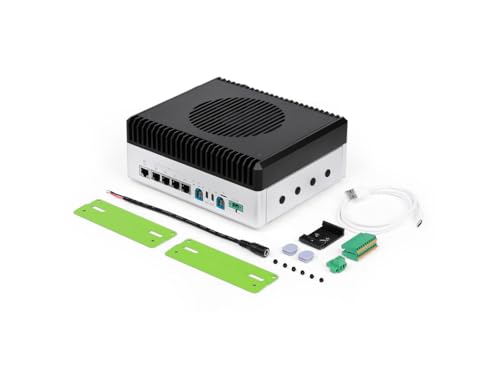
- Jetson AGX Orin 64GB robotics platform
- Up to 8 GMSL2 cameras with 4 CSI outputs
- 10G Ethernet, CAN, and serial I/O support
Best For: advanced embodied AI, AMRs, and multi-camera perception
Vision-focused AI starter board
CanMV K230 Vision Starter Board

- 6 TOPS K230 for offline inference
- 3.5-inch touch screen with 2MP camera
- 30+ AI vision functions and YOLOv8 support
Best For: Makers and students building vision-based robot projects
High-performance edge robotics platform
reComputer Robotics J5011 Jetson Orin
- 200 TOPS Jetson AGX Orin 32GB platform
- Up to 8 GMSL2 cameras and 4-lane CSI
- Robotics IO includes CAN, serial, I2C, SPI
Best For: Advanced embodied AI and AMR development
Compact vision board for robotics learning
- 6 TOPS K230 with offline inference
- 3.5-inch touch screen plus 2MP camera
- MicroPython, OpenMV, and YOLOv8 support
Best For: Compact robot learning and vision-based STEM projects
Compact Robotics Edge AI – reComputer Robotics J3011, Jetson Orin Nano
If you need an AI computer for robotics that is built for fast prototyping, the reComputer Robotics J3011 is a strong edge option. It pairs an NVIDIA Jetson Orin Nano module with a robotics-focused carrier board and a ready-to-use software stack, making it easier to build autonomous systems with multi-camera vision, ROS, and NVIDIA Isaac support.
Best For: Robotics teams that want a compact, AI-ready edge computer for autonomous prototypes and vision-heavy projects.
Pros:
- Up to 67 TOPS of AI performance in Super/MAXN mode
- Robotics-friendly I/O including dual RJ45, CAN, USB 3.2, CSI, I2C, and UART
- Pre-installed JetPack 6.2 with 128GB NVMe SSD
- Compatible with ROS 1/2, NVIDIA Isaac, and Hugging Face frameworks
Cons:
- Power cable is not included
- GMSL2 support requires an additional purchase
- Best suited to edge robotics projects rather than general-purpose desktop use
This is a practical choice if you want a compact robotics computer with broad connectivity and a software setup that can shorten development time. It is especially appealing when camera input, embedded networking, and AI deployment all need to come together in one box.
Hybrid Arduino AI Controller – UNO Q 4GB, Qualcomm + STM32
The Arduino UNO Q 4GB is a useful AI computer for robotics when you want both Linux-based compute and real-time microcontroller control in one board. Its hybrid design combines a Qualcomm Dragonwing processor with an STM32U585 MCU, giving you a practical platform for vision, voice, motion detection, and Arduino-style development.
Best For: Makers and robotics developers who want a hybrid board for AI prototyping, sensors, and real-time control.
Pros:
- Hybrid MPU + MCU design for Linux compute and real-time tasks
- Runs Linux Debian OS and supports Python plus Arduino sketches
- Includes 4GB LPDDR4 RAM and 32GB eMMC storage
- Wi-Fi 5, Bluetooth 5.1, USB-C, and shield-compatible UNO form factor
Cons:
- Less focused on heavy edge AI than larger Jetson-based systems
- 4GB RAM may limit larger models or very demanding workloads
- Best for prototyping rather than full-scale robotics deployment
For robotics users who value flexibility and a familiar Arduino workflow, this board offers a balanced mix of AI capability and embedded control. It is a good fit when you want one platform for sketches, Python, and connected prototypes without moving to a larger edge computer.
Ultra-Advanced Embodied AI Platform – reComputer Robotics J5012, AGX Orin
For builders who need a high-end AI computer for robotics, the reComputer Robotics J5012 is designed around the Jetson AGX Orin 64GB module and is aimed at embodied AI and AMR development. It brings serious compute, robotics-oriented I/O, and support for up to 8 GMSL2 cameras, making it a strong fit for demanding vision and autonomy workloads.
Best For: Advanced robotics teams working on embodied AI, AMRs, SLAM, and multi-camera vision systems.
Pros:
- Built for Jetson AGX Orin 64GB with high compute capacity
- Supports up to 8x GMSL2 cameras and 4x 4-lane CSI outputs
- Robotics-rich I/O including 10G Ethernet, CAN, RS-232/422/485, I2C, SPI, and I2S
- Wide voltage input range for 48V battery-powered systems
Cons:
- More specialized and likely more than basic robotics projects need
- Designed for advanced platforms, so it is not the simplest entry option
- Best value only if you can use the high-end vision and connectivity features
This model is the most capable of the three when your robotics work depends on heavy compute and multi-camera perception. It makes the most sense for advanced autonomy systems where expansion, sensor bandwidth, and embodied AI performance matter.
Vision-focused AI starter board – CanMV K230 Vision Starter Board
If you’re shopping for an AI computer for robotics, this LewanSoul CanMV K230 board is built for hands-on vision projects that need local inference and quick experimentation. Its 6 TOPS K230 platform, 3.5-inch touch screen, and built-in camera make it practical for computer vision demos, DIY robot builds, and STEM learning without relying on cloud processing.
Best For: Makers, students, and robot builders who want an approachable AI vision board with local debugging and plenty of tutorials.
Pros:
- 6 TOPS equivalent performance for offline model inference
- 3.5-inch touch screen plus 2MP HD camera for interactive debugging
- 30+ built-in AI vision functions, including YOLOv8 support
- MicroPython and UART/I2C support for easy integration with other hardware
Cons:
- More focused on vision and co-processing than full robot-compute workloads
- Depends on external hardware for many robotics use cases
Overall, this is a strong entry point for robotics projects that need an intelligent vision module rather than a full edge AI computer. The included learning resources and broad compatibility should help you move from basic demos to more advanced robot prototyping quickly.
High-performance edge robotics platform – reComputer Robotics J5011 Jetson Orin
For a high-end AI computer for robotics, the reComputer Robotics J5011 is designed as an edge AI platform built around the Jetson AGX Orin 32GB module. With 200 TOPS of computing power, extensive robotics IO, and support for multiple cameras, it is aimed at demanding embodied AI and AMR development where performance and connectivity matter.
Best For: Robotics teams and advanced builders developing embodied AI, AMRs, and multi-camera vision systems.
Pros:
- Jetson AGX Orin 32GB platform with 200 TOPS compute
- Rich IO for robotics prototyping, including USB, CAN, RS-232/422/485, I2C, SPI, and I2S
- Supports up to 8 GMSL2 cameras with 4x 4-lane CSI output
- Built for expanded connectivity with SSD, Wi-Fi, and 4G/5G options
Cons:
- More advanced and likely more than casual hobby projects need
- Focused on robotics systems, so it is not a general-purpose desktop computer
This is the most capable option in the group for serious edge robotics work. If your project needs high compute, camera-heavy perception, and broad industrial-style connectivity, the J5011 is positioned for that job.
Compact vision board for robotics learning – CanMV K230 Compact AI Board
This LewanSoul CanMV K230 board is a practical AI computer for robotics when you want the same vision-focused platform in a slightly leaner configuration. It still delivers the K230’s 6 TOPS equivalent performance, a 3.5-inch touch screen, and built-in AI vision features for local experimentation, DIY robots, and computer vision learning.
Best For: Learners and makers who want a compact K230-based vision board for robotics and STEM projects.
Pros:
- 6 TOPS equivalent K230 processing for offline inference
- 3.5-inch touch screen and 2MP HD camera for local interaction
- 30+ AI vision functions with OpenMV compatibility and YOLOv8 support
- MicroPython plus UART/I2C for flexible integration
Cons:
- 1GB RAM may be limiting for more demanding projects
- Better suited to vision tasks than heavy multi-sensor robotics compute
If you want the K230 feature set for robotics learning without stepping up to a larger system, this version keeps the core capabilities intact. It makes the most sense for camera-driven prototypes and education-focused builds.
How We Picked the Best AI Computer for Robotics
We focused on robotics-first hardware with the right mix of AI acceleration, camera support, I/O flexibility, and software ecosystem support. Priority went to systems that can handle edge inference, sensor input, and embedded deployment without adding unnecessary complexity.
We also considered thermal demands, board size, developer accessibility, and whether the platform suits early-stage builds or more advanced autonomous systems.
Quick Comparison
If you want maximum edge performance, the Jetson AGX Orin-based reComputer Robotics models are the strongest fit. For smaller builds and lower-power work, the Jetson Orin Nano Super variant offers a more compact path into robotics AI. If your project is centered on learning, vision experiments, or lightweight embedded intelligence, the Arduino UNO Q and LewanSoul CanMV K230 boards are easier to approach and typically more affordable.
Key Buying Factors for an AI Computer for Robotics
Compute and AI Throughput
Start with the workload. Simple object detection, gesture recognition, or sensor fusion may run well on modest hardware, while multi-camera perception, SLAM, or higher-resolution inference often benefits from a stronger GPU-class edge platform.
Camera and Sensor Support
Robotics projects often depend on vision. Check for CSI, GMSL, USB camera support, and enough bandwidth for the number of sensors you plan to use. An AI Computer for Robotics should also provide reliable GPIO, serial, and bus access for encoders, IMUs, and motor controllers.
Real-Time Control Needs
Many robots need both AI and deterministic control. Boards with a hybrid MCU/MPU architecture can separate time-critical tasks from heavier inference workloads, which improves responsiveness.
Power, Cooling, and Size
Higher-performance edge computers usually require more power and active cooling. Compact boards are easier to integrate, but they may trade away performance headroom. Match the platform to your enclosure, battery system, and thermal design.
Software Stack and Community
Look for strong SDK support, documented examples, and an active developer community. A capable board is far more useful if you can deploy models, connect peripherals, and troubleshoot quickly.
Who Should Buy Which AI Computer for Robotics?
If you are building an advanced autonomous robot, choose one of the Jetson AGX Orin systems for the most headroom. If you want a balanced edge AI Computer for Robotics that is still easier to package into a smaller chassis, the Orin Nano-based option is a smart middle ground.
For students, makers, and teams exploring computer vision, IoT, or lightweight AI workflows, the Arduino UNO Q and LewanSoul CanMV K230 boards offer a more approachable entry point. In short: buy for the workload you have today, but leave enough room for the sensors and models you will add next.