
Choosing the right AI development kit can save weeks of setup time and help you move from idea to prototype faster. The best options balance compute, camera and sensor support, software compatibility, and ease of use.
Below, we focus on kits that fit different goals, from learning and rapid experimentation to edge vision, voice assistants, and embedded AI projects.
Best 10 AI Development Kit Picks for 2026
Edge AI Robotics Starter
NVIDIA Jetson Orin Nano Super Developer Kit

- Up to 40 TOPS for edge AI workloads
- 8GB Jetson module with reference carrier board
- Supports Isaac, DeepStream, Riva, and TAO Toolkit
Best For: Robotics, smart drones, and edge vision prototyping
Dual-Brain AI Maker Board
Arduino UNO Q 4GB Hybrid Board

- Combines Qualcomm Dragonwing MPU and STM32U585 MCU
- Runs Linux Debian with Python and Arduino support
- 4 GB RAM, 32 GB eMMC, Wi-Fi 5, and Bluetooth 5.1
Best For: Hybrid AI, robotics, and IoT prototyping
Raspberry Pi AI Learning Lab

- Built for Raspberry Pi 5/4/3B+/Zero 2W
- Supports multi-LLMs plus vision and voice projects
- Includes lessons, sensors, camera, and Pan-Tilt HAT
Best For: Hands-on AI learning and multimodal Raspberry Pi projects
ESP32 Voice Chatbot Kit
LAFVIN AI Chatbot Kit for ESP32-S3

- Preloaded DeepSeek and OpenAI voice projects
- ESP32-S3 with 8MB PSRAM and 16MB flash
- 2-inch TFT screen plus Wi-Fi and Bluetooth 5
Best For: Voice assistant and chatbot prototyping on ESP32-S3
Vision AI Module
Open-Source Embedded AI Builder

- Cortex-M55 plus Ethos-U55 AI acceleration
- TensorFlow and PyTorch supported
- Works with Arduino, Raspberry Pi, XIAO, and ESP boards
Best For: Embedded vision developers who want open-source flexibility
CrowPi 3 Advanced Kit

- Built around Raspberry Pi 5 16GB with touch display
- Supports OpenCV, facial recognition, object detection, and LLMs
- Includes 41 sensors/modules and 200+ learning resources
Best For: Educators and makers who want an all-in-one AI learning station
ESP32-S3 CAM Dev Kit

- ESP32-S3 with vector AI acceleration
- USB-C flashing and power for easy setup
- Compatible with ESP32-CAM libraries and Arduino sketches
Best For: Compact camera projects and quick ESP32-CAM upgrades
Flagship Vision AI Board
Yahboom K230 AI Development Board
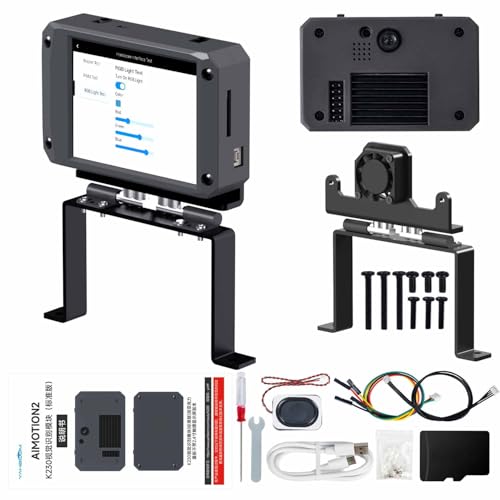
- 1.6GHz chip with strong KPU/CPU performance
- 2.4-inch touch display and 2MP camera
- 12-pin GPIO plus serial controller support
Best For: Makers and educators building fast AI vision projects
All-in-One Jetson Learning Kit
ELECROW Jetson Orin Nano Starter Kit
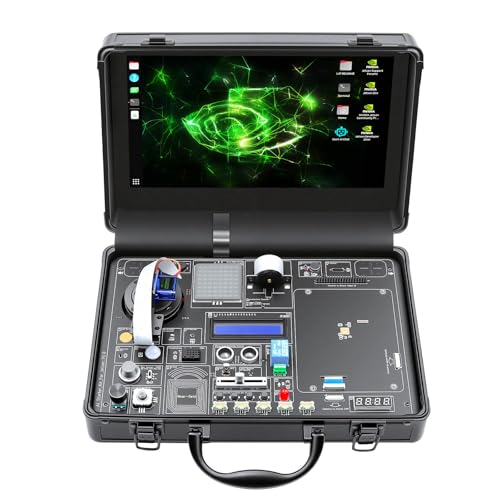
- 30 no-solder sensors for easy setup
- 8MP gimbal camera for tracking projects
- 11.6-inch screen and 38 Python tutorials
Best For: Beginners who want a ready-made Jetson AI learning kit
Voice-First IoT Dev Board
T5AI-Board Voice AI Development Kit

- Dual mics and speaker for voice interaction
- 3.5-inch TFT display with DVP camera support
- 56 GPIOs with WiFi and BLE 5.4
Best For: Voice-enabled smart home and IoT prototyping
Edge AI Robotics Starter – NVIDIA Jetson Orin Nano Super Developer Kit
If you’re shopping for an AI development kit that can move beyond basic demos, the NVIDIA Jetson Orin Nano Super Developer Kit is built for entry-level robots, smart drones, and intelligent camera projects. With up to 40 TOPS of AI performance, a compact footprint, and NVIDIA’s full AI software stack, it gives developers a practical path into modern edge AI prototyping.
Best For: Developers building robotics, vision AI, or autonomous edge prototypes on the Jetson platform.
Pros:
- Up to 40 TOPS of AI performance for modern AI and robotics models
- Includes a Jetson Orin Nano 8GB module and reference carrier board for prototyping
- Wide connector set, including two MIPI CSI camera connectors for higher-resolution vision setups
- Works with NVIDIA Isaac, DeepStream, Riva, Omniverse Replicator, and TAO Toolkit
Cons:
- Designed as a developer kit, not a finished end-product
- Best suited to users comfortable with Linux and NVIDIA’s software ecosystem
This is a strong choice if you want a serious AI development kit for edge inference and robotics work, especially when you need room to grow from simple camera projects into more advanced autonomous systems.
Dual-Brain AI Maker Board – Arduino UNO Q 4GB Hybrid Board
The Arduino UNO Q 4GB is an unusual AI development kit because it combines a Qualcomm Dragonwing MPU with an STM32U585 microcontroller in one board. That dual-brain design makes it a practical fit for projects that need Linux-based AI processing alongside real-time control, such as voice, vision, robotics, and connected devices.
Best For: Makers who want Arduino simplicity with Linux AI capability and real-time microcontroller control.
Pros:
- Hybrid MPU + MCU architecture for mixed AI and real-time workloads
- Runs Linux Debian OS and supports Python, Arduino libraries, and Sketches
- Includes 4 GB LPDDR4 RAM and 32 GB eMMC storage for more complex projects
- Offers Wi-Fi 5, Bluetooth 5.1, USB-C, and shield-compatible UNO form factor
Cons:
- More advanced than a basic beginner board
- Project focus is broader, so it may be overkill for simple Arduino-only builds
For buyers who want one board to bridge maker workflows and AI-capable Linux computing, this is a compelling platform with plenty of flexibility for prototyping.
Raspberry Pi AI Learning Lab – SunFounder AI Fusion Lab Kit
If you want an AI development kit focused on guided learning rather than raw hardware power, the SunFounder AI Fusion Lab Kit is built around Raspberry Pi projects and multi-LLM experimentation. It packages sensors, camera vision, pan-tilt control, and video lessons into one structured learning environment for beginners and engineers alike.
Best For: Learners building AI, vision, and voice projects on an existing Raspberry Pi.
Pros:
- Supports Raspberry Pi 5/4/3B+/Zero 2W for flexible learning setups
- Works with multi-LLMs like ChatGPT, Gemini, Grok, DeepSeek, Qwen, Doubao, and Ollama
- Includes camera, Pan-Tilt HAT, 10DOF module, Fusion HAT+, and other project parts
- Backed by structured video lessons, sample code, and technical support
Cons:
- Raspberry Pi is not included
- More of a learning and project kit than a standalone compute platform
This kit stands out if your goal is to learn practical AI development through hands-on projects, especially when you already own a compatible Raspberry Pi board.
ESP32 Voice Chatbot Kit – LAFVIN AI Chatbot Kit for ESP32-S3
The LAFVIN AI Chatbot Kit for ESP32-S3 is a compact AI development kit centered on voice interaction and quick project startup. With preloaded DeepSeek and OpenAI voice dialogue projects, plus a screen and wireless connectivity, it is designed to help learners and developers get into chatbot-style AI and IoT builds with less setup friction.
Best For: Beginners and developers building voice assistant or AI chatbot projects on ESP32-S3.
Pros:
- Preloaded DeepSeek and OpenAI voice dialogue projects
- ESP32-S3 with dual-core processor, 8MB PSRAM, and 16MB flash for multitasking
- Built-in 2-inch TFT-SPI screen for real-time chat display
- Includes Wi-Fi, Bluetooth 5, and 45 programmable GPIOs for flexible IoT work
Cons:
- OpenAI features require your own API key
- Best suited to voice and IoT projects rather than heavier local AI workloads
If your priority is a practical, plug-and-play chatbot platform, this kit offers a focused way to explore voice AI without starting from scratch.
Vision AI Module – Open-Source Embedded AI Builder
If you’re shopping for an AI development kit that fits embedded prototyping, the Grove Vision AI Module V2 gives you a compact path from model testing to hardware integration. It combines a dual-core Arm Cortex-M55 with Ethos-U55 acceleration, supports TensorFlow and PyTorch, and works with common boards like XIAO, Arduino, Raspberry Pi, and ESP-based dev boards.
Best For: Developers who want an open-source, board-friendly vision AI module for custom model deployment and embedded experimentation.
Pros:
- Arm Cortex-M55 plus Ethos-U55 for dedicated AI processing
- Supports off-the-shelf and custom models from SenseCraft AI
- TensorFlow and PyTorch support broadens development options
- Includes practical peripherals like PDM mic, SD card slot, and Type-C
Cons:
- Best suited to embedded vision work rather than full desktop-style development
- Requires compatible boards for the full development experience
Overall, this is a strong pick if you want a flexible AI development kit centered on vision inference and open hardware. Its compatibility and open-source design make it especially appealing for makers who plan to modify, integrate, and iterate.
CrowPi 3 Advanced Kit – Raspberry Pi 5 AI Lab Station
The CrowPi 3 Advanced Kit is a table-ready AI development kit built around the Raspberry Pi 5 16GB, making it a practical choice for learning, prototyping, and classroom use. With a 4.3-inch touch display, camera, microphone, 41 built-in sensors and modules, and support for AI and IoT workflows, it offers a complete environment for hands-on development.
Best For: Educators, makers, and developers who want an all-in-one Raspberry Pi 5 platform for AI, coding, and electronics projects.
Pros:
- Includes Raspberry Pi 5 16GB and an integrated development station
- Supports AI tasks like OpenCV, facial recognition, object detection, and LLMs
- 41 sensors and modules reduce wiring and setup friction
- Comes with 200+ course resources for guided learning
Cons:
- Bulky compared with smaller board-only kits
- Advanced kit includes many extras that may be more than casual hobbyists need
This kit stands out when you want a structured, ready-to-use AI development kit rather than piecing components together yourself. The combination of hardware, lessons, and board compatibility makes it especially useful for learning environments and project-based development.
ESP32-S3 CAM Dev Kit – Plug-and-Play AI Camera Board
If you need a compact AI development kit for camera-based projects, the ESP32-S3 CAM Dev Kit is built for fast setup and straightforward deployment. It combines an ESP32-S3 with 8MB PSRAM, 8MB Flash, an OV3660 camera, USB-C programming, and compatibility with existing ESP32-CAM libraries and Arduino sketches.
Best For: Developers who want a small, USB-C camera module for upgrading ESP32-CAM projects and testing AI vision features quickly.
Pros:
- Vector AI acceleration and OV3660 camera for vision tasks
- USB-C uploader makes flashing and power simple
- 100% code compatible with existing ESP32-CAM libraries
- Onboard antenna plus optional external antenna support
Cons:
- Limited local storage compared with larger development platforms
- Best suited to camera and streaming projects rather than broad general-purpose prototyping
For a focused camera-centric build, this board delivers a low-friction upgrade path with practical AI features. It is a good fit when you want fast iteration, minimal wiring, and compatibility with existing ESP32-CAM code.
Flagship Vision AI Board – Yahboom K230 AI Development Board
If you want an AI development kit that can handle real-time vision tasks without feeling underpowered, the Yahboom K230 board is built for exactly that kind of job. Its 1.6GHz chip and strong KPU make it a practical pick for image recognition, voice processing, and maker projects that need fast response plus flexible expansion.
Best For: Makers, educators, and developers building vision-first AI projects with sensor expansion and controller integration.
Pros:
- 1.6GHz chip with strong KPU and CPU performance for complex AI workloads
- 2.4-inch LCD touch screen and 2MP camera support quick testing and control
- 12-pin GPIO and serial interface make it easier to connect sensors and controllers
- Includes pre-installed GUI programs and 30+ functional demos for faster start-up
Cons:
- Designed as a development board, so it is not a finished consumer product
- Some advanced projects will still benefit from programming and integration knowledge
Overall, this is a strong choice if your priority is AI visual recognition with room to expand into larger robot or embedded systems. The board’s mix of built-in demos, camera tools, and controller compatibility makes it especially useful for practical prototyping.
All-in-One Jetson Learning Kit – ELECROW Jetson Orin Nano Starter Kit
This AI development kit is aimed at users who want a broad, hands-on learning setup for Jetson Orin Nano projects. With 30 no-solder sensors, an 8MP gimbal camera, and an integrated screen, it gives you a ready-made platform for experimenting with sensing, vision, and voice interaction.
Best For: Beginners and hobbyists who want a plug-and-play Jetson AI learning and demo station.
Pros:
- 30-in-1 no-solder sensor board simplifies setup and wiring
- 8MP IMX219 camera with dual-servo gimbal supports tracking projects
- 11.6-inch IPS screen removes the need for an external monitor
- 38 Python tutorials help guide beginners from basics to practical AI work
Cons:
- Jetson Orin Nano board is not included
- Larger all-in-one design is less portable than a compact dev board
For users learning AI development on Jetson hardware, this kit stands out because it combines hardware variety with structured tutorials. It is especially appealing if you want a single system for vision demos, sensor experiments, and voice interaction without extra assembly work.
Voice-First IoT Dev Board – T5AI-Board Voice AI Development Kit
If your AI development kit needs to focus on voice control and connected-device prototyping, the T5AI-Board is designed around that use case. It combines dual microphones, a speaker, display support, and broad wireless connectivity for smart home and embedded IoT projects.
Best For: Developers prototyping voice-enabled smart home panels, AI terminals, and connected IoT devices.
Pros:
- Dual microphones and speaker support voice interaction projects
- 3.5-inch TFT display plus DVP camera interface add useful UI options
- 56 GPIOs and multiple buses provide flexible hardware expansion
- WiFi and BLE 5.4 support suit modern connected-device builds
Cons:
- Intended for development and testing rather than finished consumer use
- On-board memory and storage are limited compared with larger compute platforms
This is a solid choice if you are building around voice input, screen-based interaction, and IoT connectivity rather than heavy on-device compute. The available TuyaOS resources and developer documentation make it easier to move from evaluation to prototyping.
How We Picked These AI Development Kits
We prioritized kits that offer a practical mix of processing power, ecosystem support, and project flexibility. That means evaluating CPU/NPU capability, camera and peripheral options, documentation quality, community support, and how quickly each board can be put to work for real projects.
We also considered whether the kit is better suited to beginners, makers, or developers building on-device AI for vision, speech, or robotics.
Quick Comparison
For raw edge-computing performance, GPU-based platforms are usually the strongest choice. For learning, I/O experimentation, and lower-cost prototyping, microcontroller and hybrid boards can be easier to manage. If you need cameras, microphones, displays, or sensors built in, all-in-one learning stations can reduce assembly time and simplify testing.
Key Buying Factors for an AI Development Kit
Compute and AI Acceleration
Check whether the kit relies on GPU, NPU, or MCU-based acceleration. Vision models, LLM workflows, and multi-sensor apps benefit from more onboard compute, while smaller embedded tasks may run well on lighter hardware.
Software Stack and Compatibility
Make sure the board supports the frameworks you plan to use, such as Python, OpenCV, TensorFlow, PyTorch, or vendor-specific SDKs. A strong software stack can matter more than peak specs if you want fewer setup headaches.
Peripherals and Expansion
Camera support, microphones, touchscreens, GPIO, USB, Wi-Fi, and Bluetooth all affect what you can build. An AI Development Kit with the right I/O can eliminate the need for extra adapters and make prototyping much faster.
Learning Curve and Documentation
Beginners should look for clear tutorials, sample projects, and active community support. More advanced users may prefer boards that offer lower-level control and broader expansion options.
Who Should Buy Which AI Development Kit?
Choose a high-performance kit if you want edge AI, robotics, or real-time computer vision with more demanding models.
Choose a Raspberry Pi-based kit if you want a familiar software environment and broad maker support for AI learning and experimentation.
Choose an ESP32- or MCU-based kit if your focus is voice control, simple vision tasks, low power use, or embedded smart devices.
Choose an all-in-one learning station if you want the fastest path to hands-on demos, classrooms, or guided project workflows.
In short, the best AI Development Kit is the one that matches your model size, input/output needs, and experience level—without forcing you to overbuy for features you will not use.