
Choosing an AI workstation with multiple GPUs is about more than raw specs. You need the right mix of CPU headroom, PCIe lanes, cooling, power delivery, and chassis space so your system can scale without bottlenecks.
This roundup focuses on the best 2026 options for creators, developers, and teams that need serious performance for training, inference, 3D work, and data-heavy production workflows.
Best 10 AI Workstation with Multiple GPUs Picks for 2026
Flagship AI Rendering Tower
Intel i9-14900K, RTX PRO 6000, 192GB RAM

- RTX PRO 6000 with 96GB VRAM
- 192GB DDR5 RAM and 10TB NVMe storage
- Liquid cooling with 1000W Gold PSU
Best For: Deep learning, 3D rendering, and high-end content creation
Private AI Server Mini PC
Ryzen 7 PRO, RTX 5060, 132TB storage

- Supports Nvidia RTX 5060 GPU
- Up to 132TB ZFS hybrid storage
- Dual 10GbE for fast private sharing
Best For: Local LLMs, virtualization, and private AI server workflows
Expandable Business AI Tower
HP Z2 G1i, Core Ultra 7, GPU-ready tower

- Supports up to 600W triple-wide graphics cards
- Core Ultra 7 265 with DDR5 and NVMe storage
- Windows 11 Pro with business security features
Best For: Secure business deployments that need future GPU expansion
Compact AI Creator Mini PC
i9, RTX 5060 Ti, quad-display mini PC

- Core i9-14900F with RTX 5060 Ti 16GB
- Four-display output with 8K@60Hz support
- Dual LAN, Wi-Fi 7, and 2TB PCIe 4.0 SSD
Best For: Compact creator setups and multi-monitor AI workflows
Blackwell AI Accelerator

- 48GB GDDR7 ECC memory for large AI workloads
- PCIe 5.0 x16 and workstation-grade design
- 4x DisplayPort 2.1b for multi-8K displays
Best For: Enterprise users building a high-memory GPU foundation for AI and pro visualization.
Compact Multi-Display Tower

- Core i9-14900F with RTX 4070 12GB
- 64GB DDR5, 2TB PCIe 4.0 SSD
- Four-display output with 8K@60Hz support
Best For: People who want a compact, fast desktop for AI-accelerated creative work and multiple monitors.
Threadripper Creator Rig

- Threadripper PRO 9955WX with 16 cores/32 threads
- ECC DDR5 memory and Gen5 SSD storage
- Expansion-friendly workstation platform
Best For: Professionals who want a stable, expandable base for AI, CAD, and content creation.
Flagship RTX 5090 Creator Tower
Sentinel Ryzen 9 9950X / 128GB / 8TB
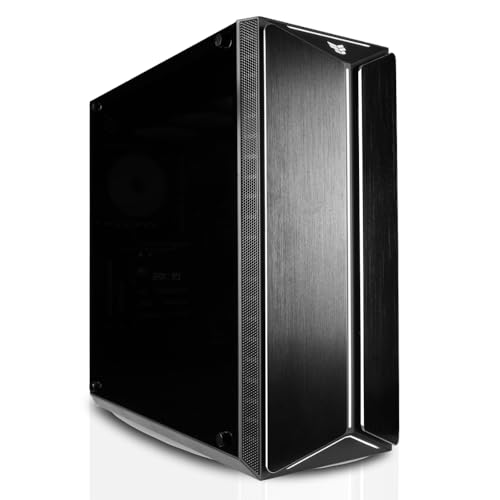
- RTX 5090 with 32GB GDDR7 graphics
- 16-core Ryzen 9 9950X processor
- 128GB DDR5 RAM and 8TB NVMe storage
Best For: High-end creators needing maximum GPU, RAM, and storage headroom
Value RTX 5080 Creator Tower
Sentinel Ultra 9 285K / 64GB / 4TB
- Core Ultra 9 285K with 24 cores
- RTX 5080 with 16GB GDDR7
- 64GB DDR5 RAM and 4TB Gen4 NVMe storage
Best For: Budget-conscious buyers seeking a strong RTX 5080 workstation
Flagship AI Rendering Tower – Intel i9-14900K, RTX PRO 6000, 192GB RAM
If you need an AI workstation with multiple GPUs-class ambition in a single tower, this Novatech build is aimed at heavy local compute, large-model workflows, and professional creation. It pairs an Intel Core i9-14900K with an RTX PRO 6000, plus 192GB of DDR5 memory and 10TB of NVMe storage for demanding projects that need speed, stability, and lots of headroom.
Best For: Deep learning, large data sets, 3D rendering, and premium content creation workflows.
Pros:
- RTX PRO 6000 with 96GB VRAM for CUDA-accelerated AI and machine learning workloads
- 192GB DDR5 RAM and 10TB NVMe storage for big projects and fast workflow access
- Liquid cooling and 1000W 80+ Gold PSU for sustained heavy use
- Assembled in the USA with lifetime technical support and a 3-year hardware warranty
Cons:
- Large tower chassis takes real desk or floor space
- Overbuilt for users who only need basic office or light creative work
This is the most workstation-like option in the group, and it makes sense when reliability and compute capacity matter more than compact size or budget. If your priority is serious AI work plus pro graphics, it offers one of the strongest specs here.
Private AI Server Mini PC – Ryzen 7 PRO, RTX 5060, 132TB storage
This NIMO AI NAS is a strong pick if you want an AI workstation with multiple GPUs-style flexibility in a compact server form factor. With an AMD Ryzen 7 PRO 8845HS, support for an Nvidia RTX 5060, dual 10GbE, and up to 132TB of ZFS hybrid storage, it is built for local AI, virtualization, and shared media or studio workflows.
Best For: Local LLM deployment, private AI serving, virtualization, and studio file sharing.
Pros:
- Supports Nvidia RTX 5060 for GPU-accelerated AI and local model work
- Up to 132TB ZFS hybrid storage with dual 10GbE networking
- Good fit for Docker, multiple VMs, and 24/7 agentic workloads
- Handles 4K/8K transcoding for Plex or Jellyfin-style media use
Cons:
- Mini-server design is less traditional than a full desktop workstation
- Notes emphasize support for RTX 5060 rather than including a high-end discrete GPU by default
For teams that care about privacy, shared storage, and always-on AI services, this is a very specialized machine. It is less about raw tower expansion and more about turning one compact system into a private compute-and-storage hub.
Expandable Business AI Tower – HP Z2 G1i, Core Ultra 7, GPU-ready tower
If you want an AI workstation with multiple GPUs potential in a business-friendly tower, the HP Z2 G1i is built around expandability and professional deployment. It includes an Intel Core Ultra 7 265, 32GB of DDR5 memory, a 1TB SSD, and support for up to 600W triple-wide graphics cards for AI inferencing and visualization.
Best For: Business users who need a secure workstation with room for powerful discrete graphics.
Pros:
- Supports up to 600W triple-wide graphics cards for demanding GPU workloads
- Intel Core Ultra 7 265 with DDR5 memory and NVMe storage
- Tool-less tower design and RAID level support for flexible setup
- Windows 11 Pro and Wolf Pro Security Edition for business deployment
Cons:
- Ships with integrated graphics listed in the notes, so GPU choice may require configuration
- 32GB RAM is solid, but lower than some premium AI-focused alternatives
This is the most enterprise-oriented option here, and its value comes from platform flexibility rather than headline GPU specs. It makes sense for buyers who want a secure tower that can be configured around a serious graphics card later.
Compact AI Creator Mini PC – i9, RTX 5060 Ti, quad-display mini PC
This compact mini PC is a practical option if you want an AI workstation with multiple GPUs-style display support in a small footprint. It combines an Intel Core i9-14900F, 64GB of DDR5 memory, a 2TB PCIe 4.0 SSD, and a GeForce RTX 5060 Ti 16GB card for AI applications, editing, streaming, and design work.
Best For: Compact creator setups, AI-assisted editing, and multi-monitor workstations.
Pros:
- Core i9-14900F and RTX 5060 Ti 16GB for strong everyday creative performance
- Supports four displays with 8K@60Hz output capability
- Dual LAN and Wi-Fi 7 make it flexible for network-heavy environments
- Compact chassis includes active cooling with four copper fans and eight heat pipes
Cons:
- Mini PC form factor limits internal expandability compared with full towers
- 64GB RAM is good, but maximum support tops out at 96GB
For users who want strong AI-ready specs without a large desktop tower, this model lands in a useful middle ground. It is especially appealing if your workflow depends on multiple monitors, fast networking, and a small footprint.
Blackwell AI Accelerator – RTX PRO 5000 48GB Workhorse
If you’re building an AI workstation with multiple GPUs, this RTX PRO 5000 Blackwell card is the kind of foundation piece that makes the rest of the system easier to scale. The 48GB GDDR7 ECC memory, PCIe 5.0 x16 interface, and workstation-focused design point it toward heavy professional workloads like AI, complex 3D, and multi-display setups.
Best For: Professionals who need a reliable, high-memory workstation GPU for AI, rendering, and multi-monitor productivity.
Pros:
- 48GB of GDDR7 ECC memory supports large AI and graphics workloads.
- PCIe 5.0 x16 helps prepare a workstation for modern expansion and high-bandwidth use.
- Four DisplayPort 2.1b outputs support multiple ultra-high-resolution 8K displays.
- Certified for over 100 professional ISV applications for enterprise workflows.
Cons:
- Dual-slot full-height design requires enough physical space in the chassis.
- Best suited to professional systems rather than casual desktop builds.
For buyers focused on scaling an AI workstation with multiple GPUs, this card stands out as a high-capacity, professional-grade option. Its memory size and workstation certifications make it especially attractive when reliability matters as much as raw speed.
Compact Multi-Display Tower – i9 RTX 4070 Mini Workstation
This compact desktop is a practical choice if you want an AI workstation with multiple GPUs later, but need a strong ready-made base today. The Core i9-14900F, RTX 4070 12GB, 64GB DDR5, and liquid cooling give it solid headroom for creative work, streaming, and multi-display productivity in a small footprint.
Best For: Users who want a compact, well-equipped desktop for AI-accelerated apps, editing, and multi-monitor workflows.
Pros:
- Core i9-14900F and RTX 4070 provide strong performance for creative and AI-accelerated tasks.
- Supports four-display output with 8K@60Hz capability across HDMI and DP ports.
- 64GB DDR5 RAM and a 2TB PCIe 4.0 SSD offer fast multitasking and storage.
- Built-in liquid cooling and copper fans help with heat and noise management.
Cons:
- Single-GPU design is not the same as a true multi-GPU workstation.
- Compact chassis may limit internal expansion compared with larger towers.
This machine makes sense when you want a smaller workstation that still handles demanding visuals, AI-assisted apps, and multiple displays well. It’s more of a compact performance desktop than a full multi-GPU platform, but the core specs are strong.
Threadripper Creator Rig – Sentinel 9955WX Workstation
For buyers evaluating an AI workstation with multiple GPUs, this Threadripper PRO system is built around the kind of platform that can support demanding expansion. The 9955WX processor, ECC RDIMM memory, Gen5 SSD, and workstation-focused design make it a strong fit for professional AI, CAD, deep learning, and 3D modeling workflows.
Best For: Creators and technical professionals who want an expandable workstation platform for AI, rendering, and heavy multitasking.
Pros:
- Threadripper PRO 9955WX offers 16 cores, 32 threads, and enterprise-class features.
- ECC RDIMM DDR5 memory adds stability for long professional workloads.
- 2TB PCIe NVMe Gen5 SSD delivers very fast boot and data transfer speeds.
- Workstation build includes multiple expansion slots and support for multiple monitors.
Cons:
- RTX 5060 Ti 16GB is solid, but not a top-tier GPU for the heaviest graphics loads.
- Only the listed HDMI and DisplayPort outputs are guaranteed; other ports may vary.
This is the most workstation-oriented platform in the group, especially if you care about expandability and long-term reliability. It’s a smart base for professional users who may later scale into more demanding multi-GPU needs.
Flagship RTX 5090 Creator Tower – Sentinel Ryzen 9 9950X / 128GB / 8TB
If you want an AI workstation with multiple GPUs or a single top-tier GPU foundation for heavy creative and compute tasks, this Sentinel tower is built around the RTX 5090, a 16-core Ryzen 9 9950X, and 128GB of DDR5 memory. The 8TB of NVMe storage and Windows 11 Pro make it a strong pick for fast project loading, multitasking, and pro-grade workflows.
Best For: High-end creators and professionals who need maximum CPU/GPU headroom, large RAM capacity, and lots of fast storage.
Pros:
- RTX 5090 with 32GB GDDR7 for very high-end GPU workloads
- Ryzen 9 9950X 16-core CPU supports demanding content creation and multitasking
- 128GB DDR5 RAM plus 2x4TB Gen4 NVMe SSDs for large projects and fast access
- Includes Windows 11 Pro, Wi-Fi 7, and support for multiple monitors
Cons:
- Single-GPU configuration, so it is not a true multi-GPU system
- Large tower and 49.8-pound weight reduce portability
- More machine than most users need for basic office work
This is the most powerful option in the group and the best fit when GPU performance and memory capacity matter more than price. If your workload benefits from a flagship graphics card and a heavily equipped desktop platform, this is the strongest all-around pick.
Balanced RTX 5080 Workstation – Sentinel Ultra 9 285K / 96GB / 4TB
This Sentinel AI workstation with multiple GPUs in mind is actually a single-GPU desktop, but it delivers a strong balance of processor power, memory, and storage for demanding creative work. With an Intel Core Ultra 9 285K, RTX 5080 graphics, 96GB of DDR5 RAM, and a 2TB Gen5 plus 2TB Gen4 SSD setup, it is aimed at fast workflows and responsive multitasking.
Best For: Users who want a high-performance creator PC with fast storage and strong multitasking for video, 3D, and AI-adjacent workloads.
Pros:
- Core Ultra 9 285K provides 24 cores for heavy multitasking
- RTX 5080 with 16GB GDDR7 handles demanding graphics work
- 96GB DDR5 RAM is well-suited for large projects and many apps open at once
- Includes a 2TB Gen5 SSD plus a 2TB Gen4 SSD for fast boot and storage
Cons:
- Only one RTX 5080 is included, so it does not offer dual-GPU expansion out of the box
- Storage is split across two drives, which may be less simple than a single large SSD
- Less memory than the 128GB model above
For buyers who want a premium workstation without stepping all the way up to the highest-cost configuration, this model lands in a practical middle ground. It combines strong CPU performance with plenty of RAM and especially fast storage.
Value RTX 5080 Creator Tower – Sentinel Ultra 9 285K / 64GB / 4TB
If you are shopping for an AI workstation with multiple GPUs but only need one strong graphics card today, this Sentinel build gives you the same Core Ultra 9 285K and RTX 5080 platform at a lower memory tier. It pairs 64GB of DDR5 RAM with 2x2TB Gen4 NVMe SSDs, making it a capable choice for editing, rendering, and general pro workloads.
Best For: Buyers who want RTX 5080 performance and a solid creator setup without paying for extra RAM they may not need.
Pros:
- Intel Core Ultra 9 285K offers 24 cores for demanding desktop tasks
- RTX 5080 with 16GB GDDR7 supports fast graphics performance
- 64GB DDR5 RAM is still substantial for multitasking and creative apps
- 2x2TB Gen4 NVMe SSDs provide 4TB of fast local storage
Cons:
- 64GB RAM is lower than the 96GB configuration in the higher-tier model
- Gen4 storage is slower on paper than the Gen5/Gen4 mix above
- Like the others, this is a single-GPU system rather than a multi-GPU tower
This version makes sense if you want the same CPU and GPU class as the more expensive build but do not need the extra memory or Gen5 drive. It is the most straightforward value-oriented choice in this roundup.
How We Picked the Best AI Workstation with Multiple GPUs
We prioritized systems and components that make sense for demanding AI and pro workloads: strong multi-core CPUs, enough memory for large datasets, fast NVMe storage, reliable thermals, and expansion support that can handle more than one high-end GPU. We also considered platform quality, upgrade paths, and practical workstation features such as Windows Pro, ZFS storage, and professional-grade graphics options.
Quick Comparison: What Matters Most
When comparing an AI Workstation with Multiple GPUs, look beyond the headline GPU. A well-balanced system often performs better than an underbuilt rig with an expensive card. Threadripper-class and high-end Intel platforms typically offer better lane budgets, while 64GB to 128GB RAM is a safer starting point for serious AI work. For storage, dual NVMe drives are a strong baseline, and larger hybrid or NAS-oriented systems are better if your datasets grow quickly.
Key Buying Factors for AI Workstation with Multiple GPUs
CPU Platform and PCIe Lanes
Multi-GPU setups need enough PCIe bandwidth to avoid choking the cards. HEDT and workstation platforms are usually the best fit if you plan to expand beyond one GPU or need additional accelerators, capture cards, or high-speed storage.
Memory Capacity
RAM is often the first constraint in AI workflows. For light experimentation, 32GB may be enough, but 64GB is a far better starting point. If you work with larger models, multiple containers, or heavy multitasking, 96GB to 128GB is preferable.
Cooling, Power, and Case Clearance
High-wattage GPUs and CPUs generate a lot of heat. Liquid cooling, airflow-focused towers, and quality power supplies matter when the system is expected to run long jobs. Make sure the chassis can physically fit the cards you want to install, especially with dual-slot or triple-slot designs.
Storage and Data Throughput
Fast local SSDs help with loading datasets, checkpoints, and project files. For teams or researchers managing large archives, NAS-style storage or hybrid configurations can be more practical than relying on a single internal drive.
Who Should Buy Which AI Workstation with Multiple GPUs?
If you want maximum GPU headroom for serious AI and rendering work, choose the most expandable tower with the strongest cooling and memory configuration. If you need a balanced pro desktop for mixed workloads, a well-equipped Intel or AMD workstation with 64GB to 96GB RAM is often the sweet spot. If storage flexibility matters most, consider the AI NAS and server-style options. And if your focus is a single powerful GPU today with room to grow later, a high-performance mini or compact desktop can be the right entry point.
In short, the best choice depends on whether you value expansion, storage, portability, or outright compute density. For an AI Workstation with Multiple GPUs, prioritize the platform first and the graphics cards second.