
If you have multigig internet, an ordinary router can leave speed on the table. The best options pair multi-gig ports with strong Wi-Fi performance, solid processing power, and enough coverage for your home.
We focused on routers that can better match fast fiber and cable plans, support busy households, and offer sensible upgrade paths through Wi-Fi 6E or Wi-Fi 7.
Best 10 Wi-Fi Router for Multigig Internet Picks for 2026
Wi-Fi 7 Multi-Gig Pick

- Dual 2.5Gbps ports for multigig internet
- Wi-Fi 7 with MLO, Multi-RUs, and 4K-QAM
- Covers up to 2,400 sq. ft. and 90 devices
Best For: Gig-plus households wanting fast wired and wireless performance
Tri-Band Power User Choice
GL.iNet Flint 3 Wi-Fi 7 Router

- Five 2.5G ports for multigig wired setups
- Tri-band Wi-Fi 7 with 6GHz and 9 Gbps speed
- VPN, AdGuard Home, and Bark support
Best For: Advanced users who want tri-band speed and networking controls
Balanced Multi-Gig Value

- Two 2.5G ports plus three 1G LAN ports
- Wi-Fi 7 dual-band with MLO and 4K-QAM
- Covers up to 2,000 sq. ft. and 60 devices
Best For: Families and home offices needing a balanced multi-gig upgrade
Wi-Fi 6 Multi-Gig Upgrade
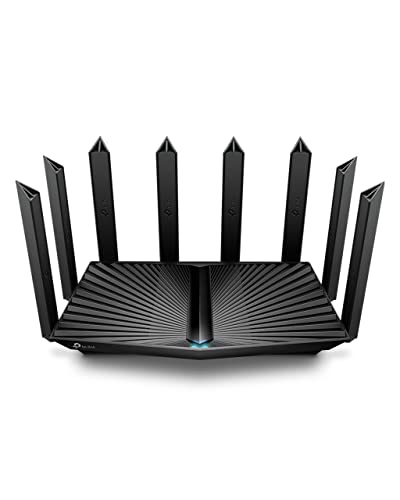
- 2.5Gbps WAN/LAN port for faster wired internet
- Wi-Fi 6 up to 4804 Mbps on 5 GHz
- Eight antennas, beamforming, and OneMesh support
Best For: Users wanting a stable Wi-Fi 6 router with a multigig uplink
Compact High-Speed Choice
NETGEAR Nighthawk WiFi 7 RS180

- Wi‑Fi 7 speeds up to 5.5 Gbps
- 2.5 Gig internet port for multigig plans
- Covers up to 2,500 sq. ft. and 80 devices
Best For: Smaller homes wanting a compact multigig-ready router
Balanced Mesh-Ready Upgrade
TP-Link Archer BE550 WiFi 7 Router

- Tri-band Wi‑Fi 7 with up to 9,300 Mbps
- One 2.5G WAN and four 2.5G LAN ports
- EasyMesh support for whole-home coverage
Best For: Users wanting strong wired multigig support and mesh expansion
Wi-Fi 7 Upgrade Pick

- Wi-Fi 7 speeds up to 6.5Gbps
- 2.5 Gig internet port for multi-gig service
- Coverage for up to 2,500 sq. ft. and 80 devices
Best For: Upgrading to Wi-Fi 7 and 2.5Gbps internet
Value Wi-Fi 6 Choice
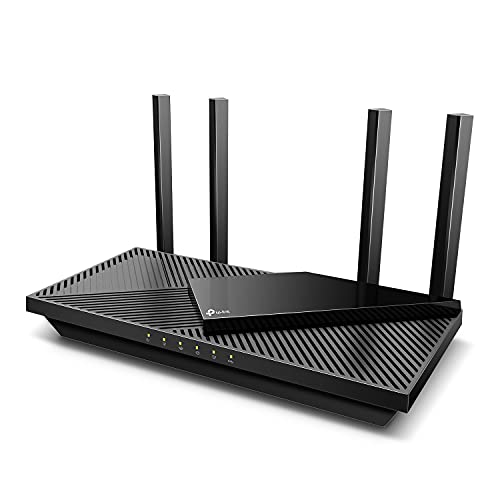
- AX3000 Wi-Fi 6 performance
- OFDMA, MU-MIMO, and beamforming included
- VPN support plus HomeShield security
Best For: Budget-minded buyers needing solid Wi-Fi 6
Best for 6GHz Performance

- Wi-Fi 6E tri-band with 6GHz support
- 2.5Gbps WAN port for multi-gig internet
- VPN server/client and HomeShield security
Best For: 6GHz Wi-Fi 6E with a 2.5Gbps WAN port
Wi-Fi 7 Multi-Gig Pick – TP-Link BE6500 WiFi 7 Router
If you want a Wi-Fi router for multigig internet that can keep up with newer devices and faster plans, the TP-Link BE6500 is built for that job. It combines dual 2.5Gbps ports with Wi-Fi 7 features like MLO and 4K-QAM, so it is aimed at homes that need both strong wireless performance and faster wired throughput.
Best For: Homes with gig-plus internet, Wi-Fi 7 devices, and users who want a fast dual-band router with strong security and expansion options.
Pros:
- Dual 2.5Gbps ports help avoid a wired bottleneck on multigig internet.
- Wi-Fi 7 features include MLO, Multi-RUs, and 4K-QAM for better efficiency.
- Rated for up to 2,400 sq. ft. and 90 devices with six streams and beamforming.
- Includes HomeShield, private IoT support, EasyMesh compatibility, and USB 3.0.
Cons:
- Dual-band design does not include a 6GHz band.
- Best performance depends on having Wi-Fi 7-capable client devices.
Overall, this is a practical pick if you want multigig-ready ports plus modern Wi-Fi 7 features in one router. It is especially appealing for busy homes that care about coverage, security, and easy setup.
Tri-Band Power User Choice – GL.iNet Flint 3 Wi-Fi 7 Router
The GL.iNet Flint 3 is a strong Wi-Fi router for multigig internet if you also want tri-band Wi-Fi 7 and a heavy focus on networking flexibility. With five 2.5G ports, 6GHz support, and a 9 Gbps wireless rating, it is aimed at demanding users who want fast wired backhaul, low-latency gaming, and smooth streaming.
Best For: Advanced users, large device counts, and homes that want tri-band Wi-Fi 7 with VPN and ad-blocking tools.
Pros:
- Five 2.5G ports provide plenty of multigig wired connectivity.
- Tri-band Wi-Fi 7 includes 6GHz support and up to 9 Gbps wireless speed.
- WireGuard and OpenVPN speeds are rated up to 680 Mbps.
- Includes AdGuard Home support, Bark parental controls, and support for over a hundred devices.
Cons:
- Setup notes recommend updating firmware right away.
- Its advanced feature set may be more than casual users need.
This router makes sense if you want more than basic home networking and need multigig ports paired with higher-end customization. It stands out for users who value control, VPN features, and tri-band capacity.
Balanced Multi-Gig Value – TP-Link Archer BE230
The TP-Link Archer BE230 is a sensible Wi-Fi router for multigig internet when you want strong port options without moving up to a tri-band model. It uses Wi-Fi 7 dual-band design, includes two 2.5G ports plus three 1G LAN ports, and is rated for up to 2,000 sq. ft. and 60 devices.
Best For: Families and home offices that want an affordable-feeling multi-gig router with Wi-Fi 7, EasyMesh, and strong security tools.
Pros:
- Two 2.5G ports plus three 1G ports support faster wired networking.
- Wi-Fi 7 adds MLO, Multi-RUs, and 4K-QAM for improved efficiency.
- Covers up to 2,000 sq. ft. and supports up to 60 devices.
- Includes EasyMesh, HomeShield, VPN support, and private IoT features.
Cons:
- Dual-band design does not support 6GHz.
- Best wireless speeds depend on Wi-Fi 7-capable devices.
For buyers who want multigig-ready wired ports and modern Wi-Fi 7 basics, this is a well-rounded middle ground. It is a good fit if you want useful features and coverage without stepping into more advanced tri-band hardware.
Wi-Fi 6 Multi-Gig Upgrade – TP-Link Archer AX80
The TP-Link Archer AX80 is a good Wi-Fi router for multigig internet if you do not need Wi-Fi 7 but still want a fast wired uplink and strong whole-home coverage. Its 2.5Gbps WAN/LAN port, Wi-Fi 6 speeds, and eight high-gain antennas make it a solid upgrade for busy homes with lots of connected devices.
Best For: Buyers who want a proven Wi-Fi 6 router with a 2.5G port, broad coverage, and straightforward home networking features.
Pros:
- 2.5G Multi-Gigabit port helps unlock faster wired internet service.
- Wi-Fi 6 performance reaches up to 4804 Mbps on 5 GHz and 1148 Mbps on 2.4 GHz.
- Eight high-gain antennas with beamforming improve range.
- Includes HomeShield, VPN client support, OneMesh, AP mode, and WPA3.
Cons:
- It is Wi-Fi 6, not Wi-Fi 7.
- The listed LAN port bandwidth is 1Gbps, so only the main uplink is multi-gig.
If you want fast internet without paying for the newest wireless standard, the AX80 is an easy-to-understand option. It is especially appealing for homes that prioritize range, stability, and a multigig WAN connection.
Future-Proof Multi-Gig Pick – Cudy Tri-Band WiFi 7 BE11000 Router
If you want a Wi-Fi router for multigig internet that is built around speed and wired flexibility, the Cudy WR11000 is a strong fit. It combines tri-band Wi‑Fi 7 performance with four 2.5G WAN/LAN ports, so it is designed for fast internet plans and high-speed wired devices without bottlenecks.
Best For: Homes that want Wi‑Fi 7 performance plus lots of 2.5G wired ports for future-proof networking.
Pros:
- Tri-band Wi‑Fi 7 with up to 11,000 Mbps combined speed.
- Four 2.5G WAN/LAN ports for multigig wired connections.
- VPN client and server support for safer remote access.
- Cudy app control plus Cudy Mesh support for easy expansion.
Cons:
- Coverage is listed at 1,500 square feet, which may be modest for larger homes.
- Uses fixed antennas rather than internal or adjustable designs.
Overall, this router stands out if your priority is squeezing the most out of a multigig internet plan and keeping several fast wired devices online. Its mix of Wi‑Fi 7, 2.5G ports, and mesh support makes it a practical long-term upgrade.
Compact High-Speed Choice – NETGEAR Nighthawk WiFi 7 RS180
The NETGEAR Nighthawk RS180 is a straightforward Wi‑Fi router for multigig internet if you want fast wireless performance in a smaller footprint. It pairs Wi‑Fi 7 speeds up to 5.5 Gbps with a 2.5 Gig internet port, making it a solid match for newer cable or fiber plans that can actually use that extra bandwidth.
Best For: Smaller households that want a simple Wi‑Fi 7 router with a 2.5 Gig internet port.
Pros:
- Wi‑Fi 7 speeds up to 5.5 Gbps.
- 2.5 Gig internet port for multigig service plans.
- Covers up to 2,500 sq. ft. and supports up to 80 devices.
- Smaller footprint with expert help included.
Cons:
- It is router-only, so it does not include a built-in cable modem.
- Only one 2.5 Gig internet port is listed, with no multigig LAN emphasis.
This model makes sense when you mainly need fast wireless service and a multigig-ready internet uplink rather than a heavily wired setup. It is a cleaner, simpler option for homes that want speed without a bulky design.
Balanced Mesh-Ready Upgrade – TP-Link Archer BE550 WiFi 7 Router
The TP-Link Archer BE550 is a well-rounded Wi‑Fi router for multigig internet, especially if you want strong wired support and easy mesh expansion. With a 2.5G WAN port plus four 2.5G LAN ports, it is set up for fast internet service and multiple high-speed devices at once.
Best For: Buyers who want multigig ports, tri-band Wi‑Fi 7, and easy whole-home expansion.
Pros:
- Tri-band Wi‑Fi 7 with up to 9,300 Mbps combined speed.
- One 2.5G WAN port and four 2.5G LAN ports for wired flexibility.
- EasyMesh support helps build a whole-home network.
- HomeShield, WPA3, and VPN support add useful security features.
Cons:
- Coverage is listed at up to 2,000 sq. ft., which may not suit very large homes without mesh.
- Modem is required for most providers, so it is not an all-in-one gateway.
For shoppers comparing multigig routers, this TP-Link model offers one of the most balanced feature sets here. It combines fast Wi‑Fi 7 performance with plenty of 2.5G ports and mesh-ready expansion, which makes it easy to grow with your network.
Wi-Fi 7 Upgrade Pick – NETGEAR Nighthawk RS200
If you want a Wi-Fi router for multigig internet with a strong forward-looking spec sheet, the NETGEAR Nighthawk RS200 is built around Wi-Fi 7 and a 2.5 Gig internet port. It is a router-only model, so it pairs with a separate modem when needed, but it should make good use of modern cable or fiber plans that can reach beyond standard gigabit speeds.
Best For: Households upgrading to Wi-Fi 7 and 2.5Gbps internet service.
Pros:
- Wi-Fi 7 with speeds up to 6.5Gbps
- 2.5 Gig internet port for multi-gig plans
- Covers up to 2,500 sq. ft. and 80 devices
- Compact design with included setup accessories
Cons:
- Router only, so it does not include a built-in cable modem
- May require a separate 2.5Gbps-capable modem for some internet services
The RS200 makes the most sense if you are trying to move past older Wi-Fi hardware and want a straightforward upgrade path for faster internet. Its multi-gig port and newer wireless standard are the key reasons to consider it.
Value Wi-Fi 6 Choice – TP-Link Archer AX55
The TP-Link Archer AX55 is a practical Wi-Fi router for multigig internet if you want fast Wi-Fi 6 performance without stepping into the newest premium tier. Its gigabit WAN and strong wireless specs are a solid match for everyday homes, streaming, gaming, and mixed-device use, though it does not offer a multi-gig WAN port.
Best For: Budget-minded buyers who want reliable Wi-Fi 6 performance for a fast home connection.
Pros:
- AX3000 Wi-Fi 6 speeds for smoother streaming and downloads
- OFDMA and MU-MIMO help improve responsiveness with multiple devices
- Four high-gain antennas and beamforming for broader coverage
- Includes VPN client/server support and HomeShield security features
Cons:
- Uses a standard gigabit LAN/WAN design rather than a multi-gig port
- Modem required for most internet service providers
For shoppers who mainly want a stable, feature-rich router at a reasonable level, the AX55 covers the essentials well. It is especially appealing if your priority is strong Wi-Fi throughout the home rather than maximum wired throughput.
Best for 6GHz Performance – TP-Link Archer AXE75
If your priority is a Wi-Fi router for multigig internet with extra headroom for busy homes, the TP-Link Archer AXE75 stands out with Wi-Fi 6E and a 2.5Gbps WAN port. The 6GHz band can help reduce congestion, and the tri-band design is aimed at faster browsing, streaming, gaming, and downloading at the same time.
Best For: Users who want 6GHz Wi-Fi 6E and a 2.5Gbps WAN port for faster home networking.
Pros:
- Tri-band Wi-Fi 6E with the 6GHz band for lower latency
- 2.5Gbps WAN port for multi-gig internet plans
- OFDMA and tri-band design support more simultaneous devices
- Includes VPN server/client support and HomeShield security
Cons:
- Requires a modem for most internet service providers
- Gigabit LAN port bandwidth may limit wired speed beyond the WAN port
The AXE75 is the strongest fit here if you want newer Wi-Fi 6E features and a faster uplink for multi-gig service. It is designed for households that care about both wireless responsiveness and future-ready internet hardware.
How We Picked the Best Wi-Fi Router for Multigig Internet
We prioritized routers with at least one 2.5Gbps port, strong wireless throughput, and hardware built to handle multiple devices at once. We also weighed coverage claims, mesh compatibility, and features that matter in real homes, such as VPN support, USB ports, and easy app setup.
Because multigig service is only useful if your router can keep up, we favored models with fast wired backhaul options and newer Wi-Fi standards where they add meaningful benefits.
Quick Comparison
If you want the simplest upgrade, look for a dual-band Wi-Fi 7 model with one or two 2.5Gbps ports. If your home is busy, has lots of wireless devices, or you want more future-proofing, tri-band Wi-Fi 7 routers offer more headroom. Budget-conscious shoppers may still find value in Wi-Fi 6 and 6E routers, especially if their internet plan is fast but not fully saturated by multiple users.
Key Buying Factors for a Wi-Fi Router for Multigig Internet
Multi-Gig Port Support
A 2.5Gbps WAN or LAN port is the minimum to benefit from multigig internet. If you have a fast switch, NAS, or gaming PC, extra 2.5G ports can be a big advantage.
Wi-Fi Standard and Band Layout
Wi-Fi 7 is the best fit for buyers who want the newest features and higher efficiency, while Wi-Fi 6E is still a strong choice for mixed-use homes. Tri-band designs usually handle congestion better than dual-band models, especially in larger households.
Coverage and Device Capacity
Match the router to your floor plan and device count. Bigger homes, thicker walls, and 50-plus connected devices usually justify stronger antennas, more streams, or mesh expandability.
Performance Features
Look for a fast CPU, beamforming, QoS, and security tools if you stream in 4K or 8K, game online, or run video calls while others are using the network.
Who Should Buy Which Wi-Fi Router for Multigig Internet?
Choose a value-focused dual-band Wi-Fi 7 router if you want a straightforward upgrade for a smaller home or apartment. Pick a tri-band Wi-Fi 7 router if your household is crowded, your coverage needs are harder, or you want better long-term headroom. If you are saving money or still on a lower multigig tier, a strong Wi-Fi 6 or 6E model can still deliver excellent results without the premium price.
The right Wi-Fi Router for Multigig Internet should match both your speed tier and your living space. Prioritize the port speed first, then choose the wireless standard and coverage level that fit how you actually use the network.