
Managing one keyboard, mouse, printer, scanner, or other USB accessory across several computers does not have to mean unplugging cables repeatedly. The right USB switch box lets you share peripherals with a button press while keeping your desk organized.
This roundup compares 10 USB switch boxes for multiple computers, including USB 2.0 and USB 3.x models, options for two to four computers, and designs with USB-A, USB-C, or mixed connections.
Best 10 USB Switch Boxes for Multiple Computers Picks for 2026
Best Compact USB Switch
Sabrent USB 3.0 Sharing Switch
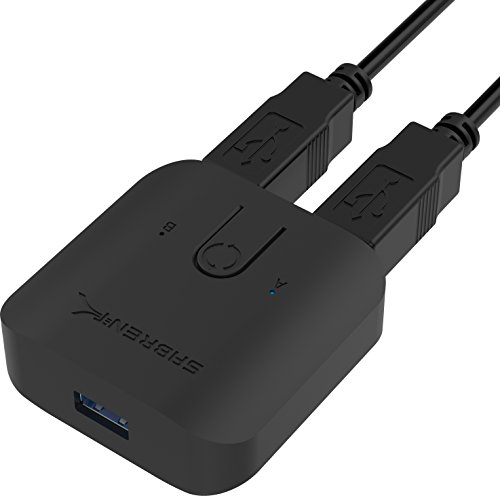
- Driver-free plug-and-play setup
- Up to 5Gbps USB 3.0 transfers
- LED status indicators and one-button switching
Best For: Simple two-computer peripheral sharing
Best for Four Computers

- Shares four devices with four computers
- Includes panel and wired switching controls
- Driver-free across major operating systems
Best For: Multi-computer office and classroom setups
Best Four-Way Sabrent
Sabrent USB 2.0 Sharing Switch

- Shares up to four USB devices
- Supports four connected computers
- Push-button control with LED indicators
Best For: Basic four-computer peripheral sharing
Best High-Speed Two-Computer Switch
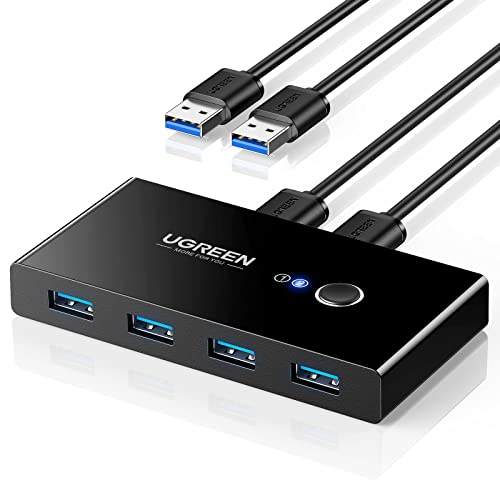
- Four USB 3.0 ports up to 5Gbps
- Shares devices between two computers
- Optional USB-C power for demanding devices
Best For: Fast peripheral sharing at a two-computer desk
Best High-Speed Pick

- Shares seven USB devices between two computers
- USB 3.2 Gen 2 speeds up to 10Gbps
- Includes USB-C-to-A cable and power adapter
Best For: Mixed USB-A and USB-C workstations with many peripherals
Best Straightforward Value

- Shares four USB devices between two computers
- 5Gbps transfers with USB 2.0 backward compatibility
- Push button and LED status indicator
Best For: USB-A peripherals and simple two-computer switching
Best Flexible Control

- Shares four USB devices between two computers
- Includes one USB-C and three USB-A device ports
- Offers button and remote-controller switching
Best For: Mixed-port desks needing flexible switching and tidy cable placement
Best Remote-Controlled 3-Computer USB Switch

- Shares four USB-A ports across three computers
- USB 3.0 speeds up to 5Gbps
- Button and IR remote switching
Best For: Three-computer workspaces using USB-A peripherals
Best Simple 2-Computer USB Switch

- Shares four USB devices between two computers
- One-button control with LED indicator
- Broad Windows, Mac, Linux, and Chrome OS support
Best For: Basic two-computer peripheral sharing
Best High-Speed 4-Computer USB Switch

- Shares USB-A and USB-C devices across four computers
- Up to 10Gbps transfer speeds
- Button and remote switching included
Best For: Four-computer setups needing USB-C and high-speed transfers
Best Compact USB Switch – Sabrent USB 3.0 Sharing Switch
For a simple way to use one set of USB peripherals with multiple computers, this Sabrent model is a compact choice among USB switch boxes for multiple computers. It uses a single push button to swap connected systems, requires no additional drivers, and supports USB 3.0 speeds up to 5Gbps.
Best For: Users who want straightforward two-computer switching for keyboards, mice, and other USB devices.
Pros:
- Plug-and-play setup without additional drivers
- USB 3.0 data transfer speeds up to 5Gbps
- LED indicators help distinguish the selected computer
- Compact 2.4-by-2.32-inch footprint
Cons:
- Designed for switching between two computer systems
- Its supplied notes specifically list keyboard and mouse compatibility rather than monitor switching
This is a practical, button-operated option when speed and a small desktop footprint matter more than advanced controls or video switching.
Best for Four Computers – 4-Port USB 2.0 Switcher
This 4-in/4-out unit is built for sharing up to four USB 2.0 peripherals among four computers, making it a flexible option among USB switch boxes for multiple computers. Panel buttons or the included wired desktop controller provide two ways to change the active computer.
Best For: Offices, classrooms, and home workstations that need four computers to share keyboards, mice, printers, scanners, or other USB 2.0 devices.
Pros:
- Connects four computers and four USB peripherals
- Offers front-panel and wired-controller switching
- LEDs indicate the active computer
- Works without drivers on Windows, macOS, Linux, and Chrome OS
Cons:
- Limited to USB 2.0 speeds up to 480Mbps
- External 5V/1A power adapter may be needed for high-power USB devices and is not included
Choose this model when four-way sharing and convenient desktop controls are priorities. Its USB 2.0 limit makes it less suitable for speed-focused storage workflows.
Best Four-Way Sabrent – Sabrent USB 2.0 Sharing Switch
The Sabrent USB-USS4 lets up to four computers share as many as four USB devices with the push of a button. For shoppers comparing USB switch boxes for multiple computers, it combines manual four-way selection with LED indicators and USB 2.0 compatibility.
Best For: Users who need uncomplicated four-computer access to shared USB peripherals.
Pros:
- Supports up to four computers and four USB devices
- Push-button selection makes switching simple
- LED indicators identify the selected computer
- USB hubs can expand the number of shareable devices
Cons:
- USB 2.0 limits data rates to up to 480Mbps
- It is a manual peripheral switch rather than a monitor or video switch
This model is a sensible fit for a shared keyboard, mouse, printer, or similar setup where four-way support matters and USB 2.0 performance is sufficient.
Best High-Speed Two-Computer Switch – UGREEN USB 3.0 Selector
UGREEN’s 2-in/4-out selector shares four USB peripherals between two computers and supports USB 3.0 transfer speeds up to 5Gbps. It stands out among USB switch boxes for multiple computers with one-button switching, broad operating-system compatibility, and an optional USB-C power input for demanding devices.
Best For: People switching keyboards, storage devices, printers, scanners, cameras, or other USB peripherals between a work computer and a personal computer.
Pros:
- Four USB 3.0 ports support transfers up to 5Gbps
- One-button switching and LED status indication
- Plug-and-play support for Windows, macOS, Chrome OS, and Linux
- Optional USB-C 5V/2A power input helps support higher-power devices
Cons:
- Does not support monitors or video transmission
- Power adapter is not included
- Only supports switching between two computers
For a two-computer desk where fast USB data access matters, this is one of the more capable choices. Plan on adding power when several or high-power devices are connected.
Best High-Speed Pick – 7-Port USB 3.2 Switch
For shoppers comparing USB switch boxes for multiple computers, the UGREEN 2-in 7-out switch stands out when you need to share many peripherals and want faster data transfers. It connects two computers to four USB-A and three USB-C device ports, with USB 3.2 Gen 2 speeds up to 10Gbps. It is a USB data switch, not a video KVM.
Best For: Mixed USB-A and USB-C workstations with several high-speed peripherals.
Pros:
- Supports up to seven shared USB devices across two computers.
- Offers up to 10Gbps transfer speeds through four USB 3.2 Gen 2 ports.
- Includes a USB-C-to-USB-A cable and power adapter for flexible setups and steadier performance with power-hungry devices.
Cons:
- Does not provide video output or monitor switching.
- USB ports are primarily intended for data transmission; audio devices are not recommended.
This is the most capable option here for a crowded, mixed-connector desk. Its powered design and seven-port layout reduce the need for additional hubs, while the lack of video support keeps it focused on USB peripheral sharing.
Best Straightforward Value – 4-Port USB 3.0 Switch
The BENFEI USB 3.0 switch is a practical choice among USB switch boxes for multiple computers when two systems need to share a keyboard, mouse, storage device, printer, or scanner. Its four USB 3.0 ports support transfers up to 5Gbps, and a push button with LED indicator makes switching straightforward.
Best For: Two-computer setups using standard USB-A peripherals and simple one-button switching.
Pros:
- Lets two computers share four USB devices, including printers, scanners, cameras, and storage.
- Supports up to 5Gbps USB 3.0 transfers and is backward compatible with USB 2.0.
- Works with Windows, macOS, Linux, and Chrome OS without requiring drivers.
- Includes an 18-month BENFEI warranty.
Cons:
- Requires USB-A-to-USB-A cables for connection.
- Power adapter is not included if extra power is needed for high-consumption devices.
Choose this model if your computers and accessories already use USB-A and you do not need USB-C device ports. It offers a familiar button-based workflow, though the optional power input may require an additional adapter for demanding peripherals.
Best Flexible Control – USB-C and USB-A 4-Port Switch
For a compact option among USB switch boxes for multiple computers, this UGREEN switch combines one USB-C port and three USB-A ports for shared access to four peripherals. It supports up to 5Gbps transfers, includes two USB 3.0 computer cables, and offers both onboard and remote switching.
Best For: Users who want USB-C and USB-A device support plus a convenient remote controller.
Pros:
- Allows two computers to share four USB devices, including keyboards, mice, printers, and cameras.
- Combines one USB-C port with three USB-A ports for varied peripherals.
- Includes two USB 3.0 cables and supports up to 5Gbps transfers.
- Provides both button and controller switching for easier desk organization.
Cons:
- Does not support monitor connections or video output.
- USB-C computer inputs may require a USB-C-to-USB adapter.
- Optional power is recommended when using multiple devices or higher-power peripherals.
This model is a good middle ground for a mixed-peripheral desk, especially when remote switching is useful. Confirm your computer connection requirements before buying, and treat the USB-C port as a data connection rather than a display interface.
Best Remote-Controlled 3-Computer USB Switch – THXCDBID USB 3.0 Switch
For shoppers comparing usb switch boxes for multiple computers, the THXCDBID is a practical choice when you need to share several USB-A peripherals across three systems. It provides four USB-A ports, USB 3.0 transfer speeds up to 5Gbps, and both button and IR remote switching. Note that it is a peripheral switch, not a KVM, so it does not connect monitors.
Best For: Workspaces that share keyboards, mice, printers, scanners, or other USB-A devices between three computers.
Pros:
- Shares four USB-A ports among three computers.
- Supports data transfer speeds up to 5Gbps.
- Offers front-button and included IR remote switching.
- Supports Windows, Linux, and Mac systems without requiring special drivers.
Cons:
- Does not support monitor connections or video switching.
- High-power USB devices may require separate power.
- The remote requires batteries, which are not included, and hotkey switching is unavailable.
The THXCDBID stands out for three-computer setups where remote switching and USB 3.0 speed matter. Its included Micro USB power cable can help maintain stable operation, especially with demanding peripherals.
Best Simple 2-Computer USB Switch – UGREEN USB 2.0 Sharing Switch
If you need straightforward usb switch boxes for multiple computers, the UGREEN USB switch selector offers one-button sharing between two systems. Its four USB 2.0 ports can connect common peripherals such as keyboards, mice, printers, scanners, storage devices, and card readers. It is not a KVM and does not transmit video.
Best For: Home offices and basic two-computer setups that prioritize simple switching and broad operating-system compatibility.
Pros:
- Shares four USB peripherals between two computers.
- One-button switching with an LED active-computer indicator.
- Works with Windows, macOS, Linux, and Chrome OS without drivers.
- Includes two USB-A-to-A cables and offers optional Micro USB power.
Cons:
- USB 2.0 is slower than the USB 3.x alternatives.
- Does not support monitors or video transmission.
- A separate charger and cable are needed for optional power, and high device loads may require it.
The UGREEN model is a sensible budget-friendly-style option for peripheral sharing rather than high-speed storage workflows. Its simple button control and wide OS support make it easy to integrate into a two-computer desk.
Best High-Speed 4-Computer USB Switch – USB 3.2 Switch Selector
Among usb switch boxes for multiple computers, this USB 3.2 selector is designed for larger setups and faster transfers. It lets four computers share three USB-A 3.2 ports and one USB-C 3.2 port, with switching through either a device button or remote control. As with the other options, it does not support monitor connections.
Best For: Users who need to share mixed USB-C and USB-A peripherals across four computers while maintaining up to 10Gbps transfer speeds.
Pros:
- Supports four computers sharing four USB 3.2 peripheral ports.
- Combines three USB-A ports with one USB-C port.
- Provides data transfer speeds up to 10Gbps.
- Includes button and remote switching plus a USB-C-to-A adapter.
Cons:
- It is not a KVM and cannot switch or connect monitors.
- High-power devices require an independent power source for proper operation.
- The remote batteries are not included, and hotkey switching is not supported.
This selector is the strongest fit when four computers, modern USB-C connectivity, and faster file transfers are the priorities. The added Micro USB 5V power connection can improve stability with devices such as hard drives and printers.
How We Picked the Best USB Switch Boxes for Multiple Computers
We focused on the features that matter in everyday peripheral sharing: computer capacity, number and type of USB ports, transfer speed, switching method, included cables, power requirements, and compatibility with common devices. The selection includes simple two-computer boxes, higher-capacity four-computer switchers, and newer models supporting USB-C or faster USB 3.2 connections.
These devices are intended primarily for sharing USB peripherals. They are not automatically video KVMs, so a USB switch alone will not switch monitors, speakers, or display signals unless the product specifically supports those functions.
Quick Comparison
| What to compare | Best fit |
|---|---|
| Two computers, basic peripherals | Compact USB 2.0 or USB 3.0 switch |
| Four computers | Four-input USB switch with individual selection control |
| Fast storage or frequent file transfers | USB 3.0 or USB 3.2 model |
| USB-C laptops and accessories | Mixed USB-A/USB-C switch |
| Shared printer, scanner, keyboard, and mouse | Four-port peripheral switcher |
Key Buying Factors for USB Switch Boxes for Multiple Computers
Computer and Peripheral Capacity
Start by counting both sides of the setup. A two-computer switch is sufficient for a desktop and laptop, while a four-computer model is more appropriate for a workstation, lab, classroom, or shared office. Also check whether the unit offers enough peripheral ports for everything you intend to connect.
USB Speed and Device Type
USB 2.0 is generally adequate for keyboards, mice, printers, and scanners. Choose USB 3.0 or USB 3.2 when moving files through external storage or using high-bandwidth peripherals. Confirm the actual port layout: a USB-C host connection or device port may not be interchangeable with USB-A without the correct cable or adapter.
Power and Compatibility
Many switches draw power from the connected computer, but several devices or power-hungry accessories may require an external power input. Check the product specifications before connecting hard drives or other high-draw equipment. Most models work across Windows, macOS, Linux, and ChromeOS because switching occurs at the USB hardware level, but accessory drivers may still be platform-specific.
Switching Method and Placement
A front button is convenient when the switch is within reach; a wired desktop controller is better when the box sits behind a monitor or under a desk. LED indicators are useful for confirming which computer is active, especially on four-input models.
Who Should Buy Which USB Switch Boxes for Multiple Computers?
Choose a basic USB 2.0 model if you only need to share low-bandwidth devices such as a keyboard, mouse, printer, or scanner and want to keep costs down.
Choose a USB 3.0 two-computer switch for a typical home office, gaming setup, or work-from-home desk where one set of peripherals serves a desktop and laptop.
Choose a four-computer switch for multiple workstations, testing environments, classrooms, or shared office equipment. Confirm that its port count and included host cables match your planned layout.
Choose a USB-C or USB 3.2 model if newer laptops, USB-C accessories, or faster storage are central to your setup. Before ordering, verify connector types on both the computers and peripherals, then account for any required hubs, adapters, or powered connections.