
Finding reliable studio monitors under $200 no longer means settling for thin sound or limited connectivity. Today’s affordable models range from compact desktop speakers to larger near-field monitors built for more detailed mixing and production.
We selected these 10 options for their balance of sound quality, size, features, and practical value, so you can choose a pair that fits your workspace and listening goals.
Best 10 Studio Monitors Under 200 Picks for 2026
Compact Wired Pick

- 3.5-inch Kevlar woofers
- Multiple wired inputs
- Front headphone output and rear EQ
Best For: Compact desktop production and streaming setups
Balanced Monitoring Choice
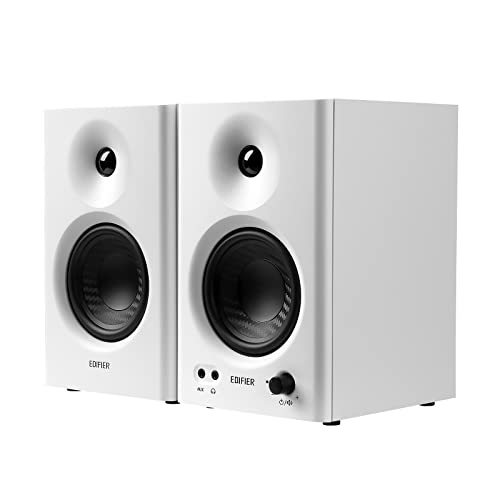
- Near-flat monitor mode
- 4-inch composite woofers
- Balanced TRS and front headphone output
Best For: Home studios and music creators
Desk-Friendly Control Pick

- Compact 3.5-inch monitor pair
- Tone knob and location switch
- Isolation pads and cables included
Best For: Small home studios and multimedia desks
Wireless Flexibility Pick

- Bluetooth multipoint connectivity
- Monitor, Music, and Custom modes
- Balanced TRS, RCA, and AUX inputs
Best For: Mixed-use near-field listening and home studios
Balanced Nearfield Upgrade

- 5.25-inch woofer and 1-inch silk-dome tweeter
- 80-watt Class AB bi-amplification
- XLR, 1/4-inch, and RCA inputs
Best For: Home producers and mixers needing flexible wired nearfield monitoring
Connected Compact Pair
Ortizan C7 Powered Studio Monitors

- Bluetooth 5.3 and built-in 24-bit USB DAC
- 3.5-inch woofer with 0.75-inch silk tweeter
- TRS, RCA, AUX, USB, and headphone output
Best For: Desktop users wanting compact monitors with extensive connectivity
Large-Driver Mixing Monitor

- 7-inch active monitor with 73 watts of power
- Bi-amped Class A/B amplification
- Front port and adjustable low/high controls
Best For: Mixers seeking larger-driver output and flexible room placement
Best Compact Studio Pair

- Stereo pair with 50W built-in amplification
- Room-tuning controls for high and low frequencies
- TRS, RCA, auxiliary, and headphone connections
Best For: Flexible desktop production and everyday listening
Best Single-Monitor Setup

- 30W powered tabletop monitor
- 4-inch woofer and 1-inch tweeter
- Two-band EQ for tonal adjustment
Best For: Compact multimedia production setups
Best Versatile Bookshelf Pair
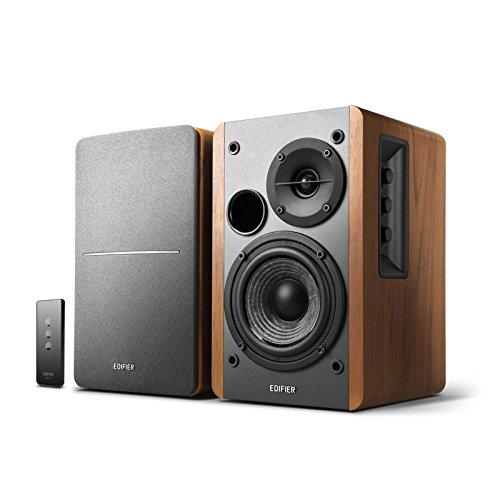
- Dual AUX inputs for two connected devices
- Remote control plus bass and treble adjustment
- 4-inch drivers in a wood-finish MDF cabinet
Best For: Home, gaming, and convenient near-field listening
Compact Wired Pick – M-Audio BX3
If you want studio monitors under 200 for a compact desk, the M-AUDIO BX3 pair combines 3.5-inch Kevlar woofers, silk dome tweeters, and a wired connection for straightforward monitoring. Multiple input options and front headphone access also make them practical for desktop production and streaming.
Best For: Desktop music production, podcasting, gaming, and live streaming where wired connectivity and small size matter.
Pros:
- 3.5-inch Kevlar woofers and silk dome tweeters provide detailed stereo sound.
- Includes 1/4-inch, 1/8-inch, and RCA inputs for flexible connections.
- Front headphone output, rear EQ controls, and a speaker-position switch add convenience.
Cons:
- The compact 3.5-inch woofer may offer less low-end weight than larger monitors.
- The connection is wired rather than wireless.
The BX3 is a versatile choice when desk space is limited and you need easy access to several source types. Its included cables and foam feet make it a ready-to-use option for a small studio setup.
Balanced Monitoring Choice – Edifier MR4
The Edifier MR4 is a strong candidate among studio monitors under 200 for creators who want a near-flat monitoring mode in a larger 4-inch format. Its MDF construction, silk dome tweeters, and flexible analog inputs suit both production work and everyday listening.
Best For: Home studios, music creators, and listeners who want separate monitor and music modes.
Pros:
- Near-flat monitor mode is designed for production and accurate listening.
- 4-inch composite woofers and 1-inch silk dome tweeters deliver full-range sound.
- Balanced TRS, RCA, AUX, and front headphone connections support varied equipment.
Cons:
- It is larger and heavier than the compact 3.5-inch options in this roundup.
- Bluetooth connectivity is not listed among the supplied features.
Choose the MR4 if you value a dedicated monitoring mode but still want a more relaxed music mode for casual listening. Independent high- and low-frequency controls provide additional tonal flexibility.
Desk-Friendly Control Pick – Mackie CR3.5
For shoppers comparing studio monitors under 200, the Mackie CR3.5 offers a compact pair with simple physical controls. Its Tone knob and Location switch let you adjust voicing and compensate for placement without navigating menus.
Best For: Small home studios, multimedia desks, and users who want quick physical sound adjustments.
Pros:
- Sold as a pair with 3.5-inch woofers for desk-sized setups.
- Tone knob provides convenient voicing control from the desk.
- Location switch helps correct bass response near a wall or in open placement.
- Includes isolation pads and the necessary connection cables.
Cons:
- The 3.5-inch woofers are less suited to users seeking especially substantial bass.
- It lacks the app-based adjustment and Bluetooth features listed for the Edifier MR3.
The CR3.5 stands out for its uncomplicated workflow. It is a sensible option when you want a compact monitor pair with useful placement and tone controls included rather than relying on software.
Wireless Flexibility Pick – Edifier MR3
The Edifier MR3 brings Bluetooth and app control to the studio monitors under 200 category while retaining balanced TRS, RCA, and AUX inputs. Its 3.5-inch mid-low drivers, Hi-Res certification, and selectable listening modes make it suitable for both monitoring and everyday playback.
Best For: Near-field listeners who need Bluetooth convenience alongside wired studio connections.
Pros:
- Supports Bluetooth multipoint plus balanced TRS, RCA, and AUX inputs.
- Offers Monitor, Music, and Custom modes with app-based EQ adjustment.
- Hi-Res Audio certification and a stated 52Hz–40kHz response support detailed playback.
Cons:
- Bluetooth and app features may be unnecessary for a strictly wired monitoring workflow.
- The 3.5-inch mid-low drivers provide a compact format rather than the larger woofer size of the MR4.
The MR3 is the most flexible choice here for users moving between production, video editing, guitar playing, and casual listening. Its combination of wired inputs, wireless playback, and customizable modes makes it adaptable to mixed-use spaces.
Balanced Nearfield Upgrade – PreSonus Eris E5
The PreSonus Eris E5 is a practical choice for anyone shopping for studio monitors under 200 and looking to improve mix translation. Its 5.25-inch woven composite woofer, silk-dome tweeter, and 80-watt Class AB amplification provide a capable nearfield monitoring setup.
Best For: Home producers and mixers who want flexible wired connectivity, useful room-tuning controls, and solid nearfield output.
Pros:
- 5.25-inch woofer delivers solid low end with minimal bass distortion.
- Silk-dome tweeter is designed for balanced highs without harshness.
- Includes balanced XLR and 1/4-inch inputs, plus unbalanced RCA.
- Acoustic tuning controls help adapt the monitor to the room.
Cons:
- This listing describes a single monitor, so a stereo setup may require two units.
- It uses wired connectivity rather than Bluetooth or wireless playback.
With front-firing bass ports, protection circuitry, and a 102 dB maximum continuous SPL, the Eris E5 offers a well-rounded feature set for compact production spaces. The included Studio One Prime and Studio Magic software adds value for new producers.
Connected Compact Pair – Ortizan C7 Powered Studio Monitors
The Ortizan C7 is a versatile option among studio monitors under 200, combining compact drivers with Bluetooth 5.3, USB audio, and traditional wired inputs. Its small footprint suits desktop production, entertainment, and casual content-creation setups.
Best For: Small-space users who want monitor-style sound with Bluetooth, USB, AUX, RCA, and balanced TRS connectivity.
Pros:
- Multiple inputs support RCA, AUX, Bluetooth 5.3, USB, and 6.35mm TRS.
- Built-in 24-bit DAC accepts digital audio through USB.
- 3.5-inch carbon-fiber mid-bass driver and 0.75-inch silk-dome tweeter provide a compact two-way design.
- Front-panel headphone output supports convenient headphone monitoring.
Cons:
- The 3.5-inch woofer may provide less low-end authority than larger studio monitors.
- Bluetooth and other consumer features may be unnecessary for a strictly wired mixing setup.
The C7 stands out for connectivity and convenience rather than large-room output. Its stated professional tuning and balanced-input support make it adaptable for small music-production systems, while wireless playback broadens its everyday usefulness.
Large-Driver Mixing Monitor – KRK Classic 7
The KRK Classic 7 is a strong candidate for studio monitors under 200 when a larger 7-inch driver and higher headroom are priorities. This self-powered two-way monitor uses matched amplification and room-adjustment controls for studio recording and mixing.
Best For: Producers and mixers who need a larger nearfield monitor with front-ported placement flexibility and adjustable frequency levels.
Pros:
- 7-inch woofer and 73-watt active design provide substantial monitoring capability.
- Custom bi-amped Class A/B amplifiers are matched to the drivers.
- Front-firing port allows more flexible placement near walls.
- Dedicated low- and high-frequency controls help match room acoustics.
Cons:
- This listing describes a single monitor, so stereo monitoring requires two units.
- The larger enclosure may need more desk or stand space than compact monitors.
- It has wired analog connectivity and no wireless communication.
The Classic 7 is geared toward users who value driver size, headroom, and placement flexibility. Its RCA, 1/4-inch TRS, and XLR connections cover common studio sources, while the front port and adjustment controls make room integration easier.
Best Compact Studio Pair – PreSonus Eris 3.5
The PreSonus Eris 3.5 is a versatile stereo pair for shoppers comparing studio monitors under 200. Its 3.5-inch woven-composite woofers, 1-inch silk-dome tweeters, and 50 watts of built-in amplification suit music production, gaming, streaming, movies, and everyday desktop listening.
Best For: Desktop users who want a compact, flexible stereo pair with room-tuning controls and multiple inputs.
Pros:
- Sold as a complete stereo pair with 50 watts of built-in amplification.
- High- and low-frequency controls help tailor the sound to the room.
- Includes balanced TRS, RCA, front auxiliary, and headphone connections.
Cons:
- The 3.5-inch woofers may not provide the low-end impact of larger monitors.
- It is a corded, non-water-resistant desktop speaker system.
The Eris 3.5 stands out as an adaptable choice in this price range, especially when you need one pair for both creative work and general media. Its compact footprint and connection options make it easy to fit into a desktop setup.
Best Single-Monitor Setup – Yamaha MS101-4
The Yamaha MS101-4 is a compact powered monitor to consider among studio monitors under 200. It combines a 4-inch woofer, 1-inch tweeter, 30 watts of power, and a two-band EQ in a tabletop design for multimedia production and other desktop audio uses.
Best For: Buyers who need a compact wired monitor for a tabletop or multimedia-production setup.
Pros:
- 30 watts of built-in power in a compact powered-monitor design.
- Uses a 4-inch woofer and 1-inch tweeter.
- Two-band EQ provides basic tonal adjustment.
Cons:
- The supplied listing describes one monitor rather than a stereo pair.
- Connectivity is wired, so it may require additional equipment for some setups.
The MS101-4 is a straightforward option when a single powered monitor fits your workflow better than a matched pair. Confirm your required channel count and connections before buying.
Best Versatile Bookshelf Pair – Edifier R1280T
The Edifier R1280T blends bookshelf styling with near-field functionality, making it a practical alternative among studio monitors under 200. Its 4-inch full-range drivers, 13mm silk-dome tweeters, dual AUX inputs, and remote control support desktop, gaming, and general home-audio use.
Best For: Home users who want studio-style near-field listening with a wood-finish cabinet, remote, and simple device switching.
Pros:
- Two AUX inputs allow simultaneous connection of two devices.
- Side-panel controls adjust volume, bass, and treble.
- Includes a remote control and classic wood-finish MDF enclosure.
Cons:
- Its supplied connections are auxiliary/RCA rather than balanced studio inputs.
- The listing identifies it as one item, so verify the included speaker configuration.
- Its 80Hz listed frequency-response figure indicates limited deep-bass extension.
The R1280T is best suited to listeners who prioritize convenience and living-space appeal alongside near-field sound. Choose it over a more studio-focused design when remote control and dual-source connectivity matter most.
How We Picked the Best Studio Monitors Under 200
We focused on powered monitors and speaker pairs that offer useful performance without requiring a separate amplifier. Our evaluation criteria included driver size, frequency response, connectivity, controls, cabinet design, desk footprint, and overall suitability for music production, editing, streaming, gaming, and casual listening.
Because prices can vary by retailer and promotions, we treated the $200 limit as a practical buying range rather than a guarantee of a fixed price. Larger models may deliver stronger bass and higher output, while compact speakers are often easier to place in small rooms.
Quick Comparison
| Best For | What to Look For |
|---|---|
| Small desks and bedrooms | 3 to 3.5-inch drivers, compact cabinets, front-facing controls |
| More balanced mixing | Near-field design, clearer midrange, and flexible acoustic controls |
| Stronger bass and volume | 5 to 7-inch woofers and sufficient desk or stand space |
| Wireless everyday listening | Bluetooth plus wired inputs for production equipment |
| Simple plug-and-play use | Built-in amplification and included speaker cables |
Key Buying Factors for Studio Monitors Under 200
Driver Size and Room Space
Smaller 3- to 3.5-inch monitors suit desktop setups and close listening distances. Four- to 7-inch models can produce more bass and volume, but they need additional room and may overwhelm a small untreated space.
Inputs and Connectivity
Check whether the speakers accept the connections used by your audio interface, computer, mixer, or phone. RCA and 3.5mm inputs are common at this price, while balanced inputs are more useful for reducing noise in recording setups. Bluetooth is convenient, but wired connections are generally preferable for critical listening.
Controls and Acoustic Adjustment
Volume controls are essential, while high- and low-frequency adjustment can help compensate for placement near walls or on a desk. These controls cannot replace room treatment, but they can make an affordable monitor easier to integrate.
Powered Design and Placement
Active monitors include amplification, simplifying setup. Place them at ear level, form an approximate triangle with your listening position, and angle them toward you. Isolation pads or stands can reduce desk vibrations and improve clarity.
Who Should Buy Which Studio Monitors Under 200?
Choose compact 3- to 3.5-inch monitors if you have limited desk space, produce at low to moderate volume, or need speakers for a bedroom studio, video editing, or general computer use.
Choose 4- to 5.25-inch models if you want a stronger all-around balance between bass extension, detail, and manageable size for home recording and mixing.
Choose 7-inch monitors if you have a larger room, more listening distance, and need greater output and low-end reach. They are less suitable for crowded desks or untreated small rooms.
Choose Bluetooth-equipped speakers when convenience matters for streaming and casual listening, but prioritize wired input quality if accurate production work is your main goal. Whichever pair you select, proper placement and a familiar reference track will often make as much difference as the speaker itself.