
Choosing studio monitors with subwoofer output is easier when you separate accurate monitoring from added low-end impact. The right setup can deliver clearer bass, better stereo imaging, and more control without overwhelming a small room.
This roundup covers compact powered monitors, matched subwoofers, and flexible combinations for home studios, desktops, and project mixing spaces. Use the guide below to compare connections, size, power, and placement before you buy.
Best 10 Studio Monitors with Subwoofer Output Picks for 2026
Budget-Friendly Sub-Out Pick
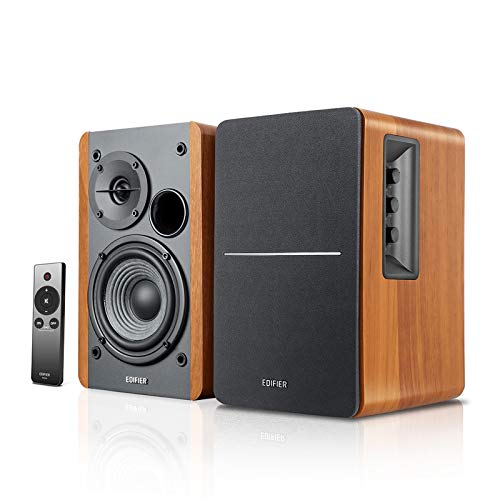
- Dedicated subwoofer output with automatic crossover
- 42W stereo power and adjustable EQ controls
- Dual RCA inputs for two wired sources
Best For: Desktop, gaming, and home listening setups
Compact Low-End Extension

- 10-inch woofer with bass response to 28Hz
- Adjustable crossover, phase, and volume controls
- Bypass connection supports quick mix comparisons
Best For: Studio recording and ADAM T-Series monitor systems
Flexible Modern Monitor Pair
Edifier MR4.5 Bi-Amped Studio Monitor

- 80W RMS bi-amped stereo monitor pair
- Balanced, unbalanced, and Bluetooth inputs
- Adjustable low cutoff and app-based room EQ
Best For: Production and high-fidelity listening without a specified sub-out
Professional Bass Expansion
KRK S8.4 Powered Studio Subwoofer

- 8-inch woofer extends response to 30Hz
- 109W power and 112dB maximum SPL
- Footswitch bypasses sub and crossover filter
Best For: Recording studios and music-production monitoring systems
Compact 2.1-Ready Pick

- 50W Class AB stereo amplification
- TRS, RCA, and auxiliary inputs
- Compatible with Eris Sub 8BT
Best For: Compact desks and flexible 2.1 expansion
Dedicated Low-End Upgrade

- 8-inch bass-reflex subwoofer
- 150W amplifier with 22–150Hz range
- Adjustable filtering and phase controls
Best For: Recording setups needing substantial bass extension
Wide Sweet-Spot Monitor Pair

- 5-inch two-way powered monitors
- Image Control Waveguide for broad imaging
- Boundary EQ and HF Trim controls
Best For: Producers and podcasters wanting adaptable desktop monitoring
Flexible Bass Control

- 8-inch driver reaches down to 30 Hz
- Adjustable crossover and room-tuning controls
- TRS, RCA, auxiliary, and Bluetooth inputs
Best For: Desktop studios and Eris monitor users needing flexible bass expansion
Focused Near-Field Pair
Yamaha HS5 Studio Monitor Pair

- Two bi-amplified 5-inch monitors
- 54 Hz–30 kHz frequency response
- Balanced and unbalanced XLR/TRS inputs
Best For: Compact music-production and near-field monitoring setups
Desktop Subwoofer Convenience
Mackie CR8SBT 8-inch Subwoofer

- 8-inch subwoofer for added desktop bass
- Adjustable crossover and subwoofer bypass
- Bluetooth, TRS, RCA, and desktop remote
Best For: CR Series desktop monitor systems needing simple bass control
Budget-Friendly Sub-Out Pick – Edifier R1280Ts
If you want studio monitors with subwoofer output for a desktop, home office, or casual production setup, the Edifier R1280Ts offers a straightforward wired solution. Its dedicated subwoofer output automatically detects an active subwoofer and engages a built-in crossover, while the 42W stereo system provides adjustable bass, treble, and volume controls.
Best For: Desktop listening, gaming, home entertainment, and entry-level monitoring setups that may benefit from added bass.
Pros:
- Dedicated subwoofer output with automatic detection and crossover activation
- 42W continuous stereo power with 4-inch woofers and 13mm silk-dome tweeters
- Dual RCA inputs allow two wired sources to remain connected
- Includes remote control and onboard bass, treble, and volume adjustments
Cons:
- Listed as a wired system, so it is less convenient for wireless setups
- Its bookshelf-oriented design is better suited to desktop and home use than larger studio rooms
The R1280Ts is a practical choice when subwoofer expandability matters more than advanced professional connectivity. It provides an accessible way to build a fuller stereo system without requiring a separate crossover.
Compact Low-End Extension – ADAM Audio T10S Subwoofer
The ADAM Audio T10S is an active studio subwoofer designed to extend the low end of a monitoring system. It is engineered to complement ADAM T5V and T7V monitors, with adjustable crossover, phase rotation, and volume controls for integrating the subwoofer into a studio setup.
Best For: Studio recording and ADAM T-Series monitor owners who need more controlled low-frequency information.
Pros:
- 10-inch woofer and 130W maximum output extend bass response to 28Hz
- Adjustable crossover, phase rotation, and dedicated volume controls support system calibration
- Downward-facing woofer provides placement flexibility
- Footswitch bypass connection makes it easy to compare mixes with and without bass extension
Cons:
- It is a subwoofer rather than a complete pair of studio monitors
- The footswitch for bypass control is not included
- Its larger 27-pound cabinet requires more floor space than compact desktop equipment
The T10S is a focused upgrade for monitoring systems that need deeper bass rather than a complete speaker solution. Its calibration controls and bypass connection make it especially useful when checking low-frequency balance during mixing.
Flexible Modern Monitor Pair – Edifier MR4.5 Bi-Amped Studio Monitor
The Edifier MR4.5 is a bi-amped monitor pair for listeners who want flexible connectivity and detailed nearfield sound. Although it does not list a dedicated subwoofer output, its adjustable low cutoff, room-compensation controls, and bass-focused calibration features can help when integrating monitors into different desktop or room placements.
Best For: Music production, mixing, mastering, and high-fidelity listening where flexible inputs and room adjustment are priorities.
Pros:
- 80W RMS total power with 4.5-inch mid-bass drivers and 1-inch silk-dome tweeters
- Balanced XLR and TRS, RCA, AUX, and Bluetooth 6.0 connectivity
- Adjustable low cutoff from 20–100Hz supports bass-management experimentation
- Edifier ConneX app offers room compensation, nine-band EQ, and sound presets
Cons:
- The supplied specifications do not identify a dedicated subwoofer output
- Its 4.5-inch drivers may provide less low-end authority than a system paired with a separate subwoofer
The MR4.5 is best considered a versatile monitor pair rather than a direct studio-monitors-with-subwoofer-output pick. Its low-cut adjustment and room-tuning features are useful for placement control, but buyers specifically needing a physical subwoofer connection should verify compatibility before purchasing.
Professional Bass Expansion – KRK S8.4 Powered Studio Subwoofer
The KRK S8.4 is a powered studio subwoofer for recording and music-production systems that need stronger low-frequency extension. Its 8-inch glass aramid composite woofer reaches down to 30Hz, while the footswitch-controlled subwoofer and crossover bypass helps you evaluate a mix with bass extension engaged or disabled.
Best For: Recording studios and music-production setups using compatible monitors with XLR connectivity.
Pros:
- 8-inch glass aramid composite woofer extends bass response to 30Hz
- 109W powered design reaches a listed maximum SPL of 112dB
- Front-firing bass port supports more flexible placement
- Footswitch control can disable the subwoofer and crossover filter for comparison checks
Cons:
- It is a dedicated subwoofer, so monitors must be purchased separately
- The footswitch is not included
- The supplied connectivity information lists XLR rather than a broader selection of inputs
The S8.4 is a studio-focused bass-management component rather than an all-in-one monitor system. It makes the most sense for producers who already have suitable monitors and want deeper, switchable low-end extension for mixing decisions.
Compact 2.1-Ready Pick – PreSonus Eris E4.5
The PreSonus Eris E4.5 is a compact pair of near-field monitors for buyers seeking studio monitors with subwoofer output potential. Its balanced TRS, RCA, and auxiliary inputs, room-tuning controls, and compatibility with the Eris Sub 8BT make it a flexible choice for desks, music production, and everyday listening.
Best For: Desktop users who want compact monitors with flexible inputs and an easy path to a 2.1 setup.
Pros:
- 50 watts of Class AB amplification provide 25 watts per side.
- Balanced TRS, RCA, and front-panel auxiliary connections support varied sources.
- High- and low-frequency controls help tailor the sound to the room.
- Front-panel headphone output and built-in headphone amplifier add convenience.
Cons:
- The 4.5-inch woofer may not deliver the deepest bass without an added subwoofer.
- Bluetooth is associated with the companion Eris Sub 8BT rather than clearly specified for the monitors themselves.
The Eris E4.5 stands out when space and connectivity matter. Add the compatible Eris Sub 8BT for a more powerful low-frequency presentation and a complete 2.1 system.
Dedicated Low-End Upgrade – Yamaha HS8S Subwoofer
The Yamaha HS8S is a dedicated powered subwoofer for listeners building studio monitors with subwoofer output. Its 8-inch driver, 150-watt amplifier, and adjustable filtering provide a focused way to extend the low end of a compatible monitoring setup.
Best For: Recording and live-music setups that need substantial, adjustable bass extension.
Pros:
- 8-inch bass-reflex design reaches a stated 22Hz–150Hz frequency range.
- 150-watt amplifier supplies high-power low-frequency output.
- Low-cut switch, low-cut control, high-cut control, and phase switch support system tuning.
- Wired XLR connectivity fits professional audio configurations.
Cons:
- This is a subwoofer only, not a complete pair of studio monitors.
- Its 33.6-pound size and floor-standing design require more space than compact desktop solutions.
The HS8S is best viewed as the low-end foundation for an existing monitoring system. Its filtering and phase controls make it more adaptable than a basic plug-in subwoofer, but buyers still need separate main monitors.
Wide Sweet-Spot Monitor Pair – JBL 305P MkII
The JBL 305P MkII pair is a strong starting point for buyers comparing studio monitors with subwoofer output options. Each monitor uses a 5-inch woofer, a Slip Stream port, and balanced XLR/TRS inputs; the pair also offers Boundary EQ and HF Trim for room-specific adjustments.
Best For: Music producers, podcasters, and desktop users who value clear imaging and room-tuning controls.
Pros:
- Patented Image Control Waveguide provides a wide listening sweet spot and precise imaging.
- Dual 41-watt Class D amplifiers support dynamic output from each monitor.
- Boundary EQ and HF Trim help adapt the monitors to different rooms.
- The included pair offers balanced XLR and TRS inputs for studio connections.
Cons:
- The supplied notes do not identify a dedicated subwoofer output on the monitors.
- With 5-inch woofers, buyers seeking especially deep bass may still want a separate subwoofer.
The 305P MkII is a practical monitor pair when stereo imaging and flexible room adjustment take priority. For a full-range monitoring system, plan the subwoofer connection separately and verify compatibility with your intended signal chain.
Flexible Bass Control – PreSonus Eris Sub 8BT
The PreSonus Eris Sub 8BT is a practical addition to a setup built around studio monitors with subwoofer output, especially when you want deeper bass without giving up connection flexibility. Its 8-inch driver reaches down to 30 Hz, while adjustable crossover and tuning controls help integrate it with compact monitors.
Best For: Home producers, desktop listeners, and Eris monitor users who want Bluetooth and wired connectivity.
Pros:
- 8-inch woofer delivers low-frequency extension down to 30 Hz.
- Adjustable highpass, lowpass, and frequency-tuning controls help blend the subwoofer with main monitors.
- Offers balanced TRS, RCA, auxiliary, and Bluetooth 5.0 connectivity.
- Front headphone output and automatic power-saving mode add desktop convenience.
Cons:
- Its compact design is most naturally suited to smaller monitoring setups.
- Bluetooth is convenient, but wired connections remain preferable for critical monitoring.
With its crossover controls and broad input selection, the Eris Sub 8BT is a versatile choice for adding controlled low end to a desktop studio or multimedia system.
Focused Near-Field Pair – Yamaha HS5 Studio Monitor Pair
The Yamaha HS5 pair is a strong foundation for systems using studio monitors with subwoofer output. These bi-amplified 5-inch near-field monitors emphasize an uncolored presentation and provide balanced or unbalanced XLR and TRS inputs for studio-oriented setups.
Best For: Music producers and home studios seeking a compact, straightforward near-field monitor pair.
Pros:
- Includes two 5-inch HS5 studio monitors.
- Bi-amplified design provides dedicated 45W low-frequency and 25W high-frequency amplification.
- 54 Hz–30 kHz frequency response supports detailed near-field monitoring.
- XLR and TRS inputs accept balanced or unbalanced signals.
Cons:
- The 5-inch woofers offer less low-end extension than a larger monitor or dedicated subwoofer.
- This pair does not include a subwoofer.
The HS5 pair is best viewed as a precise monitor foundation rather than an all-in-one bass-heavy system. Adding a compatible subwoofer can extend its low end when your room and workflow require it.
Desktop Subwoofer Convenience – Mackie CR8SBT 8-inch Subwoofer
The Mackie CR8SBT adds dedicated low-end support to studio monitors with subwoofer output, with connections designed for CR Series monitors and other compatible desktop systems. Its adjustable crossover, Bluetooth input, and included desktop remote make everyday level control particularly convenient.
Best For: CR Series owners and desktop listeners who want easy subwoofer control from their workstation.
Pros:
- 8-inch subwoofer adds bass that desktop monitors may not reproduce.
- TRS and RCA connections support compatible monitor setups.
- Adjustable crossover helps blend the subwoofer with the main monitors.
- Includes a desktop remote with volume and subwoofer-bypass controls, plus Bluetooth input.
Cons:
- It is specifically marketed for CR Series monitors, so compatibility should be checked with other systems.
- The listed 40 Hz frequency figure indicates less deep extension than some competing subwoofers.
- At 32.4 pounds, it is not especially lightweight for a desktop-oriented subwoofer.
The CR8SBT makes sense when convenient workstation control matters as much as added bass. Its remote and adjustable crossover simplify day-to-day use, particularly in a CR monitor setup.
How We Picked the Best Studio Monitors with Subwoofer Output
We focused on powered near-field monitors and compatible subwoofers suited to desktop, home-studio, and project-studio use. The selection includes compact bookshelf-style speakers, established reference monitors, and dedicated subs from brands known for studio or multimedia audio. We considered practical factors such as frequency coverage, amplifier design, connection flexibility, subwoofer integration, footprint, and intended listening distance.
Because a monitor and subwoofer must work together, compatibility matters more than headline wattage. Some products are complete monitor pairs, while others are subwoofers intended to supplement an existing system. Check each listing carefully for quantity, cables, and required accessories.
Quick Comparison
| Best For | What to Look For |
|---|---|
| Compact desktop setup | Small monitors, front-panel controls, and modest bass extension |
| Mixing and critical listening | Neutral response, balanced imaging, and adjustable acoustic controls |
| More low-end impact | A dedicated sub with crossover and level controls |
| Flexible entertainment use | Bluetooth, remote control, or convenient consumer-friendly inputs |
| Larger rooms | Higher output, larger woofers, and careful placement options |
Key Buying Factors for Studio Monitors with Subwoofer Output
Connections and Integration
Look for the inputs and outputs your system requires. Balanced XLR or TRS connections are preferable for longer cable runs and lower noise, while RCA and 3.5mm inputs can be convenient for desktops. A subwoofer with filtered outputs or a selectable crossover makes it easier to blend bass with the main monitors.
Monitor Size and Bass Extension
Five-inch monitors are often a practical starting point for near-field listening. Larger models can produce more low-end and headroom, but they may be excessive in a small room. If you add a sub, prioritize clean integration rather than simply choosing the largest speaker available.
Room, Placement, and Controls
Low frequencies interact strongly with walls and corners. Place monitors symmetrically at ear level, form an approximate listening triangle, and avoid pushing the sub tightly into a corner unless its controls and room response support that placement. Treble, bass, polarity, and crossover adjustments can help, but they cannot fully correct a problematic room.
Power and Listening Goals
Wattage is only one specification. Sensitivity, driver design, maximum output, distortion, and listening distance also affect performance. For mixing, choose consistency and detail. For music, gaming, or video, a subwoofer and a little extra output may be more valuable than the flattest response.
Who Should Buy Which Studio Monitors with Subwoofer Output?
Choose compact powered monitors if you need a simple desktop system for editing, casual production, or everyday listening. Choose neutral near-field monitors if you mix music and want reliable imaging and tonal balance. Add a dedicated studio subwoofer when you need to judge deep bass, produce bass-heavy material, or fill a larger listening space.
Buy a subwoofer with crossover and level controls if you already own suitable monitors. Bluetooth and remote features are useful for convenient playback, but they should not replace balanced connections when recording or mixing. Whichever combination you choose, leave room for calibration and placement adjustments so the added bass improves translation rather than masking detail.