
Finding the right hub can make apartment automation simpler, quieter, and easier to manage. The best picks balance compact size, reliable connectivity, and broad device support without overcomplicating your setup.
Below, we focus on smart home hubs for apartments that suit renters, smaller spaces, and mixed-brand ecosystems—whether you want voice control, local automation, or a hub that doubles as a sensor and controller.
Best 10 Smart Home Hubs for Apartments Picks for 2026
Apartment-Ready Local Control

- Preinstalled Home Assistant for quick setup
- Silent, fanless design fits apartments
- USB expandability for Z-Wave, Zigbee, Thread
Best For: People who want quiet, local automation in a small space
Wall-Mounted Control Center

- 8-inch dashboard for quick device control
- Supports Zigbee, Matter, Thread, and more
- Wall-mountable to save apartment space
Best For: Alexa users who want a dedicated smart home control panel
Advanced Local Automation

- Matter bridge with Aqara Zigbee and Thread support
- Local automations and encrypted storage
- IR blaster adds AC and remote control
Best For: Apartment users who want local automation and Matter bridging
Simple Sensor Hub with Chime

- Connects up to 64 Tapo devices
- Low-power protocol helps preserve battery life
- Built-in chime and siren for alerts
Best For: Compact Tapo-based apartment setups with simple sensor automation
Apartment-Friendly Smart Hub
Aeotec Smart Home Hub for SmartThings
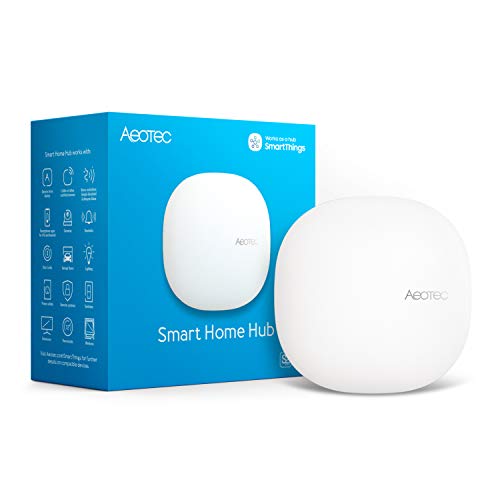
- Works with SmartThings, Matter, Zigbee, Z-Wave, Wi‑Fi, Alexa, and Google Home
- Set up quickly with Wi‑Fi or Ethernet in the SmartThings app
- Local automations improve speed and reliability
Best For: Renters who want broad compatibility and flexible automation
Compact Sensor Hub Pick
Tapo H200 Smart Hub with Chime

- Supports up to 64 sensors/buttons plus 4 cameras or doorbells
- Built-in chime and smart alarm features
- microSD storage supports local recording
Best For: Tapo users in small spaces who want sensors and chime support
Privacy-First Automation Hub

- Local processing boosts privacy and reliability
- Supports Zigbee, Matter, Thread, Ethernet, and 1,000+ brands
- No subscription required for full access
Best For: Users who want advanced automations and broad brand support
Compact Room Control
SwitchBot Hub 2 for IR and Home Monitoring

- IR remote learning for TVs and AC units
- Tracks temperature, humidity, and light
- Includes two smart buttons and scene support
Best For: Apartment dwellers who want a compact hub for IR control and room monitoring
Secure Zigbee Center
Aqara Hub M1S Gen 2 for Small Spaces

- Zigbee 3.0 hub for up to 128 Aqara devices
- Built-in speaker, RGB light, and illumination sensor
- Works with HomeKit, Alexa, Google Assistant, and IFTTT
Best For: Apartment setups built around Aqara Zigbee devices and HomeKit automation
All-in-One Command Hub
SwitchBot Hub 3 with Screen and Knob

- 2.4-inch screen with temperature, humidity, and alert data
- Knob and buttons offer quick physical control
- Works with 100,000+ IR appliances and Matter bridging
Best For: Apartment users who want a visible, hands-on smart home command center
Apartment-Ready Local Control – Home Assistant Green
Home Assistant Green | Smart Home hub with Advanced Automation | Official Home Assistant Hardware
Check Price On AmazonIf you want smart home hubs for apartments that keep setup simple while still allowing serious automation, Home Assistant Green is a strong fit. It comes with Home Assistant already installed, so you only need to plug in power and Ethernet to start building a single control point for lights, routines, and connected devices.
Best For: Apartment dwellers who want a quiet, power-efficient hub with local control and room to expand.
Pros:
- Preinstalled Home Assistant makes it easy to get started
- Small, fanless, and silent design suits compact living spaces
- Uses only a couple of watts of power
- USB expandability supports Z-Wave, Zigbee, and Thread add-ons
Cons:
- Needs Ethernet, so placement depends on a nearby network drop
- Extra connectivity requires separate USB devices
Overall, this is the best pick if you want an apartment hub that prioritizes local data, low power use, and flexibility over a built-in voice assistant style interface.
Wall-Mounted Control Center – Amazon Echo Hub
For smart home hubs for apartments, the Amazon Echo Hub works well when you want a central dashboard instead of juggling multiple apps. Its 8-inch screen lets you arrange controls, start routines, check cameras, and manage compatible devices from one wall-mounted panel.
Best For: Renters and apartment owners who want a simple, visible control panel for Alexa-based devices.
Pros:
- Customizable dashboard makes everyday controls easy to reach
- Built-in hub supports Wi-Fi, Bluetooth, Zigbee, Matter, Sidewalk, and Thread devices
- Wall-mount design helps save counter space
- Can arm/disarm compatible security systems and control media
Cons:
- Some features rely on compatible subscriptions and devices
- Best fit for Alexa ecosystems rather than fully platform-agnostic setups
This is a practical choice if your apartment setup benefits from a dedicated screen and you want fast access to routines, security, and device controls in one place.
Advanced Local Automation – Aqara Hub M3
If you need smart home hubs for apartments with more advanced automation, the Aqara Hub M3 is built around local control and flexible integration. It supports Aqara Zigbee and Thread devices, acts as a Matter bridge, and can integrate third-party devices into the Aqara Home app.
Best For: Apartment users who want local automation, Matter compatibility, and IR control in one hub.
Pros:
- Supports Aqara Zigbee and Thread devices with Matter bridge functionality
- Edge-based automations keep many actions local
- 360° IR blaster can add air conditioners and traditional remotes into your setup
- Offers Wi-Fi, PoE, and USB-C options for stable placement
Cons:
- Supports only Aqara Zigbee devices, not third-party Zigbee devices
- Some cloud-based notifications still need internet access
It stands out for apartment users who want a compact hub that can bridge multiple ecosystems while keeping core automations and storage local.
Simple Sensor Hub with Chime – Tapo Smart Hub H100
The Tapo Smart Hub H100 is a straightforward option for smart home hubs for apartments when you want reliable sensor connections without overcomplicating setup. It links Tapo sensors, switches, and buttons over a low-power wireless protocol and adds a built-in chime for alerts.
Best For: Small apartments needing a low-cost hub for Tapo sensors, buttons, and basic automation alerts.
Pros:
- Supports up to 64 Tapo devices
- Low-power protocol can extend battery life for compatible devices
- Built-in chime and up to 90 dB siren add audible alerts
- Long-range connection is designed to reduce interference
Cons:
- Requires 2.4GHz Wi-Fi
- Works with Tapo sensors, switches, and buttons rather than broad third-party ecosystems
This hub makes sense if you mainly want dependable sensor coverage, simple routines, and extra alerting without adding much bulk to an apartment setup.
Apartment-Friendly Smart Hub – Aeotec Smart Home Hub for SmartThings
For smart home hubs for apartments, the Aeotec Smart Home Hub is a practical pick if you want broad device compatibility without juggling multiple apps. It works with SmartThings, Zigbee, Z-Wave, Matter, Wi-Fi, Alexa, and Google Home, so it can serve as a central controller for lights, sensors, switches, and other connected devices in a smaller space.
Best For: Apartment renters who want a flexible hub that supports lots of device types and voice assistants.
Pros:
- Supports Matter, SmartThings, Z-Wave Plus, Zigbee, Wi-Fi, Alexa, and Google Home
- Easy setup with Wi-Fi or Ethernet through the SmartThings app
- Can automate lights, sensors, switches, and routines from one place
- Many automations now run locally for faster, more reliable operation
Cons:
- Designed for North America only
- Z-Wave Plus support applies to the V3 model only
Overall, this hub makes sense if you want a wide-compatibility backbone for an apartment smart setup and prefer a system that can grow with your devices. It is especially appealing when you want both app control and voice-assistant support in one hub.
Compact Sensor Hub Pick – Tapo H200 Smart Hub with Chime
If you’re comparing smart home hubs for apartments, the Tapo H200 stands out as a compact hub focused on sensors, buttons, cameras, and doorbells. It supports up to 64 switches, sensors, or buttons plus 4 cameras or doorbells, and it also adds a built-in chime and smart alarm functions for a more integrated setup.
Best For: Small spaces that use Tapo sensors, cameras, or a video doorbell and want one hub with chime support.
Pros:
- Supports up to 64 switches, sensors, or buttons plus 4 cameras or doorbells
- Built-in chime and smart alarm features for motion or visitor alerts
- Local microSD storage for recordings up to 512 GB
- Low-power wireless protocol can help sensors and buttons last longer
Cons:
- Requires 2.4GHz Wi‑Fi
- Best fit is the Tapo ecosystem and compatible devices
This is a strong option if your apartment setup centers on Tapo gear and you want a hub that doubles as a chime. It is less of a universal platform than some other hubs, but it offers useful everyday functions in a small footprint.
Privacy-First Automation Hub – Homey Pro mini Smart Hub
Among smart home hubs for apartments, the Homey Pro mini is aimed at users who want local control, privacy, and strong automation tools. It supports Zigbee, Matter, Thread, and Ethernet out of the box, and it can manage devices from more than 1,000 brands through Homey Flow and its app ecosystem.
Best For: Apartment owners who want advanced automation, local processing, and broad brand support without a subscription.
Pros:
- Local data processing can improve privacy and reliability, even if the internet is down
- Supports Zigbee, Matter, Thread, and Ethernet out of the box
- Works with 1,000+ brands and supports Alexa, Google Assistant, and Siri
- No monthly subscription required for full access to features
Cons:
- Z-Wave, Bluetooth, and infrared require the separately sold Homey Bridge
- Some advanced customization may take time to set up
This is the most feature-rich option in the group if you want a hub that can grow with a serious apartment automation setup. It is especially compelling for users who value local processing and want to avoid ongoing fees.
Compact Room Control – SwitchBot Hub 2 for IR and Home Monitoring
For smart home hubs for apartments, the SwitchBot Hub 2 is a practical pick if you want one compact device to handle infrared remotes, basic environmental monitoring, and simple automations. It can learn IR controls for appliances like TVs and air conditioners, while also tracking temperature, humidity, and light so you can build scenes around changing room conditions.
Best For: Apartment dwellers who want a compact hub for IR control, environment tracking, and simple scenes.
Pros:
- Built-in thermometer, hygrometer, and light sensor for room monitoring
- Learns infrared remotes for appliances like TVs and air conditioners
- Supports scenes, geofencing, and two included smart buttons
- Works with Alexa, Google Home, Apple Home, and Matter-supported SwitchBot devices
Cons:
- Requires a 2.4GHz Wi-Fi network
- Support is focused on SwitchBot devices and infrared appliances
Overall, the Hub 2 makes sense if you want a simple apartment-friendly control point with room data built in. It is especially useful when you want automation without adding a lot of separate sensors and controllers.
Secure Zigbee Center – Aqara Hub M1S Gen 2 for Small Spaces
Among smart home hubs for apartments, the Aqara Hub M1S Gen 2 stands out if your setup is centered on Aqara sensors and automations. It uses Zigbee 3.0, supports up to 128 Aqara devices, and adds practical apartment-friendly features like a built-in speaker, RGB light, and illumination sensor for alarms, alerts, and scene control.
Best For: Apartment setups built around Aqara Zigbee devices and HomeKit-compatible automation.
Pros:
- Supports up to 128 Aqara devices with Zigbee 3.0
- Includes a speaker that can work as an alarm or doorbell
- Built-in RGB light and illumination sensor for automations
- Compatible with Apple HomeKit, Alexa, Google Assistant, and IFTTT
Cons:
- Only supports 2.4GHz Wi-Fi
- Designed for Aqara devices, not third-party Zigbee devices
- Setup depends on a secure local network and nearby router placement
This hub is best when you want a reliable Zigbee bridge for a compact apartment and plan to stay within the Aqara ecosystem. If you want a security-minded hub with lighting and alarm features, it offers a lot in a small footprint.
All-in-One Command Hub – SwitchBot Hub 3 with Screen and Knob
If you want smart home hubs for apartments that feel more like a control panel than a hidden bridge, the SwitchBot Hub 3 is the most feature-rich option here. It combines IR control, a display, a knob, temperature and humidity sensing, and automation triggers in one unit, making it easy to manage a small home without juggling multiple apps or controllers.
Best For: Apartment users who want a visible, hands-on smart home command center.
Pros:
- Controls 100,000+ infrared appliances plus SwitchBot devices
- 2.4-inch IPS screen shows home status, weather, and alerts
- Dial and buttons make temperature, lighting, and scene control easy
- Supports Matter bridging and voice control through major assistants
Cons:
- Requires 2.4GHz Wi-Fi
- Only works with infrared devices, not RF devices like garage openers
- Some Apple Home setup requirements depend on the same network
The Hub 3 is a strong fit if you want everyday apartment control in a single, easy-to-read device. Its screen and physical controls make it especially appealing when convenience and quick access matter more than a hidden, app-only setup.
How We Picked These Smart Home Hubs for Apartments
We prioritized compact hubs that fit well in small living spaces, support common protocols like Zigbee, Z-Wave, Matter, Thread, or Wi-Fi, and keep setup manageable for renters. We also looked for strong ecosystem compatibility, useful automation features, and hardware that can replace separate accessories where possible.
Quick Comparison
If you want the simplest voice-first control, a display hub can be the easiest fit. If you prefer flexible, advanced automation, a local-control hub with broad protocol support is usually the better long-term choice. Sensor-heavy options are useful when you want one device to handle multiple apartment tasks, such as temperature monitoring, IR control, or security routines.
Key Buying Factors for Smart Home Hubs for Apartments
Size and Placement
Apartment hubs should be easy to place on a shelf, desk, or entry table without taking over the room. Wall-mounting can help in tighter layouts, but portability matters if you move often.
Compatibility
Look for support that matches your existing devices. Matter is helpful for future-proofing, while Zigbee and Z-Wave remain valuable if you already own sensors, locks, or switches. If your home leans toward Alexa, Google, Apple, or SmartThings, choose a hub that plays well with that ecosystem.
Local Automation and Reliability
For apartments, dependable routines matter more than flashy extras. Local processing can keep automations responsive even when the internet is slow, which is especially helpful for lights, climate, and entryway devices.
Extra Built-In Features
Some hubs add IR blasters, screens, chimes, temperature readings, or light sensors. These extras can reduce clutter and save money if you would otherwise buy separate devices.
Who Should Buy Which Smart Home Hubs for Apartments?
Choose a simple app-and-voice hub if you want easy setup and basic automation. Pick a more advanced multi-protocol hub if you plan to expand over time or already own mixed-brand devices. If your apartment needs monitoring and control in one place, a hub with built-in sensors or a display can be the most practical option.
For most renters, the best Smart Home Hubs for Apartments are the ones that stay compact, integrate cleanly with existing devices, and make daily routines easier without adding complexity.