
Choosing the right PC cooling for rackmount case setups can make a major difference in noise, temperature, and long-term hardware stability. The best options balance airflow, fan placement, case depth, and drive layout without making maintenance harder.
In this roundup, we focus on rackmount cases and cooling panels that suit different builds, from compact 2U systems to high-airflow 4U chassis and liquid-cooling-capable layouts.
Best 10 PC Cooling for Rackmount Case Picks for 2026
Budget 3U Server Chassis
Rosewill RSV-Z3100U 3U rackmount case

- 2 pre-installed 80mm PWM front fans
- ATX and extended ATX compatible
- 6 internal 3.5-inch bays with 4 PCI slots
Best For: Compact rackmount builds needing built-in cooling
Compact Exhaust Panel

- 4 fans with up to 104 CFM airflow
- Quiet 28 dB operation
- Dual ball bearings for longer life
Best For: Quiet exhaust cooling for dense 19-inch racks
High-Capacity 4U Chassis
Rosewill RSV-R4000U 4U rackmount case
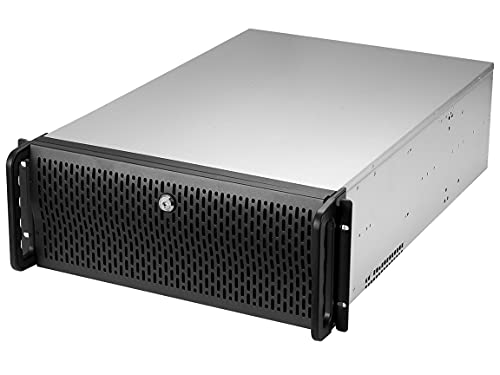
- 4 pre-installed fans for stronger airflow
- 2 front 120mm PWM and 2 rear 80mm fans
- 8 x 3.5 bays plus 3 x 5.25 device bays
Best For: Larger rack builds that need strong airflow and storage
Smart Thermostatic Rack Fan

- Programmable thermostat sensor control
- 3 fans with up to 225 CFM airflow
- Space-saving 1U rack format
Best For: Temperature-controlled exhaust cooling in 19-inch racks
3U Liquid-Cooling Flex

- 3 pre-installed 120mm fans
- 360mm radiator support
- ATX, Micro-ATX, and Mini-ITX support
Best For: 3U rackmount builds that may switch between air cooling and AIO liquid cooling
Drive-First Airflow Tower
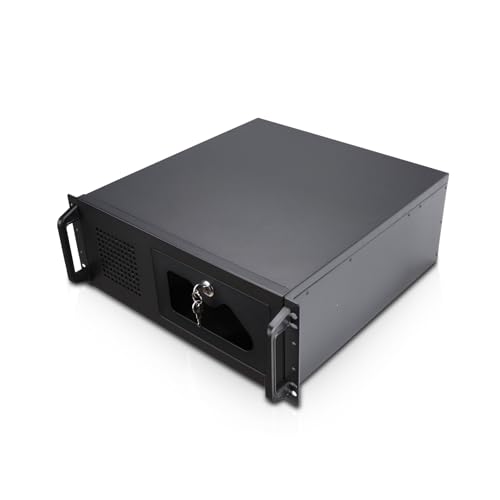
- 3 pre-installed PWM fans
- 7 internal 3.5-inch bays
- ATX and CEB motherboard support
Best For: Drive-heavy server builds that need simple, preinstalled air cooling
Compact 2U Airflow Build

- 4 preinstalled 80mm intake fans
- Supports Micro-ATX and Mini-ITX
- Up to 9 x 3.5-inch drive bays
Best For: Compact rackmount servers that need good airflow and high drive capacity
3U High-Capacity Rackmount Cooling
RackChoice 3U Server Chassis for ATX and Micro-ATX

- 2 x 120mm + 1 x 80mm front fans plus 2 x 60mm rear fans
- Fits ATX, Micro-ATX, and Mini-ITX motherboards
- Supports up to 8 x 3.5-inch drives or mixed 3.5/2.5 layouts
Best For: Dense rackmount builds that need strong airflow and high drive capacity
Short-Depth Airflow Rackmount
RackChoice 2U Micro-ATX Chassis

- Short 14.17-inch depth for tight rack installations
- Three 80mm fans included for ventilation
- Supports ATX PS2 PSU with top or side cooling
Best For: Shallow Micro-ATX rack systems with simple air cooling needs
Compact 2U Cooling with 5.25 Bays
RackChoice Micro-ATX Rackmount Case

- 2 x 80mm intake fans plus top 120mm PSU fan support
- 2 x 5.25-inch bays and 4 x 3.5-inch internal bays
- 400mm depth keeps the chassis compact
Best For: Utility rackmount builds that need cooling and 5.25-inch drive bays
Budget 3U Server Chassis – Rosewill RSV-Z3100U 3U rackmount case
If you want practical PC cooling for rackmount case builds without adding extra hardware, this 3U Rosewill chassis gives you a straightforward airflow setup. The two pre-installed 80mm PWM front fans are aimed at keeping drives and internal components cool while staying relatively quiet, and the ATX/extended ATX support leaves room for a flexible server or desktop-style build.
Best For: Small rackmount systems that need basic, built-in front-to-back cooling with ATX flexibility.
Pros:
- Two pre-installed 80mm PWM front cooling fans
- ATX and extended ATX compatibility for flexible builds
- Six internal 3.5-inch bays plus 4 PCI expansion slots
- Front LED indicators and 2 USB 3.0 ports add everyday utility
Cons:
- Only 2 fans included, so heavy-duty thermal loads may need more airflow
- 3U height is more compact than larger server chassis
For a rackmount case focused on simple, dependable cooling, this model covers the essentials well. It is a solid fit when you need airflow for drives and components, but do not want to move up to a larger 4U chassis.
Compact Exhaust Panel – Kutatek 2U rack fan panel
Rack Mount Fan Panel 2U, Exhaust Airflow, for Cooling AV, Home Theater, Network 19" Racks
Check Price On AmazonThis 2U fan panel is a strong option if your main goal is PC cooling for rackmount case or AV rack setups and you need to push hot air out efficiently. With four high-performance axial fans, up to 104 CFM of airflow, and a slim 2U footprint, it is designed for tight spaces where heat buildup can still be a problem.
Best For: Rack users who want a compact exhaust solution with strong airflow and low noise.
Pros:
- Four fans deliver up to 104 CFM combined airflow
- Low 28 dB operating noise suits quiet environments
- Dual ball bearing construction improves durability
- Single AC cord and on/off switch make setup simple
Cons:
- Exhaust-focused design is not a full chassis cooling solution
- Requires rack space and AC power rather than internal case mounting
If you need an add-on cooling panel rather than a new enclosure, this unit offers a clean, practical way to improve rack ventilation. It is especially useful where quiet operation and 24/7 reliability matter.
High-Capacity 4U Chassis – Rosewill RSV-R4000U 4U rackmount case
When PC cooling for rackmount case builds needs more headroom, this 4U Rosewill chassis stands out with four pre-installed fans and a larger internal layout. The combination of two 120mm PWM front fans and two 80mm rear fans is geared toward moving air across drives and out the back, which makes it a practical choice for fuller server-style builds.
Best For: Larger rackmount systems that need more bays, more airflow, and more expansion room.
Pros:
- Four pre-installed fans for broader cooling coverage
- Two front 120mm PWM fans plus two rear 80mm fans
- Eight internal 3.5-inch bays and 3 x 5.25-inch device bays
- ATX and CEB compatibility with 7 PCI expansion slots
Cons:
- 4U size takes more rack space than compact chassis
- Designed for larger builds, so it may be more case than smaller systems need
This is the better pick if you want a rackmount case that can handle more drives while keeping airflow a priority. It balances expansion, cooling, and usability in a way that suits heavier-duty systems.
Smart Thermostatic Rack Fan – Tupavco TP1731 1U rack cooler
For users focused on responsive PC cooling for rackmount case setups, this 1U Tupavco fan unit adds automatic temperature control and strong exhaust airflow. Its three 120mm ball-bearing fans can move up to 225 CFM, and the programmable thermostat helps the system react to heat without constant manual adjustment.
Best For: Rack cabinets that benefit from sensor-based cooling control and high airflow in a 1U format.
Pros:
- Programmable thermostat sensor controller for automatic fan triggering
- Three 120mm fans deliver up to 225 CFM airflow
- 1U rack format saves space in 19-inch cabinets
- Ball-bearing fans are built for continuous use
Cons:
- Thermostat-driven design is more specialized than a simple always-on fan panel
- 1U layout is compact, so it is best for exhaust support rather than full chassis cooling
This unit makes sense if you want cooling that responds to temperature instead of running manually all the time. It is a smart fit for rack users who value automation, airflow, and space efficiency.
3U Liquid-Cooling Flex – 3U Rackmount Server Chassis
If you want PC cooling for rackmount case builds that can go either way, this 3U chassis is built around airflow or liquid cooling. It ships with three 120mm fans pre-installed, but it also supports a 360mm radiator when you remove those fans, making it a flexible option for compact server or workstation setups.
Best For: Builders who want a 3U rackmount case with preinstalled fans now and 360mm AIO support later.
Pros:
- Includes 3 pre-installed 120mm fans for immediate airflow
- Supports 360mm liquid cooling radiators for AIO-based builds
- Fits ATX, Micro-ATX, and Mini-ITX motherboards
- Supports SFX or SFX-L power supplies and 8 expansion slots
Cons:
- 360mm radiator support requires removing the pre-installed fans
- GPU clearance drops to 305mm with AIO cooling installed
- Low-profile GPU height limit is 115mm
This is a strong pick if your rackmount build needs cooling flexibility in a 3U footprint. It favors practical server-style layouts, with storage and expansion support that make sense for compact high-density systems.
Drive-First Airflow Tower – RSV-R4100U Server Chassis
For PC cooling for rackmount case setups where storage is the priority, this 4U chassis focuses on straightforward airflow with pre-installed fans. It includes one 120mm PWM fan up front and two 80mm PWM fans in the rear, which gives you a simple cooling layout for drive-heavy server builds.
Best For: Storage-focused rackmount builds that want basic, pre-installed air cooling in a 4U chassis.
Pros:
- 3 pre-installed cooling fans for immediate airflow
- 120mm PWM front fan plus 2 rear 80mm PWM fans
- 7 internal 3.5-inch bays for large drive capacity
- ATX and CEB motherboard compatibility
Cons:
- Cooling is air-only, with no liquid-cooling support mentioned
- Uses a tower-style layout rather than a compact rack chassis
- Only 6 expansion slots are listed in the details
This case makes sense when you want a roomy, airflow-first enclosure for lots of hard drives. It is less about advanced thermal tuning and more about dependable, built-in cooling for a conventional server tower.
Compact 2U Airflow Build – MicroATX/Mini-ITX 2U Chassis
If you need PC cooling for rackmount case builds in a shallow footprint, this 2U chassis keeps things simple with four preinstalled 80mm intake fans. It is aimed at Micro-ATX and Mini-ITX systems and also supports standard ATX power supplies, so it works well for compact server builds that still need solid front-to-back airflow.
Best For: Compact 2U rackmount systems that need strong intake airflow and lots of 3.5-inch drive space.
Pros:
- 4 preinstalled 80mm intake fans for airflow right out of the box
- Supports Micro-ATX and Mini-ITX motherboards
- Up to 9 x 3.5-inch drive bays with Mini-ITX, or 7 with Micro-ATX
- Supports standard ATX power supplies
Cons:
- Air cooling only is specified, with no liquid-cooling support mentioned
- 2U height limits component clearance compared with larger rack cases
- Bottom 3.5-inch drives may need 90-degree SATA adapters in Mini-ITX layouts
This is a practical choice if you want a dense storage chassis with built-in cooling in a relatively short rack depth. It is best for builders who value drive count and compatibility more than oversized GPU or radiator clearance.
3U High-Capacity Rackmount Cooling – RackChoice 3U Server Chassis for ATX and Micro-ATX
If you need PC cooling for rackmount case builds that also carry a lot of drives, this 3U chassis is built around airflow and storage density. It ships with 2 x 120mm plus 1 x 80mm front intake fans and 2 x 60mm rear fans pre-installed, while still supporting ATX, Micro-ATX, and Mini-ITX boards, standard ATX or SFX power supplies, and a large drive stack.
Best For: Builders who want a 3U rackmount case with strong front-to-rear airflow and lots of 3.5-inch drive capacity.
Pros:
- Includes 2 x 120mm + 1 x 80mm front fans and 2 x 60mm rear fans pre-installed.
- Supports ATX, Micro-ATX, and Mini-ITX motherboards.
- Accommodates up to 8 x 3.5-inch drives or 6 x 3.5-inch plus 2 x 2.5-inch drives, depending on layout.
- Allows standard ATX PSU or SFX PSU with the included ATX-to-SFX bracket setup.
Cons:
- ATX motherboard placement can sit partly under the PSU, which limits access to some components.
- The PSU occupies two PCI slot spaces.
- GPU clearance is limited to 128mm high by 250mm long unless HDD brackets are removed.
Overall, this is a practical choice when cooling and storage expansion matter more than easy component access. The fan configuration and mixed motherboard support make it a flexible rackmount option for dense, air-cooled systems.
Short-Depth Airflow Rackmount – RackChoice 2U Micro-ATX Chassis
For PC cooling for rackmount case setups where depth is tight, this short 2U chassis keeps things simple with three 80mm fans for ventilation and support for ATX PS2 power supplies using either top or side cooling. Its Micro-ATX-first layout and front-access I/O make it suited to compact server-style systems that still need practical airflow.
Best For: Compact Micro-ATX rackmount builds that need a shallow chassis and straightforward air cooling.
Pros:
- Short 14.17-inch depth makes it easier to fit into tighter rack spaces.
- Three 80mm fans are included for air ventilation.
- Supports ATX PS2 power supplies with either top 120mm or side 80mm cooling.
- Front-access I/O can simplify daily use in server-style setups.
Cons:
- Built specifically for Micro-ATX and mini-ITX motherboards.
- Only one internal 3.5-inch drive bay is listed in the notes.
- Expansion is limited compared with larger rackmount chassis.
This model makes sense when physical fit and basic ventilation matter more than maximum internal space. It is a focused short-depth option for smaller rack systems that still need dependable airflow.
Compact 2U Cooling with 5.25 Bays – RackChoice Micro-ATX Rackmount Case
If you want PC cooling for rackmount case builds in a compact 2U format, this chassis combines a top-mounted 120mm PSU fan path with 2 x 80mm intake fans. It supports Micro-ATX and mini-ITX boards, includes 2 x 5.25-inch bays plus internal drive space, and keeps the footprint shallow at 400mm depth not including the handle.
Best For: Compact rackmount systems that need front intake cooling and room for 5.25-inch devices.
Pros:
- Includes 2 x 80mm cooling fans for intake.
- Supports ATX PS2 standard power supplies with a 120mm fan on top.
- Offers 2 x 5.25-inch bays plus 4 x 3.5-inch internal bays.
- Comes with a 3.5-to-2.5 adapter and supports low-profile expansion cards.
Cons:
- Only supports Micro-ATX and mini-ITX motherboards.
- Expansion is limited to 4 low-profile add-on cards.
- The rackmount depth is compact, so larger components may be harder to plan around.
This is a good fit when you need a smaller rack chassis with practical cooling and legacy front-bay support. The fan setup and drive layout make it useful for utility-focused builds rather than high-expansion systems.
How We Picked the Best PC Cooling for Rackmount Case
We selected options based on airflow potential, chassis size, drive capacity, cooling flexibility, and compatibility with common motherboard and PSU formats. For PC Cooling for Rackmount Case builds, we also looked at practical details like front intake support, rear exhaust paths, and whether the layout leaves enough room for high-TDP components or radiator hardware.
Quick Comparison
In general, 2U cases prioritize compactness and density, but they can be harder to cool quietly. 3U models often offer a better balance of space and airflow, while 4U cases are usually the easiest choice for stronger air cooling, more drives, and broader component compatibility. Fan panels can also help when the chassis itself needs extra exhaust or targeted rack airflow.
Key Buying Factors for PC Cooling for Rackmount Case
Case Height and Air Volume
More vertical space usually means easier airflow and larger, slower-spinning fans. If cooling performance matters most, 4U is typically more forgiving than 2U.
Fan Support and Air Path
Look for cases with front intake and rear exhaust support, plus sensible fan sizes such as 80mm, 120mm, or multi-fan panels. A clean front-to-back air path is especially important in rack environments.
Component Heat Load
Match the enclosure to your hardware. Storage-heavy systems, workstation builds, and hotter CPUs benefit from more open layouts, while lightweight network or media systems can work well in compact chassis.
Drive Bays and Internal Layout
More drive bays can improve storage capacity, but they can also restrict airflow. If you plan to run many HDDs, favor cases with deliberate fan placement and enough clearance around the drive cage.
Liquid Cooling and PSU Clearance
If you want radiator support, verify depth, mounting position, and PSU placement before buying. For some rackmount systems, top or side PSU orientation can affect both cooling and cable routing.
Who Should Buy Which PC Cooling for Rackmount Case?
Choose a 2U chassis if you need a compact footprint and acceptable cooling for moderate loads. Pick a 3U case if you want a practical middle ground with better airflow and more build flexibility. Go with a 4U chassis if cooling performance, expansion, and easier maintenance matter most. If your rack runs warm or includes multiple high-load systems, consider adding a dedicated fan panel for stronger exhaust support.