
Upgrading to a faster wired network is one of the easiest ways to improve performance for cameras, access points, workstations, and NAS storage.
This roundup of network switches with 10gbe poe focuses on practical choices for mixed-speed setups, better power delivery, and future-ready uplinks.
Best 10 Network Switches with 10gbe Poe Picks for 2026
Managed 2.5G PoE with 10G uplinks
MokerLink 8-Port 2.5G PoE Managed Switch with 10G Uplinks

- 8 x 2.5G PoE ports with 802.3af/at support
- 2 x 10G RJ45 and 4 x 10G SFP+ uplinks
- Web/CLI L3 management with VLAN, ACL, and routing
Best For: Managed multigig PoE networks that need flexible 10G uplinks
Simple PoE access switch with uplink support
MokerLink 11-Port Gigabit PoE Switch with SFP

- 8 Gigabit PoE ports with 802.3af/at support
- 2 Gigabit uplinks plus 1 SFP port
- 120W power budget with AI detection and QoS
Best For: Gigabit PoE camera and AP setups needing a fiber uplink
Quiet multigig switch with dual 10G copper ports
NICGIGA 10-Port 10Gbps Switch with 2 x 10G RJ45

- 8 x 2.5Gb ports plus 2 x 10Gb RJ45 ports
- 80Gbps switching capacity
- Fanless metal case with lightning protection
Best For: Quiet plug-and-play home labs and offices needing 2.5G plus 10G
Smart 2.5G PoE Web-Managed Pick
9 Port 2.5Gb PoE+ Managed Switch
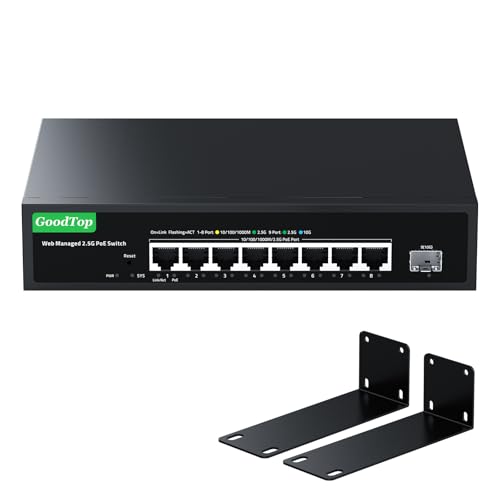
- 8 x 2.5G PoE ports with 135W budget
- 1 x 10G SFP+ uplink with flexible media support
- Web-managed basics like VLAN, QoS, and LAG
Best For: Small networks needing 2.5G PoE access and a 10G uplink
Plug-and-Play 10G Copper Switch
TRENDnet 10-Port 10G Unmanaged Switch
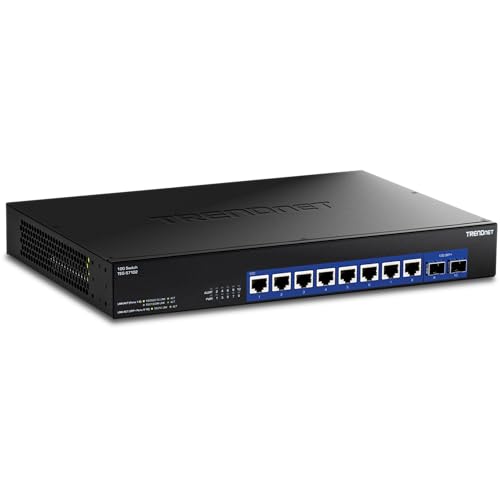
- 8 x 10GBASE-T ports and 2 x 10G SFP+ slots
- Unmanaged design with no configuration required
- 1U rackmount metal housing with smart fan design
Best For: Simple 10G switching without PoE or setup
Managed PoE Gigabit Expansion Pick
NETGEAR 26-Port PoE Gigabit Smart Managed Switch

- 24 x 1G PoE+ ports with 190W budget
- 2 x 1G SFP ports for fiber expansion
- Smart managed interface with Insight remote access
Best For: Large PoE gigabit setups needing many powered ports
Budget 2.5G PoE Uplink Pick

- Eight 2.5G PoE+ ports with up to 30W each
- Two 10G SFP uplinks for faster backbone links
- Fanless metal build with 130W total PoE budget
Best For: Easy 2.5G PoE access and 10G uplinks in a small network
Managed 10G Control Choice

- Managed 10GbE switch with VLAN, QoS, and LACP
- Four 10G RJ45 ports plus two 10G SFP+ ports
- Supports multi-speed RJ45 links from 100M to 10G
Best For: Advanced users who want managed 10GbE networking without PoE
High-Bandwidth Unmanaged Pick
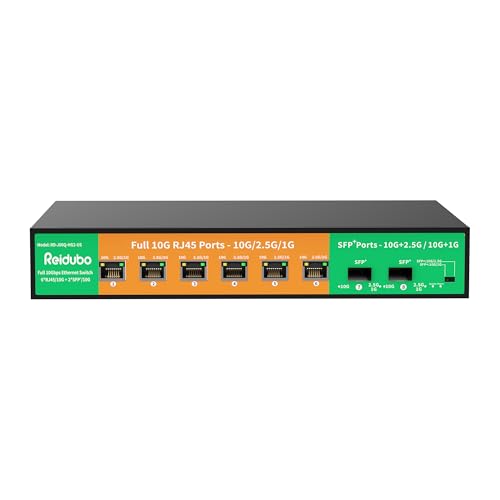
- Six 10G RJ45 ports for fast copper connections
- Two 10G SFP+ uplinks and 160Gbps capacity
- Plug-and-play unmanaged design with quiet fan
Best For: Users who want a fast, simple 10GbE switch for NAS and PCs
Managed 2.5G PoE with 10G uplinks – MokerLink 8-Port 2.5G PoE Managed Switch with 10G Uplinks
If you need network switches with 10gbe poe for a high-speed edge or aggregation setup, this MokerLink model stands out for combining 8 x 2.5G PoE ports with both 2 x 10G RJ45 and 4 x 10G SFP+ uplinks. It is a strong fit when you want PoE access ports plus flexible 10G backhaul in one managed unit.
Best For: Small business, prosumer, or lab networks that need 2.5G PoE access and 10G uplinks in a managed switch.
Pros:
- 8 x 2.5G PoE ports with IEEE 802.3af/at support and up to 30W per port
- Dual 10G RJ45 plus 4 x 10G SFP+ ports for flexible uplinks and aggregation
- Web/CLI L3 management with VLAN, ACL, QoS, routing, and diagnostics
- 120W total power budget in a metal desktop or wall-mountable enclosure
Cons:
- Default package does not include SFP modules
- More switch features than a simple plug-and-play setup may need
- Built-in 120W budget may limit very dense PoE deployments
This is the most feature-rich option in the group if you want managed control alongside multigig PoE access and true 10G expansion. It is especially compelling where routing, security, and uplink flexibility matter together.
Compact non-PoE 10G desktop switch – TRENDnet 6-Port 10G Switch with 2.5G Ports
For buyers comparing network switches with 10gbe poe, this TRENDnet unit is the simplest non-PoE option here, but it does deliver a practical mix of 10G and 2.5G copper ports. It is a compact choice when you want faster wired links for desktops, NAS gear, or upstream connections without adding PoE requirements.
Best For: Desktop or wall-mounted setups that need a few 10G copper ports and 2.5G connectivity.
Pros:
- 2 x 10G RJ-45 ports for high-speed connections
- 4 x 2.5G RJ-45 ports for multigig devices over Cat5e or better
- 60Gbps switching capacity for its six-port design
- Wall-mountable form factor for flexible placement
Cons:
- No PoE support
- Fewer total ports than the other switches in this roundup
- Best performance assumes compatible 10G network adapters and service
This is the cleanest fit if your priority is affordable copper-based 10G expansion rather than PoE. The smaller footprint and mixed 2.5G/10G layout make it easy to place in a home office or small network rack.
Simple PoE access switch with uplink support – MokerLink 11-Port Gigabit PoE Switch with SFP
If you are shopping network switches with 10gbe poe but can live with gigabit access ports, this MokerLink model offers a straightforward PoE layout with useful uplinks. It is aimed at camera, access point, and general PoE deployments where plug-and-play simplicity matters more than multigig access speed.
Best For: Budget PoE camera or access point networks that need gigabit ports and one fiber uplink.
Pros:
- 8 Gigabit PoE ports with IEEE 802.3af/at support and up to 30W per port
- 2 Gigabit uplink ports plus 1 SFP port for longer-distance fiber runs
- 120W total PoE power budget with built-in power supply
- AI detection and QoS on selected ports for easier maintenance
Cons:
- Does not provide 10G or 2.5G access ports
- No management features described in the supplied notes
- Not compatible with passive 24V PoE
This is a practical choice when you want a simple PoE switch with fiber uplink support and solid power output. It is less suited to high-performance multigig networks, but it covers common IP camera and AP installations well.
Quiet multigig switch with dual 10G copper ports – NICGIGA 10-Port 10Gbps Switch with 2 x 10G RJ45
This NICGIGA model is a good fit if you want network switches with 10gbe poe in the broader sense of fast copper switching, but you do not actually need PoE output. It combines 8 x 2.5Gb ports with 2 x 10Gb RJ45 ports, making it a strong desktop or wall-mount option for NAS, WiFi 7 routers, and 10G NICs.
Best For: Home labs and small office networks that need 2.5G access with two 10G copper ports.
Pros:
- 8 x 2.5Gb ports plus 2 x 10Gb RJ45 ports for mixed-speed devices
- 80Gbps switching capacity for heavier traffic loads
- Fanless metal design with 4KV lightning protection
- Plug-and-play setup with automatic MDI/MDIX
Cons:
- No PoE support
- Only two ports run at 10Gb speed
- Not intended for advanced switching features or configuration
Among non-PoE options, this one offers the most balanced mix of multigig access and true 10G copper uplinks. It is a sensible pick when quiet operation and simple deployment matter more than power delivery.
Smart 2.5G PoE Web-Managed Pick – 9 Port 2.5Gb PoE+ Managed Switch
If you want network switches with 10gbe poe-style flexibility for a small wired setup, this 9-port model is built around 8 x 2.5G PoE ports plus a 10G SFP+ uplink. It fits users who need faster-than-gigabit device connections, single-cable power delivery, and basic web management without stepping into a full enterprise platform.
Best For: Small offices or home labs that need 2.5G PoE access ports and a 10G SFP+ uplink.
Pros:
- 8 x 2.5G PoE ports with up to 30W per port and a 135W total budget.
- 1 x 10G SFP+ slot supports 10M through 10G and works with copper modules, fiber, DAC, and AOC.
- Basic web management includes VLAN, QoS, link aggregation, spanning tree, MAC address tools, and DHCP client.
- Fanless metal housing is designed for silent operation.
Cons:
- The 10G connection is SFP+ only, not 10G RJ45.
- Setup requires using IPv4 first before logging in.
- Changes need to be applied and then saved separately to persist after reboot.
Overall, this is a practical pick if you want a compact PoE switch with higher-speed access ports and a 10G uplink path. The feature set is straightforward, but the management workflow is a little manual.
Plug-and-Play 10G Copper Switch – TRENDnet 10-Port 10G Unmanaged Switch
For buyers comparing network switches with 10gbe poe alternatives, this unmanaged TRENDnet model focuses on raw 10G connectivity instead of PoE. It gives you eight 10GBASE-T RJ-45 ports plus two 10G SFP+ slots, making it a simple way to add high-speed switching where power injection is handled elsewhere.
Best For: Users who want straightforward 10G copper and SFP+ switching with no setup.
Pros:
- 8 x 10GBASE-T RJ-45 ports support up to 10Gbps over Cat6A or better cabling.
- 2 x 10G SFP+ ports are included for uplinks or NAS/access server connections.
- Unmanaged design means no configuration is needed.
- 1U rackmount metal housing and smart fan design suit structured installations.
Cons:
- It does not include PoE, so it will not power devices directly.
- It is not designed for users who need VLAN or other managed features.
- 10GBASE-T performance depends on using Cat6A or better cabling.
This is a clean fit if your priority is fast, reliable 10G switching without management overhead. It is best treated as a simple backbone or aggregation switch rather than a PoE edge switch.
Managed PoE Gigabit Expansion Pick – NETGEAR 26-Port PoE Gigabit Smart Managed Switch
If you are shopping network switches with 10gbe poe in mind, this NETGEAR model is more about high-port-count PoE and managed control than 10G speed. It offers 24 PoE+ gigabit ports, 2 SFP slots for fiber expansion, and a smart-managed interface that suits teams that want centralized control on a dependable gigabit backbone.
Best For: Gigabit PoE deployments that need many powered ports and basic smart management.
Pros:
- 24 x 1G PoE+ ports with a 190W total power budget.
- 2 x 1G SFP ports support fiber optic connections and expansion.
- Smart managed software includes secure setup, access control, and SNMP management.
- 1 year NETGEAR Insight remote management is included.
Cons:
- It is a gigabit switch, not a 10G switch.
- The SFP ports are 1G only.
- It lacks the faster multi-gig or 10G copper options found on some higher-speed models.
In practice, this is a strong fit when PoE port count and manageable networking matter more than top-end uplink speed. It is a solid expansion switch, but not the right choice if 10G is a hard requirement.
Budget 2.5G PoE Uplink Pick – 8×2.5G PoE+ 2x10G SFP
If you need network switches with 10gbe poe-style uplinks for faster cameras, WiFi 6 access points, or a 2.5Gb NAS, this unmanaged GigaPlus model is built around speed and simplicity. It gives you eight 2.5G PoE+ RJ45 ports plus two 10G SFP uplinks, so you can power compatible devices while still keeping headroom for faster backbone connections.
Best For: Small offices or homes that want easy 2.5G PoE access ports with 10G SFP uplinks.
Pros:
- 8 PoE+ ports support 802.3af/at and up to 30W per port.
- 2 x 10G SFP uplinks and 80Gbps switching capacity.
- Fanless metal design with 6KV lightning protection.
- Works with 2.5Gb NAS, 4K PoE cameras, and WiFi 6 APs.
Cons:
- Unmanaged design means no advanced configuration tools.
- PoE is limited to the eight RJ45 access ports.
- No 10G RJ45 copper ports if you need all-copper 10GbE.
This is a practical choice if you want a quiet, plug-and-play switch for powering 2.5G endpoints while reserving the SFP+ ports for higher-speed uplinks. It is less feature-rich than managed alternatives, but the hardware mix is well matched to simple multi-device networks.
Managed 10G Control Choice – 4x10G RJ45 2x10G SFP+
For buyers comparing network switches with 10gbe poe, this SODOLA model stands out as a managed 10GbE option focused on control rather than power output. It combines four 10G RJ45 ports with two 10G SFP+ ports, and it supports a wide range of management features for tuning VLANs, QoS, LACP, and monitoring.
Best For: Users who want a managed 10GbE switch for NAS, PCs, routers, or APs.
Pros:
- 4 x 10G RJ45 ports plus 2 x 10G SFP+ ports.
- Supports 100M/1G/2.5G/5G/10G on RJ45 ports.
- Managed features include LACP, VLAN, QoS, SNMP, and RSTP.
- Metal case with internal cooling fan.
Cons:
- Does not include PoE output in the supplied specs.
- Fan-based cooling may matter to noise-sensitive setups.
- Management setup requires an IPv4 address before login.
This is the right pick if you want flexibility and traffic control more than PoE power delivery. Its strong mix of 10G copper, SFP+, and software features makes it a better fit for advanced home labs or small business networks than a basic unmanaged switch.
High-Bandwidth Unmanaged Pick – 6x10G RJ45 2x10G SFP+
If you want network switches with 10gbe poe in the broader sense of high-speed edge networking, this Reidubo unit is built for fast copper and SFP+ connections without setup overhead. It offers six 10G RJ45 ports plus two 10G SFP+ uplinks, with auto-negotiation for 1G, 2.5G, 5G, and 10G devices.
Best For: Fast plug-and-play 10GbE links for NAS, PCs, routers, and WiFi 6/7 APs.
Pros:
- Six 10G RJ45 ports provide plenty of high-speed copper connections.
- Two 10G SFP+ uplinks expand backbone or server connectivity.
- 160Gbps switching capacity supports heavy transfers.
- Quiet fan, metal casing, and rackmount support improve deployment flexibility.
Cons:
- No PoE support is listed in the supplied product details.
- Unmanaged design offers no traffic control features.
- Fan cooling may not suit completely silent environments.
This switch is strongest as a simple, high-capacity 10GbE hub for storage and workstation traffic. If your priority is speed and easy deployment rather than PoE or management tools, it is a solid fit.
How We Picked the Best Network Switches with 10gbe Poe
We focused on switches that balance 10GbE connectivity, PoE support, and real-world deployment value. Priority went to models with enough uplink flexibility for storage or backbone links, sensible PoE budgets for cameras and access points, and configurations that fit both desktop and rack-style installations. We also considered whether the switch is unmanaged, smart managed, or fully managed, since that affects setup effort and network control.
Quick Comparison
When comparing Network Switches with 10gbe Poe, start with port mix. Some models emphasize a few 10GbE RJ-45 ports plus 2.5GbE access ports, while others favor 10G SFP+ for fiber or DAC uplinks. Unmanaged switches are best for simple plug-and-play use, while managed options suit users who need VLANs, QoS, monitoring, or PoE control. PoE budget matters just as much as port count if you plan to power cameras, Wi-Fi access points, intercoms, or VoIP phones.
Key Buying Factors for Network Switches with 10gbe Poe
Port Speed and Uplink Type
Check whether you need 10G RJ-45, 10G SFP+, or a mix of both. RJ-45 is easier for copper cabling, while SFP+ is often better for longer runs, lower heat, and backbone links.
PoE Standard and Budget
Most buyers should look for IEEE 802.3af/at support. If you are powering multiple high-draw devices, the total PoE budget is more important than the number of PoE ports alone.
Management Features
Managed and smart managed switches add VLANs, link aggregation, traffic prioritization, and monitoring. Those features are useful for business networks, segmented home labs, and AV systems, but they are not necessary for every setup.
Noise, Cooling, and Form Factor
Fanless models are ideal for quiet offices or desks, but they may have lower power limits. Fan-cooled switches usually handle heavier loads better. Also confirm whether you need wall-mount, desktop, or rack compatibility.
Who Should Buy Which Network Switches with 10gbe Poe?
If you want the simplest path, choose an unmanaged model with the right mix of 10GbE and PoE ports. If you run cameras, access points, or a segmented office network, a managed switch is usually the better investment. If your main goal is fast storage or workstation connectivity, prioritize 10G uplinks and enough non-PoE ports to keep traffic flowing without bottlenecks.
For most buyers, the best choice is the switch that matches today’s devices while leaving room for one or two upgrades later. That extra capacity is what makes Network Switches with 10gbe Poe feel worthwhile long after the first install.