
Clear speech can make a bigger difference than a sharper camera. The best lavalier microphones keep voices close to the source, reduce distracting room noise, and let creators record more naturally than with a phone’s built-in mic.
This roundup compares 10 lavalier microphone options for phones, cameras, computers, presentations, and interviews. Use the buying guide below to narrow your choice by compatibility, range, recording quality, battery life, and budget.
Best 10 Lavalier Microphones Picks for 2026
Best Compact Wireless Pick

- 9g transmitters with 48kHz/24-bit audio
- 300m line-of-sight range and noise cancellation
- Up to 40 hours with charging case
Best For: Vloggers, filmmakers, and podcasters
Best for Live Performances

- Includes headset and lapel microphones
- 15 UHF frequencies with digital transmission
- Rechargeable bodypack and receiver
Best For: Karaoke, church, weddings, and small stages
Best for Two-Person Recording
NEEWER CM28 Wireless Lavalier Mic

- Two transmitters with one receiver
- 4GB onboard storage per transmitter
- 200m range and one-click noise cancellation
Best For: Interviews, vlogs, and two-person podcasts
Best Wired Professional Pick

- Discreet 4mm broadcast-oriented capsule
- Omnidirectional pickup for flexible placement
- Durable 1.2m Kevlar-reinforced cable
Best For: Filmmakers, streamers, and wired camera setups
Best Wireless Pick

- Wireless two-mic kit with charging case
- Lightning and USB-C adapters included
- Noise reduction and outdoor wind protection
Best For: Mobile creators, interviews, and social video
Best Wired Value

- Two wired lavalier microphones
- No batteries or pairing required
- 3.5mm TRS plug with 3.9-foot cable
Best For: Presentations, cameras, and compatible transmitters
Best for Long Recording
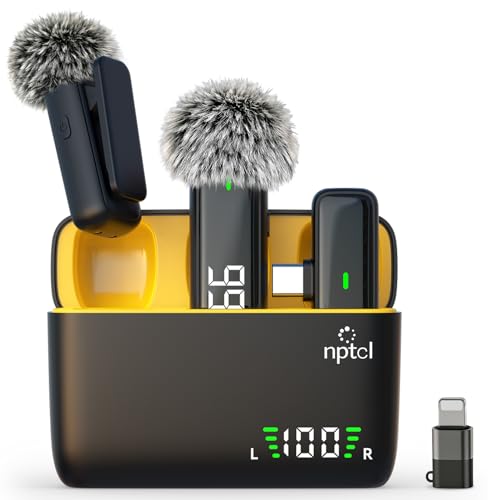
- Two microphones for dual-person pickup
- Up to 24 hours with charging case
- USB-C and included Lightning compatibility
Best For: Vloggers, interviews, and extended mobile sessions
Versatile Wireless Pick

- USB-C, Lightning, and 3.5mm receiver options
- Dual transmitters for two-person recording
- Up to 65 feet of wireless range
Best For: Creators using multiple device types
Easy Two-Mic Value
2-Pack Wireless Lavalier Microphone

- USB-C and Lightning receiver included
- Two 10-gram microphones for interviews
- Up to 6 hours of use per mic
Best For: Portable iPhone and Android recording
Case-Friendly Choice
MAYBESTA Wireless Lavalier Mic

- Longer receiver works with most phone cases
- Supports Lightning and USB-C devices
- Two mics with plug-and-play pairing
Best For: Phone-based creators who keep cases on
Best Compact Wireless Pick – Hollyland Lark M2
For creators who want highly portable lavalier microphones with strong wireless performance, the Hollyland Lark M2 combines 48kHz/24-bit audio, noise cancellation, and broad device compatibility. Its camera receiver supports both mono and stereo recording, while factory pairing keeps setup simple.
Best For: Filmmakers, vloggers, podcasters, and streamers needing a small wireless kit with long battery life.
Pros:
- Very compact 9g transmitters with 48kHz/24-bit audio capture.
- Up to 300m line-of-sight transmission range and one-touch noise cancellation.
- Up to 40 hours of total camera-version use with the charging case.
- Supports camera, smartphone, and computer connections, including UAC operation.
Cons:
- Mono/stereo switching is supported through the camera’s 3.5mm connection.
- The advertised transmission distance depends on clear line-of-sight conditions.
The Lark M2 is a strong all-around choice when discreet size, polished audio specifications, and flexible wireless connectivity matter more than having built-in transmitter recording.
Best for Live Performances – Phenyx Pro PDP-1-1B
This Phenyx Pro system is a practical choice among lavalier microphones for karaoke, presentations, teaching, and small-stage use. It includes both lapel and headset microphones, a bodypack transmitter, and a receiver designed for direct connection to common PA equipment.
Best For: Live performers, wedding speakers, church users, teachers, and karaoke setups.
Pros:
- Includes both headset and lapel/lavalier microphone options.
- Uses 48kHz/24-bit UHF digital transmission with 15 tunable frequencies.
- Offers a stated 160–200ft line-of-sight range for live use.
- Rechargeable USB-C batteries and one-tap frequency selection simplify operation.
Cons:
- The receiver uses a 6.35mm output, so some devices may need the included adapter.
- Range is affected by obstacles, metal, glass, and antenna positioning.
Choose this system when live usability and connection to speakers, mixers, or amplifiers are priorities. Its dual microphone formats add flexibility beyond a standard single-lavalier kit.
Best for Two-Person Recording – NEEWER CM28 Wireless Lavalier Mic
The NEEWER CM28 stands out among wireless lavalier microphones for interviews and two-person content because it includes two transmitters and a receiver. It also provides onboard recording, adjustable gain, noise cancellation, and compatibility with phones, cameras, computers, and tablets.
Best For: Interviews, two-person vlogs, podcasts, livestreams, and outdoor video recording.
Pros:
- Two transmitters support recording two speakers with one receiver.
- Each transmitter has 4GB of storage for up to 9 hours of uncompressed WAV recording.
- One-click noise cancellation, windshields, magnetic mounting, and gain adjustment are included.
- Offers up to 200m transmission and multiple audio export modes.
Cons:
- It records at 48kHz/16-bit rather than 24-bit.
- Wireless range varies with the recording environment and obstructions.
- The kit’s multiple adapters and modes may require more setup than a basic clip-on microphone.
For creators recording conversations or interviews, the CM28’s dual transmitters and independent storage make it especially versatile. It is also a useful starter kit for mobile-first video production.
Best Wired Professional Pick – RØDE Lavalier GO
The RØDE Lavalier GO is a straightforward wired option for buyers who want dependable lavalier microphones without wireless pairing or battery management. Its discreet 4mm capsule, omnidirectional pattern, and standard 3.5mm TRS connector suit cameras, wireless transmitters, interfaces, and video-call setups.
Best For: Filmmaking, broadcast, streaming, video calls, and users who already have compatible 3.5mm equipment.
Pros:
- Discreet 4mm capsule delivers broadcast-oriented audio capture.
- Omnidirectional pickup is forgiving when microphone placement shifts.
- Includes a foam pop shield and clip with cable management.
- Reinforced 1.2m Kevlar cable is designed for durability.
Cons:
- It is a wired microphone, so cable placement limits movement.
- The 3.5mm TRS connector may require an adapter for devices without that input.
- Unlike the wireless systems here, it does not provide wireless range or charging-case operation.
The Lavalier GO is a sensible choice for controlled shoots and fixed recording positions. Its simple connection, discreet profile, and forgiving pickup pattern make it a reliable foundation for compatible recording gear.
Best Wireless Pick – Mini Mic Pro
The Mini Mic Pro is a compact wireless option for creators who want convenient lavalier microphones for phones, tablets, or laptops. It includes Lightning and USB-C adapters, requires no app or Bluetooth connection, and comes with wind protection for outdoor recording.
Best For: TikTok creators, YouTubers, interviewers, and mobile video makers who want a plug-and-play wireless setup.
Pros:
- Works with iPhone, Android, tablets, and laptops using the included adapters.
- Includes two microphones, a receiver, charging case, clips, foam covers, and deadcat covers.
- Noise reduction and wind protection help produce clearer voice recordings outdoors.
- Each charge supports up to 6 hours of recording, and the device can charge while the mic is in use.
Cons:
- The listed 6-hour battery life is shorter than the charging case’s total extended-use capacity on some competing options.
- Its wireless receiver setup may be more equipment than needed for simple single-person recordings.
Choose the Mini Mic Pro if you prioritize portability, broad device compatibility, and included accessories. Its two-mic kit is particularly useful for interviews and two-person content.
Best Wired Value – NEEWER CM5 Two-Pack
The NEEWER CM5 is a straightforward wired choice for shoppers seeking dependable lavalier microphones with a 3.5mm connection. This two-pack uses omnidirectional condenser capsules, requires no batteries, and is designed for devices with a 3.5mm TRS jack.
Best For: Presentations, stage use, lectures, streaming, and cameras or transmitters with compatible 3.5mm inputs.
Pros:
- Two microphones are included, making it practical for two speakers.
- No batteries or wireless pairing are required.
- Omnidirectional condenser microphones capture voices from around the capsule.
- The 3.9-foot cable and metal clip support hands-free lapel placement.
Cons:
- It requires a compatible 3.5mm TRS jack and may need a separately purchased adapter for USB-C devices.
- It is not compatible with Sony microphone systems.
- Wired operation limits movement compared with wireless lavalier microphones.
The CM5 makes sense when simplicity and low-maintenance operation matter more than wireless freedom. Confirm your device’s connector and TRS compatibility before buying.
Best for Long Recording – NPTCL K1 Wireless Mic
The NPTCL K1 is a wireless two-microphone system built for mobile recording. These lavalier microphones automatically pair without an app or Bluetooth, include noise reduction and windscreens, and use a charging case rated for up to 24 hours of total use.
Best For: Vloggers, podcasters, livestreamers, and interviewers who need two-person pickup and extended recording time.
Pros:
- Two microphones can capture two speakers simultaneously.
- Each microphone runs for up to 6 hours, while the charging case provides up to 24 hours of extended usage.
- Supports USB-C devices and includes Lightning compatibility for applicable iPhones.
- Offers automatic connection, noise reduction, a mute function, and a digital battery display.
Cons:
- Lightning users with older iPhones must use the included adapter; other adapters may not work.
- The stated 70-foot wireless range can vary with recording conditions.
- Its primary compatibility focus is smartphones, rather than a broad range of cameras and recorders.
The K1 stands out for two-person recording and battery endurance. It is a practical pick for mobile creators who regularly record interviews or longer sessions and want a visible charge indicator.
Versatile Wireless Pick – 3-in-1 Lavalier Microphone
For creators comparing lavalier microphones, this PQRQP set stands out for its 3-in-1 receiver, dual transmitters, and compatibility with iPhone, Android, cameras, tablets, and other devices. Its clip-on design, active noise reduction, and claimed 65-foot transmission range make it suited to mobile recording and presentations.
Best For: Vloggers, livestreamers, interviewers, teachers, and creators who need a flexible microphone system for multiple device types.
Pros:
- Includes a receiver with USB-C, Lightning, and 3.5mm connection options.
- Dual wireless microphones support two-person recording.
- Active noise reduction and omnidirectional pickup help emphasize voices.
- Offers up to 7 hours of working time and charging while in use.
Cons:
- The receiver’s 3.5mm connector is not suitable for laptop audio input.
- Some Android and USB-C devices may require OTG to be enabled manually.
This is a practical choice when device flexibility and two-person recording matter. Confirm your device’s connector and OTG requirements before buying.
Easy Two-Mic Value – 2-Pack Wireless Lavalier Microphone
This 2-pack is a straightforward option for shoppers seeking lavalier microphones for iPhone and Android recording. It combines USB-C and Lightning receiver compatibility with quick pairing, active noise cancellation, and lightweight 10-gram transmitters for portable content creation.
Best For: Mobile creators, interviewers, presenters, and podcasters who want two compact microphones with simple plug-and-play setup.
Pros:
- Includes USB-C and Lightning connectivity for iPhone and Android devices.
- Two microphones support interviews and two-person recordings.
- Each microphone offers up to 6 hours of continuous use.
- Claims a 65-foot range and ultra-low latency for mobile recording.
Cons:
- The supplied notes do not specify camera or 3.5mm compatibility.
- Battery life is rated at up to 6 hours per microphone, shorter than some alternatives.
With its compact design, storage pouch, and quick pairing, this set is convenient for phone-based recording. It is especially appealing if your workflow alternates between Lightning and USB-C devices.
Case-Friendly Choice – MAYBESTA Wireless Lavalier Mic
The MAYBESTA set is among the lavalier microphones designed for creators who record directly from phones, tablets, or laptops. Its longer receiver interface is intended to work with most phone cases, while plug-and-play pairing, windscreen tips, and noise reduction simplify filming for social media and video calls.
Best For: YouTube and TikTok creators, online teachers, vloggers, and users who prefer not to remove their phone case before recording.
Pros:
- Compatible with Android devices and iPhone and iPad models using Lightning or USB-C.
- Longer receiver design is intended to accommodate most phone cases.
- Automatic connection requires no adapter or app.
- Includes two microphones, windscreen tips, and a mute function.
Cons:
- The supplied notes do not provide a specific wireless range or battery-hour rating.
- The receiver uses Lightning and USB-C connections but does not list 3.5mm support.
This model makes sense for creators who value easy setup and case compatibility over detailed battery and range specifications. Its two-microphone configuration also adds flexibility for interviews and collaborative videos.
How We Picked These Lavalier Microphones
We selected models covering the main use cases: smartphone video, interviews, online teaching, presentations, camera recording, and two-person conversations. We considered connection type, device compatibility, wireless range, battery life, onboard recording, noise control, included accessories, and overall setup complexity.
Because specifications vary widely, treat advertised range and battery figures as best-case estimates. Real-world performance depends on walls, interference, clothing placement, phone settings, and whether the microphone or receiver is actively recording.
Quick Comparison
| Best For | Look For | Recommended Type |
|---|---|---|
| Phone video and social content | Direct phone compatibility and compact receiver | Wireless plug-and-play lavalier |
| Interviews and two speakers | Two transmitters, stable range, and separate channels | Dual wireless kit |
| Camera or computer recording | Correct connector, adapter support, and monitoring | Camera-compatible wireless or wired lav |
| Presentations and speech | Reliable transmission and comfortable clip or headset | Dedicated digital or headset system |
| Lowest cost and simplicity | No pairing steps and broad device compatibility | Wired lavalier microphone |
Key Buying Factors for Lavalier Microphones
Compatibility and Connectors
Check whether the kit is designed for USB-C phones, Lightning devices, cameras, computers, or a particular wireless receiver. A microphone that physically fits may still require an adapter or may not work with your recording app. For camera use, confirm support for the camera’s microphone input and whether the system needs a TRS or TRRS connection.
Wireless Range and Reliability
Long range is useful for demonstrations, walk-and-talk videos, and presentations, but a stable connection matters more than the largest advertised number. Keep transmitters within a clear line of sight when possible, and avoid placing them behind metal or crowded wireless equipment.
Audio Quality and Noise Control
Look for a natural vocal tone, adequate sensitivity, and noise reduction that does not make speech sound artificial. Higher sample rates or bit depths can support cleaner recordings, but microphone placement and room acoustics usually have a larger practical impact.
Battery Life and Recording Options
For longer shoots, choose a system that comfortably exceeds your recording schedule and can recharge between takes. Onboard storage can provide a backup when wireless transmission is interrupted, while a charging case makes compact phone kits easier to keep ready.
Placement and Accessories
Clip the mic near the upper chest, keep it clear of collars and jewelry, and use a windscreen outdoors. A secure clip, spare cable, charging case, adapters, and included windscreens can be more valuable than a modest specification upgrade.
Who Should Buy Which Lavalier Microphones?
Mobile creators: Choose a compact wireless kit made for your phone’s connector, especially if you record short videos frequently.
Interviewers and co-hosts: A two-transmitter system is the convenient choice for recording two voices without sharing one microphone.
Presenters and instructors: Prioritize dependable range, comfortable wear, and consistent transmission over the smallest possible size.
Camera operators: Select a system with the correct camera connection, monitoring support, and enough battery life for full sessions.
Budget-conscious users: A wired lavalier remains an effective option when the speaker can stay near the recording device and cable management is acceptable.